Why I’m Hesitant to Sell This Batch of Chinese Green Kynam: Confessions of a Senior Exporter
“A deep dive into premium Chinese Green Kynam. Explore its 'paste-like' resin, explosive coolness, and investment value compared to Vietnam's Nha Trang Kynam.”
I have spent twenty years in the agarwood export industry, handling countless pieces of agarwood to the point where many rare treasures have become ordinary to my eyes. However, to be honest, when I carefully poured this batch of Chinese Green Kynam chips onto the white silk inspection cloth and turned on the high-intensity professional inspection lamp, I truly held my breath. In the market, less than 1% of agarwood can be called ‘Kynam,’ and this batch is a classic paradigm that shatters regional biases. Many ask: What does top-tier Kynam look like? What is the real gap between Chinese and Vietnamese materials? Today, I will not only show you through photos but also take you into the dimension of ‘terroir’ scent to taste this liquid gold sealed by time. This is a set of inspection notes regarding land, time, and olfaction.
Stunning First Impression: What Real ‘Paste-Grade’ Appearance Looks Like
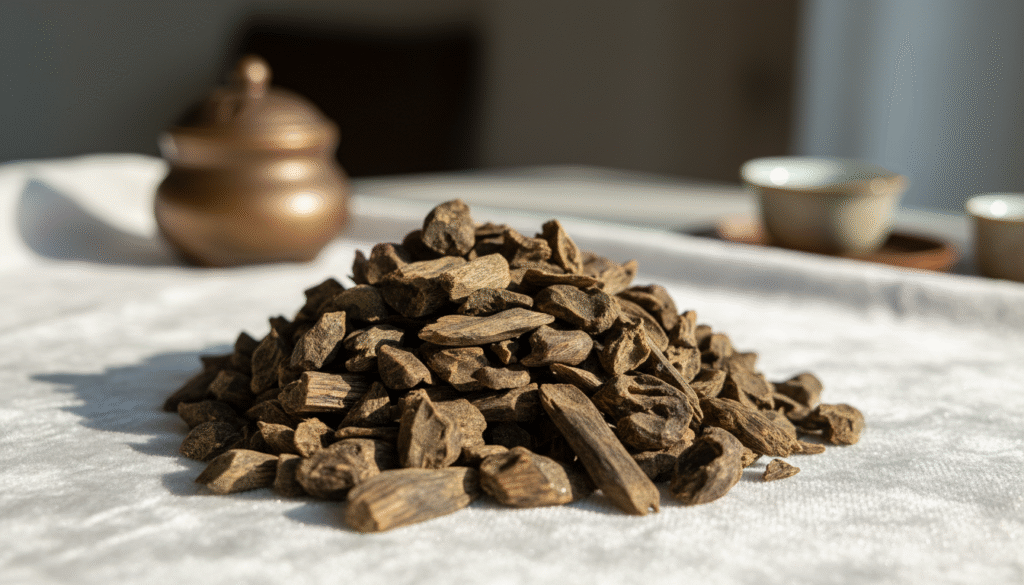
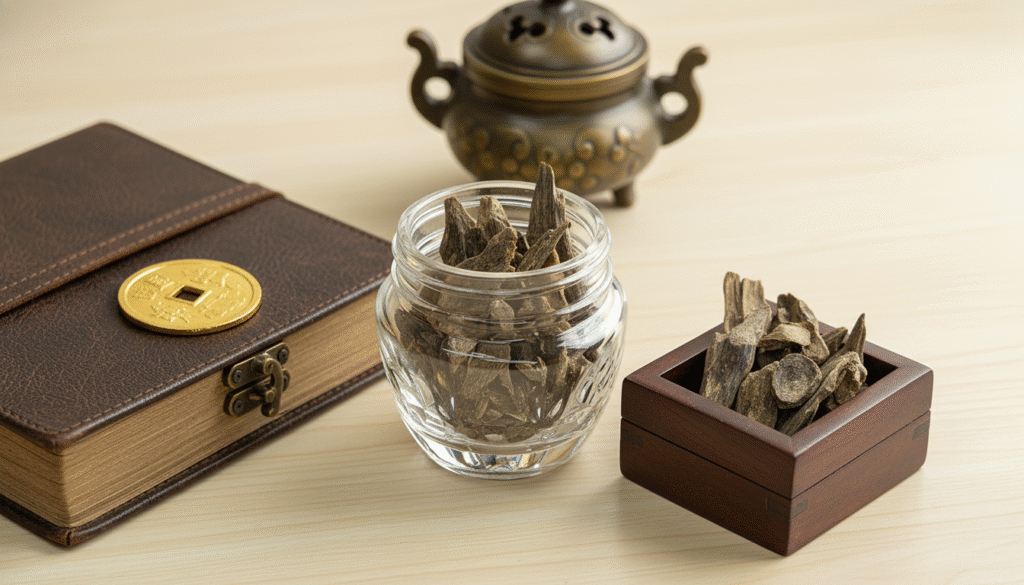
Many believe that the darker the agarwood looks in photos, the better the quality. This is not necessarily true. Observing the microscopic details of these chips, you will find that the resin of top-tier Kynam does not just float on the surface; it ‘overflows’ from the inside out. What shocks me most about this batch is the typical ‘paste-like’ texture on the surface, with a natural luster similar to an antique patina. Especially that deep brown color that is almost black—it is not a lifeless black, but a vibrant, oily glow, which directly reflects the aging of the resin through long-term fermentation. Look at the edges: though they are chips, the cuts are neat, preserving the natural form of the raw material. You can almost feel the ‘silkiness’ through the screen: soft, waxy, and sticky. This is not wood containing oil; it is oil enveloping the wood.
Microscopic Evidence: Secrets in the Cross-Section – Fiber and Honeycomb Structure
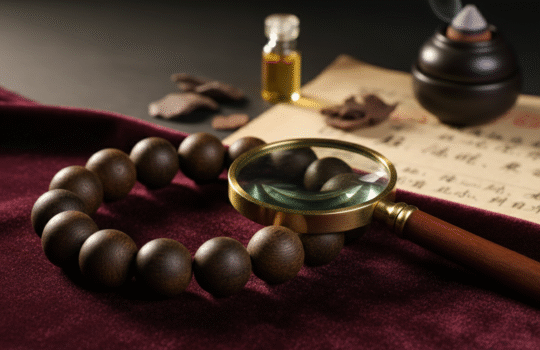
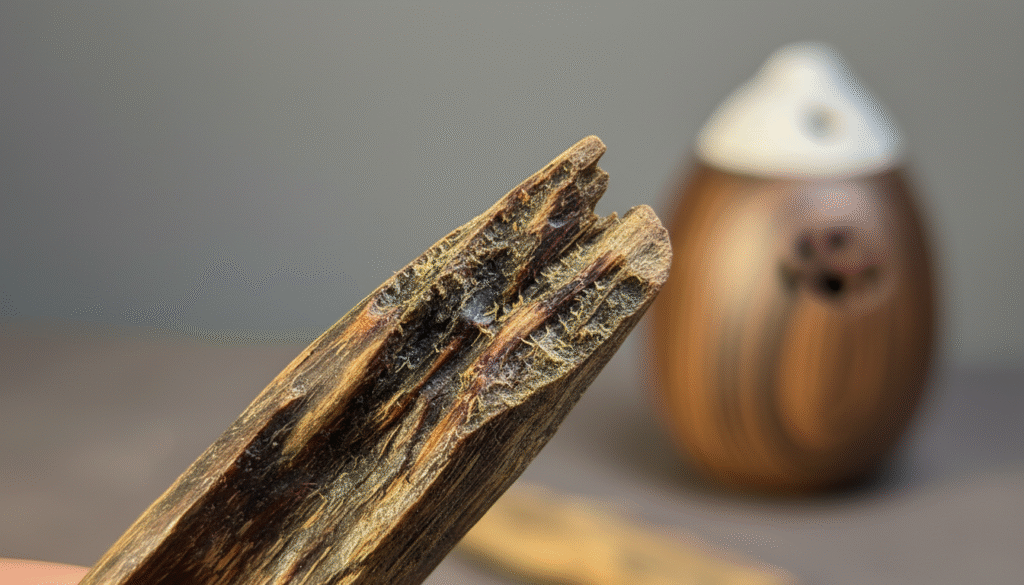
Amateurs look at the skin; professionals look at the bone. To judge the authenticity of Kynam, observing the cross-section with a magnifying glass is the most powerful evidence. The cross-section of ordinary agarwood often shows dry wood fibers, but in this batch of Green Kynam, the wood fibers are completely fused with the resin. At the fracture, you can clearly see the typical filamentous or honeycomb structure, which is the result of fiber softening caused by extremely rich oil glands. This uniform particle distribution and clear resin lines reflect its extremely high oil content and density. Even as chips, every piece is like a miniature energy reactor. This structure determines that when heated, the resin will immediately boil and release an explosion of fragrance, rather than the charred wood smell of ordinary agarwood.
The Ultimate Terroir Showdown: Chinese Green Kynam vs. Vietnam Nha Trang
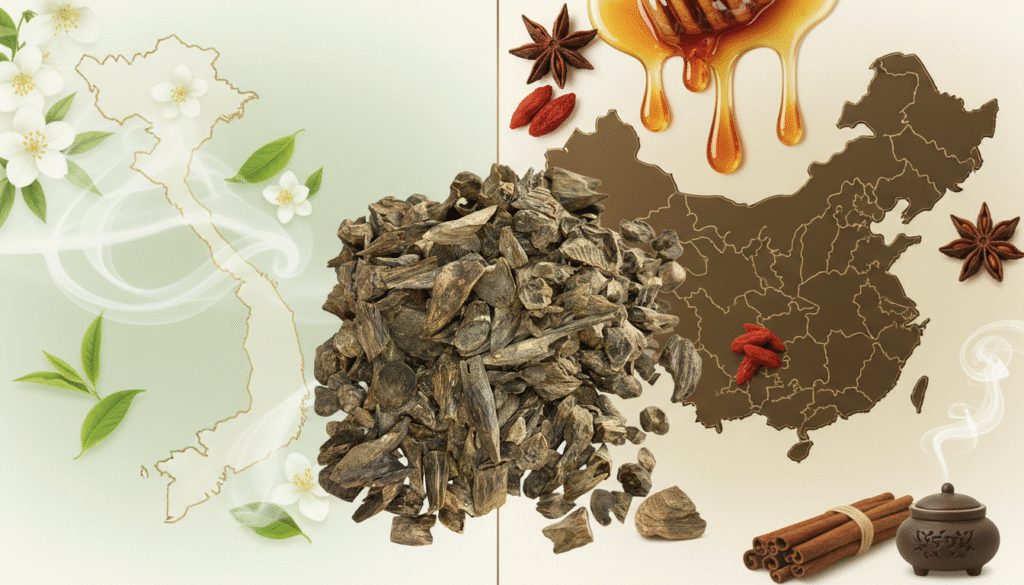
This is the topic top collectors care about most. When Kynam is mentioned, many first suggest ‘Vietnam Nha Trang.’ Indeed, Nha Trang Kynam is famous for its ethereal ‘qi’ and floral notes, like a soprano singer. However, this batch of Chinese Green Kynam exhibits a completely different ‘regal aura.’ Compared to the ‘airy’ nature of Nha Trang material, the charm of Chinese Green Kynam lies in its ‘depth’ and ‘dominance.’ Its coolness is not linear but explosive; the moment it touches the incense burner, that penetrative power rushes straight to the head, followed quickly by a rich milky-honey aroma. If Nha Trang is morning dew, then this Chinese Green Kynam is thick afternoon honey—viscous, heavy in the hand, with an incredibly long-lasting aftertaste. From a geographical perspective, this material perfectly interprets the unique ‘medicinal base’ of Chinese production areas, a depth that many new production areas cannot reach.
Olfactory Storm: The Interplay of Instant Coolness and Frankincense-Honey Rhyme
Continuing the characteristics of its origin, the aromatic layers of this batch are no less than a storm. Upon first heating, that unique ‘cool rhyme’ strikes the crown of the head, as if standing in an ancient temple at dawn, refreshed and clear-headed. Immediately following, the plot twists as a rich honey scent mixed with soft frankincense explodes. This sweetness is not sugary but a nectar-like sensation with the thickness of resin. In the trailing notes, you can even capture a hint of elegant herbs and florals. The richness of the layers is like listening to a symphony. The highest realm pursued by many top players is precisely this ‘honey-medicinal balance,’ making it a superior choice for both fragrance appreciation and medicinal use.

Collection and Investment: Why I Don’t Recommend Burning It Carelessly
To be honest, as an exporter, I should encourage everyone to buy and use more. But facing this batch, I often joke with old clients: ‘Every piece burned is one piece less; cherish it as you smell it.’ The scarcity of Kynam determines its astronomical price status in the market; it has long crossed the boundary of ordinary consumer goods to become a safe-haven financial asset and luxury collectible. This batch of Chinese Green Kynam belongs to the pinnacle of the agarwood pyramid. In the medicinal market, this grade of Kynam has extremely high liquidity; in the world of Kodo (the Way of Incense), it is a symbol of status. Whether you are a veteran incense lover, someone with high-end gifting needs, or a medicinal collector, these chips are currently the variety with the strongest value-added potential. Owning it is a silent display of strength. If you have questions about the price per gram or the identification of the agarwood in your hands, don’t rush to order—I have specifically reserved a few ‘trial scent’ slots, not for business, but to meet true fellow enthusiasts of the Way of Incense.
Q&A
Q.Which has higher collection value: Chinese Green Kynam or Vietnam Nha Trang Kynam?
A.Both have their own merits and belong to the top tier. Nha Trang has greater fame and market recognition; however, top-tier Chinese Green Kynam is even rarer in existence, possessing a unique medicinal fragrance and a heavier honey rhyme. From the perspective of scarcity and cost-performance, high-quality Chinese Green Kynam is currently a value trough with huge potential for future appreciation.
Q.Is this Green Kynam chip suitable for beginners to use on a burner directly?
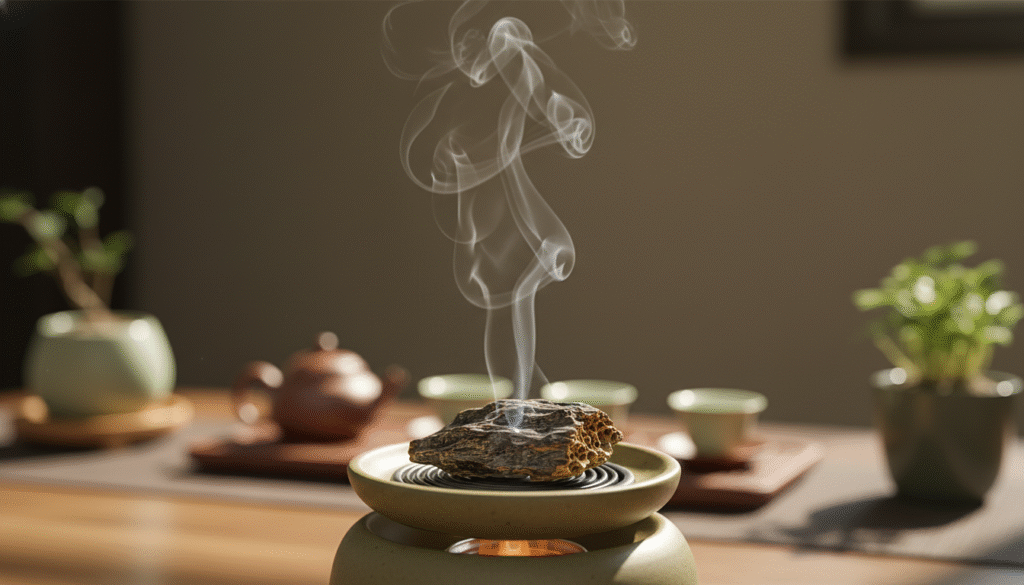
A.It is very suitable, but it is recommended to use an electric incense burner rather than an open flame. Because this batch has extremely high oil content (paste-like), an open flame can easily cause the oil to carbonize instantly, wasting its aromatic layers. It is suggested to control the electric burner temperature between 100-150 degrees Celsius to slowly coax out its cool rhyme and honey scent.
Q.Why is the price of chips still so high?
A.Kynam is priced by the gram; its value lies in quality rather than shape. Although these are chips or thin slices, the core oil content and aging years are identical to large pieces. For fragrance appreciation or medicinal use, chips actually offer the best value because you don’t have to pay for a ‘craftsmanship premium’—every penny is spent on the resin itself.
Q.Is this Green Kynam chip suitable for beginners to use on a burner directly?
A.It is very suitable, but it is recommended to use an electric incense burner rather than an open flame. Because this batch has extremely high oil content (paste-like), an open flame can easily cause the oil to carbonize instantly, wasting its aromatic layers. It is suggested to control the electric burner temperature between 100-150 degrees Celsius to slowly coax out its cool rhyme and honey scent.