Why Can This ‘Wu Shi Pai’ Be a Family Heirloom? Revealing the Collection Secrets of Top-tier Chinese Kinam
I remember a monsoon season in Lingnan; the air was so humid it felt as if you could wring water out of it. I followed a reclusive old incense hunter deep into the heart of the ‘Guan Xiang’ (Agarwood) production area. Beside a fallen tree that had lain there for countless years, the old man’s hands trembled as he removed a section of seemingly rotten wood—this was the predecessor of today’s ‘Wu Shi Pai.’ He sighed and said something I remember to this day: ‘Scent is the scar of the tree, and the medal of time.’
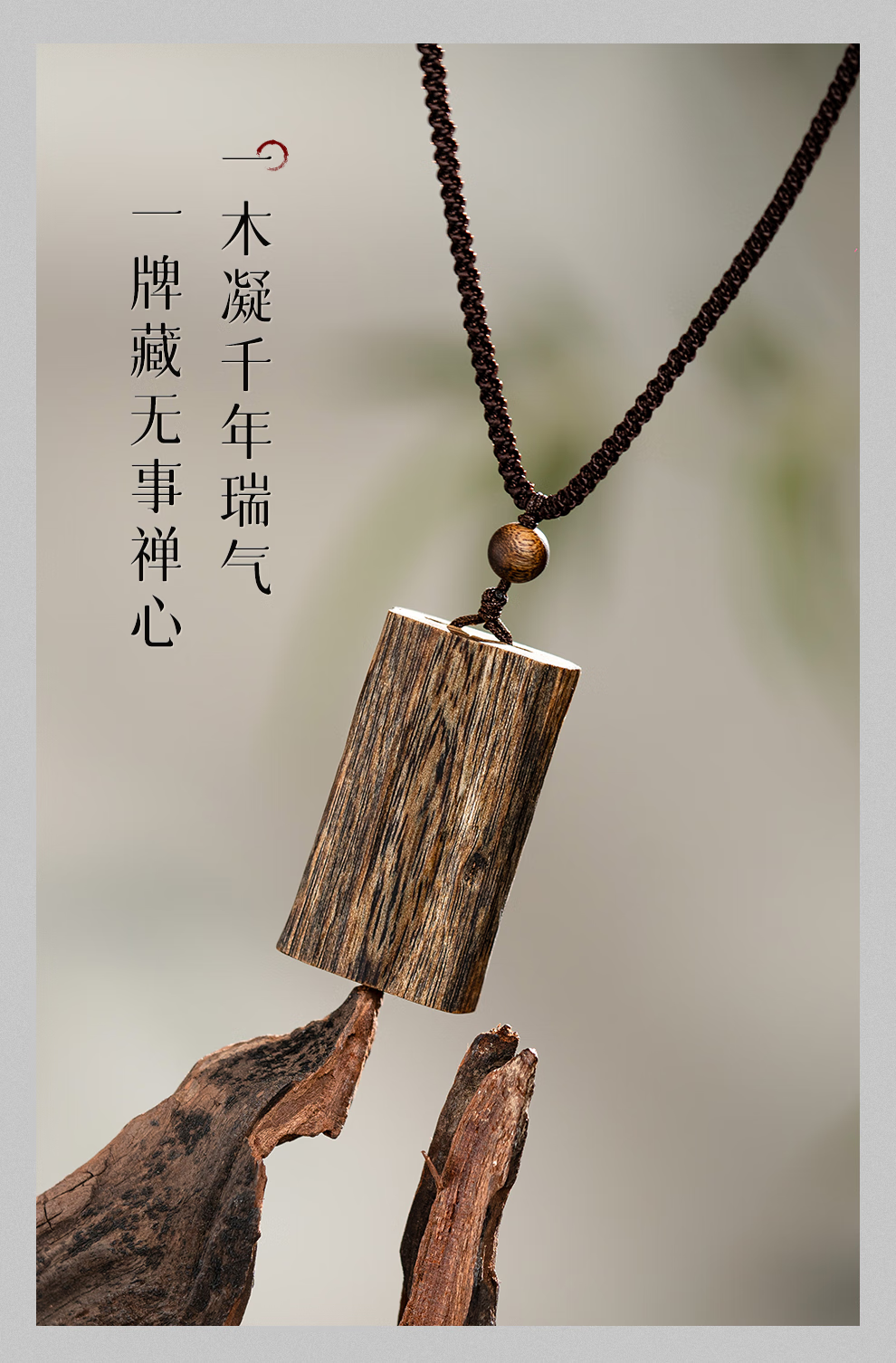
Having spent so many years in this industry and handled tens of thousands of agarwood pieces, my heart has honestly grown quite tough. Yet, whenever I touch this Kinam, derived from the top-tier Chinese Aquilaria sinensis, I still find myself holding my breath! It lacks flashy carvings, retaining only its original rectangular form—deeply dark and soul-stirringly soft. Many people ask me, why is it that the most expensive Kinam is often left uncarved? Today, I want to use this ‘Wu Shi Pai,’ which carries the spiritual essence of mountains and rivers, to set aside my expert persona and talk to you about the wisdom of collection and family legacy.
Mountain Narrative: The ‘Life-and-Death Breakout’ Behind High-Resin Veins
Incense collectors often say, ‘Look at the oil first, then the scent,’ but with this piece, I look at its ‘destiny’!
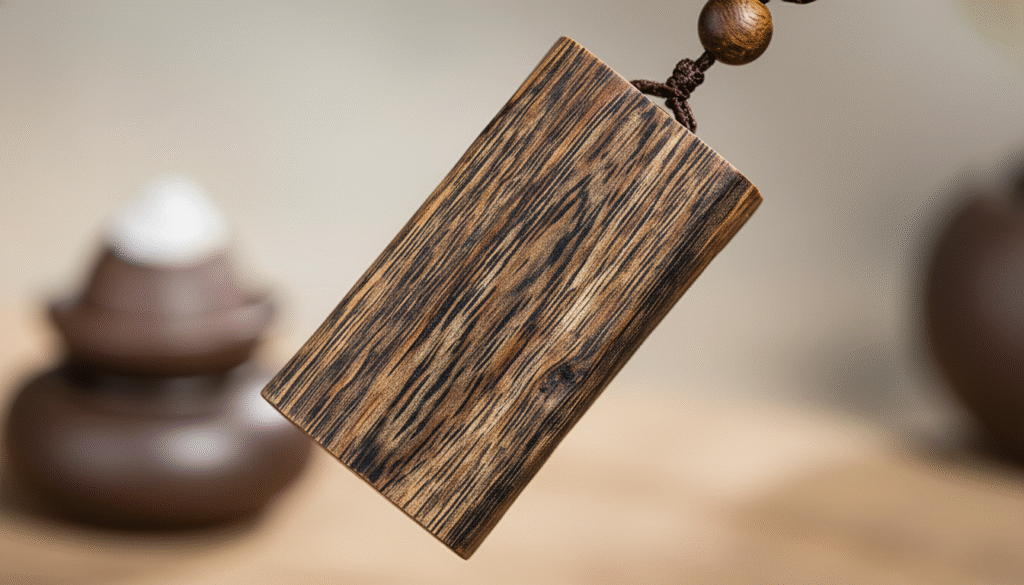
My friends, please look closely at this macro image. The oil lines on the surface are not simple accumulations; they represent a near-tragic ‘pervasion.’ Centuries ago, this tree might have been struck by lightning or bitten by insects. To survive, it secreted its most precious resin to wrap the wound. The typical ‘Black Oil Grid’ and ‘Soft Silk’ texture of this Kinam is proof of the long years where resin and wood fibers battled and merged until the wood almost dissolved, leaving only the rich, mellow oil.
This visual ‘stickiness’ and softness is something manual polishing can never replicate—it is the patina bestowed by time! Every winding oil line is a survival epic written by nature, making it a non-forgeable identity card.
The Sound of Silence: Why Does Top Kinam Prefer the ‘Plain’ Look?
A friend who had just entered the hobby once showed me this piece and asked, ‘Expert, such good material—isn’t it a waste not to carve a Guan Yin or a Dragon?’
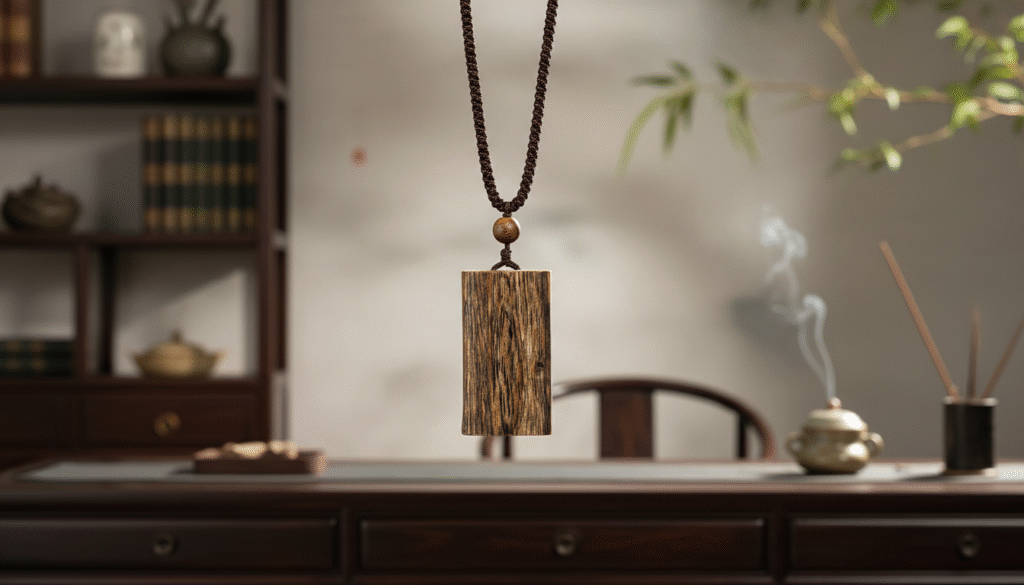
I smiled and told him that in the collection circle, there is an ironclad rule: ‘Fine jade is not carved; good incense is not engraved.’ Material that dares to be made into a ‘Wu Shi Pai’ (meaning ‘Safe and Sound,’ literally ‘No-Thing Pendant’) is essentially the ‘Brave One’ of the agarwood world! It requires the material to be flawless—no cracks, no patches, and no dead spots that fail to sink in water. This Kinam uses a completely plain surface because its own texture is already breathtakingly beautiful; any carving would be superfluous.
Paired with a minimalist hand-woven knot, it embodies a Taoist philosophy of ‘doing nothing, yet leaving nothing undone.’ Wearing it is not about flaunting craftsmanship, but about being close to nature. That confidence in being ‘unadorned’ is what I consider the highest level of luxury.
Soul-Stirring Scent: A Sensory Memory Traversing a Century
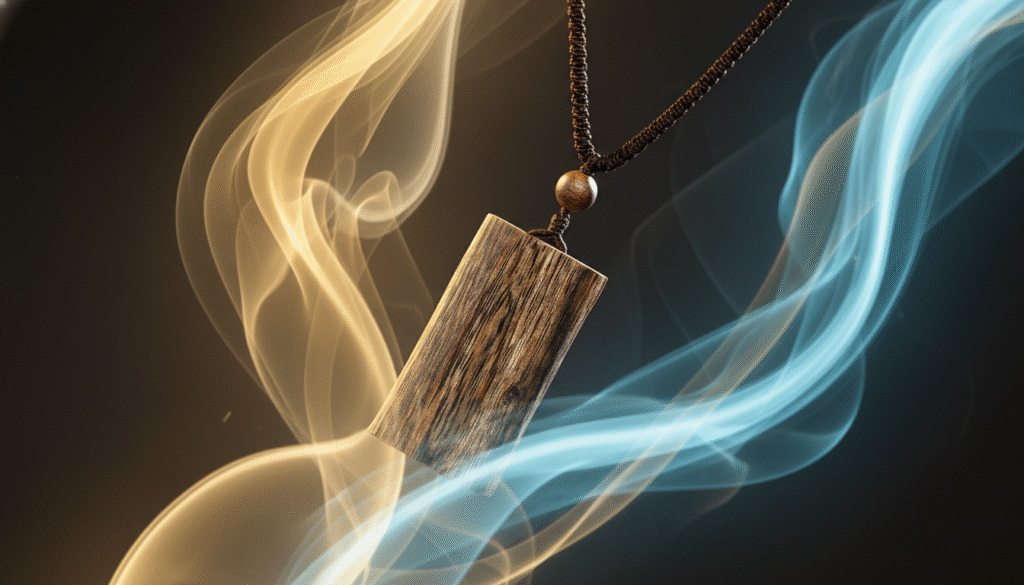
If visuals are its body, then the scent profile is the soul of this Wu Shi Pai. I can only describe the aroma of this Chinese Kinam as ‘domineering tenderness.’
There is no need to burn it; simply wear it close to your body. As your body temperature slightly warms the pendant, a surge of clear, cooling ‘coolness’ will first break through your nasal passages, as if you were standing in a mountain forest at dawn—it is incredibly refreshing! Following that is a highly penetrative blend of orchid fragrance and honey-sweetness, a power that instantly calms the mind.
What is most remarkable is its lingering quality. In this fast-paced era, its fragrance is slow and long. In the collection world, we say ‘one tael of Kinam is worth one tael of gold.’ In truth, we aren’t just collecting wood; we are collecting an olfactory memory that can transcend a hundred years and suddenly awaken your soul on a quiet afternoon. Honestly, this ‘fragrance that lingers on the hands’ is a cultural code that no modern perfume can replicate.
The Heirloom: A Family Totem from ‘Object’ to ‘Enlightenment’
Finally, I want to have a heart-to-heart about ‘heirlooms.’ In the Chinese mindset, the best thing to leave for descendants is often not gold or silver, but a spiritual sustenance.
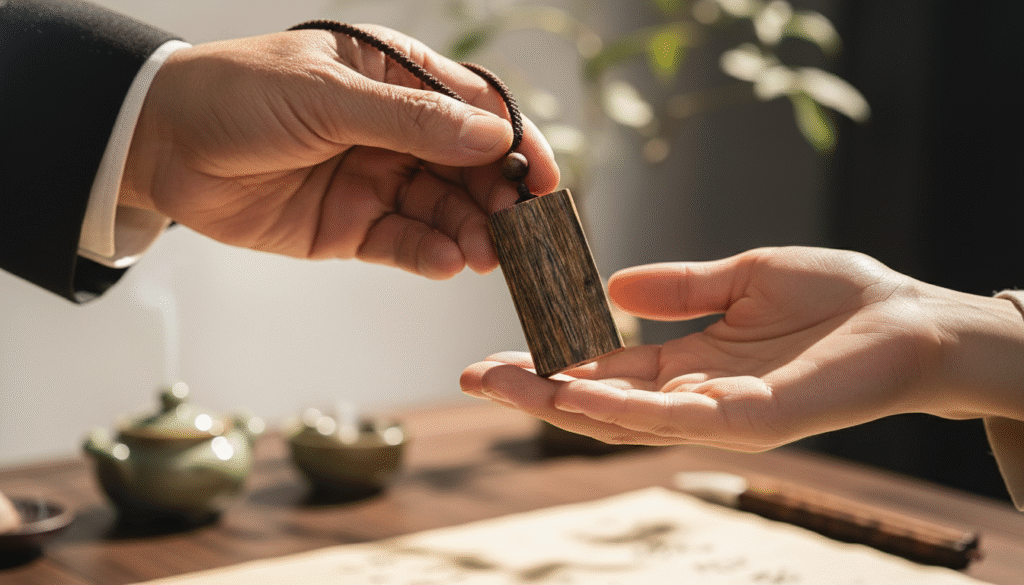
This Kinam Wu Shi Pai is not just a hard currency against inflation; it is a ‘spiritual totem’ for a family. Kinam is non-renewable, and old Chinese materials are disappearing piece by piece; it is a resource-based collectible in every sense. When you wear it or pass it to the next generation, you are passing on more than wealth—you are passing on the beautiful wish of ‘peace and safety’ and a composure that remains unshaken even if ‘Mount Tai collapses before you.’
In this noisy world, owning a piece of agarwood that allows you to return to your inner self is perhaps the most profound interpretation of ‘wealth.’
[Expert’s Message]
Every piece of Kinam is waiting for its destined owner. If you are looking for such a family heirloom to stabilize your ‘fortune,’ or simply want to experience that shock of ‘cooling air rising to the head’ from top-tier Kinam, feel free to click the consultation button below to chat with me privately. Even if you don’t buy, making a friend who understands incense is one of life’s great joys.
FAQs
Q. Since this Kinam is so rich in oil, will it stain my clothes while wearing it?
A. Haha, you don’t have to worry about that at all! Although we describe it as ‘more oil than wood,’ this refers to the fact that the resin has completely aged and solidified within the wood fibers. High-quality Kinam feels ‘dry but not parched, moist but not greasy.’ It won’t stain clothes; instead, through friction with your skin and clothing, the surface will develop a warmer and brighter patina. The more you wear it, the more lustrous it becomes!
Q. What is the significance of ‘Wu Shi Pai’ besides symbolizing peace?
A. The ‘Wu Shi Pai’ originated from the late Ming dynasty jade carving master Lu Zigang. Because the pendant has no decoration (Wu Shi), it is a homophone for ‘nothing happening’ (Wu Shi), meaning a life free of trouble. In agarwood collection, besides symbolizing that everything goes smoothly, it represents the collector’s state of mind: ‘letting go.’ Letting go of complex carvings to gain natural interest; letting go of external restlessness to gain inner peace. It is an amulet with deep roots in traditional Chinese philosophy.
Q. Does this kind of top-tier Kinam require special maintenance?
A. The best maintenance is simply to wear it! The human body temperature is the best catalyst for stimulating the Kinam fragrance, and skin oils (in a clean state) are its best nourishing oil. As an expert, my only warning is ‘chemical prevention’ and ‘odor prevention’: keep it far away from shampoos, perfumes, and other chemical agents, and try to avoid places with heavy smoke like hotpot restaurants to prevent external odors from masking its precious original scent.
Q. If I want to keep it as a family heirloom, can its value stand the test of time?
A. You’ve hit the nail on the head! The formation of Kinam often takes hundreds or even thousands of years, and its scarcity ensures it always sits at the top of the collection pyramid. Particularly for Chinese (Guan Xiang) Kinam, resources are nearly exhausted. In the art market, it is known as the ‘Diamond of the Woods.’ As a physical asset, it not only has high resistance to price drops, but its cultural value and scarcity make it a masterpiece that can span cycles and outpace time.