Unveiling the “Invisible King” of Collectibles: Why This Batch of Huizhou Old Material Kynam is the “Graduation-Level” Witness of Chinese Agarwood?
Having exported agarwood for thirty years, I have seen many legends of “unbounded prices but no supply,” but what truly makes my heart race and makes me want to keep it for myself are often those long-buried stories. The emergence of this batch of Chinese Kynam old material was, honestly, a matter of pure chance. it originated from the “warehouse opening” of an old spice farmer in Huizhou, where it had been “sleeping” in a cool corner of his attic for forty years. Someone once offered a sky-high price for the whole block, but the old man couldn’t bear to part with it; it wasn’t until last month, to prepare a wedding house for his grandson, that he finally let it go. The moment the cutting blade touched the wood, the resin stuck to the blade and the fragrance filled the room. The master craftsmen present all held their breath—not just because of the extreme density, but because it represented the pinnacle quality of typical domestic White Kynam. Why do I call this the “ultimate DIY moment”? Because only a massive block with sufficient weight and overflowing oiliness dares to be luxuriously carved into loose beads ranging from 6mm to 14mm. This is not just “Lego” for collectors; it is a timeless witness of being from the same source material. When you pick up a bead, you are touching more than just paste-like resin lines; you are touching the surviving glory of the broken history of Chinese Kynam. Take my advice: material like this is seen once and disappears.
A Visual Shock: Resin Like Paste, “Black Gold” Condensed by Time
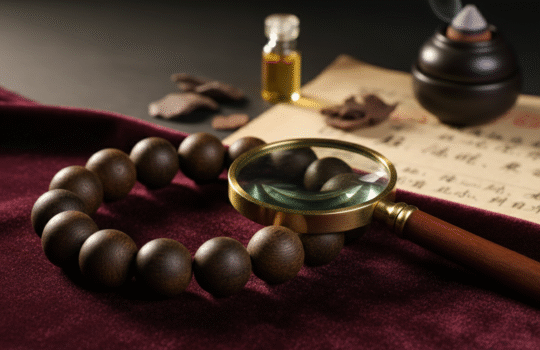
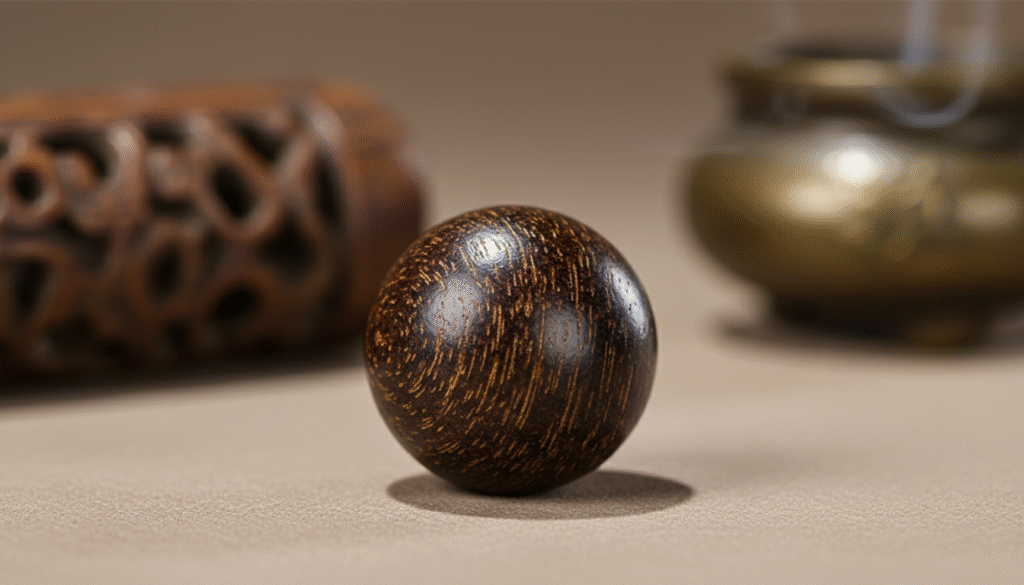
Pick up a magnifying glass, and you will see the most shocking microscopic world of this batch of Chinese Kynam: it’s not just resin lines floating on the surface, but a texture that “overflows” from inside the wood fibers like soft, glutinous paste. This paste-like resin line is the product of the incense tree’s deep entanglement and fermentation with its unique fungal community over decades of wind, rain, thunder, and lightning. Under natural light, the beads present a deep dark brown color with a warm matte finish—the “prelude to patina” unique to old materials. Each bead retains the texture of natural wood grain interwoven with resin lines, without any artificial oily shine, only a heavy, solid feel in the hand. This high-density, sinking-grade quality is the most honest answer given by time—it proves that this material underwent a sufficiently long process of natural mellowing before being harvested. Collectors in the know understand that this “black gold” texture is synonymous with hard currency.
An Olfactory Feast: One Breath of “National Fragrance,” Three Lifetimes of Destiny
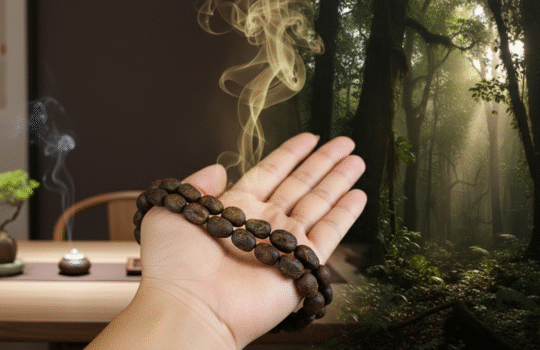
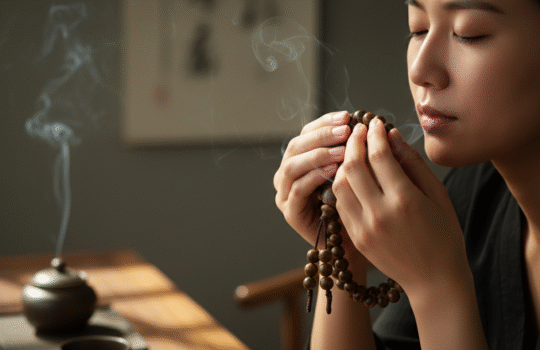
If Hainan agarwood is a refined gentleman, then this batch of Chinese Kynam is an emperor with a full-throttle aura. Its fragrance possesses a textbook-level “National Fragrance” hierarchy that ordinary Star Island (Xing Zhou) agarwood simply cannot match. Upon first scent, there is an extremely penetrating cool sensation that hits the crown of the head, instantly clearing the mind—this is the signature “cool rhythm” of Kynam. Next, as it is warmed by body temperature during wear, the middle notes explode with a rich aroma of sweet melon, fruit, and creamy milk—sweet but not greasy, mellow and long-lasting. Most exquisite is its base note, which carries a hint of elegant orchid mixed with a medicinal scent. This fragrance is not only long-lasting but also has incredible diffusibility. Without exaggeration, placing a 14mm bead in a study allows the entire room to catch that faint, ethereal grace. This is the true meaning of “recognizing a person by their scent.”

Full-Scale Luxury: Reimagining Palace-Level DIY Aesthetics
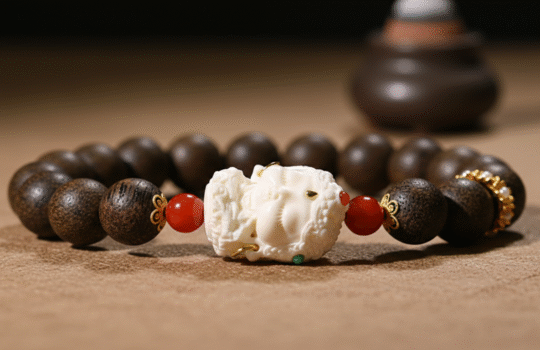
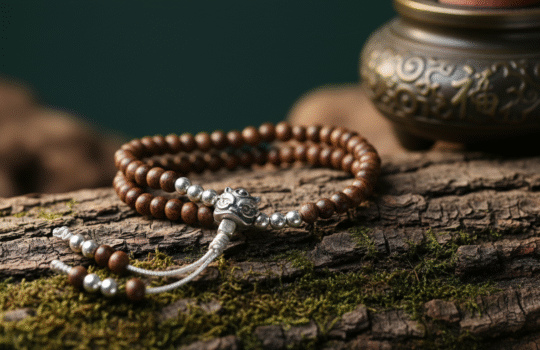
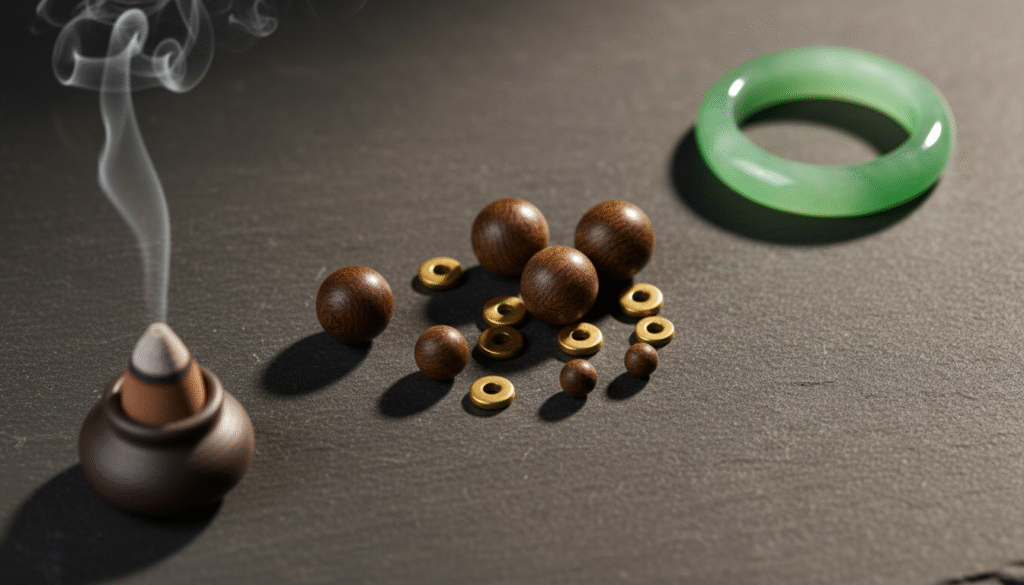
Loose Kynam beads on the market often come in incomplete sizes, but for this batch, I specifically reserved a complete sequence from 6mm to 14mm to satisfy collectors’ ultimate pursuit of “palace-level coordination.” Imagine this: an 8mm Kynam 108-bead mala as the base chain, interspersed with a few spacer beads made of heritage antique gold. The visual impact of that “black and gold contrast” carries both royal nobility and scholarly restraint. Or, choose a top-tier 14mm main bead paired with an Imperial Green Jadeite ring; the steadiness of the dark brown and the vibrancy of the emerald green complement each other, representing the peak of Chinese aesthetics. This full-scale freedom allows you to personally design a unique family heirloom. The sense of high-end luxury brought by this combination will undoubtedly make you the focus in any social setting.
Collection and Heritage: Same Source Scarcity, Every Cut is a Loss
In the agarwood collection circle, “Same Source Material” (originating from the same raw block) signifies pure lineage and multiplied value. The reason these Chinese Kynam loose beads are called a “pinnacle witness” is that in today’s world, where domestic Kynam resources are nearly exhausted, finding a large enough old block to craft a full range of bead sizes is a miracle in itself. This is not just consumption; it is asset allocation. As raw materials become non-renewable, the price of old material at this level climbs at an alarming rate every year. Collecting these loose beads is equivalent to locking in the ownership of a scarce resource. It is “soft gold” you can wear with you, and a cultural memory of “Chinese Scent” to leave for future generations. [Expert Message & Consultation]: If you want to see the shocking video of this “mother material” being cut, or want me to design a custom heritage gold inlay for your main bead, do not hesitate—click the consultation button below. Good material waits for no one, and I have only kept a tiny amount of offcuts as specimens to give to those truly destined. Rather than watching from the sidelines, come and experience this heavy piece of history for yourself.

FQAs
Q. What is the advantage of these ‘same-source’ Kynam beads compared to mixed sets on the market?
A. Great question! ‘Same source’ means all beads have perfectly consistent color, oiliness, density, and fragrance. Mixed sets on the market often combine leftovers from different regions and qualities, leading to a messy aroma and uneven patina color over time. These same-source beads will develop a uniform patina and a harmonious fragrance, making their collection value far higher than ordinary mixed sets—they are of ‘pure bloodline.’
Q. What should I pay attention to when wearing beads with this ‘paste-like resin’?
A. High-quality items are naturally more delicate. Paste-like resin indicates extremely high oil content. First, absolutely avoid contact with chemical detergents (like dish soap or perfume), as they can destroy the resin structure. Second, avoid prolonged exposure to intense sunlight. My advice is to wear them frequently; the body’s natural oils and temperature are the best maintenance. This is called ‘the person nurtures the wood, the wood nurtures the person.’
Q. Why do you recommend pairing them with heritage gold or jadeite?
A. This is based on both hardness and aesthetics. The matte texture of heritage gold complements the low-profile oiliness of Kynam, and gold’s malleability prevents scratching the beads. The cool tones of Jadeite (especially Imperial Green) brighten the dark tones of Kynam, creating a visual focal point. However, remember that Jadeite is very hard; when pairing, be sure to add leather pads or coconut shell spacers at the contact points to prevent physical wear. Details determine success.