Soul of Guanxiang: 30 Years in the Trade, Unveiling My Private ‘Black Oil Old Material’ 108-Bead National Fragrance Bracelet
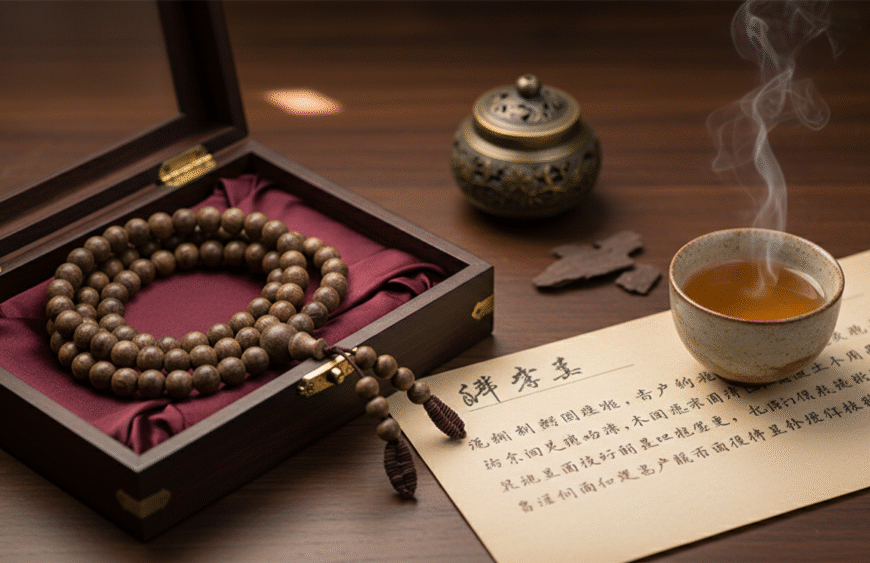
After thirty years in the agarwood export business, I’ve handled material by the ton. I’ve grown accustomed to the intensity of the Star Island (Xingzhou) series and the elegance of the Huian series, yet every time I return to my home in Guangdong and catch that familiar scent of ‘National Fragrance,’ my heart still skips a beat. In an era where wild resources are nearly extinct, encountering this ‘lost treasure’ from an old collector in the Dalingshan mountains of Dongguan is pure destiny. Most items marketed as ‘Old Guanxiang’ are merely new material artificially aged, but this 108-bead black oil bracelet is a true ‘living fossil’ that has weathered decades, salvaged from roots of trees long deceased. Today, I won’t bore you with dry data; I want to use these beads to share a story of time, scars, and rebirth, while teaching you the industry secrets for identifying genuine oil.
Visual Evidence: Every ‘Black Oil’ Line is a Battle Scar of the Tree’s Cultivation
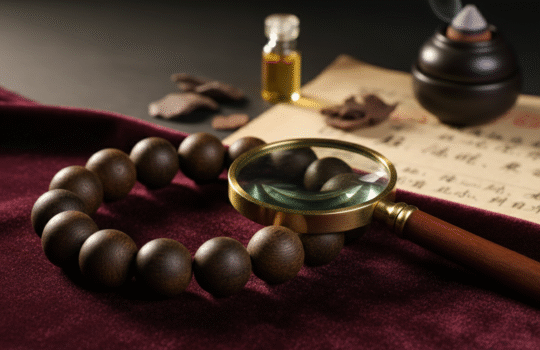
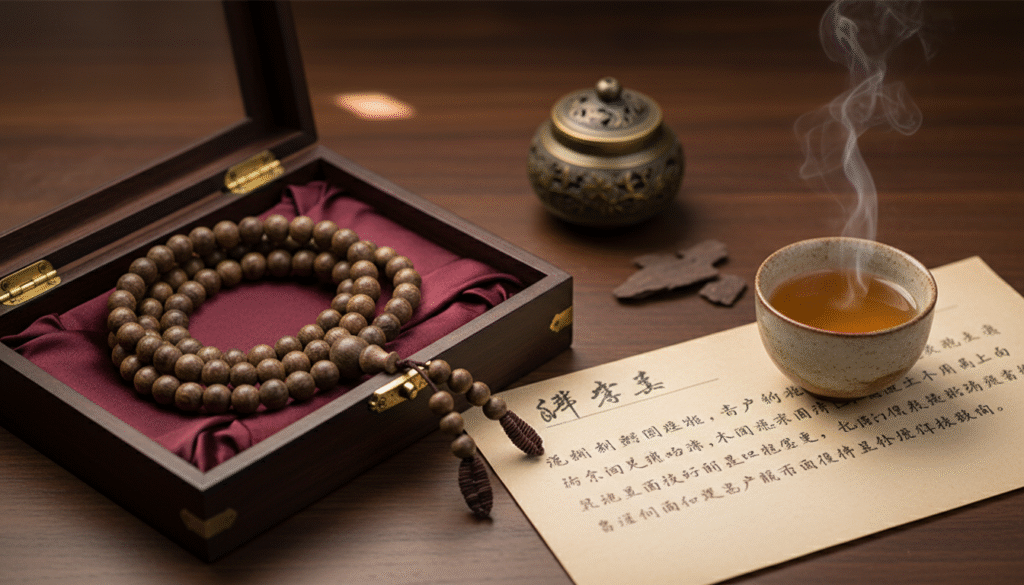
When you pick up this bracelet, don’t rush to wear it; first, hold it against the light. Many beginners chase ‘blackness’ without understanding its origin. Look at the black oil texture in the photo—fine as silk yet purposefully gathered. This is no ‘chemical-soaked’ fake. Each resin line is a scar left by the tree’s self-healing process after lightning strikes, insect infestations, or axe cuts decades ago. In the trade, we call it ‘Kynam-infusion’ or ‘scenting,’ but I prefer to call it the tree’s ‘spiritual cultivation.’ This natural gradient from yellowish-brown to deep black is a hallmark of genuine Chinese Guanxiang (Aquilaria Sinensis) old material—the xylem has aged to a crisp state while the resinous parts are hard as steel. This blend of ‘void and solid’ textures resembles a miniature ink-wash landscape painting, recording not a price tag, but the tree’s struggle with nature on the red soil of Lingnan.
The Soul of Scent: Where Does the ‘Honey Sweetness’ of the Tang Dynasty Court Reside Today?
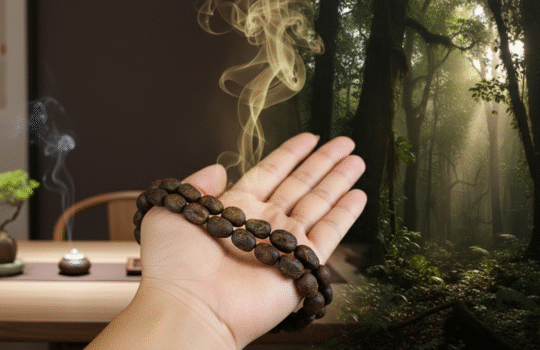
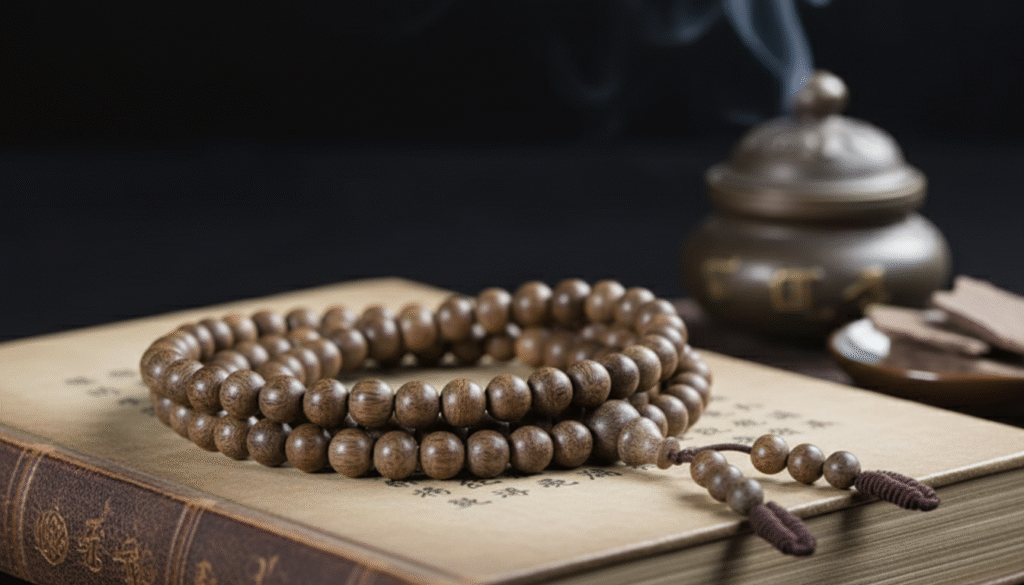
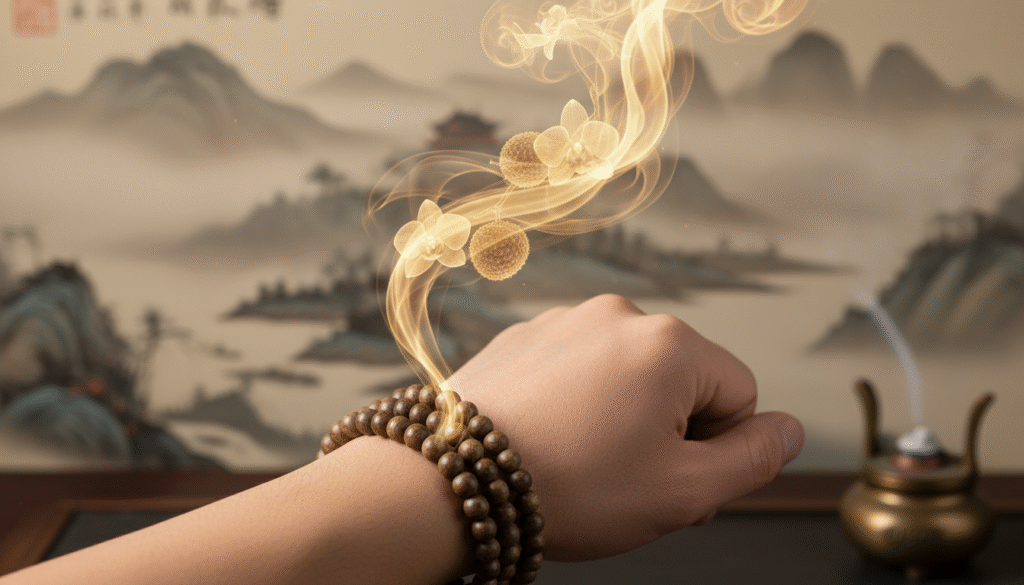
If texture is the body, scent is the soul of agarwood. Why did the ancients claim Guanxiang was ‘supreme under heaven’? Wear this 108-bead strand, and as your body temperature warms it, the aroma emerges. Unlike the overbearing nature of the Star Island varieties or the tartness of the Huian series, this old material emits a highly penetrating, elegant honey-sweetness. Close your eyes, and it feels like standing in a lychee orchard after an early summer rain. First comes a cool, fruity top note that clears the mind; followed immediately by a rich sweet base with a unique herbal undertone that settles the spirit. This is the legendary ‘National Fragrance,’ the same scent that lingered in the Tang Dynasty imperial courts. It does not compete for attention, yet it creates a sophisticated aura of ‘finding peace amidst the city’s clamor’ with every gesture.
Form and Legacy: Eastern Philosophy Within 108 Beads
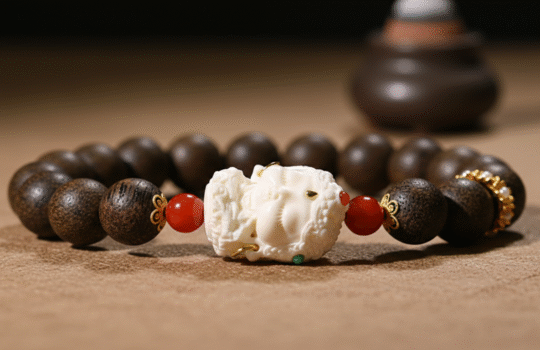
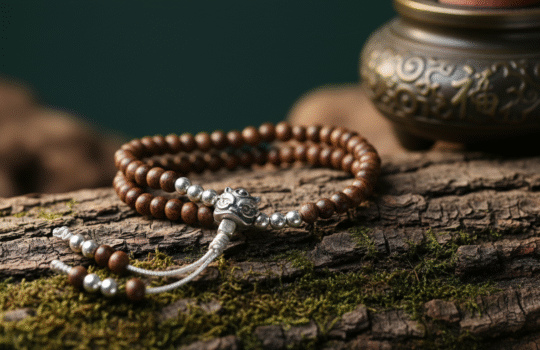
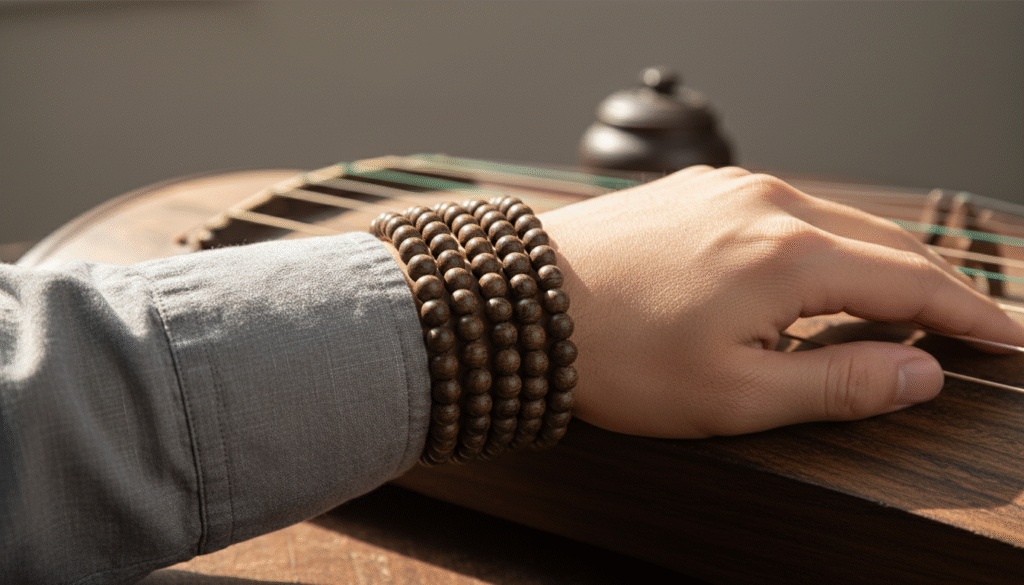
In a restless urban world, why do we need a 108-bead strand? Buddhism speaks of 108 worldly troubles; severing them brings enlightenment. However, I prefer to see this meticulously crafted, perfectly rounded bracelet as a ‘spiritual valve’ for the modern elite. Each bead of old material has been lathed and polished to remove the harsh edges of the wood while preserving the core of the fragrance. It can be worn as a necklace to signal understated refinement, or wrapped four times around the wrist for gentle contemplation during negotiations or tea ceremonies. The tactile sensation—warm as jade with a slight resistance—helps you find your inner rhythm during moments of anxiety. It is more than an accessory; it is your invisible calling card and a tribute to the traditional Eastern way of life.
Expert’s Conclusion: Don’t Let Your ‘Tuition’ Be Wasted on Counterfeits
As an industry insider, I must speak from the heart: the depletion of wild Chinese Guanxiang is happening much faster than we imagine. A 108-bead long strand that reaches ‘Black Oil’ grade and old-material maturation is a disappearing rarity. My greatest concern is that enthusiasts, lacking industry knowledge, spend ‘old material’ prices on ‘oil-soaked’ fakes. Collection is not just a transaction; it is built on trust. If your heart is moved by this ‘National Fragrance,’ or if you have a piece you are unsure of, do not rush to purchase. Click the consultation button below and send me a photo taken in natural light. I am an old agarwood farmer and your gatekeeper. Even if you do not acquire this specific piece, I hope to help you avoid the ‘pitfalls’ of the market, ensuring every penny is spent on true cultural heritage.
FAQs
Q.Will the scent of this agarwood disappear?
A.Genuine old-material agarwood has resin accumulated over decades or even centuries. The scent will not disappear; instead, as you wear it, your body heat will make the oils more active, causing the fragrance to become richer and more vibrant over time. As the saying goes, ‘Like water to the thirsty, it grows sweeter with time.’
Q.Why is old Guanxiang more expensive than other origins?
A.Rarity is one factor, but cultural identity is more important. Guanxiang (Aquilaria Sinensis) is the orthodox source of Chinese incense culture. Its unique honey-sweet rhyme cannot be replicated by other regions. Combined with the early over-exploitation of domestic wild resources, high-quality old material is extremely scarce today.
Q.How do I maintain ‘Black Oil’ so it doesn’t change color?
A.The best maintenance is ‘human nourishment.’ Your skin’s natural oils will blend with the agarwood resin to form a patina (Baojiang), making the beads darker and more lustrous. The only taboo is to stay away from detergents, perfumes, and other chemicals, which can dissolve the resin and destroy the scent. Always remove it before bathing or swimming.
Q.I am a beginner; how can I tell if the lines on these beads are just painted on?
A.Painted fakes have textures that float on the surface, appearing stiff and artificial. In this old Guanxiang material, the black oil lines ‘grow’ inside the wood. They follow the natural vessels deep into the interior. Under a magnifying glass, you can see the resin not only filling the vessels but also permeating the surrounding wood fibers, creating a natural gradient that human hands cannot replicate.