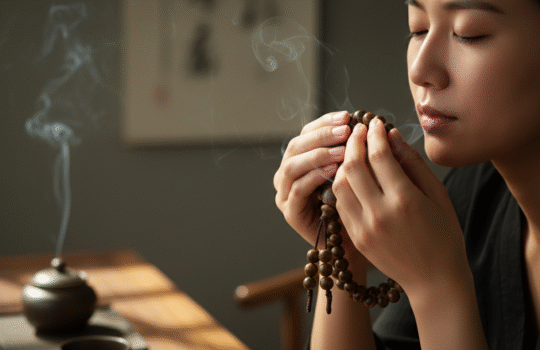
Seeking the Lost Soul of the National Fragrance: Appreciating a Guanxiang (Sinensis) Exquisitely Carved Amulet Buddha from the Extinct Old Material of Dalingshan
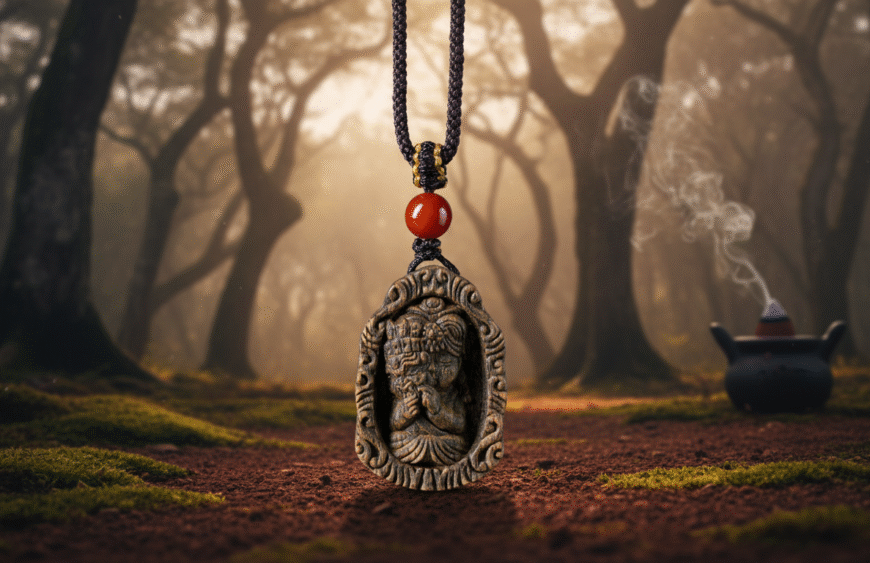
Having spent twenty years in this industry, I’ve handled countless pieces of agarwood. From the ethereal lightness of Nha Trang, Vietnam, to the creamy sweetness of Tarakan, Indonesia, each has its merits. But when the night is still and I sample incense alone, the one that haunts my dreams is our local Chinese treasure—Guanxiang (Sinensis). Many people ask me why Chinese agarwood has become the ‘invisible king’ of the auction houses. Today, I won’t bore you with dry data; instead, I’ll share this [Dalingshan Region · Guanxiang Exquisitely Carved Amulet Buddha Pendant] which I just acquired from a reclusive old collector in Guangdong. I remember a rainy night in Guancheng, Dongguan, when the old gentleman rubbed this material and told me: ‘This is an iron-knot dug from the red soil forests of Dalingshan years ago; it is a specimen of the struggle between Guangdong’s red soil and the subtropical monsoon. Now that the mountains are closed, such pieces are disappearing one by one.’ When you hold it in your hand, the grounding weight and the chill that pierces your heart will tell you what the true ‘Soul of National Fragrance’ is.
I · Origin: The ‘Aesthetics of Scars’ from the Depths of Dalingshan’s Red Soil
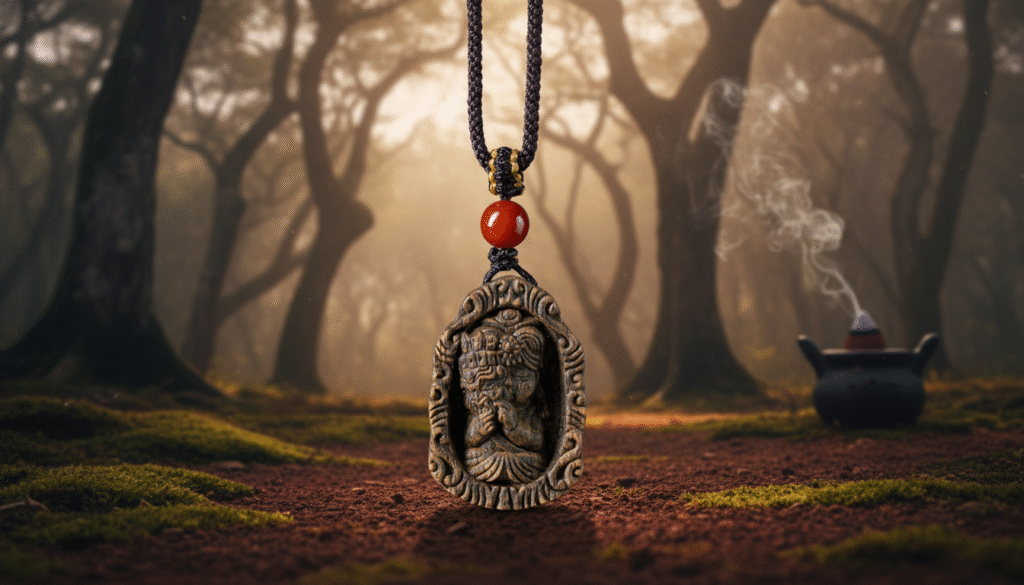
To play with agarwood without knowing the origin is like a blind man feeling an elephant! The story of this piece begins with the soil beneath our feet. It is not the common commodity found everywhere on the market, but authentic wild old material from the Dalingshan mountain range in Dongguan, Guangdong. Veteran players of ‘Guanxiang’ know that the iron-rich red soil and the alternating hot and humid microclimate of Dalingshan are the true breeding grounds for top-tier national fragrance. Decades ago, this incense tree was wounded deep in the mountains—perhaps by lightning or insects. To heal the wound, the tree secreted a special resin. Buried in red soil and fermented by time, it underwent decades or even centuries of maturation to form this iron-hard texture. This kind of material with a clear ‘regional fingerprint’ has nearly vanished. It carries not just resin, but the unique terroir memory of that mountain range—nature’s most expensive ‘scar.’
II · Quality: Oil Lines Like Ink, Bones Like Iron
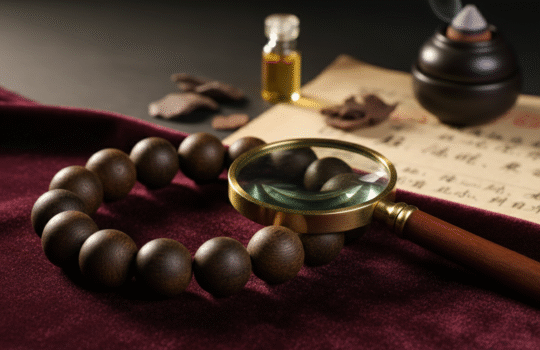
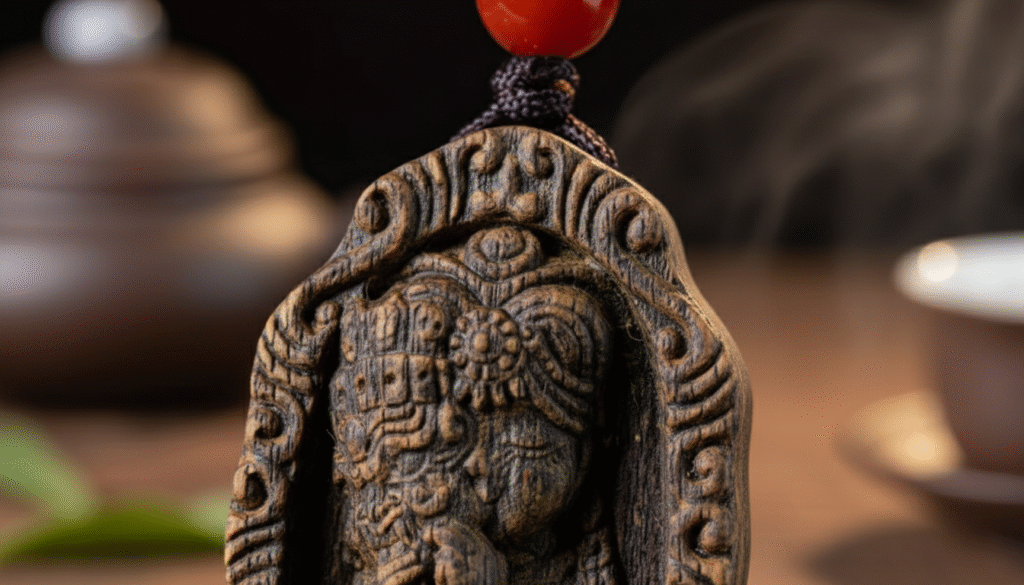
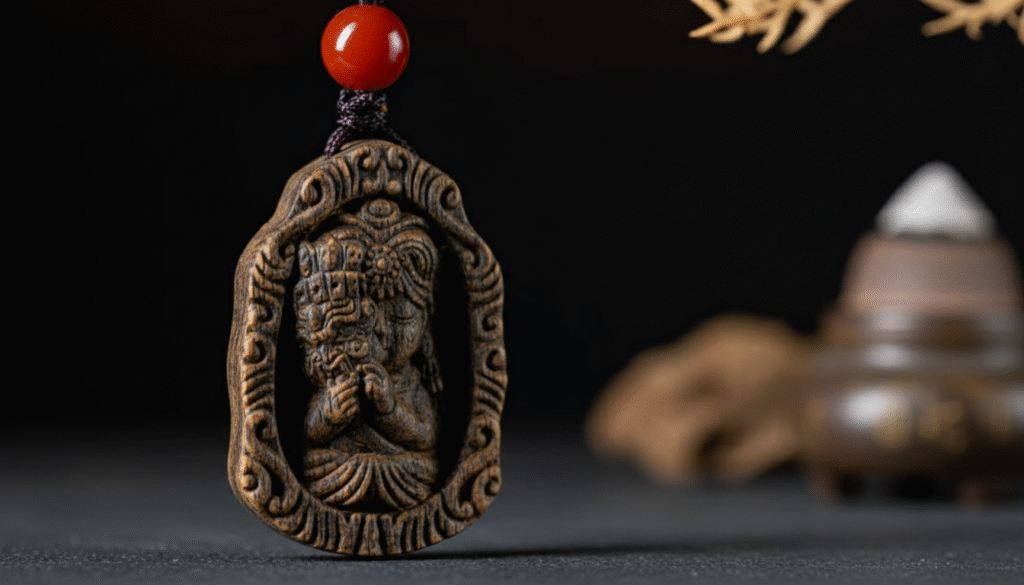
Many novices judge agarwood solely by how black it is; this is a major misconception! True experts look at ‘Qi’ (energy) and ‘Zhi’ (quality). Please observe the macro details of this piece—this is not the ‘dead black’ created by high-pressure oil injection common in the market, but the typical ‘natural mature knot’ of Dalingshan old material. Under strong light, you can clearly see the dense, dark brown oil lines. They are like the dry, charred ink of calligraphy, deeply rooted in the wood fibers—this is the legendary ‘Cow-hair Pattern.’ This state of ‘oil-wood symbiosis’ brings an indescribable sense of moistness. Rotating the pendant gently, it shows no gaudy glare, only a matte luster (Patina) settled by time. This texture cannot be faked; it records how the wood was reborn from decay, eventually turning into something as resilient as stone. Believe me, this is a natural miracle that cannot be simulated by artificial means, and it is the most hardcore standard for judging old material.
III · Craftsmanship: Su-style Carving and the ‘Finishing Touch’ of Red Agate
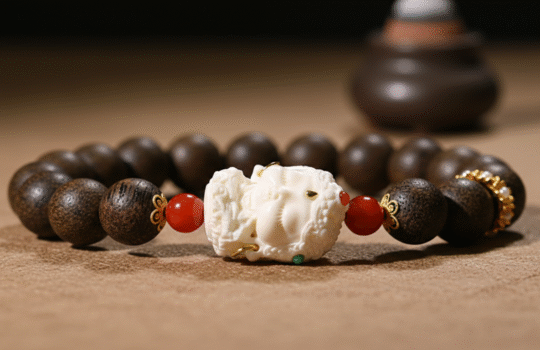
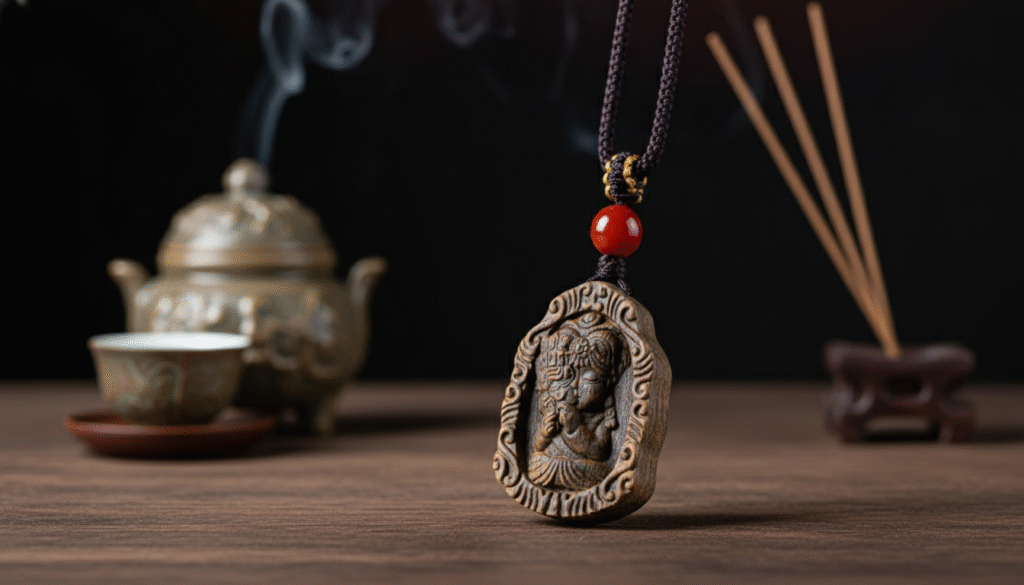
Fine material deserves fine craftsmanship; this is an iron rule in the world of cultural relics. But for this piece, the carving is particularly exquisite. It employs typical Su-style Carving (Suzhou style) techniques. You can see the majesty of the Buddha’s face, carved with great presence, yet the lines are handled with exceptional fluidity, without a trace of hesitation. This craftsmanship maximizes the integrity of the material while endowing it with a sense of religious sanctity. The most brilliant stroke is the designer’s bold choice of a red agate bead as an accent. The deep black-brown of the agarwood represents the depth and restraint of the earth, while the bright red of the agate symbolizes life’s vitality and ‘Hongyun’ (great fortune). This ‘interplay of red and black’ creates not only a strong visual impact but also carries the auspicious meaning of ‘Good luck at the top.’ This is a dialogue across materials, giving the entire work a touch of vibrant life amidst its ancient elegance—a true paradigm of dual excellence in material and craft.
IV · Aroma: A Wisp of Clear Sweetness, a Century of Coolness
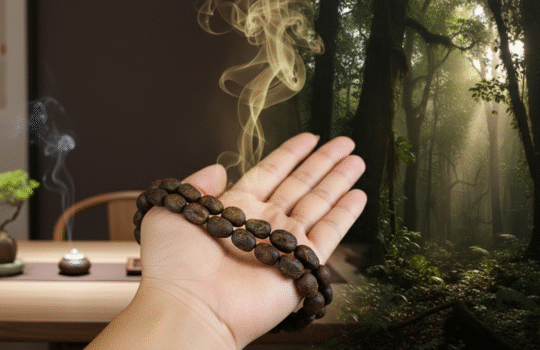
If the appearance is the body, then the aroma is the soul. The reason Chinese Guanxiang is hailed as the ‘Chief of All Fragrances’ lies in its dominant penetrative power. When smelled at room temperature, this pendant offers a typical Chinese regional scent—a clear, honey-like sweetness mixed with faint floral notes, as if you were standing in a sea of spring flowers in Dalingshan. But the true magic happens after you wear it. As your body temperature warms it, the oils begin to volatilize minutely. You will suddenly feel a profound coolness, followed by a herbal sweetness that hits the crown of your head. This ‘Cool Sweetness’ is the unique DNA of Guanxiang, with a long-lasting aftertaste that refreshes the soul. It is not just an olfactory pleasure; for busy business people like us, it is a remedy to soothe a restless heart. Encountering this is fate. If you wish to personally experience this century-old ‘National Fragrance’ coolness, or wish to authenticate the agarwood in your hands, feel free to click below to chat with me. After all, connecting with a rare heirloom often happens in a single moment of thought.
FAQs
Q.Why is Guanxiang from the Dalingshan region more expensive than ordinary agarwood?
A.The core lies in it being ‘extinct’ and its unique ‘aroma.’ Dalingshan was historically the core production area of Guanxiang. Wild resources were nearly exhausted by the Qing Dynasty. Existing old materials are mostly remnants from earlier years, making them non-renewable resources. Furthermore, the unique red soil environment of this region endows the agarwood with a more powerful cool-sweetness and penetrative power that cannot be replicated by other regions.
Q.Does the red agate bead on the pendant require special maintenance?
A.Red agate has a high hardness, but it should still be protected from violent impacts. When maintaining agarwood, we avoid chemical detergents, and this applies to the agate as well. In fact, like agarwood, agate becomes more lustrous the more it is worn. Simply keep it clean, and the oils secreted by the human body will nourish both the wood and the stone, making the red and black colors more distinct and moist.
Q.Will the scent of the agarwood disappear after wearing it for a long time?
A.It will not disappear, but it may ‘hibernate.’ If it isn’t worn for a long time or if the patina becomes too thick, the fragrance might temporarily weaken. This piece has dense oil. Simply wipe the surface patina gently with a warm, damp towel, or let your body temperature heat it while wearing it, and the clear honey sweetness and coolness will wake up immediately. This is the charm of old material—the aroma is part of its life.