Out-of-Print Chinese Kynam: Why This “Tiger-Skin” Square Bead Bracelet Makes Even an Old Exporter Reluctant to Sell?
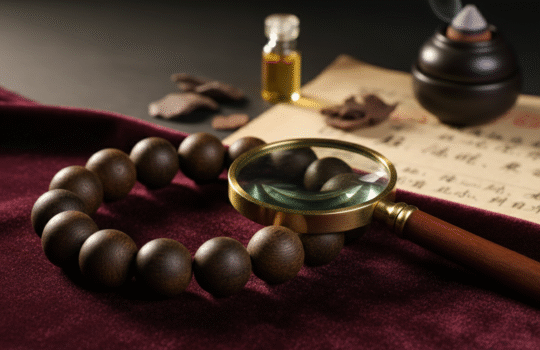
After thirty years in this industry, I have handled countless pieces of agarwood, but honestly, encountering Kynam with the classic “Chinese heritage charm” still makes my heart skip a beat. While organizing my inventory the other day, this square bead (dice bead) bracelet left me dazed for a long time. It reminded me of the days in the early 90s when I was collecting materials in the Jianfengling area of Hainan; back then, local farmers occasionally held these “Black Tiger” resin pieces that were overbearingly powerful. In today’s market, where even Nha Trang material is hard to find, seeing Chinese Kynam with such high oil saturation and such an “extravagant” cut is simply a magnificent luxury. Today, let’s skip the empty technical parameters. I will take you, as if we were in my tea room, to use a magnifying glass and see exactly why this “graduation-level” collectible commands such a high price.
Visual Evidence: The Wildness of Deep Red Oil Overflow and “Tiger Skin” Patterns
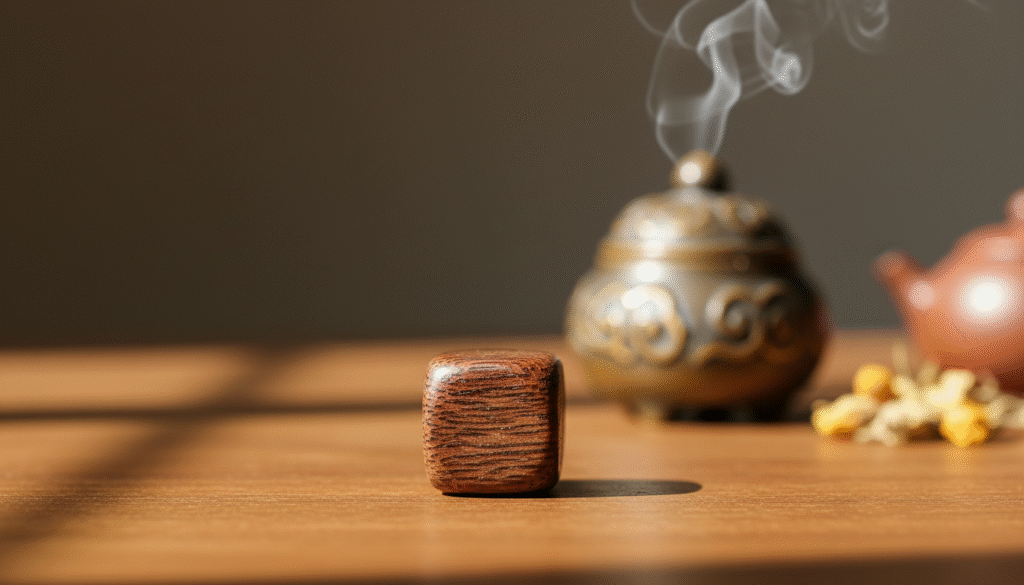
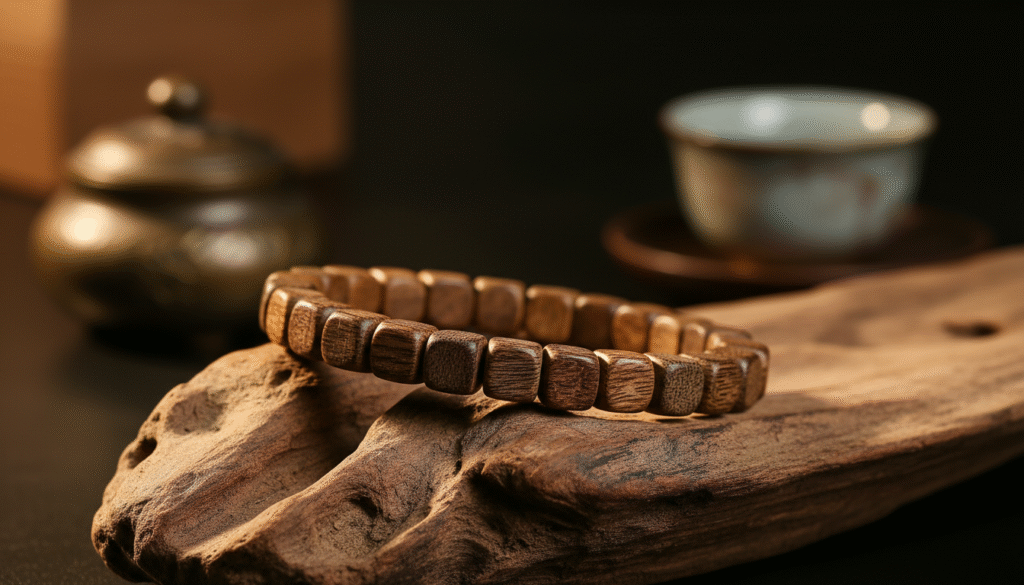
Many friends ask me, what is “top-tier oiliness”? Don’t just listen to theories; look at the evidence. Under natural light, this bracelet displays a breathtaking deep reddish-brown resin overflow, as if the oil inside is “flowing” outward. This isn’t achieved by post-polishing; it is a physiological characteristic of the material itself being saturated to the limit. Looking closer, the resin glands are clear and irregularly distributed—the most hard-core ID card of natural wild material. The fine, dense oil lines interweave into a wild “tiger skin” texture. I have only seen this specific texture on old materials from the border of Guangdong and Hainan years ago. Every flat surface of these square beads acts as a window, revealing perfect resin formation inside without any blind spots. This texture suggests a harsh growth environment, where only century-old Chinese native Kynam can exhibit such vibrant vitality on a geometric cut.
Square Bead Craftsmanship: A Boldness Rooted in Quality
In the Kynam circle, there is a saying: “treasure the wood like gold.” Usually, beads are made round to preserve as much weight as possible. But this bracelet chose the square cut. This choice reflects extreme confidence—because square edges most severely test the “flesh” of the wood. If the oil content isn’t high enough, the edges will not only fray but may even crack. Yet, these beads have edges as smooth as jade and lines as sharp as iron, indicating the resin has completely petrified the wood fibers to a “rhino horn” hardness. Back then, cutting this grade of Kynam into dice beads seemed like a “prodigal” waste of material, but it was actually a precise strike at modern collection aesthetics. It sheds the old-fashioned look of traditional beads, exuding a calm nobility on the wrist. This “squareness” reveals the true confidence found only in top-tier incense materials.
Scent Profile: The Explosive Power of “Coolness” and “Creaminess”
Visuals are the skin, but the scent is the soul. The aroma of this Chinese Kynam has distinct national characteristics. When smelled raw, an explosive cooling penetration hits the crown of the head. This “coolness” has a clear minty feel, which is a key signal for identifying high-level Chinese Kynam (suspected Hainan species). Then, triggered by body temperature, rich honey sweetness and floral notes emerge—sweet but not cloying. The best part is the base note: a heavy, milky fragrance as thick as condensed milk that lingers at the tip of the nose. [Expert Private Note]: I’m in no rush to sell this piece, as it records the most glorious era of Chinese Agarwood. If you are an aficionado obsessed with scent, or want to experience the legendary “Hainan Coolness,” feel free to click my profile and send me the word “Scent.” Let’s close the door and light a burner in my tea room—only talking about the aroma, not the business. After all, too few people truly understand the story behind these beads.

FAQs
Q. Why do square Kynam beads have more collection value than round ones?
A. The core lies in rarity and the wastage ratio. Making square beads requires cutting away more precious Kynam edges, resulting in a high loss rate. Only top-tier large logs with excellent oil and tight structures (like old Hainan or Guangdong material) dare to be cut this way. Therefore, square-cut finished products are extremely rare on the market, making them priceless unique collectibles.
Q. How can I visually distinguish this Chinese Kynam from Vietnamese Nha Trang material?
A. While both are top origins, the unique deep reddish-brown oil lines and wild tiger-skin patterns are distinct to this Chinese Kynam. In contrast, Nha Trang material often has softer, finer oil lines. Furthermore, this visual ‘oil overflow’ combined with the olfactory ‘explosive coolness’ is the genetic code of typical Chinese (especially Hainan-系) Kynam.
Q. With such strong oil overflow, what should I notice while wearing it?
A. This is exactly what makes it precious. The best maintenance is regular wearing; body temperature activates the resin. However, keep it away from chemical detergents (perfumes, hand soaps) and avoid long-term exposure to intense sunlight. While the square edges are hard, avoid heavy collisions with hard objects to maintain the perfect geometric lines.