Out-of-Print Chinese Kinam: This ‘Black Oil Bamboo Rhyme’ Reveals the Ultimate Form of Agarwood
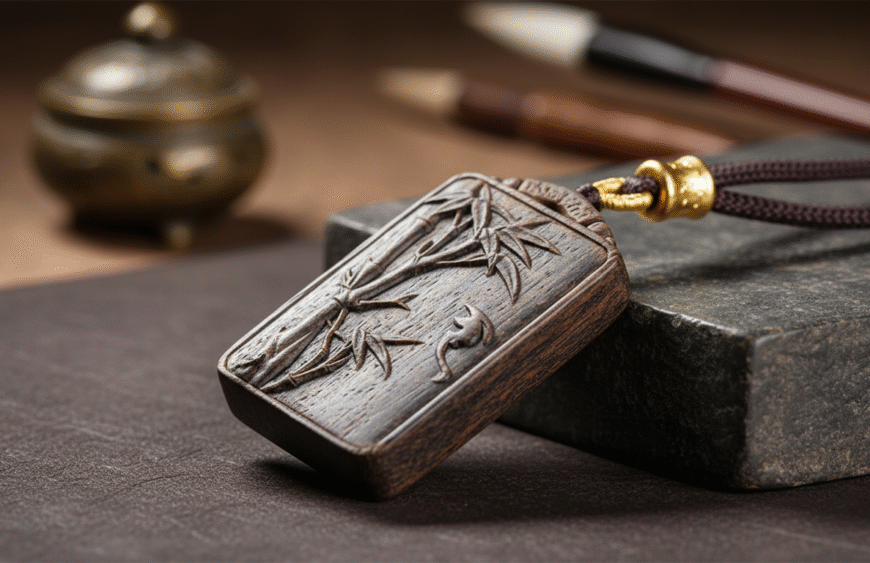
In the world of Agarwood collection, there is a saying: ‘It takes three lifetimes of merit to encounter Kinam in this life.’ Having been in this industry for over twenty years, I have sought fragrance in the deep mountains of Nha Trang, Vietnam, and tasted scents in Japanese Kodo clubs. But to be honest, the thing that always makes my heart skip a beat is that touch of ‘Chinese Kinam’ from our ancestral lands. I remember ten years ago, an old incense farmer living in seclusion in Dianbai, Guangdong, sighed to me: ‘Top-tier domestic Green Kinam is as black as ink and as soft as fat; it is the last breath of primordial energy left by nature to the mountains.’ After years of searching, when I finally touched this ‘Black Oil Bamboo Rhyme’ pendant, those words from my memory instantly became tangible. This is not just a piece of wood; it is a fragment of sealed history and physical proof of Agarwood’s evolution to its ultimate form. Today, I don’t want to talk only about cold parameters; I want to talk to you as a collector about the private story of rebirth, integrity, and legacy behind this ‘Bamboo of Peace’ piece.
The Origin: Solidified Black Gold, the Sarira of Time
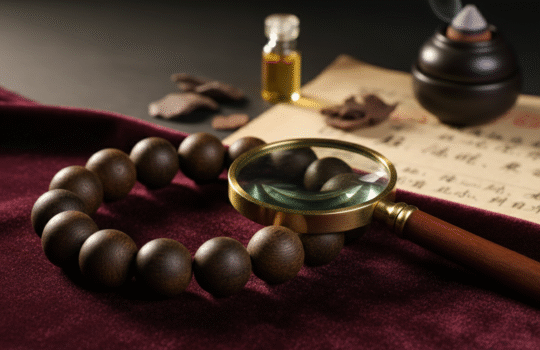
The most shocking aspect of this pendant is its almost overflowing ‘Black Oil Crystallization.’ In the eyes of experts, this color is called ‘Mo Chi’ (Ink Pond), symbolizing an oiliness as rich as thousand-year-old ancient ink. Honestly, the moment I saw the actual piece, I subconsciously held my breath—this is not ordinary pigment precipitation, but a miracle where the incense tree, after being struck by lightning or bitten by insects, underwent centuries or even millennia of self-healing. It layered its resin ‘blood’ until it completely replaced the wood fibers. Picking it up, your fingertips do not feel the dryness of wood, but rather a heavy sinking sensation and a waxy coolness similar to congealed fat. This is the legendary ‘Sinking-grade’ physical texture that is so hard to find! It reminds me of the description of top-tier Kinam in ancient texts: ‘Shaved, it forms curls; kneaded, it forms pills.’ This deep black is a medal of honor from the gamble between time and trauma, representing the dominant aura that only truly out-of-print Chinese wild Kinam can present. Owning it, you do not just own fragrance, but a piece of solidified time.
Character: Cultivation on the Blade, the Rebirth of Bamboo Rhyme
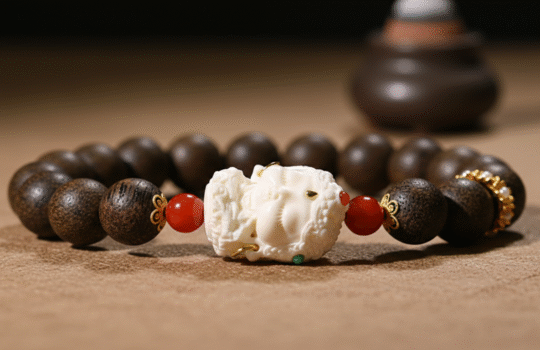
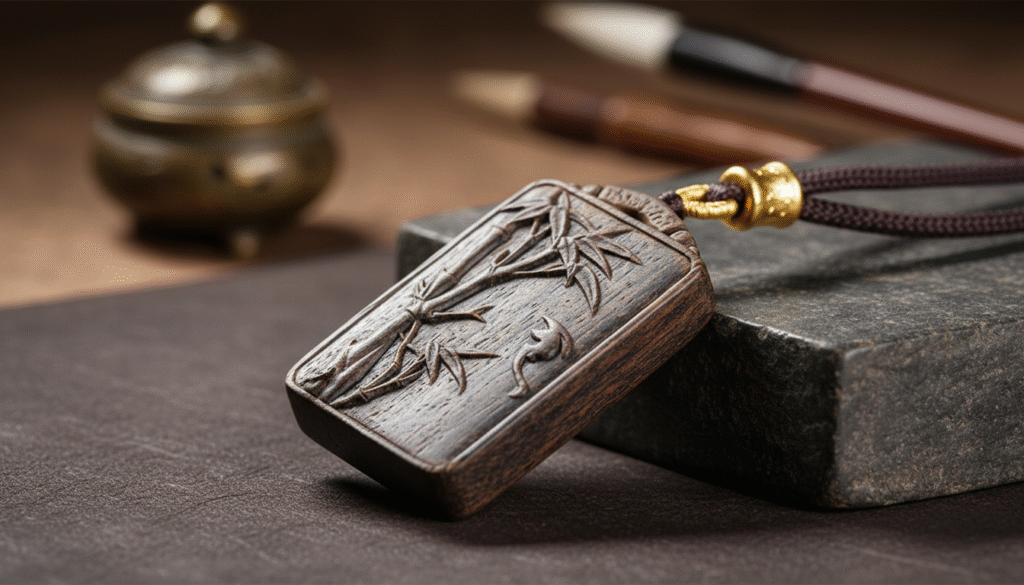
Kinam is precious also because of its ‘Soft Gold’ texture; it is so soft and sticky that ordinary blades sink into it upon contact. To use a knife on this ‘Bamboo of Peace’ is no different from carving flowers on tofu—it requires not only exquisite skill but also immense focus. I have personally seen countless precious raw materials wasted due to careless carving, but this master craftsman clearly understood the Dao of ‘going with the flow.’ He followed the natural ‘oil line’ of this piece of Kinam, skillfully carving bamboo with vigorous nodes. In Chinese culture, bamboo is a symbol of a gentleman—’having nodes before emerging from the soil, and remaining humble even when reaching the clouds.’ This vigorous bamboo rhyme forms a perfect intertextuality with Kinam’s tragic aesthetic of ‘becoming fragrant through injury’: only by experiencing the deepest pain (resin formation) can the hardest bones (bamboo nodes) grow. Paired with a minimalist 18K gold setting, this is not just an accessory, but a ‘motto’ worn on the chest, constantly reminding the collector: ‘Uncorrupted by wealth, unyielding to force.’
Spirit: The Soul Ferry of the Three-Stage Fragrance
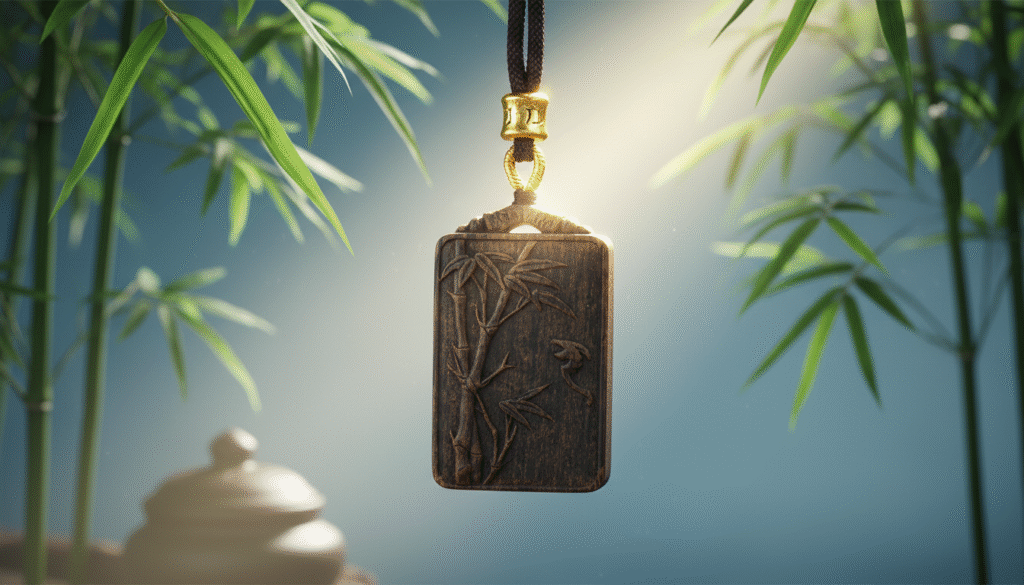
If the visual is its body, then the fragrance rhyme is its soul. This authentic-region Chinese Kinam possesses a ‘Cool, Sweet, and Milky Rhyme’ that can penetrate time and space. At first sniff, it is a ‘nose-piercing coolness’ similar to a blend of mint and deep-mountain morning dew, instantly opening the five senses and clearing the mind—this is the unique explosive power of Chinese Kinam. Next, body heat warms the oils, and the middle notes reveal a rich honey-sweetness that is not cloying but extremely enveloping, as if one is standing amidst a hundred flowers. But the most intoxicating part is the base note: a mellow and warm almond-milk fragrance (milky scent) that lingers long and deep, like an old friend’s whisper in your ear. This ‘Cool, Sweet, Milky’ three-stage experience is something no synthetic fragrance can simulate. Kinam chooses its owner just as people seek Kinam. If you are also looking for an heirloom that can converse with your soul, feel free to click below or private message me with ‘Appraisal.’ I will provide a one-on-one analysis of whether this ‘Black Oil Bamboo Rhyme’ aligns with your aura.
FAQs
Q.Why do experts say that “Black Oil” is an unparalleled existence in Chinese Kinam?
A.Great question! “Black Oil” represents the ultimate state of Oud resin transformation, where the resin content is so high that it completely saturates the wood fibers, appearing as a black paste. In Chinese production areas (such as Hainan and Guangdong), due to almost destructive harvesting over the past century, wild Kinam that can reach this “Full Black Oil Crystallization” and “Sinking” density has become as rare as phoenix feathers. It is a non-renewable resource where “every piece used is one less piece in existence,” recognized as a hard currency in collector circles.
Q.Does the carving of “Bamboo of Peace” increase or decrease the value of Kinam?
A.This is a very professional question. In Kinam carving, the focus is on “utilizing the natural shape” and “preserving the weight.” The bamboo node theme not only carries auspicious meanings (rising step by step, peace), but its rectangular structure also best preserves the integrity of the Kinam raw material, minimizing the loss of expensive material (remember, Kinam is sold by the gram!). At the same time, the texture of bamboo nodes can cleverly hide natural undulations, allowing the work to retain the wild beauty of the material while possessing the artistic quality of scholar’s pieces, achieving a double premium in both material and artistic value.
Q.How should I enjoy the “Cool, Sweet, and Milky note” of this pendant after acquisition?
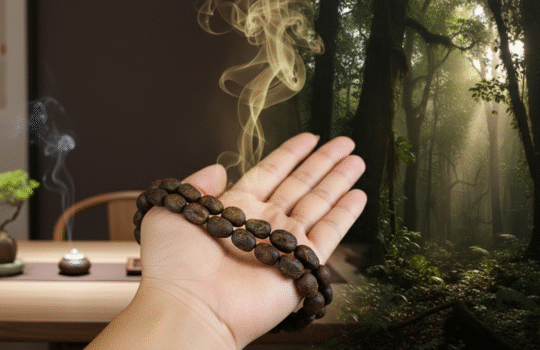
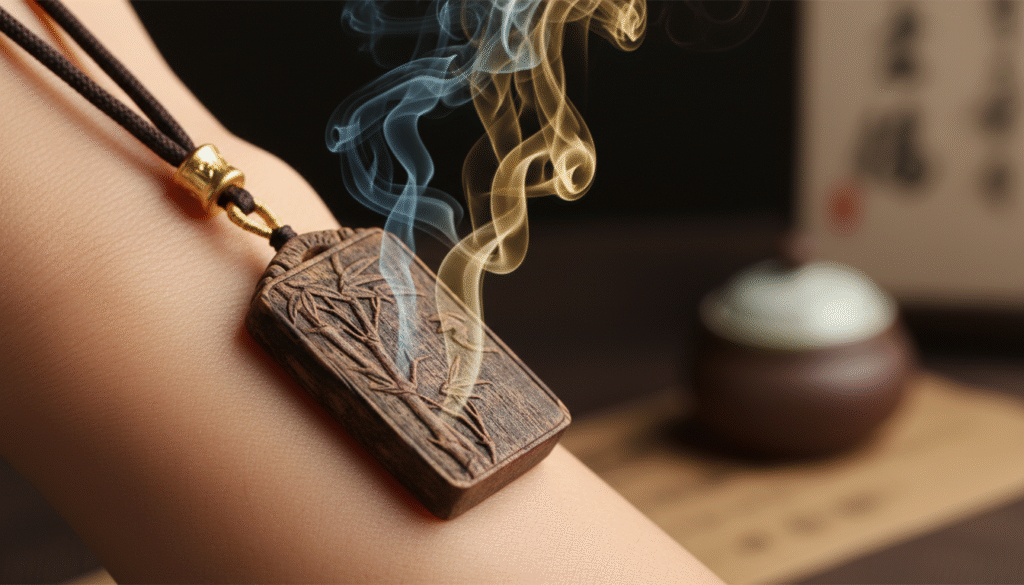
A.The best way to enjoy it is actually very simple—”wear it close to your skin.” The human body’s constant temperature of about 37 degrees Celsius is the best “incense burner” for Kinam. When you first put it on, you can take a deep breath to feel the refreshing “cool note”; after wearing it for half an hour, as the oils volatilize with the heat, you can lower your head to smell your collar and feel the surrounding “honey sweetness”; when your mind calms down or during meditation, that long-lasting “milky” base note will naturally emerge. You can enjoy the highest levels of the Way of Incense without needing an open flame.