Inherited Masterpiece: Why This Hainan Sinking-Grade Chinese Kinam Buddha Pendant is Called ‘Hard Currency’?
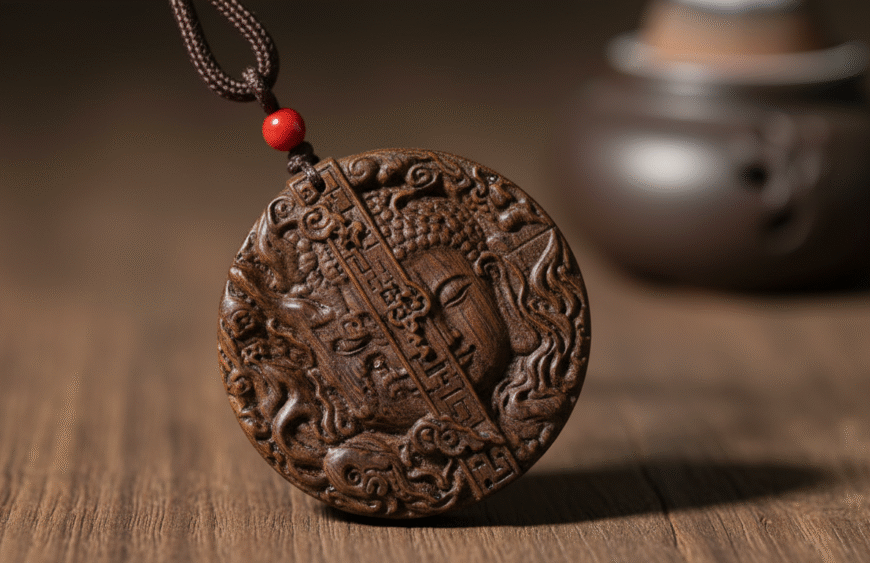
Having spent over twenty years in the agarwood industry and handled tons of materials, only the rare ‘Chinese Kinam’ truly makes my heart race. I remember when this piece was first acquired; it was brought out from a 1,600-meter altitude no-man’s land by Old Chen, one of the last ‘scent hunters’ in the Wuzhi Mountains, who risked mudslides after a typhoon. Mud-stained and trembling, he unwrapped the red cloth layers, and at that moment, the whole room turned cool. Today, I won’t bore you with parameters. I want to spotlight this newly inventoried ‘Chinese Kinam Handcrafted Zen Buddha Collection-Grade Pendant’ from the heart of Hainan’s Wuzhi Mountains. Let’s discuss what ‘sinking on sight’ truly means and the legendary ‘living oil’ of the incense world. In today’s capital winter, this is a rare asset-class artwork that transcends economic cycles.
Visual Impact: ‘Living Oil’ and Sinking-Grade Density from the Wuzhi Mountains
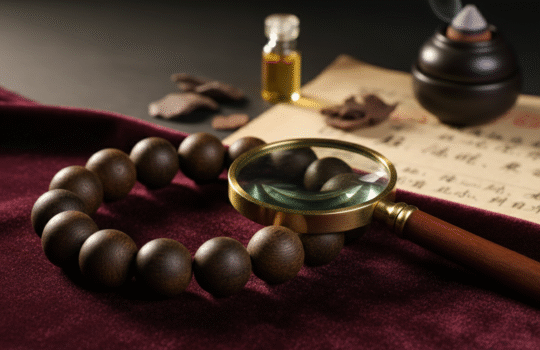
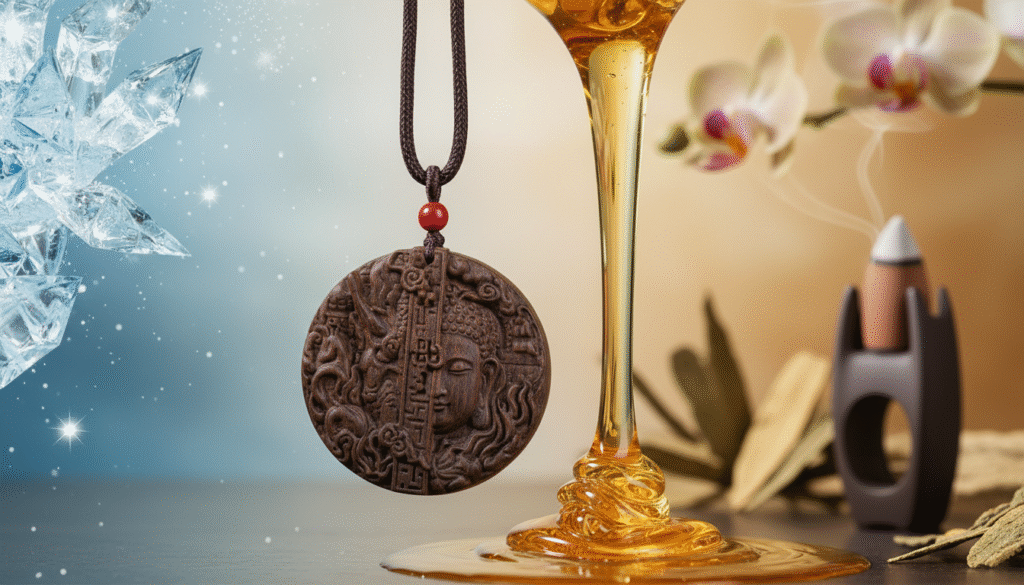
People often ask what top-tier Kinam looks like. This pendant is the answer. Harvested from the core old-growth forests of Hainan’s Wuzhi Mountains, its unique micro-environment created a non-replicable resin structure. What fascinates me most is the texture—not a superficial gloss, but a deeply restrained and full-bodied quality. Under natural light, the deep color seems to swallow the light. This is typical ‘sinking-grade’ quality with extreme density. Even more remarkable is the grain: high-density oil lines are clearly visible, flowing through the wood fibers as if alive. This is the ‘living oil’ feature experts talk about. These oil lines aren’t dead or dry; they look soft, waxy, and moist, as if they might overflow at any moment, yet they feel as warm and smooth as jade. This visual impact is a natural miracle that no manual manipulation can simulate.
Olfactory Feast: An Explosive Scent Journey from Frosty Cool to Warm Honey
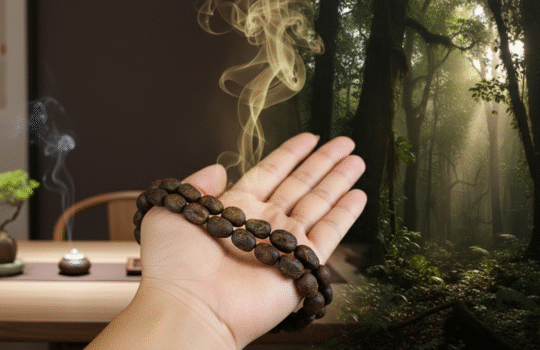
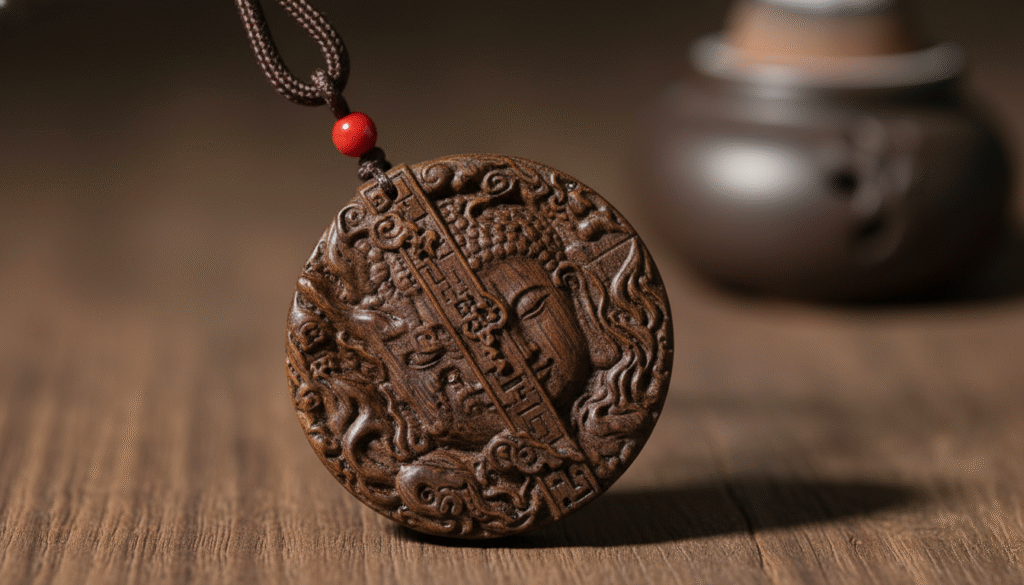
If the visual is the first impression, the scent is the soul’s capture. Hainan Kinam stands at the top of the hierarchy because of its domineering ‘explosive power.’ When you bring it close to your nose, an intense coolness instantly pierces through, reaching the crown of your head. This is the century-old chill accumulated from high-altitude Hainan old-growth wood, transporting you to the misty peaks of Wuzhi Mountain. Then, this coolness softens into a rich, warm honey scent mixed with top-tier milky notes—sweet but not cloying, as mellow as aged wine. The base note evolves into a long-lasting, faint floral and medicinal fragrance with rich layers. Its penetration is so strong that when worn around the neck, the body’s warmth gently coaxes a subtle fragrance that accompanies you all day. This is the true scent that ‘nourishes the person.’
Craftsmanship and Aesthetics: Primitive Beauty Under Minimalist Accents
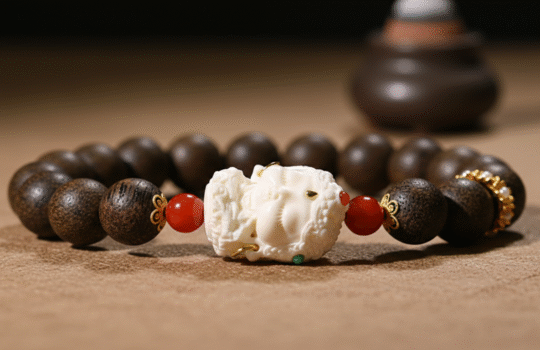
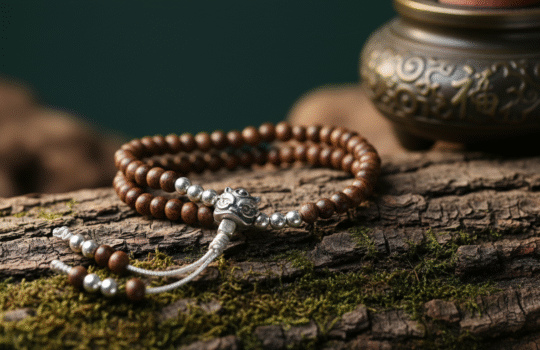
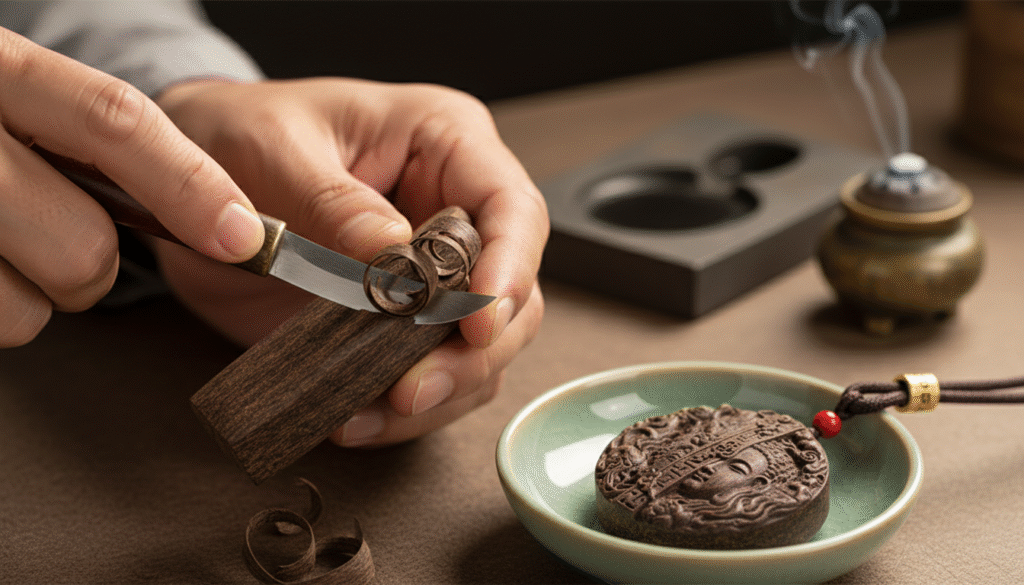
As the saying goes, ‘a good horse deserves a good saddle,’ but with top-tier Kinam, complex decoration is redundant. This pendant is hand-carved with a Zen Buddha theme. The lines are smooth and natural, and the Buddha’s face is compassionate without any trace of artificiality, showing high artistic attainment. Before touching the wood, the master carver from Suzhou stared at this material for three days, fearing he would fail this divine wood that gathered the essence of heaven and earth. Ultimately, he chose ‘subtraction,’ following the flow of the resin to let the Buddha ‘grow’ out of the wood. We specifically chose a minimalist accessory scheme. Why? Because the raw Hainan Kinam is the protagonist. Simple knots and accents highlight its natural, primitive beauty rather than overpowering it. This ‘great skill appearing clumsy’ design caters to the aesthetics of senior collectors and business elites—understated and restrained, yet instantly recognizable as priceless to those in the know.
Market Insights and Collector Invitation: More Than a Collection, It’s a Circle
As an exporter, I must be honest: the stock of domestic Chinese Kinam, especially top-tier old material from Hainan, is depleting at a visible rate. In the current international collection market, Chinese Kinam with such high resin content, clear origin (Wuzhi Mountain/Jianfeng Ridge area), and exquisite carving is an absolute ‘hard currency.’ It possesses strong risk-resistance. Regardless of economic fluctuations, the value logic of top-tier scarce resources never changes. This is not just an accessory to wear, but ‘liquid gold’ for your safe. For senior incense collectors and high-end art investors, owning a Hainan sinking-grade Kinam is not just a symbol of wealth, but an entry ticket to an elite circle. [Expert Message] Scent meets its soulmate, and tools choose their masters. If you are interested in this ‘Inherited Masterpiece’ or simply want to avoid ‘tuition traps’ in the market and discuss the real Hainan old-material market, welcome to click below or DM me with the word ‘Incense’. I have 20-year-old Sheng Puerh tea ready in my tea room. We don’t have to talk business—I’m just waiting for those destined to appreciate these mountain-matured years together.
FAQs
Q.What is the main difference between Chinese Hainan Kinam and ordinary agarwood?
A.The core lies in ‘resin activity’ and ‘scent layers.’ Ordinary agarwood resin is mostly solid with a singular scent; however, Chinese Hainan Kinam possesses a unique ‘soft silk’ structure with semi-fluid resin (living oil). It curls when shaved, tastes numb and cool, and its aroma has explosive power with three distinct stages (cool, honey-like, milky, and medicinal).
Q.What is ‘Sinking Grade,’ and why does it determine the price?
A.’Sinking Grade’ refers to agarwood with a resin content so high that its density exceeds that of water, causing it to sink naturally. This is the most objective metric of quality. For Kinam, reaching sinking grade signifies extreme resin saturation and great age, serving as the fundamental divide between investment-grade collections and entry-level pieces.
Q.What maintenance is required for daily wear of a Kinam pendant?
A.Kinam resin is highly active. While more durable than ordinary agarwood, it should still avoid contact with chemical detergents (like soap or body wash) to prevent resin corrosion. Regular wearing allows body temperature to ‘nourish’ the scent. When not in use, it is recommended to store it in a sealed glass or porcelain jar with a small cup of water nearby to maintain humidity and its ‘living oil’ state.