Guangdong Green Kynam Records: The Absolute Ancestral Source of Guanxiang, Revealing the “Ultimate Dream” of this 108-bead Freeform Strand
Having spent over thirty years in the world of incense, handling countless pieces of agarwood, I’ll be honest—there aren’t many materials left that make my heart skip a beat. But whenever “Guangdong Green Kynam” (Guangdong Green Kynam) is mentioned, I recall the Compendium of Materia Medica describing Guanxiang: “scent is clear and sweet; adding silver flakes makes it even brighter.” Did you know the name “Hong Kong” (Fragrant Harbor) actually originated from the port that once shipped this top-tier Guanxiang? Sadly, after centuries of over-exploitation, wild old-growth materials from core areas like Dalingshan are now as rare as wild giant pandas. Today, with a sense of reverence, I’m showcasing my “bottom-of-the-chest” treasure—a 108-bead freeform strand. It’s not just a product; it’s an olfactory heritage “rescued” from the depths of Lingnan’s red soil, the “ultimate dream” forged by a century-long romance between time and timber. Sit tight, friends, let’s savor this true “National Fragrance.”
Visual Identification: The “Soft Silk” Miracle Born of Lingnan’s Red Soil
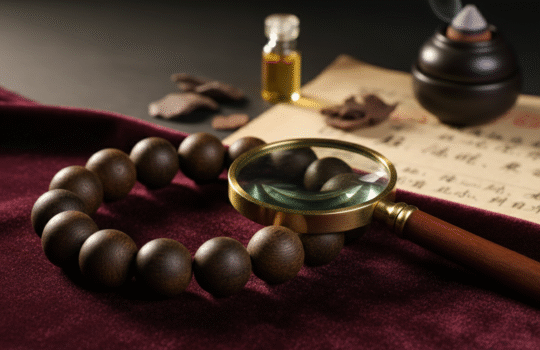
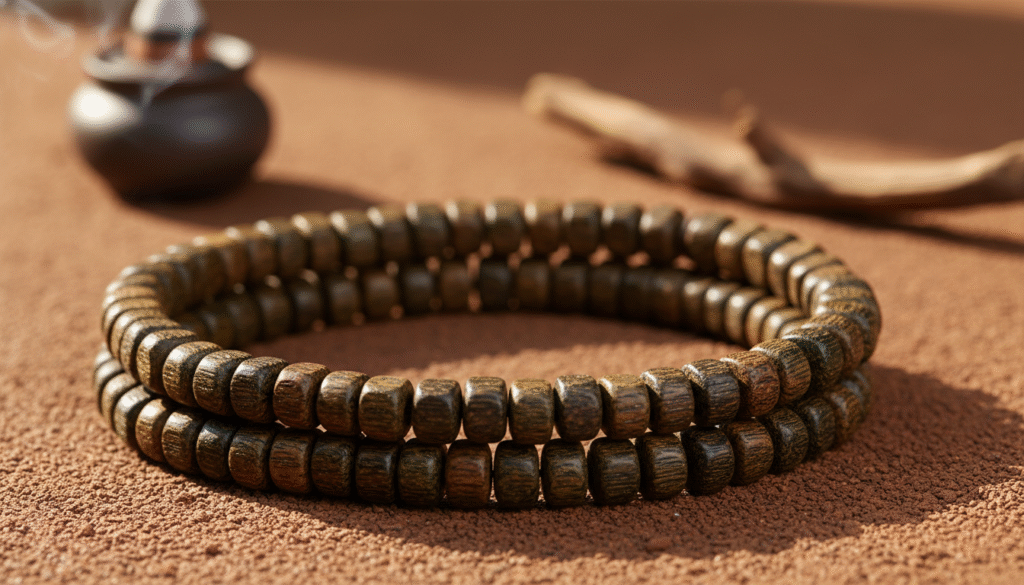
When dealing with agarwood, especially the long-extinct Guangdong Green Kynam, the first thing to look for is the “Aura.” Under natural light, these beads look completely different from the dryness of ordinary agarwood. The oil lines are deep and fluid, typical of the Guangdong “Soft Silk” texture. This is thanks to the unique humid subtropical climate of coastal Guangdong and its iron-rich Red Soil (Red Soil). The resin isn’t static; it looks as if it’s still breathing and flowing within the grain. Each bead’s color is deep and oily, with the wood and resin perfectly integrated after a century of maturation. This isn’t just wood; it’s a healing balm secreted by the tree after enduring storms and insects, condensed into amber-like tears deep underground. This level of “Soft Silk” is becoming rarer by the day.
The Way of Craftsmanship: The “Freeform” Philosophy of Following Nature
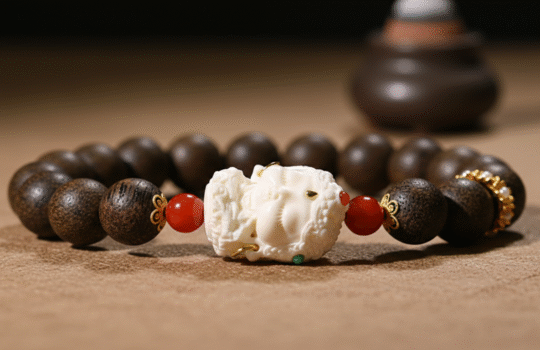
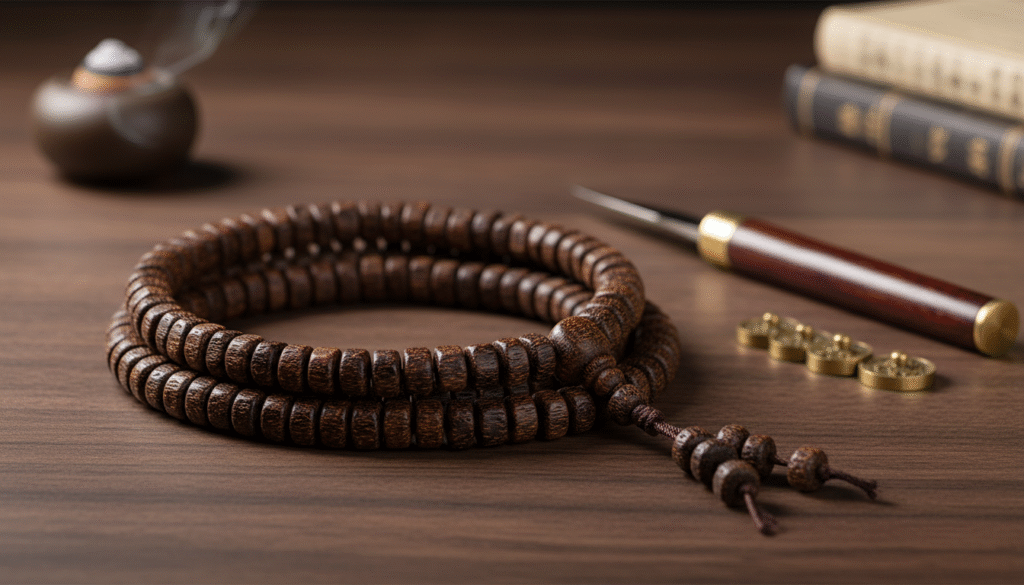
In ancient times, harvesting incense was sacred, and making it required even more reverence. What moves me most about this piece is its insistence on the Natural Shape polishing process. Many don’t understand, thinking freeform is to save material, but it’s actually to “preserve the soul.” When facing wild old material worth over ten thousand per gram, grinding away the precious resin layer just to achieve an industrial perfect sphere is a sin! This strand removes the useless white wood while largely preserving the original material’s thickness and natural cavities. Running your fingers over the beads, you can feel the rhythmic texture—the marks carved by nature itself. For true collectors, this imperfection is the highest form of aesthetic connection between past and present—because it is unique and irreplicable.
Olfactory Feast: The “Minty Coolness” Piercing Through Centuries
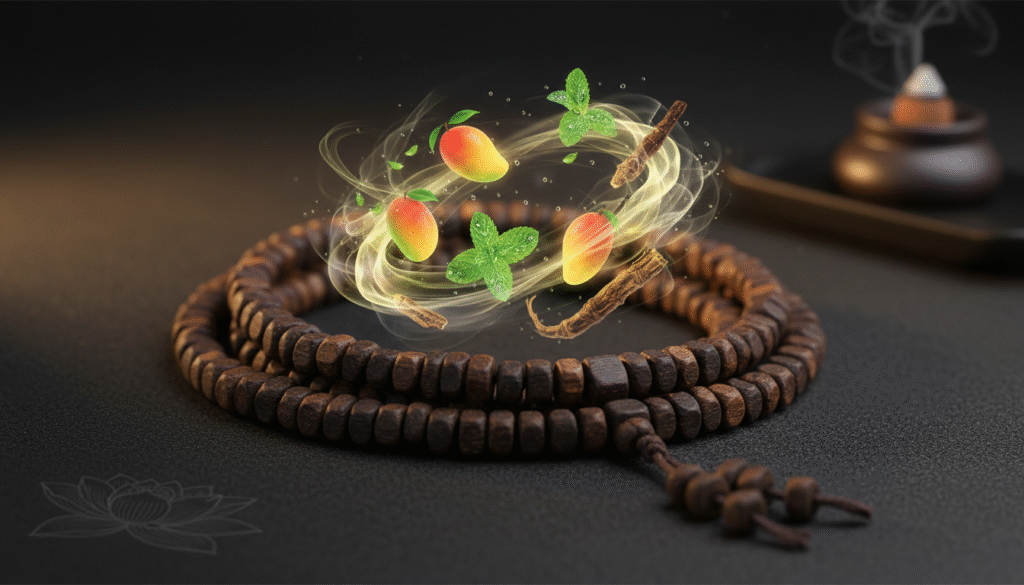
The reason Guangdong Green Kynam became a legend lies in its irreplicable olfactory power. Wearing this 108-bead strand, even a slight increase in body temperature triggers the scent. The initial note is a rich, honeyed fruitiness, much like the sweetness of ripe Lingnan lychees; then, the middle note explodes with a piercing minty coolness. This “coolness” is the soul of Guangdong Green Kynam, making you feel as if you are in the deep forests of Mount Luofu after rain—hitting the crown of your head and washing away worldly dust. Finally, the base note transforms into a mellow frankincense and medicinal aroma. It’s not a single scent, but a fluctuating symphony, recording the genetic code of the land’s vegetation over millennia. As old collectors say: “Once you’ve smelled Green Kynam, all other fragrances seem mundane.”
Wearing and Connection: Dissolving 108 Types of Troubles
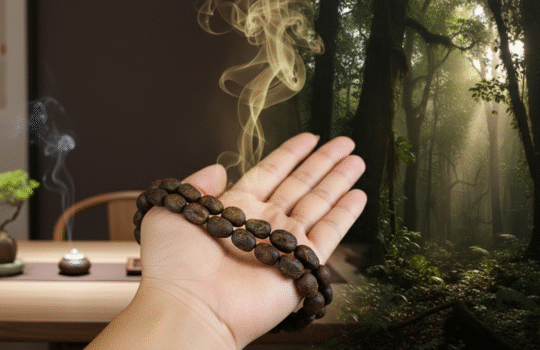
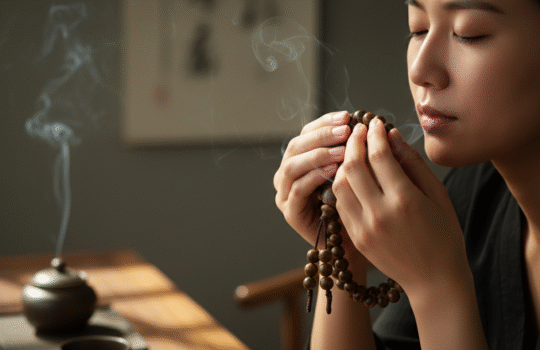
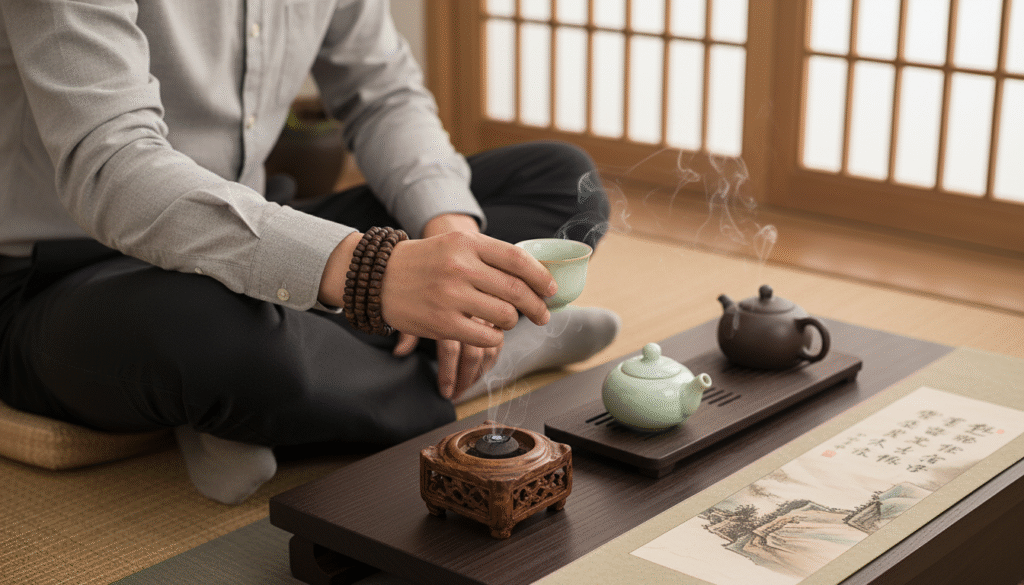
Friends often ask me: should such a legendary fragrance be kept in a Buddhist hall or worn? My answer: fine incense nourishes the person, and the person nourishes the incense. This 108-bead long design symbolizes the elimination of 108 types of afflictions. In the fast-paced world of business or city life, when you feel restless, wrap it around your wrist or hold it in your palm. As your fingertips touch the warm resin and your nose catches that stabilizing coolness, anxiety dissipates. It’s not just a top-tier accessory reflecting status, but a portable “tranquility field” connected to ancient natural energy. Currently, this is the only wild old-growth piece I have left. If you want to reclaim that long-lost peace or experience the shock of this “minty coolness” yourself, feel free to inquire below; let’s discuss the fate of this treasure privately.
FAQs
Q. What is the difference between Guangdong Green Kynam and Vietnam Nha Trang Kynam?
A. This is a very professional question. Both are top-tier agarwood, but their styles differ. The biggest feature of Guangdong Green Kynam is its superior ‘cool notes.’ The minty chill that hits the brain is highly recognizable, with strong explosive power and fast diffusion. Nha Trang Kynam usually has a more delicate sweetness. Additionally, because the Guangdong production area was developed very early, wild old-growth material is now scarcer than Nha Trang’s, giving it immense collectible value.
Q. Why aren’t these beads carved into perfect rounds? Does the freeform shape affect value?
A. Quite the opposite. In top-tier Kynam circles, ‘Quality over Craft’ is an ironclad rule. The Freeform (Natural Shape) is used to maximize the preservation of the precious resin layer (the soft silk part), avoiding grinding away priceless oil-bearing layers just for the sake of roundness. At the same weight, freeform beads often mean more original high-oil old-growth material is retained, and each shape is unique, making them artistic one-of-a-kinds with greater potential for appreciation.
Q. How should I maintain ‘Soft Silk’ textured Kynam daily?
A. ‘Soft Silk’ means the oil is abundant and active, with a relatively soft texture. When wearing, avoid chemical detergents like dish soap or body wash, and keep it away from high-heat water. The best maintenance is ‘human nourishment’—body temperature stimulates the fragrance, and long-term wear creates a beautiful patina. If there is excessive sweat, simply wipe it gently with a clean cotton cloth. Treat it like an old friend, with cleanliness and respect.