Exclusive Memoir: The ‘Life-Risking’ Journey to Nha Trang, Vietnam, to Secure This Heirloom-Grade Kynam ‘Wu Shi Pai’ Pendant
Behind every piece of top-tier agarwood lies an untold legend of the trade. This ‘Wu Shi Pai’ (Plain Pendant) you see wasn’t a simple find from a market counter; it’s a witness to a ‘life-risking’ scent-hunting journey to Nha Trang three years ago. I remember in a remote village in Khanh Hoa Province, I spent three whole days negotiating with an old local farmer named ‘Ah Fu’ for this palm-sized material. The heat was unbearable and mosquitoes were everywhere, but when he tremblingly unwrapped layers of oilcloth from an iron box under his bed to reveal a dark, iron-like piece of old-growth wood, I knew the trip was worth it. This isn’t just wood; it’s nature’s sole gift to those who persist in the dangerous rainforest. Today, as an insider, I want to talk to you about the secrets behind this piece.
Origin Unveiled: The One-in-Ten-Thousand ‘Solid’ Miracle
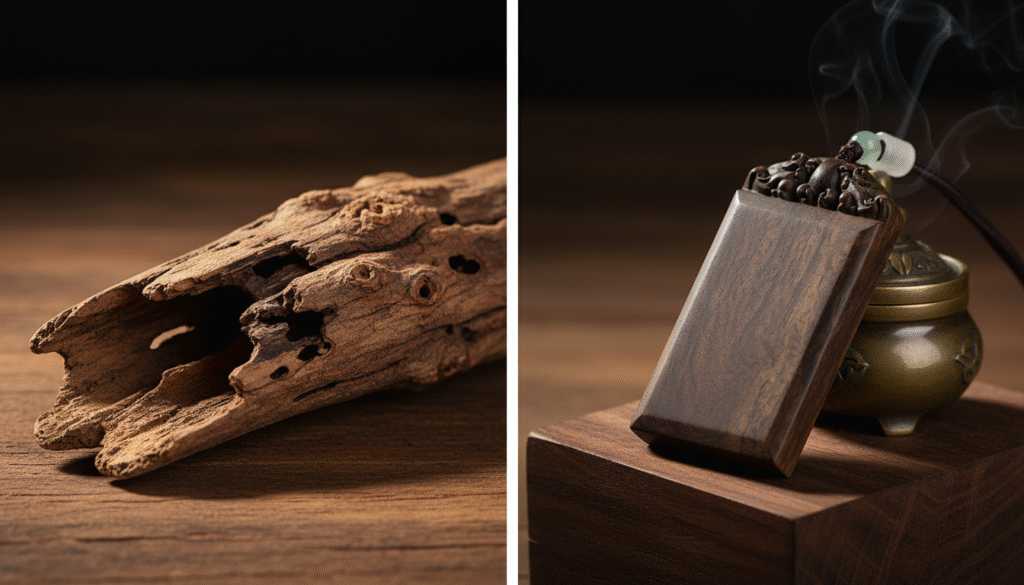
Many friends don’t understand why a ‘plain’ pendant without carvings is more expensive than a masterfully carved one. Having spent years in the agarwood circle, I must share a hard-core fact: Wild agarwood from Nha Trang, Vietnam, due to local termites, mostly results in hollow shells or insect-eaten structures. Finding a piece large enough to cut a standard ‘461’ size (4cm×6cm×1cm) with natural high resin content and a completely solid interior is like finding a needle in a haystack! This Wu Shi Pai was the ‘sole survivor’ of that batch. It has no fillings or patches to hide defects; it stands there complete and heavy. This integrity of Nha Trang old-growth material is a natural miracle beyond craftsmanship. Honestly, when we sawed the raw log, my heart was in my throat, fearing a hidden cavity. Seeing that solid core brought a rush of joy only those in the trade can truly grasp.
Visual Appreciation: Daring to be ‘Plain’ is True Confidence
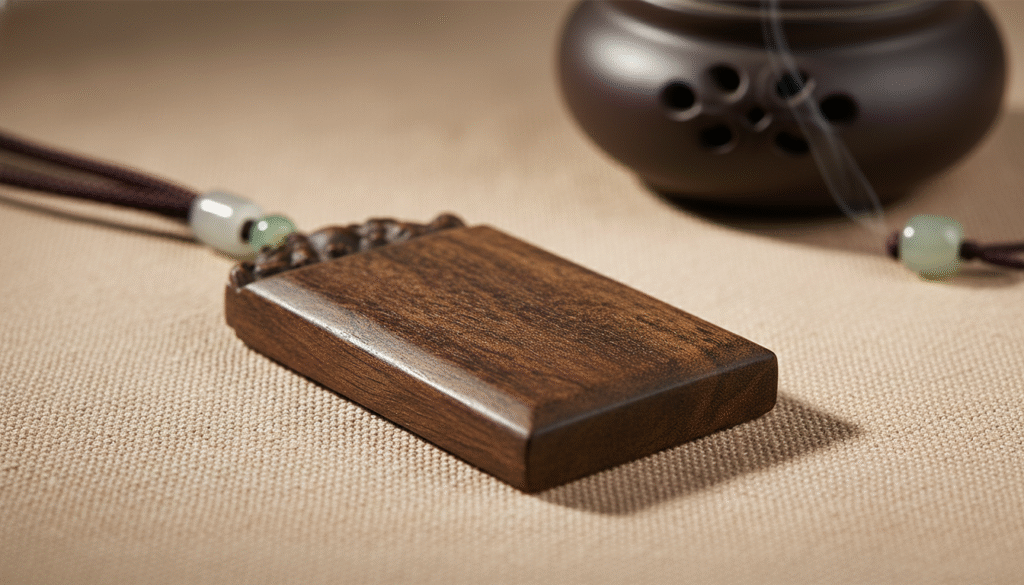
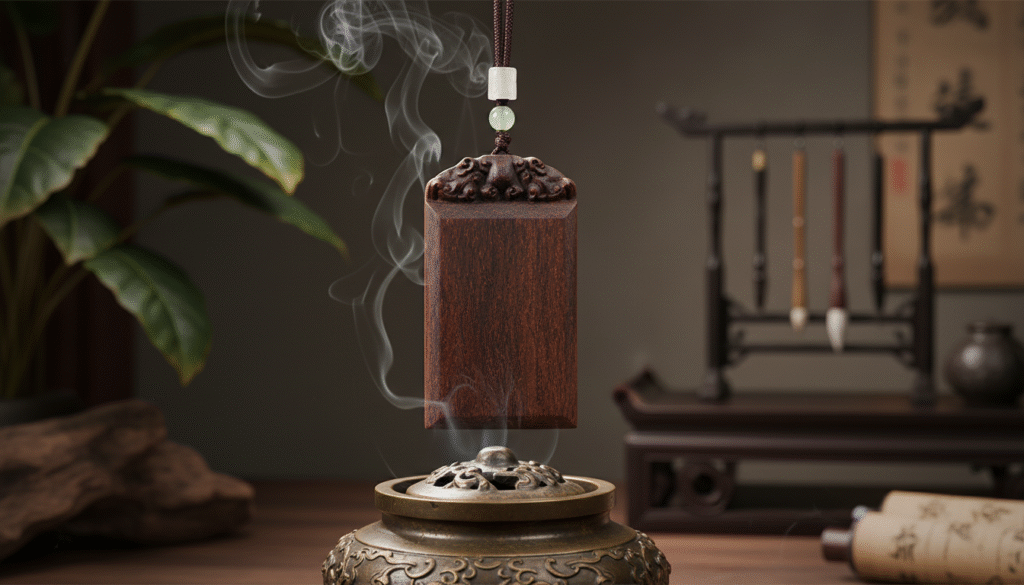
Since I went to such lengths to get the material, why not have a master carve it? My decision: keep it ‘Plain.’ Look closely at this smooth Wu Shi Pai form. The jade-like waxy texture on the surface is a natural patina formed by the rich resin of the Nha Trang old material seeping out over time. Under natural light, you can clearly see dark brown oil lines interwoven like splashed ink on a pale gold background—the grain of time itself. Intricate carvings would have severed this natural flow. This ‘plain’ look isn’t simple; it’s the ultimate confidence in top-tier raw material—only zero-defect wood dares to face a collector’s scrutiny so nakedly. Like a true master, it needs no flashy moves; its presence alone commands the room.
Aroma and Craft: Zen ‘Sealing’ the Cool-Sweet Scent
While the body is minimalist, we preserved the essence of traditional Chinese craft at the top—a fine cloud pattern bas-relief. These few strokes not only allow for a silk cord but also carry the auspicious meaning of ‘rising above the clouds.’ But the best part is the scent. After being worn for a while, the Nha Trang material warmed by body temperature releases its signature cool, sweet aroma. This chill pierces through to the mind, followed by a honey-like sweetness—the unique penetrative power of Kynam-grade old material. In the fast-paced urban life, bowing your head to smell this fragrance from the foreign deep mountains instantly calms the soul. If you wish to own a piece of ‘incense legacy’ that can be passed down for centuries, or if you are unsure about your own agarwood collection, welcome to click the link below or DM me. Whether for appreciation or a casual chat, I’m happy to share my first-hand experiences from Nha Trang. After all, agarwood is rare, but finding a kindred spirit is even rarer.
FAQs
Q. Why is it harder to make a Wu Shi Pai from Nha Trang material than a carving?
A. Great question! This is determined by the growth characteristics of Nha Trang agarwood. Wild Nha Trang wood is often ‘Chonglou’ (insect-eaten), resulting in many holes and irregular shapes. Carvings can follow the wood’s natural shape or cut away defects to create art, but a Wu Shi Pai requires a regular rectangular cut from a completely solid piece with zero margin for error. If a cavity is discovered after cutting, the material’s value drops significantly. Thus, Nha Trang wood capable of becoming a Wu Shi Pai is the ‘crown’ of raw materials.
Q. Why are the oil lines on this pendant dark brown?
A. Dark brown oil lines are typical of high-quality ‘Shujie’ (ripely knotted) old-growth material. This means the resin has undergone long-term mellowing and oxidation, becoming highly integrated with the wood fibers. Compared to younger or cultivated agarwood where the oil sits on the surface, these dark lines represent higher density and longer-lasting fragrance—they are medals of time.