[Collector’s Notes] Sinking-Grade Domestic Kynam ‘Acala’: Why I Call It the ‘Pasty’ Swan Song of Top-Tier Soft Silk?
It is 3 AM, the tea has gone cold, but the faint luster of this sinking-grade Chinese Kynam ‘Acala’ under the lamp leaves me with no desire for sleep. Honestly, after being in this industry for so long, seeing the words ‘sinking grade’ usually leaves my heart as still as water, but this particular piece has truly broken through my defenses. I remember twenty years ago at the home of a reclusive old collector in Guangdong, I saw a similar ‘Black Kynam.’ The old man’s words, ‘Soft as paste, heavy as iron,’ still echo in my ears. I didn’t understand it then, until the moment my fingertips touched this pendant; that jade-like warmth and the heavy, substantial weight in my hand made me realize: Is this not the legendary ‘Soul of National Incense’? In an era flooded with chemical fragrances, encountering such a domestic Kynam—overflowing with resin, sinking not just in water but deep into the soul—is less of a deal and more of a spiritual introduction. Today, I won’t boast about parameters. Instead, as a veteran player, I will take you on a journey through this Acala to touch that soul-shivering ‘pasty’ faith.
Visual Narrative: Not Wood, but Solidified ‘Black Gold Years’
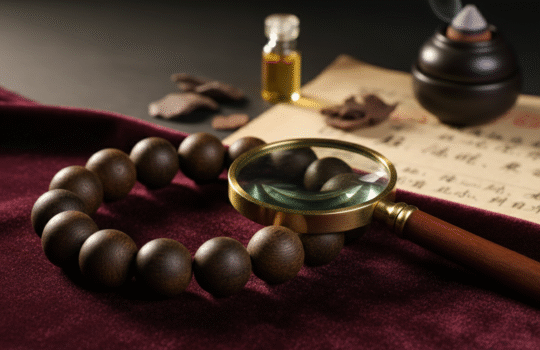
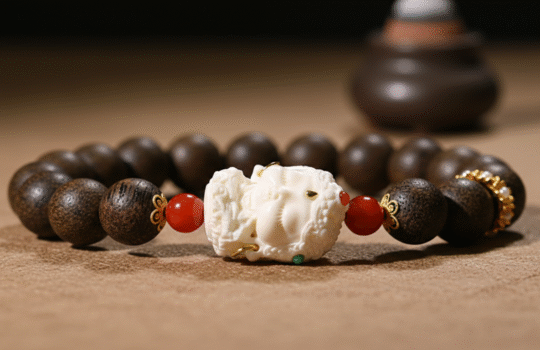
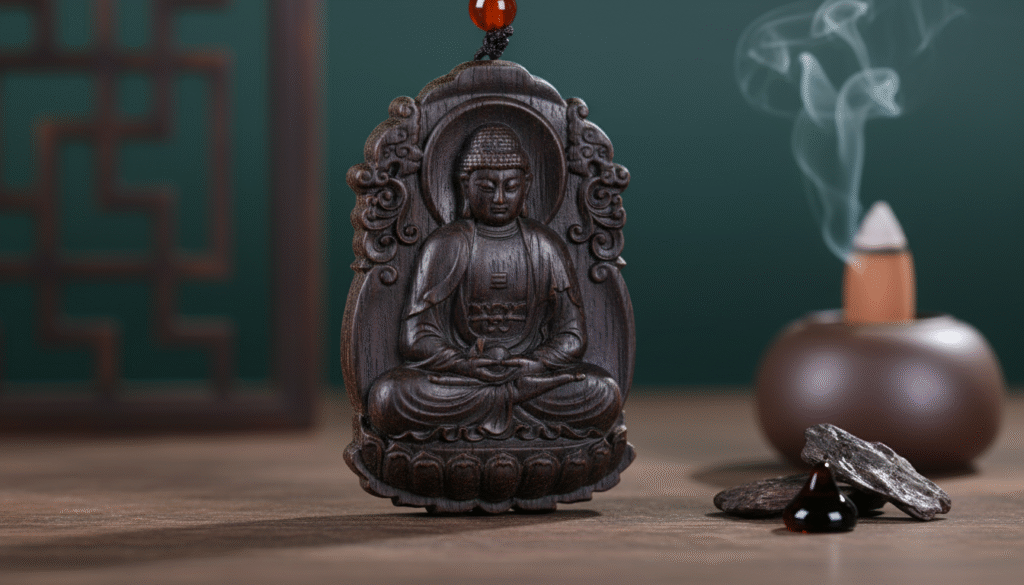
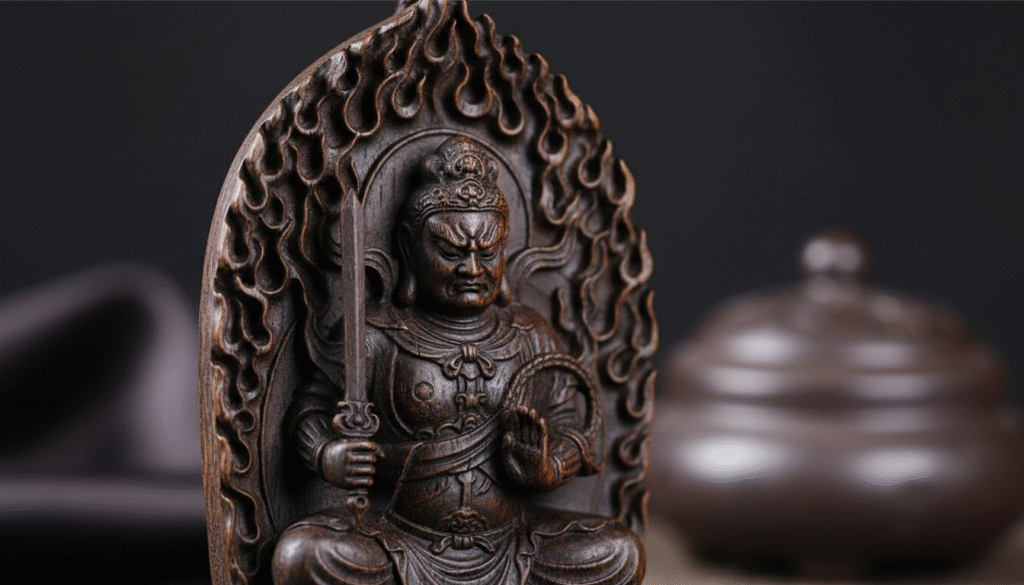
Even through a screen, you should be able to feel that overwhelming sense of ‘oiliness.’ Look closely at the image; this isn’t the dry texture of ordinary wood, but a ‘deep brown paste’ that almost looks fluid. Insiders call this the ‘highest tribute to soft-silk Kynam.’ It doesn’t resemble wood so much as a block of concentrated vintage ink or even semi-melted dark chocolate, with a faint waxy glow on the surface—ironclad proof of resin ‘overflowing’ the ducts. Many friends ask me what the charm of ‘Lufeng old material’ is? Look right here—when cut, the oil lines stretch like honey. This ‘soft, sticky, blade-clinging’ visual tension is impossible to forge. Its blackness isn’t a dead black; it’s an extreme depth created by layers of reddish-brown compressed over a century of time. Wearing it is not wearing an accessory; it’s wearing a drop of ‘congealed grease’ blended by nature over a hundred years.
Olfactory Narrative: If It Doesn’t ‘Pierce the Nose with Coolness,’ How Dare It Claim to be Domestic Kynam?
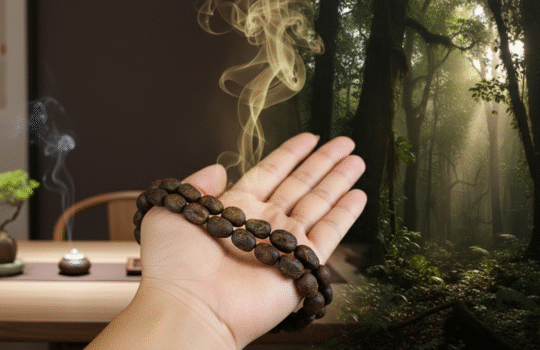
If the Hui-an series is a gentle lady, then this Chinese Kynam, styled after Hainan/Lufeng, is a dominant king. In all honesty, no heating is required; just holding it in your palm for a few seconds releases a highly penetrating ‘coolness’ that shoots straight to the crown of your head. This scent is so familiar—it’s exactly like the crisp air of Wuzhi Mountain in Hainan at 5 AM before the mist has dissipated. This ‘coolness’ is the unique DNA of our domestic Kynam, capable of instantly cutting through the cluttered thoughts in your mind. Then, as the coolness fades, a rich blend of honeyed sweetness and creaminess intertwines, like the first drop of nectar tasted after a long ascetic practice. This ‘coolness first, sweetness later’ layering is remarkably similar to the sword and rope held by Acala—first cutting through troubles, then granting peace. This is why I often recommend Kynam to high-pressure individuals; it truly uses scent to help you ‘re-tune’ your frequency.
Cultural Narrative: Using the ‘Softest’ Bone to Carve the ‘Hardest’ Spirit
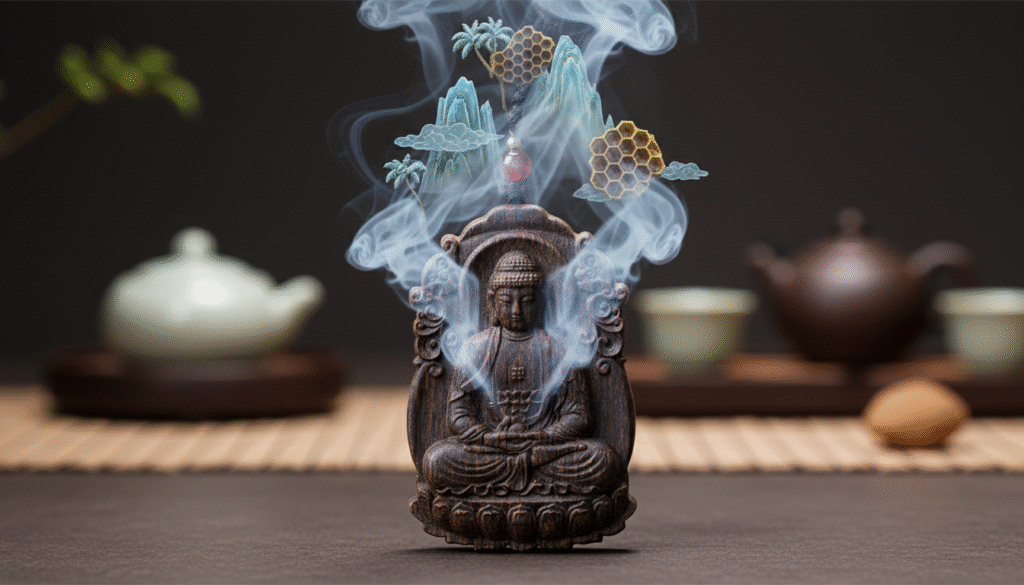
Why do I strongly advocate using top-tier ‘soft silk’ to carve the wrathful image of ‘Acala’? There is a profound Zen meaning hidden within. Kynam’s texture is soft and waxy, representing the ‘ultimate softness’; Acala’s heart is as firm as a rock, representing the ‘ultimate hardness.’ The carver did not waste a single gram of this material’s weight; the deep relief carving makes the dharma image appear exceptionally solemn amidst the surrounding resin. As the natal guardian for those born in the Year of the Rooster, Acala symbolizes the ‘flames of rationality.’ One of my long-time clients, an entrepreneur, said that when he wears this piece and touches that soft, waxy texture, his heart becomes as steadfast as the Wisdom King. This isn’t just asset allocation; it’s a psychological anchor: in a volatile world (as inclusive as soft silk), maintain an unshakeable heart.
Connoisseur’s Masterclass: The Truth of ‘Live Oil’ Under Macro and a Connection Guide
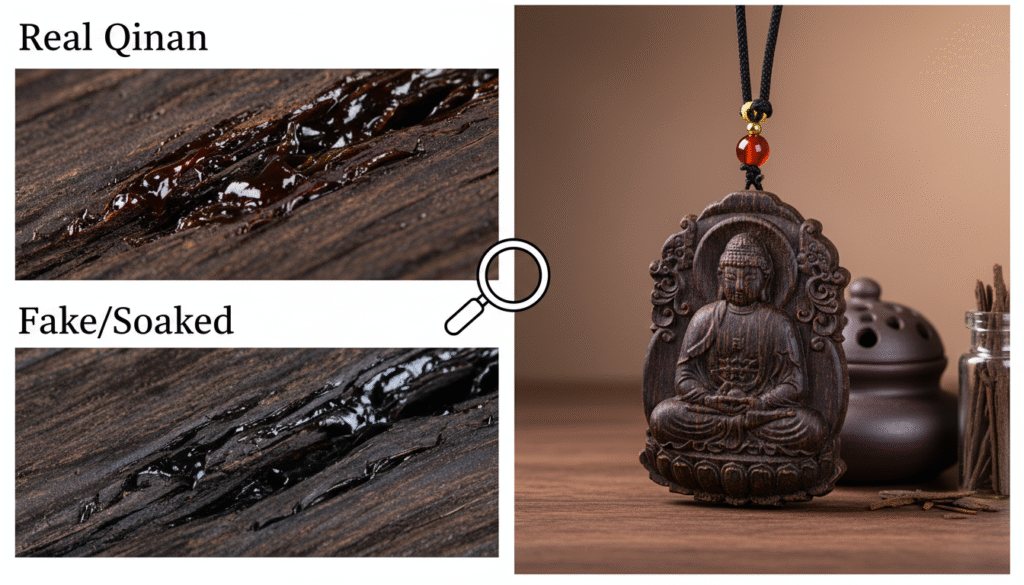
Many collectors fear buying ‘oil-soaked’ fakes. I’ll teach you my secret trick: look at the ‘vitality’ of the oil lines. 1. Prepare your tool: Use your phone’s macro mode. 2. Look for diffusion: The oil lines of fake agarwood are like rigid black dye with edges as neat as a knife cut. In this authentic piece, look closely at the detail photos; the resin diffuses in a ‘smudged’ manner, like ink on rice paper, with blurred edges where wood and oil blend into one. 3. Test the feel: Real soft silk has a subtle ‘suction’ feel when touched, which is the affinity between the resin and your skin. [Expert’s Conclusion]: For this piece, ‘those who know, know.’ It’s not a mass-produced commodity, but a unique item that can be passed down through generations. If you happen to be a Rooster, or if you’ve been feeling restless lately and need a ‘stabilizing needle’ of energy, feel free to click [Expert Consultation] below. Send me a photo of your palm or your birth details, and I’ll help you see if this Acala resonates with your magnetic field. (Even if you don’t buy, it’s great to make a friend and chat about the Way of Incense).
FAQs
Q. Old Chen, how can a beginner distinguish the ‘soft silk’ Kynam you mentioned from ordinary agarwood at first touch?
A. Great question. The most intuitive way is the ‘hand feel’ and ‘blade feel.’ Ordinary agarwood resin is solidified and hard; whereas with ‘soft silk’ Kynam, if you pinch it gently with a fingernail (if it’s your own material), it feels like pinching hard cheese or beeswax—there’s a ‘waxy strength.’ When shaved, it doesn’t produce sawdust but rather curly ‘shaved silk.’ This extremely high resin vitality is the secret behind its explosive fragrance at room temperature.
Q. Besides those born in the Year of the Rooster, who else is suitable to wear this Acala?
A. Although Acala is the natal Buddha for the Rooster, in Buddhism, he is a ‘Vidyaraja’ (Wisdom King) who specifically handles all kinds of ‘obstacles.’ So, if you are a corporate manager, a finance professional, or anyone in a high-pressure role requiring strong decisiveness, or if you feel your personal energy has been weak lately, this ‘sinking grade’ masterpiece is very suitable for grounding. It is both an asset and a psychological anchor.
Q. Is domestic Kynam (Hainan/Lufeng) still common on the market? Is it worth investing in?
A. To be honest, true wild old material from Hainan/Lufeng is essentially in a ‘swan song’ state. 99% of the market consists of grafted new material. A piece like this that can reach ‘sinking grade’ and possesses a ‘soft silk pasty’ texture is a unique item that is ‘one less every time one is seen’ in the community. From a collection perspective, its scarcity and cultural recognition currently outperform many Southeast Asian production areas; it is a true hard currency.