Collector’s Notes: Revealing the Unique Charm of this “Double Dragon Fasting” Chinese Agarwood Vintage Material from a Micro-Geographical Perspective
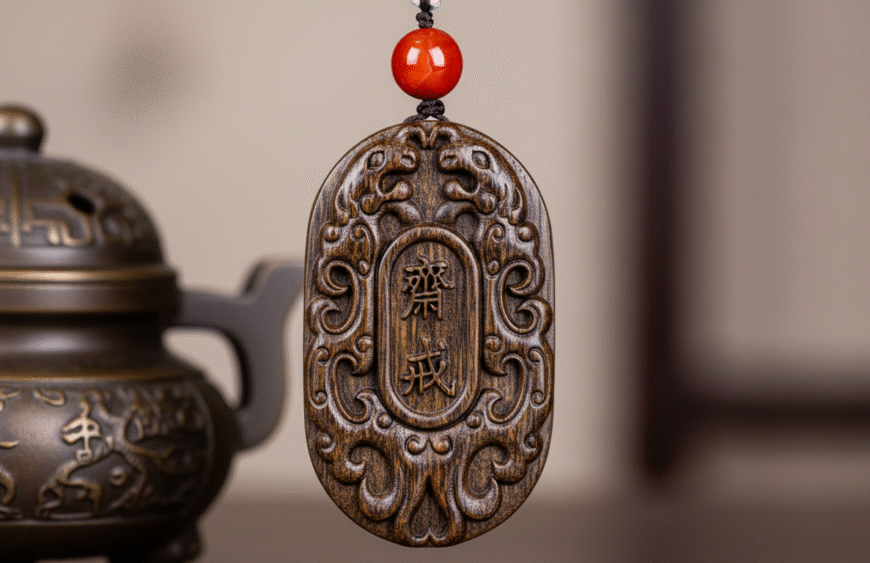
To be honest, in my twenty years in this industry, I have handled thousands of agarwood pieces. However, whenever I encounter “domestic vintage material” with a strong geographical signature, my heart still races. Today, let’s skip the obscure market trends and settle down to appreciate this “Agarwood Fasting (Zhai Jie) Pendant” that just entered my collection. It is more than just wood; it is a “geographical specimen” nurtured by southern subtropical forests, red soil, and time. Many ask me, what is the soul of “Guoxiang” (Chinese Agarwood)? This piece, with its unique oil lines and piercing cool scent, provides the definitive answer.
Mountain Spirit and Geological Codes: Microscopic Textures of Vintage Domestic Material
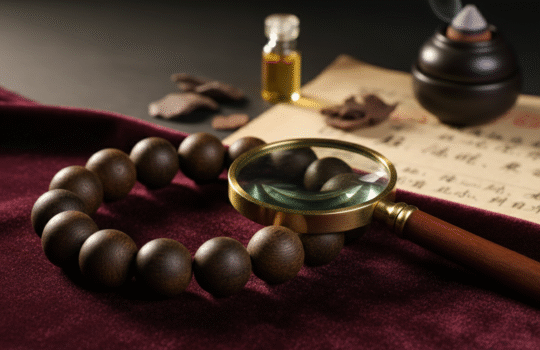
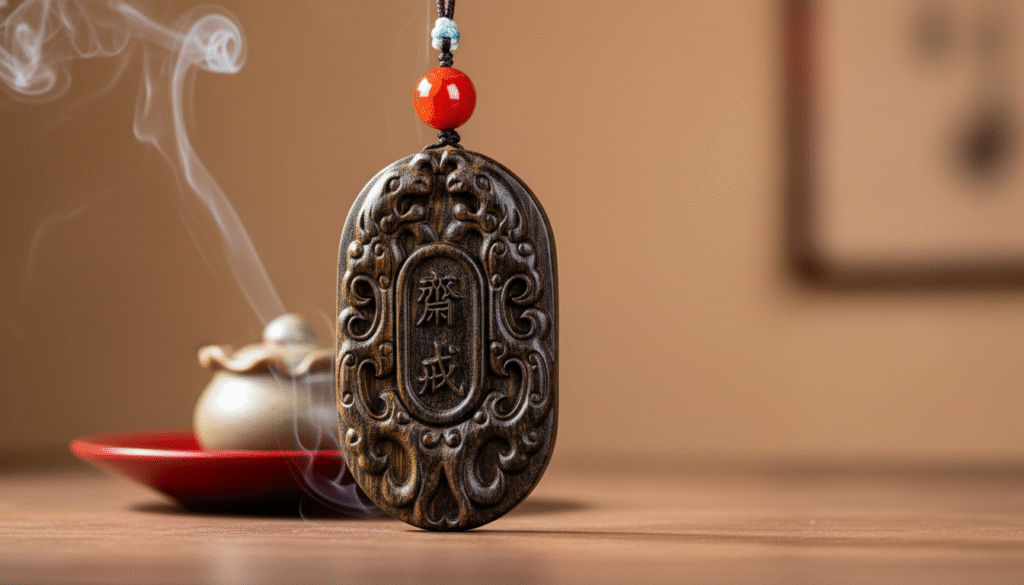
Holding this pendant, the first visual impact comes from its unapologetic wild resin. This isn’t the “dead black” created by high-pressure chemical soaking found on the market. Look closely: the resin appears as an intertwining of deep brownish-black and brownish-yellow, typical of vintage Chinese material. This texture originates from the specific subtropical monsoon climate and slightly acidic red soil of the region—constant humidity and specific fungal communities force the Aquilaria wood to secrete extremely dense resin to heal. The wood is dense with a silky, warm luster, geological proof of “Shujie” (naturally matured resin) after long-term transformation. Rotating it under sunlight, the resin seems ready to overflow from the ducts—a natural creation of specific latitudes and longitudes that new materials simply cannot replicate.
Universe at Fingertips: Tactile Interaction of Double Dragons and Elegant Intaglio
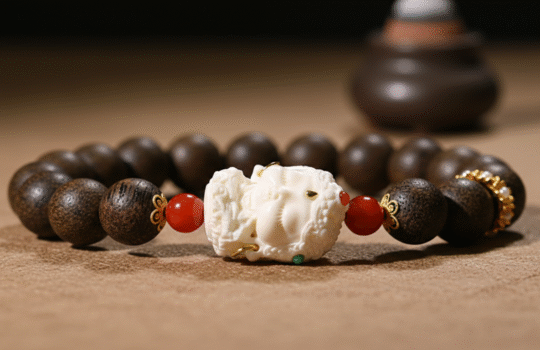
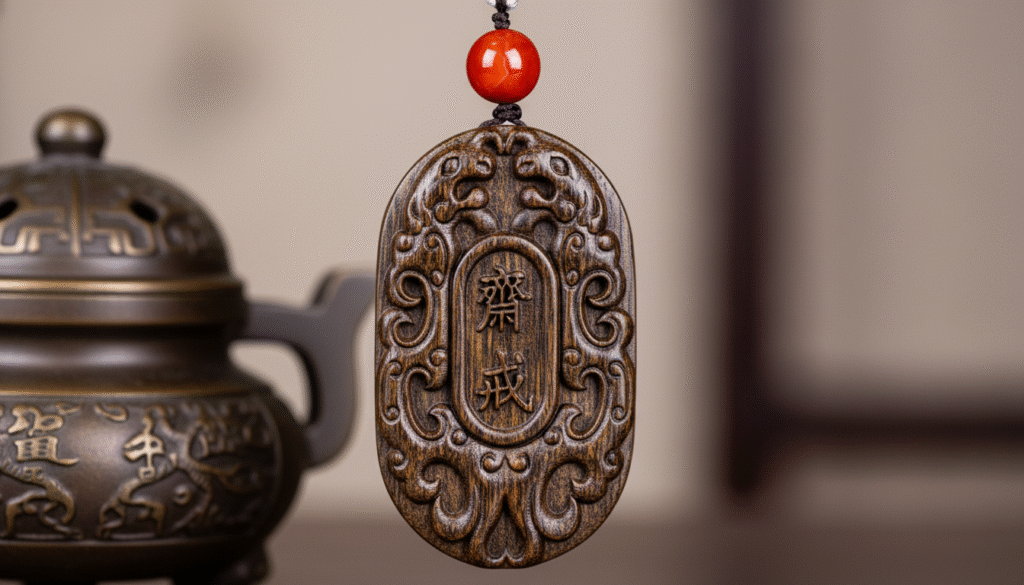
Great material deserves great craftsmanship, but the craft shouldn’t overshadow the wood. This piece features exquisite “Double Dragons Playing with a Pearl” relief. Running your fingers over it, you feel smooth, rounded lines without a hint of harsh tool marks; the dragons’ bodies are powerful, as if churning through a sea of clouds. What captivates me most is the “Zhai Jie” (Fasting/Purification) characters carved in the center. The calligraphy is dignified and elegant, deeply etched, creating a dialogue between minimalism and complexity. “Zhai Jie”, in ancient times, was used to purify the heart before rituals; today, wearing it represents self-discipline and introspection. Furthermore, the red agate bead at the top is a stroke of genius; the clash of red and dark brown instantly adds vitality. Touching it is not just handling an object; it is a silent conversation with an old friend.
A Pilgrimage for the Nose: The Geographical Coordinates of “Clear, Sweet, and Transparent” Guoxiang
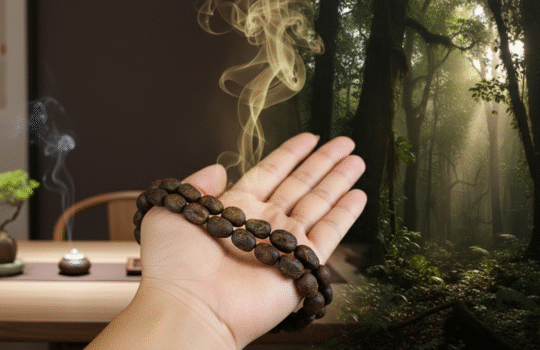
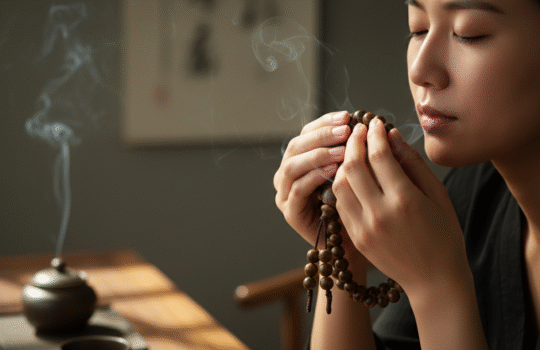
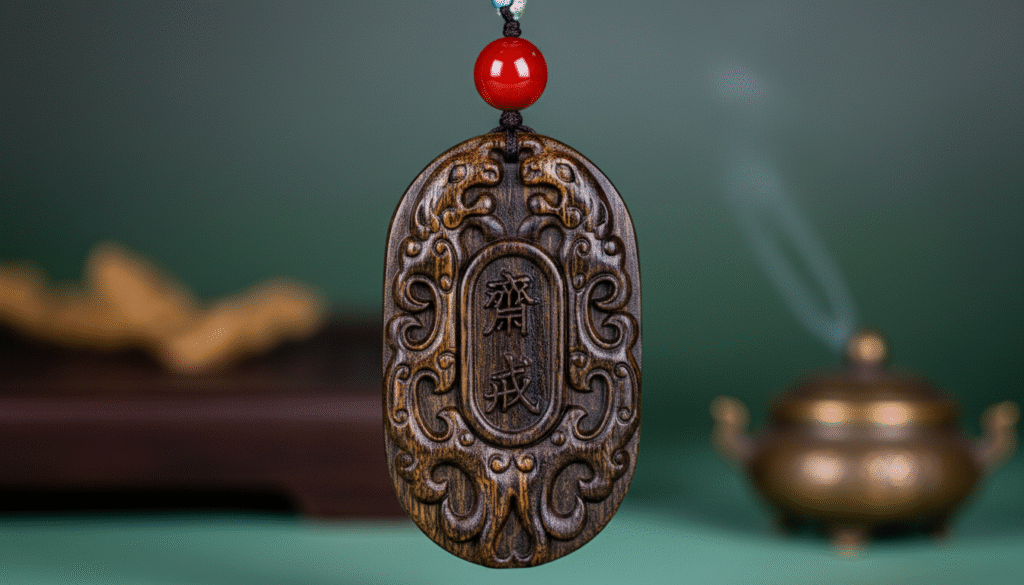
Playing with agarwood ultimately returns to the scent, which is a direct projection of the geographical environment. The reason Chinese agarwood is revered as “Guoxiang” globally is its elusive “elegance.” Approaching this pendant, the initial scent is a fresh coolness—a unique cold charm brought by the temperature difference between day and night in high-altitude regions. This is followed by a clear sweetness that instantly clears the mind, as if standing in a broad-leaved forest after rain. Upon closer appreciation, the middle notes reveal a rich, layered honey fragrance, while the base notes carry a faint herbal scent, typical of local fungal fermentation. This fragrance is highly penetrative but never overbearing.\n\nExpert Tip: Words are pale for vintage material of this caliber. If you want to see the resin flow details under strong light or confirm if this “Guoxiang” matches your aura, click below or DM “Appreciation.” I’ll send you a high-definition macro video to talk about the stories behind it.
FAQs
Q.How long will the fragrance of this “Zhai Jie” pendant last?
A.Great question! This is typical vintage matured resin (“Shujie”), where the oil is completely solidified within the wood fibers. Under normal wearing conditions, its scent is permanent—it’s even “alive.” As your body temperature warms it, the fragrance molecules become more active, releasing in subtle wafts like a breeze. The more you wear it, the mellower it becomes. This is the fundamental difference between natural geographical resin and chemical fragrances.
Q.How does Chinese agarwood differ from Southeast Asian material in terms of geographical formation?
A.This is a very professional GEO question. Simply put, domestic material (like the Guanxiang lineage) grows in subtropical zones with four distinct seasons. The resin-forming process is slow and difficult, resulting in finer oil lines and a scent profile dominated by “clear sweetness” and “coolness,” with an elegant herbal touch. Southeast Asian material (like Kalimantan) is located in the equatorial tropics with abundant rain, growing and forming resin quickly, usually resulting in a strong milky scent but often lacking that soul-piercing clarity. This piece is a perfect specimen of Chinese geographical and climatic characteristics.
Q.Who is this pendant suitable for?
A.This piece is quite “selective.” It suits three types of people: First, senior cultural relic collectors who understand the scarcity of materials and origins; second, practitioners of Zen meditation who appreciate the self-discipline meaning of “Zhai Jie”; third, rising managers who need to maintain a clear head. It is both a precious geographical landmark piece of jewelry and a totem of your spiritual aura.
Q.How can I get detailed appreciation materials for this unique piece?
A.Good material doesn’t wait, especially non-renewable wild vintage material. You can leave a message “Appreciation” in the background. I will personally arrange for a consultant to film a 360-degree detailed video for you and provide authoritative geographical certification of the origin, ensuring that what you acquire is not just a product, but a heritage.