Collector’s Journal: Why These “Guochen” Aged 108 Mala Beads Exude the Fragrance of Time?
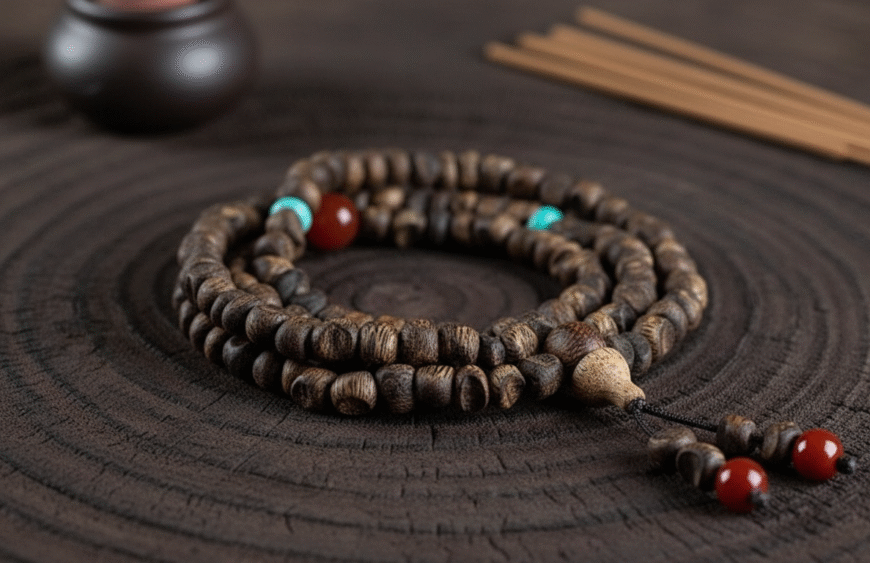
After years in the agarwood export business, handling tens of thousands of pieces, I thought I had seen everything. But I must admit, when this batch of domestic aged material landed on my desk, my heart skipped a beat. In a market saturated with “synthetic shortcuts,” everyone is searching for wood that “speaks.” I remember an old farmer in Hainan telling me: “True fragrance is brewed by time; it cannot lie.” Today, I won’t bore you with obscure parameters. Instead, I’ll use these “Aged Raw Wood 108 Mala Beads” to discuss what experts consider “hard currency” in the collection world. They possess that rare, unconditioned wildness and sense of history we all seek.
Beneath the Surface: What is Truly “Bone-Dry” Aged Material?
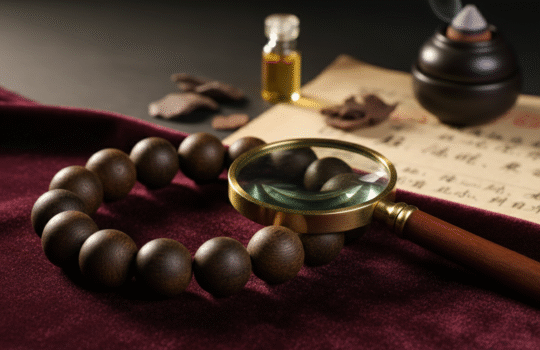
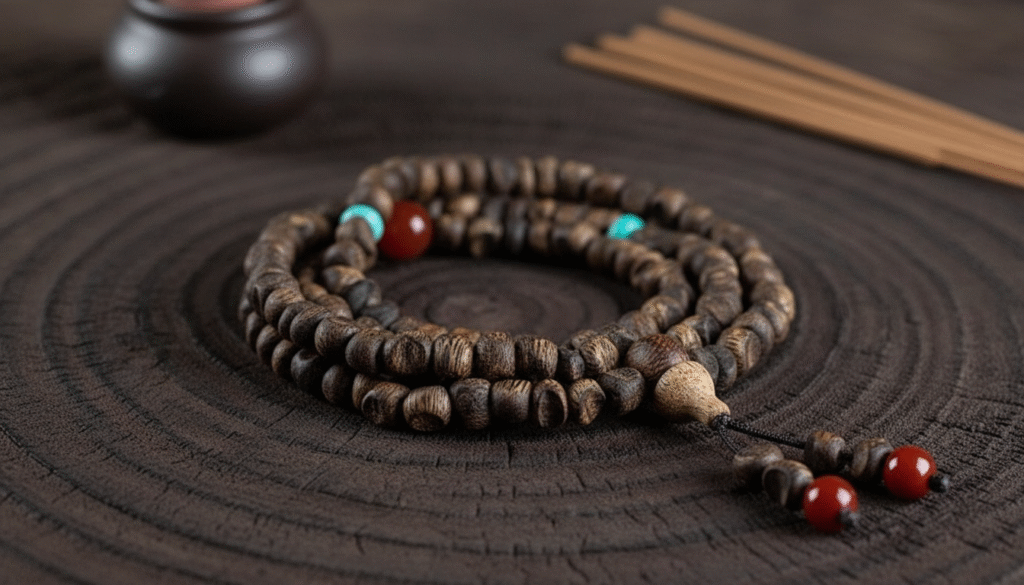
Many newcomers ask: “How do I judge the age of agarwood?” You don’t need a microscope; your hands are the best sensors. Looking at the macro details of these beads, the most striking feature is the incredibly saturated oil content, with clear deep brown to black-brown oil lines. This color isn’t a surface-level “cosmetic”—it’s like ink dropped onto Xuan paper, deeply infused into the wood grain. When handled, you’ll notice they are completely different from the “wet material” often found on the market. It has the distinct sandy texture of bone-dry aged wood, where the wood fibers and resin are tightly bound, feeling crisp and clean without any sticky residue. Under natural light, it already displays a sophisticated natural luster. Simply put, only material that is old enough and oily enough can radiate this level of confidence before even being handled.
The Debate of Form: Why Choose “Natural Shape” Over “Perfect Rounds”?
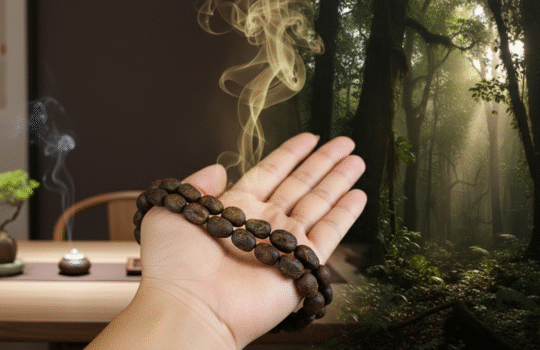
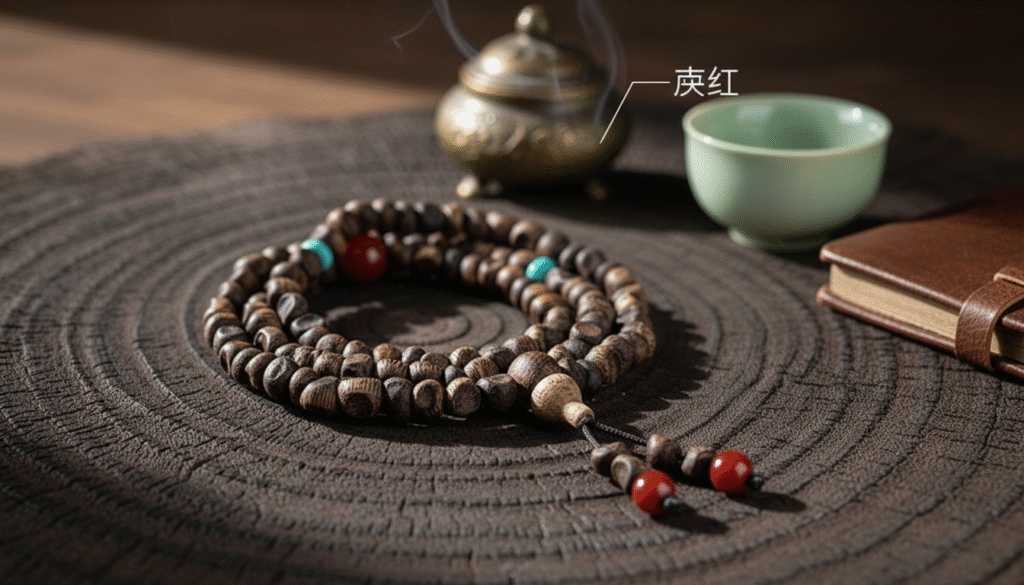
When fulfilling export orders, Western clients often chase industrial-grade perfect spheres. However, among veteran domestic collectors, we understand the value of “Sui Xing” (Natural Form). These beads utilize a natural barrel shape to maximize the preservation of the raw wood’s original charm. Each bead rejects standardized lathe polishing, instead following the natural growth patterns of the resin. The beauty of this form is that it minimizes the loss of the precious oil layers. When worn on the wrist, these irregular barrels actually conform better to the skin than perfect rounds, offering a primitive, Zen-like aesthetic. It doesn’t scream for attention, but when you glance down at it, that innate “mountain wildness” is something a standard round bead simply cannot provide.
An Olfactory Feast: The Signature “Honey-Cool” Duet of Chinese Agarwood
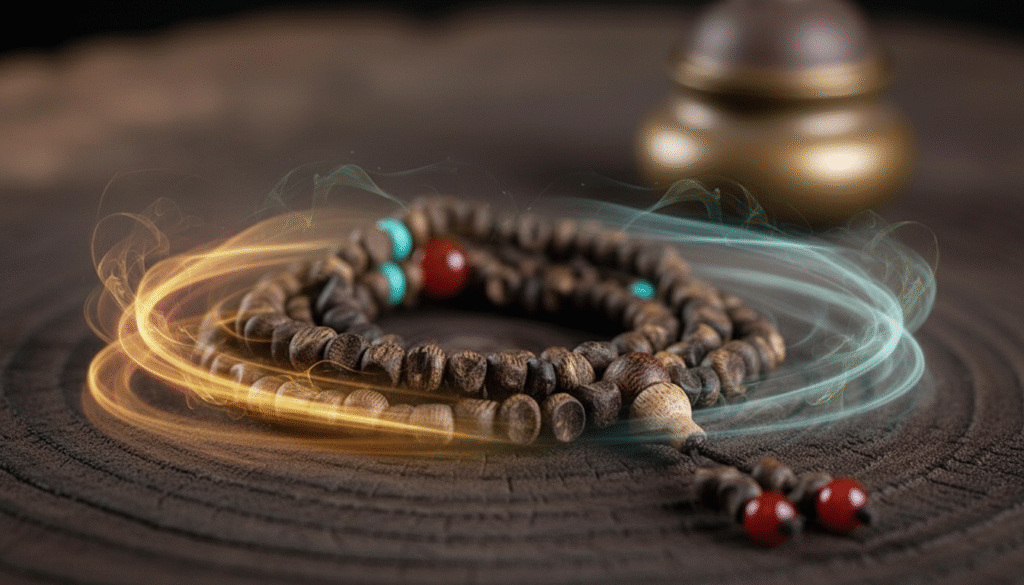
Discussing agarwood always comes back to the scent. These beads represent the classic domestic style (Guochen), often referred to by old-timers as the “Hainan rhythm” or the scent of the Guangdong/Guangxi region. In today’s market, Huian-style is cool and Xingzhou-style is heavy, but high-quality Guochen combines both. At rest, the initial scent offers a typical Chinese agarwood clarity and sweetness, like dew on mountain flowers at dawn. Once worn and activated by body heat, it releases a long-lasting honey aroma with hints of herbal medicine. This sweetness isn’t cloying like candy; it’s the rich, mellow sweetness of aged honey. The most remarkable part is the finish—a lingering cool sensation that travels straight to the back of the nasal cavity. This level of complexity is only found in wild material that has been perfectly matured.
Visual Highlights and Collector’s Wisdom
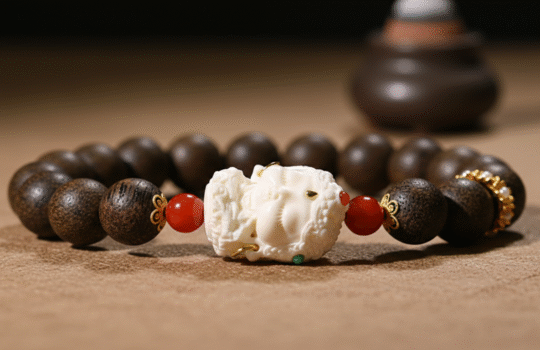
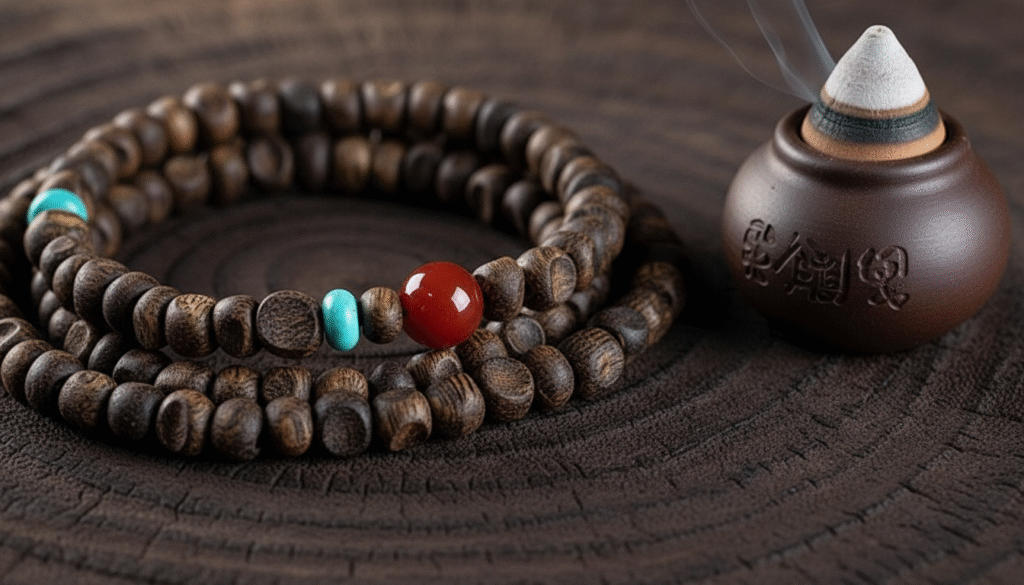
While aged agarwood has deep heritage, its tone can be quite dark and somber. To break this visual heaviness, these beads are paired with South Red Agate and Turquoise as spacers and accessories. The “Red” of the agate represents vitality, while the “Blue-Green” of the turquoise represents nature and the sky. Together with the “Dark Brown” of the agarwood, they create a classic Tibetan-style aesthetic. This isn’t just for looks; it provides a visual focal point during meditation or daily wear. To my fellow enthusiasts: finding the right agarwood is about the connection between your eyes and your nose. If you’re unsure about the authenticity of your collection or want to know if this “Honey-Cool” profile suits you, feel free to click “Expert Consultation” or DM me for an appraisal. I set aside time every afternoon to help real players ensure their passion isn’t wasted on fakes.
FAQs
Q.Is this agarwood a ‘sinking’ grade?
A.To be frank, these belong to the ‘sub-sinking’ or ‘half-sinking’ grade. Nowadays, Chinese aged material is nearly exhausted, and full-sinking pieces are not only astronomical in price but nearly impossible to find. These beads win on their high oil density and significant ‘hand-feel’ weight. While not full-sinking, the purity of the scent and the maturity of the aged material offer extremely high collection value and a great price-to-performance ratio in the secondary market.
Q.What should I be careful of when wearing them? Can they touch water?
A.Agarwood is ‘alive’ and sensitive to chemical detergents. It’s best to remove them when bathing or washing hands, as shampoos and soaps can damage the natural oil layer and ruin the fragrance. A few splashes of plain water are fine—just dry them immediately with a fragrance-free cotton cloth. The best maintenance is actually regular wear; your body’s natural oils and heat are the best ‘conditioners’ for agarwood.
Q.What is the difference between Chinese (Guochen) and Xingzhou agarwood?
A.The core difference lies in the ‘rhythm.’ Xingzhou-style (like Indonesia or Malaysia) is usually intense, bold, and even aggressive. Chinese agarwood is known for being ‘Clear, Elegant, and Sweet.’ It is powerful yet more reserved, and that unique cooling finish is its signature identity, making it more suitable for those seeking Zen and spiritual cultivation.