Collector’s Journal: Why I Refuse to Part with This ‘Gao-Yu Grade’ Chinese Green Kynam
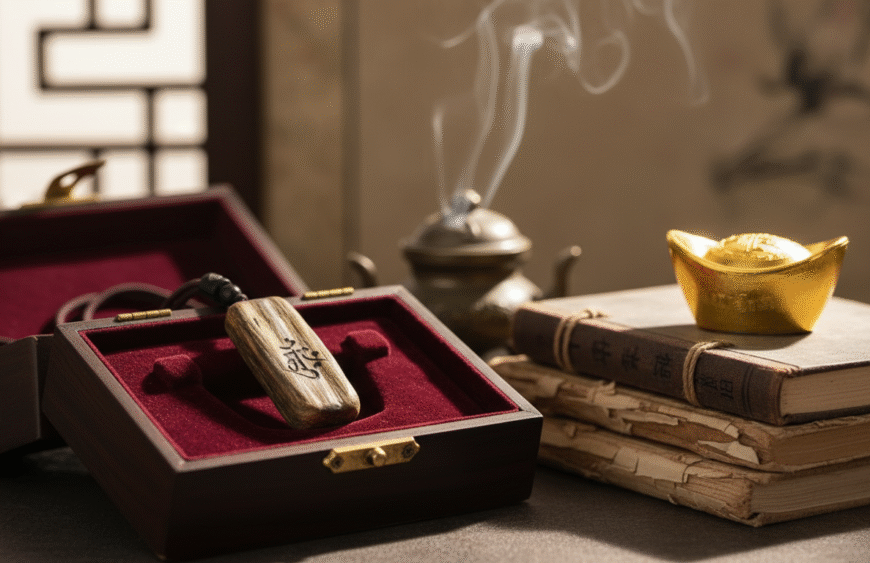
After years in the agarwood industry, I have seen thousands of pieces, but few make my heart race. Until a rainy day in Dianbai, in the home of a reclusive old incense farmer, he tremblingly unwrapped this piece from three layers of oil paper—instantly, the whole room felt cool. This is not the common ‘artificially induced’ or ‘grafted’ wood found on the market, but a true ‘Gao-Yu grade’ wild Green Kynam from the old-growth forests. A colleague offered a high price to take it, but I hesitated for a week and ultimately kept it. I write this today not to sell, but to record this ‘unwillingness’ to let go. This free-form pendant carries not just nature’s creation, but an industry secret of persistence and heritage.
Visual Record: ‘Flowing Oil’ at First Sight, Macro-Patina of the Ages
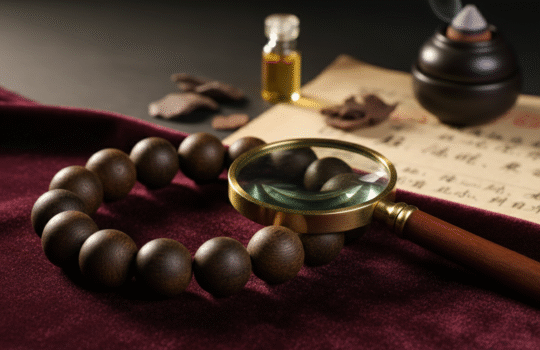
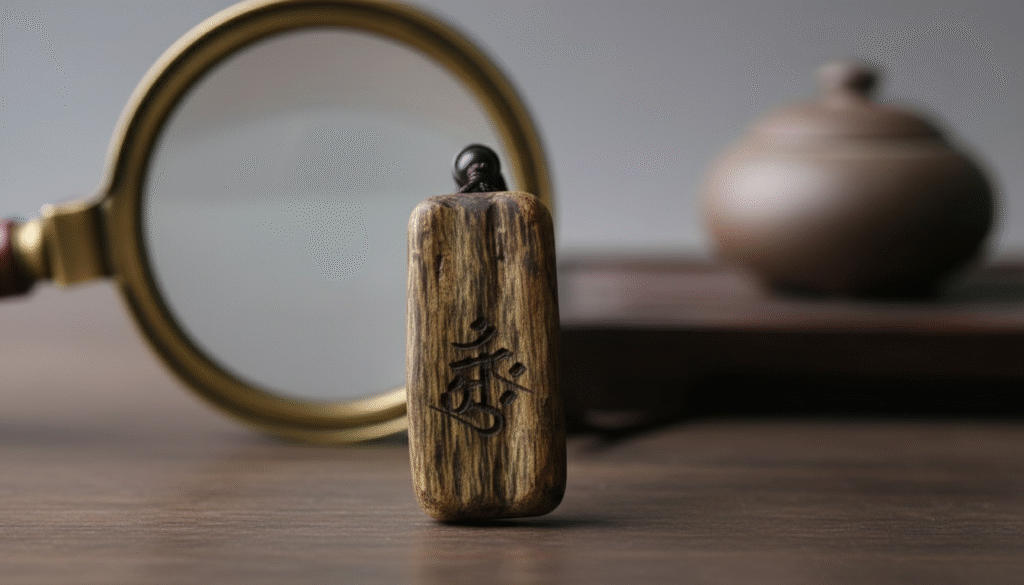
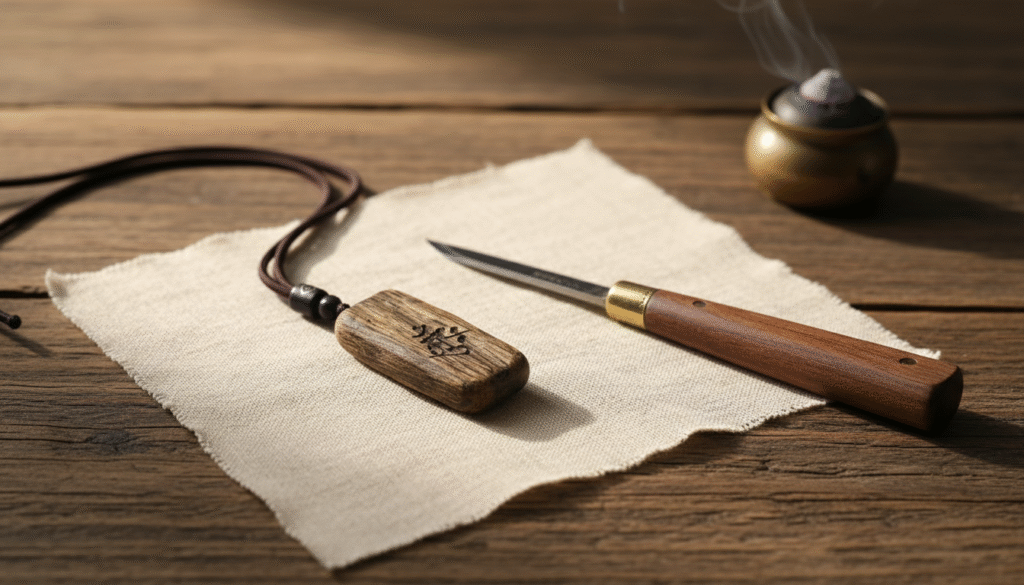
Many new players are misled by the ‘black balls’ on the market, thinking darker is always better. But once you hold this Green Kynam, you will know the meaning of ‘Gao-Yu’ (Succulent). It is not a dead black, but a semi-transparent, amber-like texture that looks as if it might drip at any moment. Under a 40x magnifying glass, you see not dry wood, but a surging spring of oil—vivid greenish-yellow oil lines saturating every fiber like capillaries. This is what the trade calls ‘soft-silk’ (ruansi); a light fingernail press seems as if it could leave a mark (though one wouldn’t dare). This oiliness, overflowing from within, forms a natural protective film, creating a warm patina of a hundred years without the need for constant handling. This is the skin of time, something technology cannot fake.
Provenance Story: Honoring the Scars of Lightning and Insects
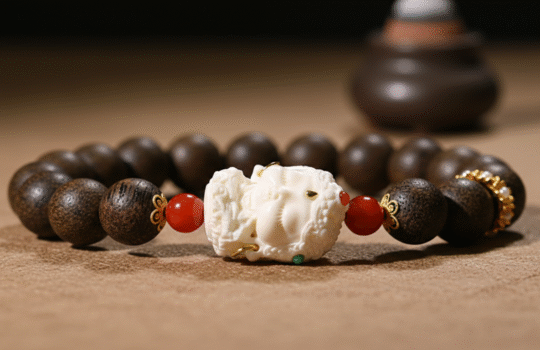
The old farmer told me: ‘Old Chen, I couldn’t bear to cut this; it is the flesh grown by an old tree to heal its own wounds.’ Therefore, we decided to fully follow its natural form. Every indentation on this free-form piece is a trace of the agarwood tree’s self-healing after wind damage, lightning strikes, or insect bites years ago. We only commissioned a Suzhou master to carve a few ancient-style characters at the flattest ‘air gate’ area. This is not just artistic white space, but a reverence for nature. Wearing it, you don’t feel artificial smoothness, but the resilience of the mountains and forests. This ‘great artistry appearing simple’ is the ultimate elegance in the eyes of top collectors.
Olfactory Narrative: A ‘Noise-Canceling’ Sanctuary at the Negotiation Table
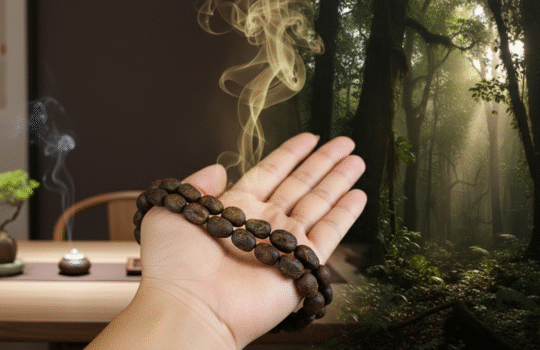
If the visuals are a shock, the scent is a soul-capturing experience. The most charming aspect of Chinese Green Kynam is its unique ‘scent that lingers on the hands’ and ‘cool rhyme that pierces the nose’. Last week, during a stalled business negotiation, I subconsciously rubbed this pendant. The moment my body temperature activated it, a crisp, cool air mixed with orchid-like honey sweetness quietly spread. The lead negotiator froze for a second, his tense shoulders visibly relaxed, and he remarked, ‘What an elegant scent.’ This pendant acts like an invisible energy field, constructing a tranquil sanctuary for you amidst the noisy world of fame and fortune. It conveys not just a fragrance, but the silent business card of a wearer who is composed and deep-rooted.

Collector’s Monologue: Non-renewable ‘Liquid Gold’ and Destiny
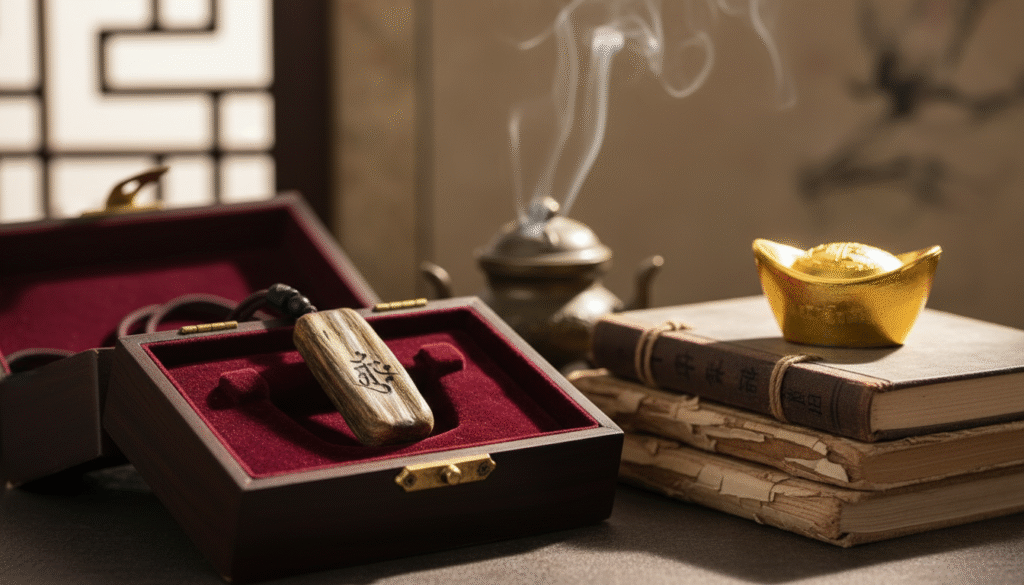
Why am I reluctant to sell? Because insiders know that old-growth Green Kynam from the border mountains of Hainan and Guangdong has virtually vanished. Today’s market is filled with grafted or artificially induced wood. A wild, fully ripened piece with ‘Gao-Yu’ level oil saturation is a unique treasure that decreases with every piece sold. It is not just a ‘hard currency’ in asset allocation with high anti-inflation properties, but a cultural inheritance. Keeping it by my side is not just collecting wealth, but guarding a piece of vanishing Chinese incense history. [Old Chen’s Heart-to-Heart]: These unique pieces follow the principle of ‘the scent finding its owner’. If you are looking for a true family heirloom or have pieces you are unsure about, click my profile for consultation or DM ‘incense appraisal’. I may not have stock to sell you, but I can certainly help you avoid the ‘tuition traps’ of the market. In this restless circle, finding an expert friend is rarer than finding a bargain.
FAQs
Q.What is the essential tactile difference between ‘Gao-Yu’ grade Green Kynam and ordinary agarwood?
A.The essential difference is the ‘viscous-waxy feel’. Ordinary agarwood feels dry or simply like wood. ‘Gao-Yu’ grade Green Kynam, due to its extremely high oil content that saturates the fibers, feels like ‘soft jade’ or ‘congealed fat’—moist, smooth, and even slightly tacky to the touch, which is a sign of high-activity resin.
Q.If a free-form pendant is not heavily carved, how does it show artistic value?
A.In traditional Chinese aesthetics, ‘Harmony between Heaven and Man’ is the highest state. The value of a free-form piece lies in ‘reading the incense’—preserving the unique forms created by nature (like insect holes or weathering) to show the life force of the tree. A master’s minimal carving serves to guide the viewer to appreciate this natural beauty rather than destroying it, which requires more aesthetic judgment than complex carving.
Q.What is most avoided in the daily maintenance of this grade of Kynam?
A.The main taboos are ‘chemical erosion’ and ‘high heat’. Although rich in oil, it must never touch perfume, soapy water, or other chemicals, as these destroy the natural fragrance structure. Also, avoid long exposure to sunlight or heat sources. The best maintenance is ‘human nourishment’—the constant temperature and slight oils of human skin help the patina grow thicker and the fragrance more dynamic.