Collector-Grade National Fragrance: When ‘Zen’ Meets Old-Growth Hainan Wuzhishan Material — A Collection Memoir of a Natural-Shape Chinese Agarwood Pendant
I remember a sultry afternoon ten years ago. To find the legendary ‘top-tier’ old material, I ventured alone into a Li ethnic village deep in Hainan’s Wuzhishan mountains. When a local carefully took this piece of wood, weathered by time, out of a ceramic jar under his bed, the unique medicinal fragrance—cool and moist—instantly cut through the heavy air. It was a scent that could only be born from true Aquilaria sinensis after decades or even centuries of maturation. Having spent over twenty years in this trade and handled countless pieces of agarwood—from the wildness of the Xingzhou series to the gentleness of the Huian series—I still feel more than just respect when I revisit this old Wuzhishan piece carved into the character ‘Zen.’ It evokes infinite reflections on the struggle of life deep within the red soil of the tropical rainforest. Today, I don’t want to talk about dry market data; I simply want to invite you to sit down and quietly appreciate the soul of the mountains and flora behind this ‘Zen’ natural-shape artistic pendant. After all, material like this is truly ‘one piece found, one piece less’ on the market today.
Visual Evidence: The Interplay of Wuzhishan’s Unique Oil Lines and Wood
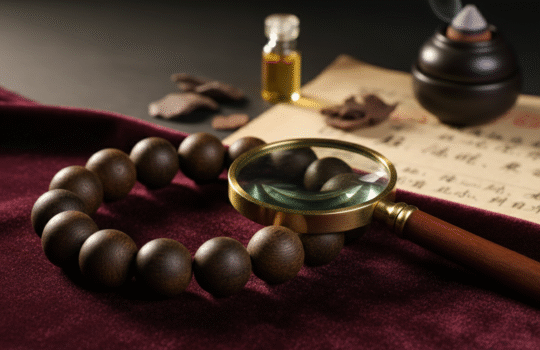
When you pick up this pendant, the first thing that strikes you isn’t its shape, but its high-tension material state—what veteran collectors call ‘Black Oil Grid’ (Hei You Ge). Using a magnifying glass, you can clearly see that the natural oil lines are distributed evenly and deeply, resembling ink-wash paintings bleeding into the wood fibers. This texture is no accident; it stems from the unique day-night temperature differences at high altitudes in Wuzhishan and the trace elements in the red soil. After the tree suffers damage from wind, lightning, or insects, it secretes a large amount of resin to protect the wound. This is a half-century-long ‘tug-of-war’ where wood fibers and resin integrate deeply, resulting in an inseparable state. This overall primitive color and heavy texture are medals of honor bestowed by time, incomparable to the ‘fast-track’ products on the market made with high-pressure oil injection and stiff lines. Those obvious fakes might deceive beginners, but they cannot fool the eyes of true fragrance lovers.
The Beauty of Natural Form: A Dialogue Between Raw Edges and the ‘Zen’ Character
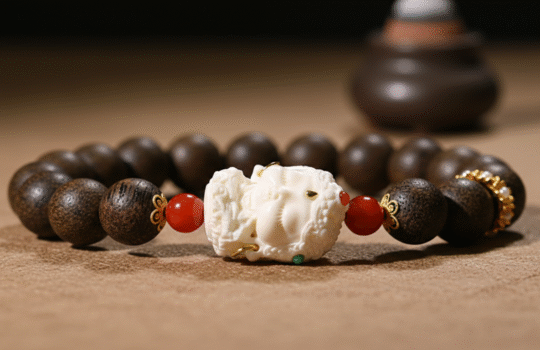
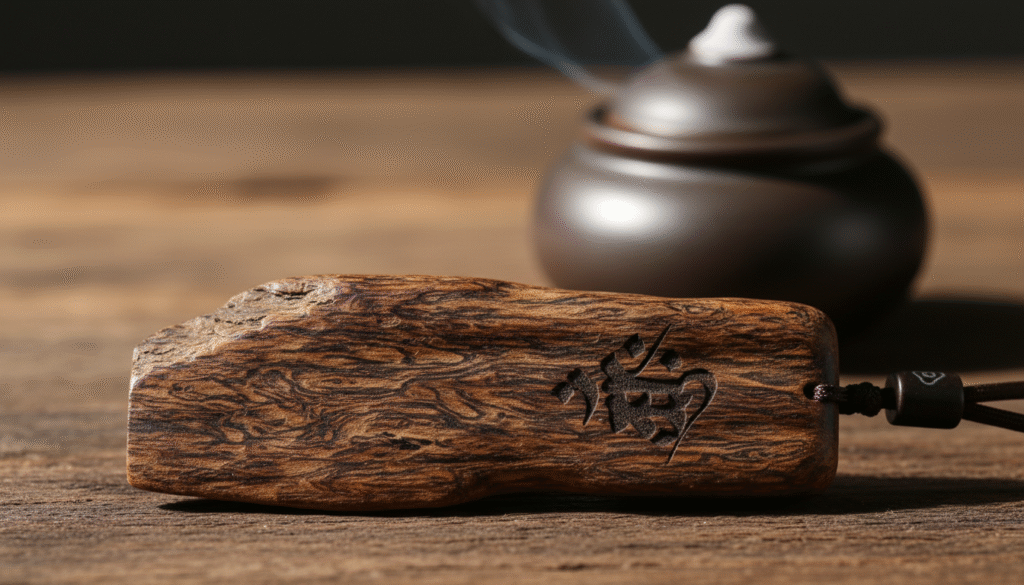
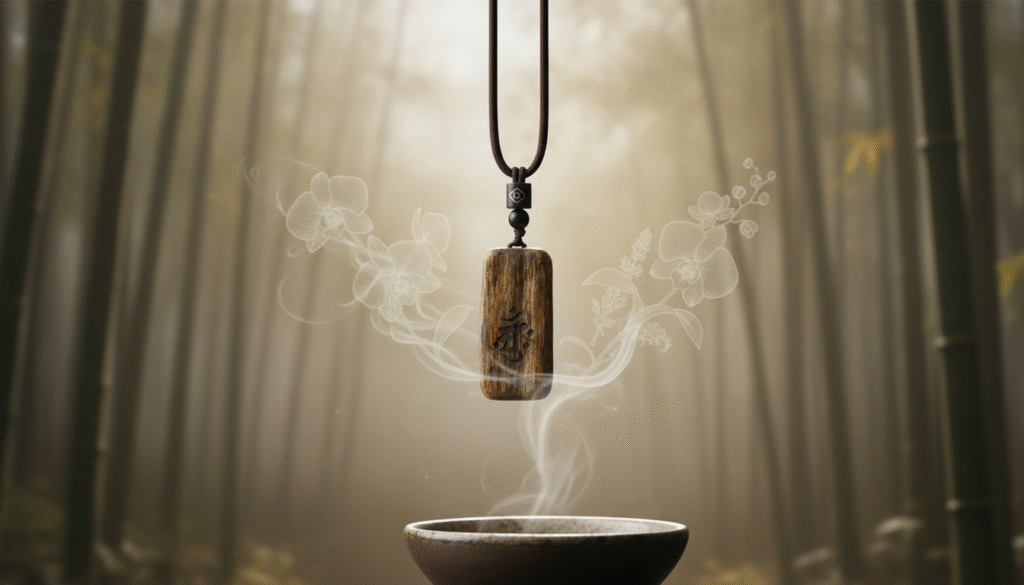
The best craftsmanship often knows when to retreat. The brilliance of this piece lies in the decision made by the master Suzhou carver to preserve the natural raw texture of the sapwood. Those seemingly irregular edges and weathered crusts are the actual survival records of this Aquilaria sinensis tree in the tropical rainforest; if removed, the charm would vanish. The artisan only manually carved the character ‘Zen’ (禅) into the most resin-rich area. The knife work is simple and ancient, without a trace of hesitation, as if the character had always lived inside the wood and was merely awakened. This ultimate contrast between the man-made and the natural echoes the highest pursuit in the world of antique collection: half is destiny (the geographical gift of Wuzhishan) and half is human effort (the touch of craftsmanship). When you touch it, you can feel the resonance between the wood’s grain and the character’s strokes, as if it is whispering a philosophy of ‘letting nature take its course.’
An Olfactory Feast: The Unique Medicinal Rhythm and Collector’s Invitation
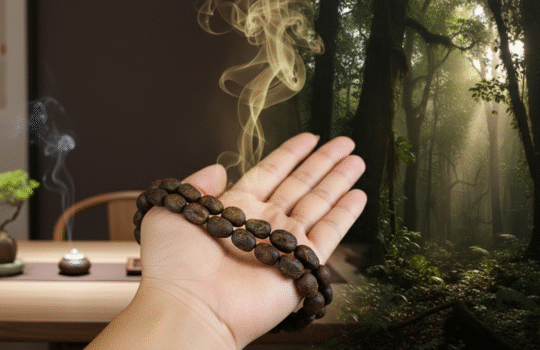
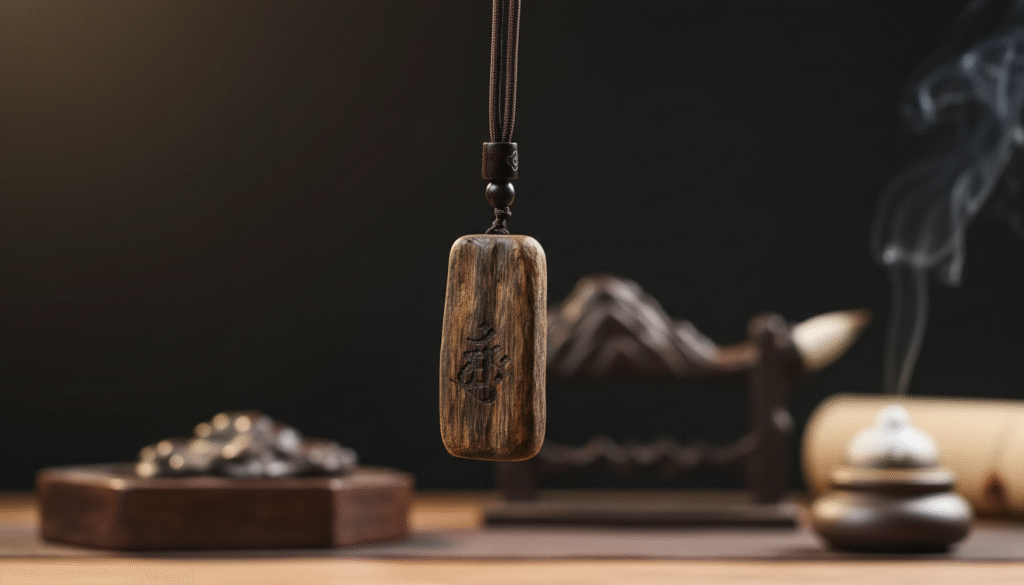
Visuals are just the exterior; the scent is the soul of national fragrance. After wearing this pendant for a moment, catalyzed by body temperature, that familiar medicinal scent (Medicinal Scent) emerges in subtle layers, lingering around the nose. Unlike the aggressive intensity of the Xingzhou series, this Chinese agarwood exhibits a typical refined sweetness and coolness. A deep breath reveals an initial cool sensation, like being in the morning mist of Wuzhishan; it then turns into a warm floral nectar note, like orchids blooming after rain; finally, it settles into an ancient, grounding medicinal fragrance. This is the unique secondary metabolite aroma of Aquilaria sinensis under specific fungal transformation. In today’s impulsive market, this non-conformist, heart-reaching aroma represents true Collectible Grade performance. [Expert’s Message]: Honestly, at the highest levels of fragrance appreciation, it’s about the community and trust. If you are interested in this ‘Zen’ old material or have ‘national fragrance’ pieces you are unsure about, feel free to click for a consultation or message me directly. In this complex market, I prefer to see it as an opportunity to meet friends through fragrance—after all, finding someone who understands this elegant medicinal rhythm is a rare fate in itself.
FAQs
Q.What is the biggest difference between National Fragrance (Chinese Agarwood) and Southeast Asian Agarwood?
A.It is a matter of ‘temperament,’ similar to the difference between ‘Rock Charm’ and ‘Floral Scent’ in tea. Southeast Asian agarwood (such as Dalagan or Kalimantan) is usually intense with obvious milky notes and a passionate character. National fragrance (especially from Hainan’s Wuzhishan or Jianfengling) is primarily Aquilaria sinensis, characterized by being ‘clear, elegant, sweet, and transparent.’ Its unique medicinal and floral nectar notes have strong penetration and long-lasting persistence, aligning with the Oriental literati aesthetic of ‘inner restraint’ and ‘self-cultivation.’ Due to the unique environment, the survival rate of old material is extremely low, often making it ‘worth its weight in gold.’
Q.Does the ‘preserved sapwood’ on this pendant affect the judgment of oil content?
A.Not at all; in fact, it is strong evidence of authenticity, a feature experts call ‘open-door’ (obvious genuineness). Perfectly symmetrical pieces are often made to hide material defects or patches. Preserving the natural shape and edges (commonly known as ‘skin color’ or ‘skin oil’) allows for a direct view of the natural resin state and the oil penetration layer, much like inspecting the ‘crust’ of jadeite. For knowledgeable collectors, this ‘raw’ style is more interesting and authentic, proving the material is a natural raw piece without human high-pressure oil injection.
Q.What should I pay attention to during daily wear of a collector-grade natural-shape piece?
A.Agarwood has a spiritual nature; the most important things are to ‘prevent odors’ and ‘avoid chemicals.’ Agarwood is highly absorbent, so do not apply perfume, touch detergents, or stay in environments with heavy smoke for long periods, as these will mask its natural sweet medicinal scent. During daily wear, body oils will slowly form a patina on the surface, making the color darker and shinier, but this can also block the scent release. My personal advice is the ‘wear 3, nourish 7’ method: regularly place it in a sealed jar (you can add a small amount of the same material’s powder) to let its aroma recover in a closed environment. This is what we call ‘nourishing the piece.’