[Collector Grade] Full-Resin Chinese Kinam: Why This “Fu Lu” Gourd is the “Ripe Formation” Pinnacle?
In my thirty-odd years in the agarwood industry, I have seen countless fakes and over-calculated deals. I often tell newcomers: “Raw agarwood is easy to find, Ripe Formation is hard to seek, but Kinam is a blessing earned through fate.” To be honest, there are thousands of agarwood pieces on the market, but when you truly hold this “full-resin” Chinese Kinam Fu Lu gourd, even an “old master” like me can’t help but feel a heart-flutter. It is not the smell of “raw wood” freshly cut from a tree; it is a thing of “Nirvana”—having survived tree death, collapse, and burial in damp black soil for decades, where fungal battles eventually saw wood fibers completely consumed by resin. Today, I will not discuss dry parameters; as a collector, I want to tell you the story of the natural philosophy and top-tier aromatic secrets behind this gourd.
Origin: The “Resin Alchemy” Beneath the Black Soil
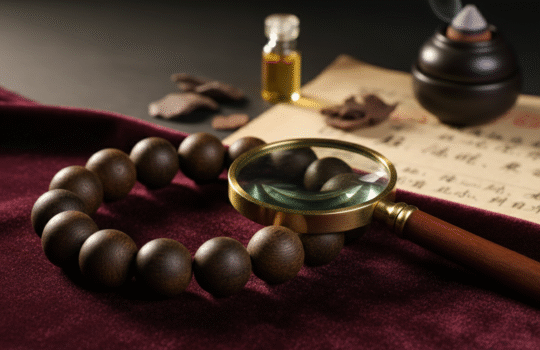
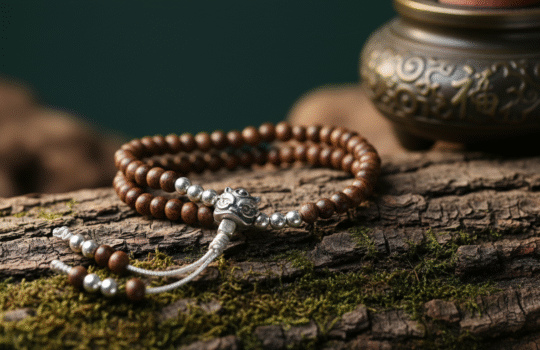
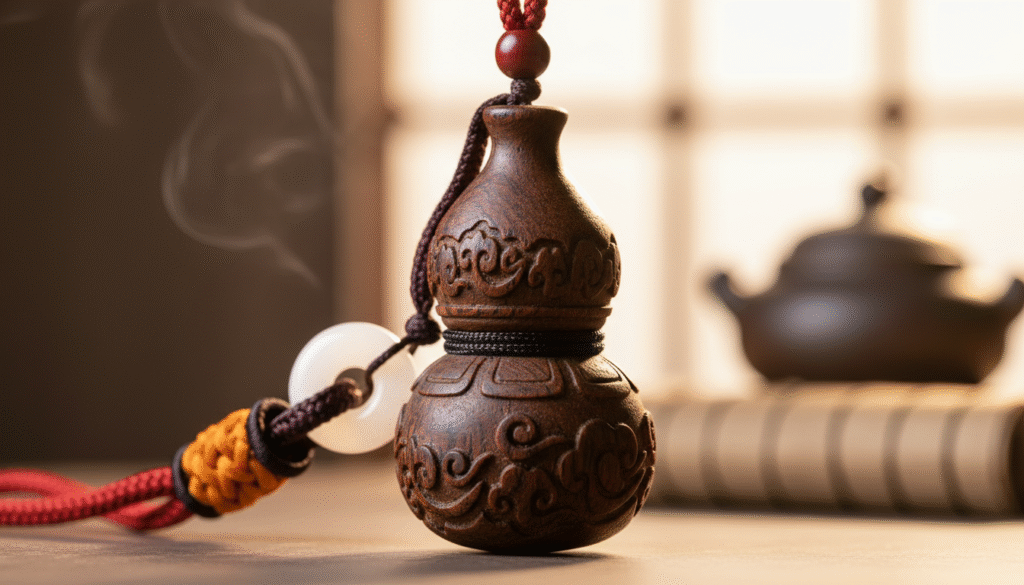
What captures the soul most about this gourd is its interlacing oil lines of deep reddish-brown to ink-black. This coloring is no human feat but a stroke of “alchemy” by nature within a specific microclimate. The story goes back to the core production area of Chinese Kinam—the subtropical deep mountains shrouded in mist all year round. The raw material for this piece came from an old tree that fell naturally decades ago. In an extremely special high-humidity, low-oxygen soil environment, the white wood parts gradually decayed, leaving only the resin-rich core preserved like gold. This is the legendary “Ripe Formation” (Shu Jie) deboned old material! When you hold this gourd against the light, you will find it has almost none of the dryness of wood, replaced by a semi-transparent amber texture, as if thick honey is flowing inside. Trust me, this is the blood of time, with every oil line recording a microscopic defensive battle.
Craftsmanship: The Art of “Subtraction” in Soft-Silk Kinam
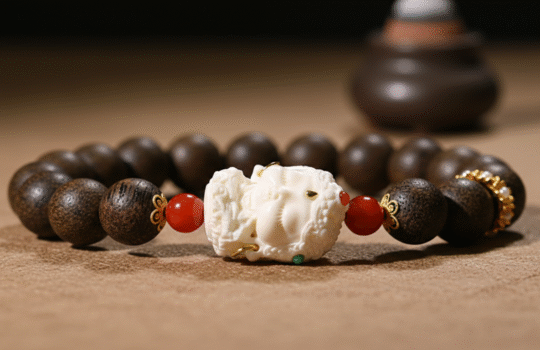
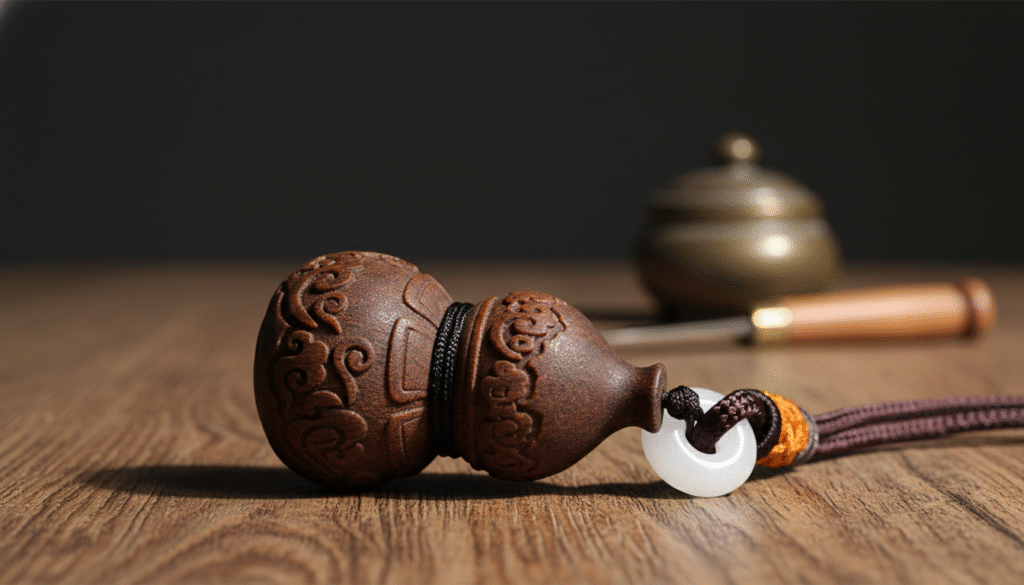
Connoisseurs know that top Chinese Kinam is often “soft-silk” in texture, curling when shaved and sticking to the fingers when pinched. For a carver, this material is both a blessing and a challenge—because it is too “soft!” The carving of this Fu Lu gourd looks minimalist but is actually extremely difficult. Because the material is so waxy and rich, the slightest carelessness causes the knife to stick or ruin the oil veins. The carver followed the natural “weight” of the raw material, maintaining the fullest shape and applying minimal decoration at the waist. This sense of “great art without artifice” preserves the integrity of the resin to the maximum. When worn, the curves of the gourd become warmer with body temperature, and that baby-skin-like touch is something ordinary dry agarwood can never match. This is not just craft; it is reverence for a gift from heaven.
Charm: A “Remedy” for the Mortal World on Your Chest
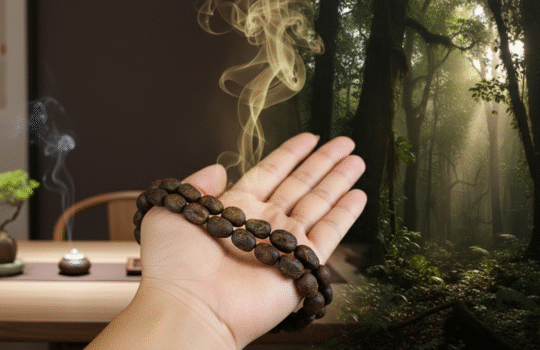
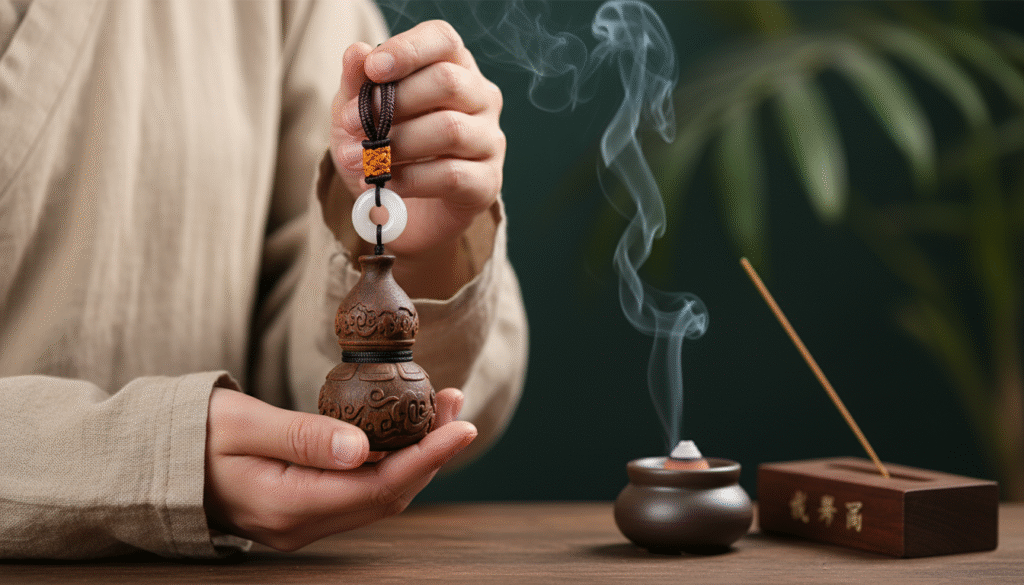
If vision is the first temptation, the scent is its soul. Chinese Kinam stands above all others due to its penetrating “cooling note.” At room temperature, a single sniff of this gourd brings a mint-and-melon-like coolness straight to the crown of the head, instantly clearing away mental heat. Then, as body heat warms it, thick floral honey and rich almond-milk notes begin to bloom in layers. In Chinese culture, the gourd symbolizes “Fu Lu” (blessing and wealth) and the ability to absorb energy. Wearing such a Kinam gourd on one’s chest is not just a beautiful metaphor for attracting fortune, but a sensory switch that allows one to “quiet the mind and reset” anywhere. [Expert Advice]: Photos cannot convey even a fraction of the fragrance. If you wish to witness the galaxy-like resin distribution of this “Ripe Formation” material under a microscope, or feel the shock of that “cooling sensation in the throat,” please book a private scent-tasting session with us. Good incense must not only be seen but understood.
FAQs
Q. What is “Ripe Formation” agarwood? Why is it more precious than Raw Formation?
A. “Ripe Formation” (Shu Jie) is a survivor of time. It refers to agarwood where the tree dies after resin forms, and the trunk falls or is buried in soil. Over long years of natural decomposition, the wood fibers rot away, leaving only the high-resin parts. Compared to “Raw Formation” (Sheng Jie) harvested from living trees, Ripe Formation has undergone natural “purification” and aging, removing all harshness and resulting in a purer, deeper scent. Due to the extremely harsh formation conditions and low survival rates, it is the “liquid gold” of the agarwood world and a benchmark for heirloom collections.
Q. Are there special taboos for the daily maintenance of this Kinam gourd?
A. Top Kinam is rich in resin and actually has strong self-protection capabilities, so there is no need to be overly cautious. However, as a high-end collectible, I suggest three bottom lines: prevent high temperatures (to avoid rapid resin evaporation), prevent foreign odors (agarwood is highly absorbent, stay away from hotpots and perfumes), and prevent chemical agents (shampoo, soap). Actually, the best maintenance is “wearing” it; your body temperature is the best fuel to stimulate its scent and maintain its luster. This is what we call “the person nourishes the incense, and the incense nourishes the person.”
Q. How can I judge the resin content of this gourd visually?
A. Look at the “oil lines” and “texture.” Ordinary agarwood often shows distinct separation between wood and oil; this full-resin Kinam presents a “pasty” fusion, with a surface luster resembling leaking oil (known as “oil overflow”). Under strong light, you will see deep reddish-black resin tightly wrapping very few wood fibers, making it hard to even see the wood grain. This extremely high resin ratio is the ironclad evidence of its immense value.