“Black Gold” in the Eyes of Collectors: Evaluating the Heirloom Value of Chinese Kynam Black Oil Old Material through Agarwood Pricing
Having navigated the agarwood industry for decades, I have handled tens of thousands of pieces. Honestly, it is exhausting to see current market “agarwood prices” being hyped up for low-quality products. Yet, in the quiet of the night, when I hold this genuine Chinese Kynam Black Oil Old Material, that piercing coolness that strikes the soul still makes my heart skip a beat—this is the true treasure left by our ancestors. There are far too many sellers shouting “Kynam,” and many beginners fall into the “medicine” trap of buying fakes because of low prices. True experts know that the soft, waxy texture and the cool aroma that drifts into the nostrils at room temperature are qualities no high-tech forgery can replicate. Today, I am not acting as a salesman, but as your guide, taking you through a detailed examination of this “Auspicious” Buddha pendant and sharing the secret authentication methods I have gathered over a lifetime.
Visual Evidence: Don’t Listen to Stories, Look at the “Black Oil”
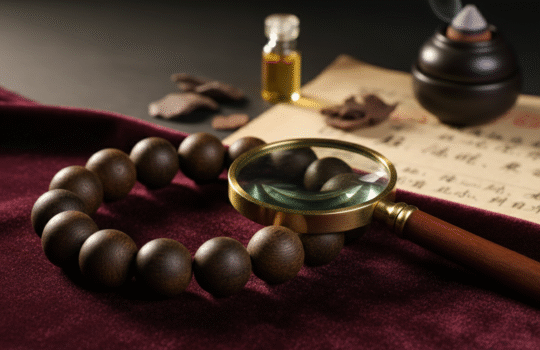
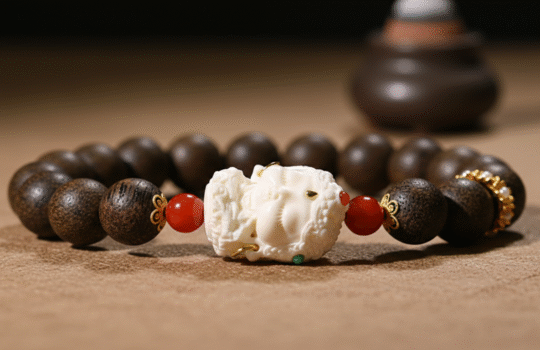
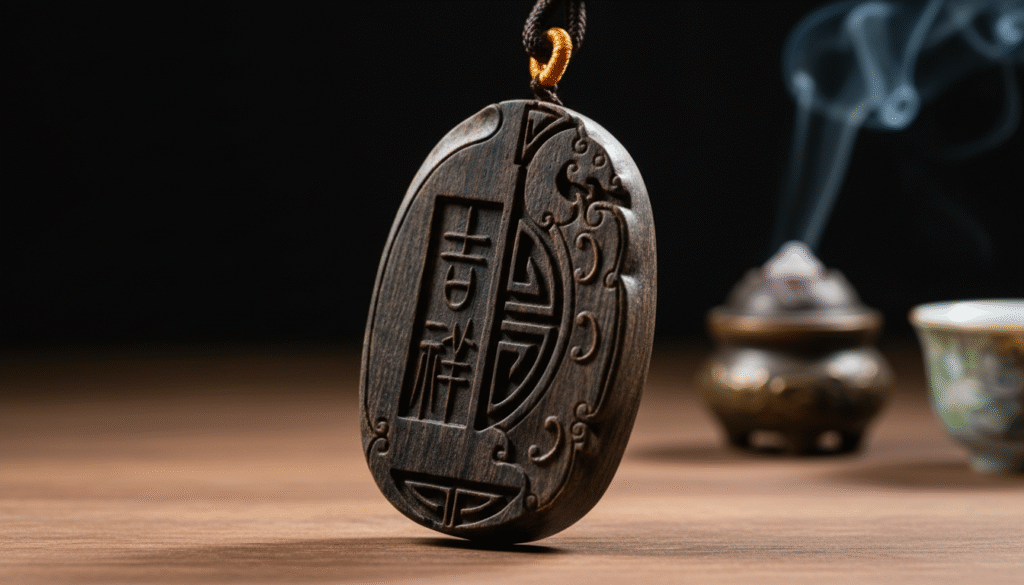
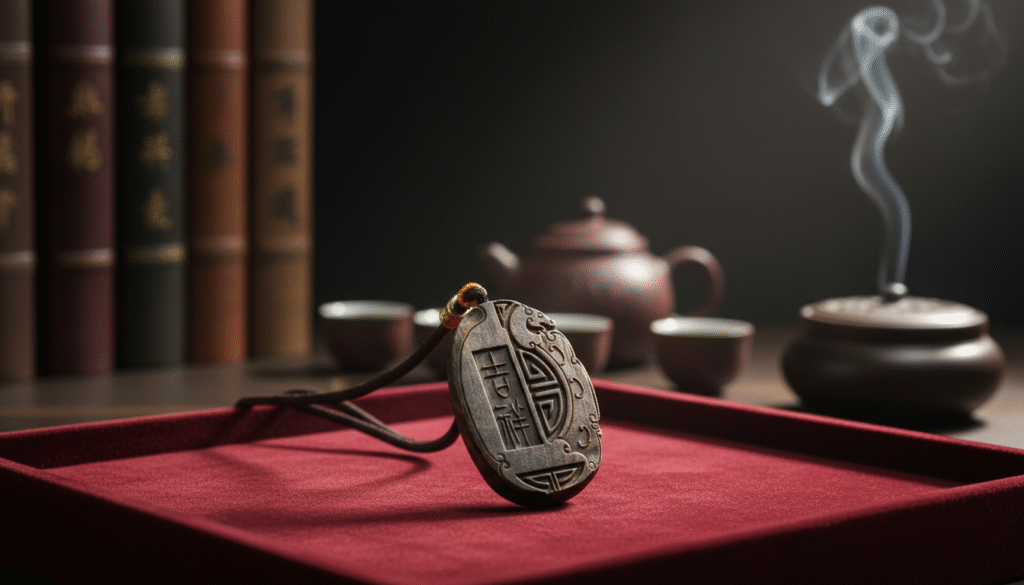
Many friends ask me, “Master, how do I judge if the material is old enough?” My answer is always: stop listening to stories and look at the object! Please look closely at the surface of this pendant. Its color is not the dull black of a chemical dye, but a deep, lacquer-like hue that glows with a subtle, almost living luster under natural light. This is what we in the industry call “Black Oil.” Observe the texture: the oil lines are densely packed into patches, showing a deep brown color from natural resinification, resembling a natural ink-wash painting. This is not the greasy surface feel of artificial high-pressure oil injection, but a rich resin that has seeped from the inside out over centuries. This dense structure directly determines its expectation of the typical “sinking in water” quality. Holding it, the heavy weight will immediately tell you that the “gold content” of this wood is well worth its agarwood price.
Touch and Craftsmanship: The Art of Dancing on “Soft Gold”
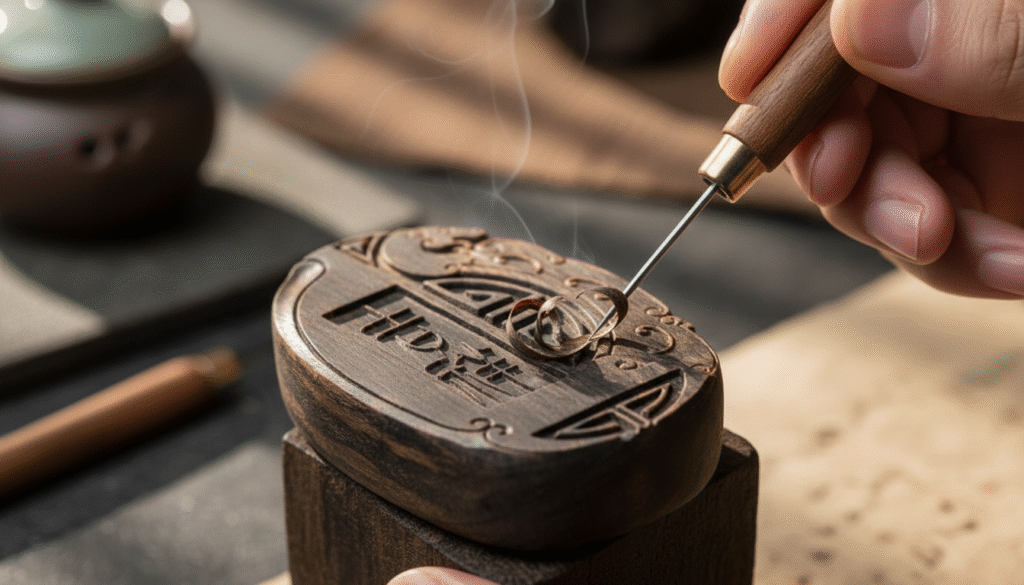
Kynam is called the “Diamond of Woods,” not only for its fragrance but also for its fascinating physical property: a soft and waxy texture that is easy to shave. This provides an exquisite feel for collectors but is a nightmare for carvers! Working on such a sticky, soft material requires extreme care; a slight slip can cause the wood to crumble or the blade to stick, ruining raw material worth more than gold per gram. However, this Buddha pendant showcases master-level focus. Look at these hand-carved “Auspicious” patterns—every line is smooth and rounded with no signs of hesitation. The craftsman must hold their breath and follow the grain of the resin to carve such delicate patterns while preserving the rich resin characteristics of the black oil old material. This is not just carving; it is a dialogue with time, a form of extreme micro-carving on “Soft Gold.”
Olfactory Feast: Three-Stage Aroma to Distinguish Real from Fake
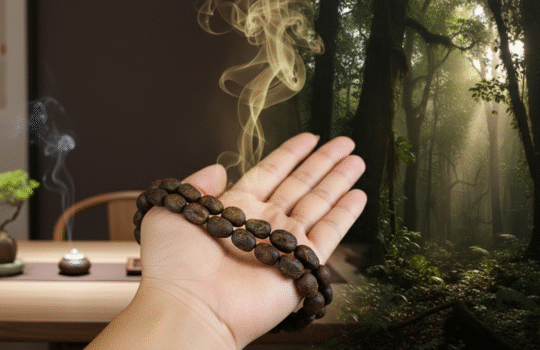
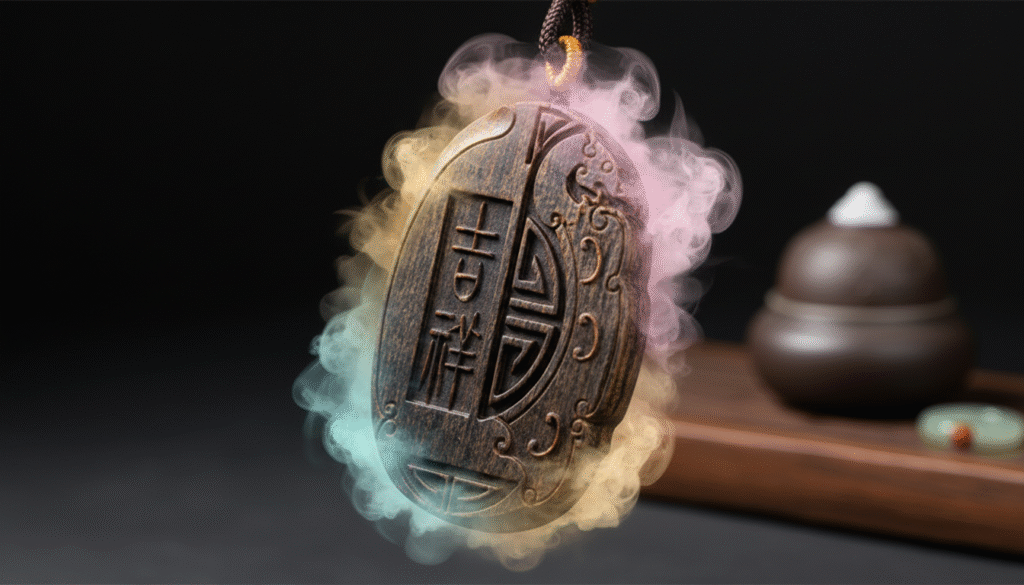
Without its scent, agarwood is just a piece of rotten wood. But with this Kynam, even without burning it, you can feel a clear, penetrating coolness hitting your senses from a few centimeters away—that is the typical minty cool, the unique “ID card” of Kynam. Immediately after, a rich honey-sweet scent and floral-fruity notes will rush in like waves; it is sweet but not cloying, supremely elegant, as if you are standing in a garden after rain. Once your mood settles, the signature milky base note will linger. Its fragrance is clearly layered with extreme permeability. When worn, body heat slowly catalyzes the resin, surrounding you in a powerful aura. To be blunt, ordinary agarwood simply cannot provide this level of olfactory impact at room temperature.
Insider Tips: Three Tricks to Spot Fakes
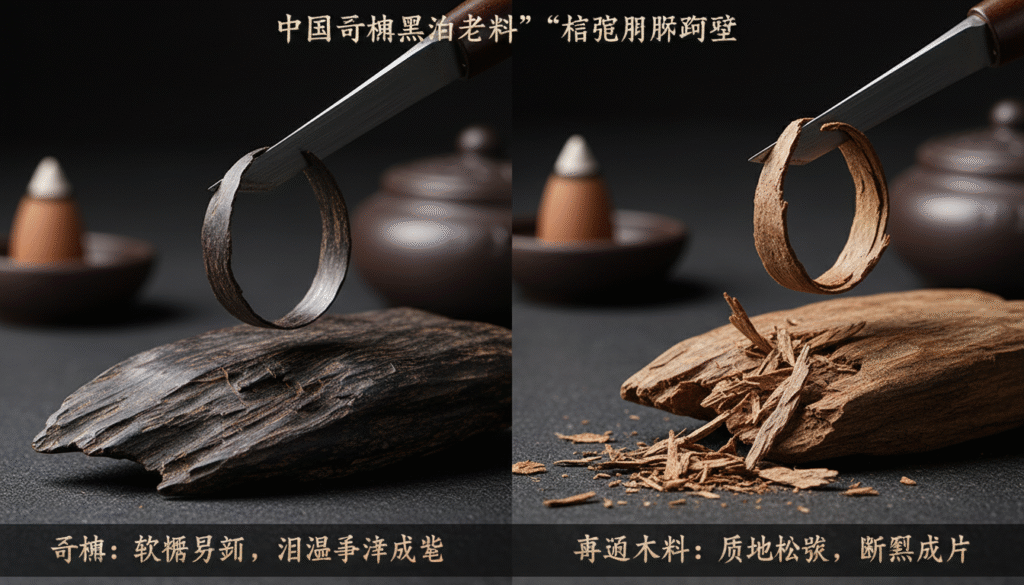
Since we are discussing high agarwood prices, I must teach you some defensive skills. This is experience paid for with high tuition fees, shared for free today to upgrade your authentication level: 1. Shaving Test (Blade Feel): Ordinary agarwood breaks into fragments when shaved, but true Kynam, due to its high oil content and waxy nature, will produce curled shavings (like pencil shavings), and the cut will feel sticky, much like cutting cheese. 2. Taste Test (Mouthfeel): Take a tiny fragment and chew it. True Kynam will first taste bitter, followed by a strong spicy and numbing sensation on the tongue and oral cavity, accompanied by salivation. This numbness can last a long time, proving the resin’s activity. 3. Room Temperature Test (Scent): This is the simplest “demon-reflecting mirror.” Ordinary agarwood has almost no scent at room temperature and must be heated. Kynam, however, emits a distinct cool and sweet aroma at room temperature. If someone offers you “Kynam” that has no scent at room temperature, it is likely a fake.
Collector’s Perspective: The Last Chance Amid Resource Depletion
As a veteran standing guard in this industry, I must tell you a harsh reality: wild resources in the rare production areas of Chinese Kynam are nearly exhausted. The old materials seen on the market today are mostly stocks accumulated from years ago. Large pieces like this, with rich black oil and suitable for making finished Buddha pendants, are truly “one less for every one sold.” They are non-renewable cultural heritages. This pendant combines religious culture, auspicious symbolism, and top-tier natural resources, making it a hard currency at the pinnacle of the high-end antique circle. For seasoned collectors or elites seeking a protective blessing, it is not just an accessory, but a family asset that can be passed down. [Expert’s Message]: Collecting agarwood is most feared when one “pretends to know” or “has no reliable source.” If this Kynam moves you, or if you have agarwood you are unsure about, feel free to click the consultation button below to chat with me privately. I do not do one-off deals; I want to connect you with true fragrance culture.
FAQs
Q. Why is there such a massive difference in agarwood prices on the market?
A. The industry is complex. Agarwood prices depend on the origin, oil content (sinking or not), scent purity, and resinification time. Ordinary cultivated agarwood is cheap, but natural wild Kynam black oil old material, like that mentioned in this article, is several times the price of gold because it is exhausted and cannot be replicated. You get what you pay for; that is the iron rule of the agarwood world.
Q. Can this Buddha pendant really “sink in water”?
A. Based on its physical characteristics as a “dense black oil old material,” this pendant has a very high expectation of sinking. In the agarwood world, sinking means extremely high oil content and is a core standard for judging value. However, I suggest treating good material with care; unless necessary, frequent water testing is not recommended to avoid affecting the patina.
Q. Why can I smell it at room temperature?
A. This is the biggest difference between Kynam and ordinary agarwood, and why it is so precious. Kynam’s resin is highly active and rich in volatile aromatic substances. It does not need to be burned or heated; at room temperature (especially when warmed by the human body), it emits a highly penetrating fragrance.
Q. I am a beginner; what if I buy a fake?
A. Your concern is normal. Besides the “curl, taste, and smell” methods mentioned, the safest way is to find a reputable seller who offers a “guaranteed authenticity and return” policy. If you are uncertain, you are welcome to contact me for one-on-one identification guidance.