[Appreciation] 11g Sinking-Grade Chinese Agarwood Barrel Beads: The Awakening of Lingnan Old Material and Decoding Its Out-of-Print Value
Sitting alone late at night, as I play with this 11-gram string of Chinese Agarwood barrel beads, the coolness from my fingertips brings back memories of a chance encounter in a mottled old house in Lingnan ten years ago. An old incense farmer in his seventies tremblingly took out a dust-covered “black lump” from an iron box under his bed. It was a treasured old material he was only willing to sell to pay for his grandson’s tuition. He said, “This is Tu-Chen (soil-buried agarwood); it has slept underground for decades, absorbing the earth’s essence.” Today, that seemingly unremarkable piece of wood has been meticulously crafted into this unique masterpiece. There are many products on the market claiming to be “Sinking-Grade Chinese Agarwood,” but those that truly sink instantly and are as oily as jade, like this string, are few and far between. Today, I won’t bore you with dry parameters; I want to use these beads, which carry a heavy story, to show you the true “Soul of National Fragrance” and why they have become a hard currency that transcends economic cycles.
Aging Under the Microscope: The “Amber-like” Miracle of Waxy Resin
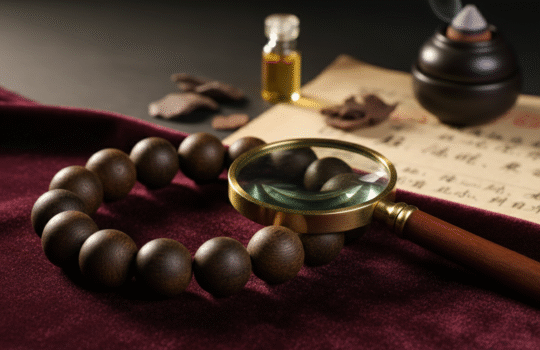
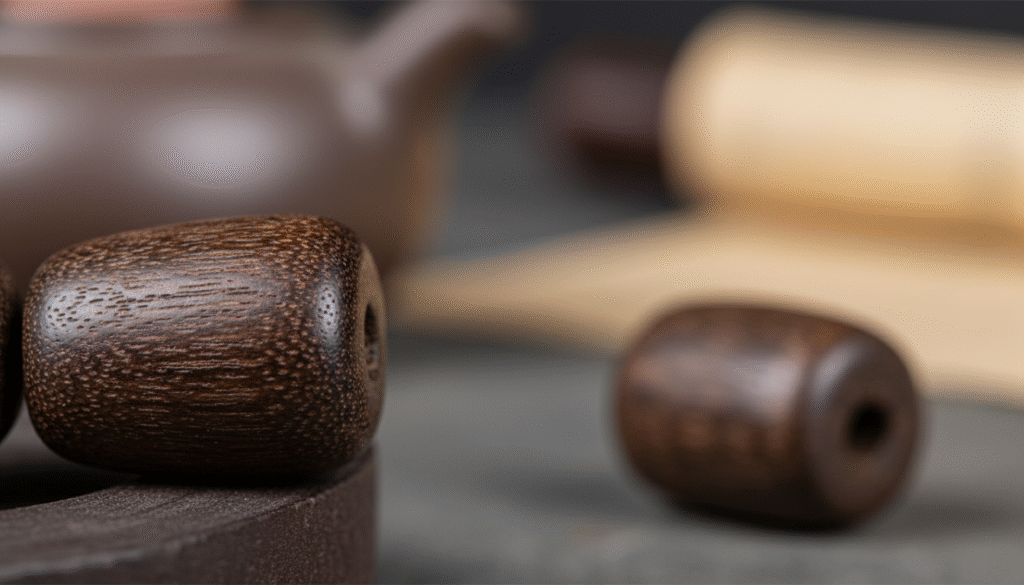
I remember when that old material was first cut; it wasn’t sawdust that seeped between the sawteeth, but a thick, viscous ointment. Look closely at these beads: they don’t have the superficial glare of artificial high-polishing, but rather a reserved “matte oiliness.” This is the legendary waxy resin formation. Under a magnifying glass, you won’t see harsh black lines; you’ll only see the oil tightly wrapping and soaking the wood fibers like amber. This is the result of decades or even centuries of self-healing by the tree after being injured, where the oil and wood have completely merged over time. This microscopic structure is like a slice of time, with every thread of texture recording the wind, rain, and thunder of the past—far superior to the “instant products” made by high-pressure oil injection.
The 11-Gram Weight: Physical Density and Historical Depth
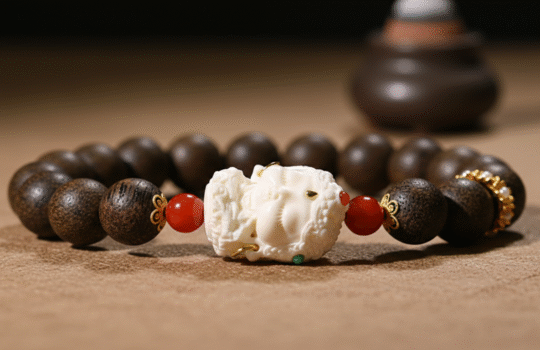
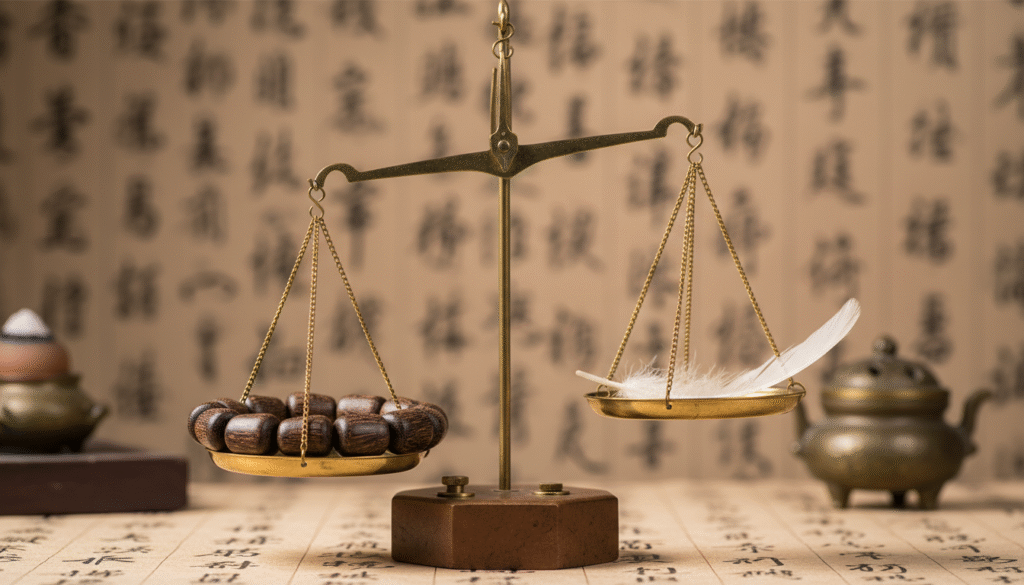
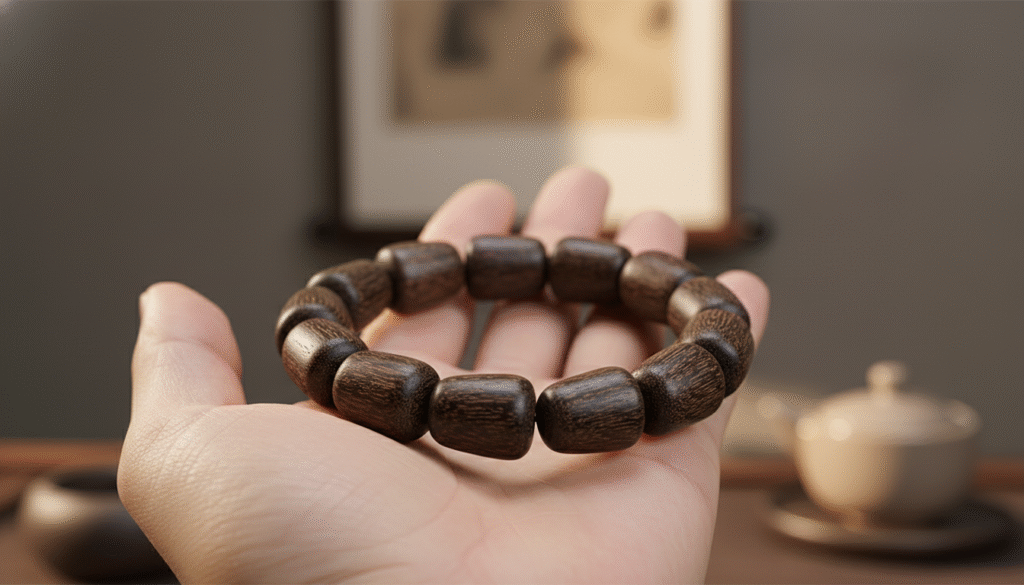
Many new players ask, “Is 11 grams heavy?” In the world of agarwood, weight is relative to volume. This string uses a refined barrel bead craft, with specifications of approximately 9-11mm x 13mm for a total of 15 beads. Reaching a total weight of 11 grams at this size means its oil content has reached a physical extreme—it is a solid Sinking-Grade piece. When you pick it up, you feel a distinct “hand-sinking” sensation. This weight doesn’t come from moisture but from the almost completely mineralized oil. As the old farmer said, “Only that which sinks can become the stone in your heart.” This 11-gram weight condenses a century of essence from a vanished primary forest; it is a heavy piece of history held in your hand.
The Unique Rhyme: A Breath of “Clear, Sweet, and Cool” Across Millennia
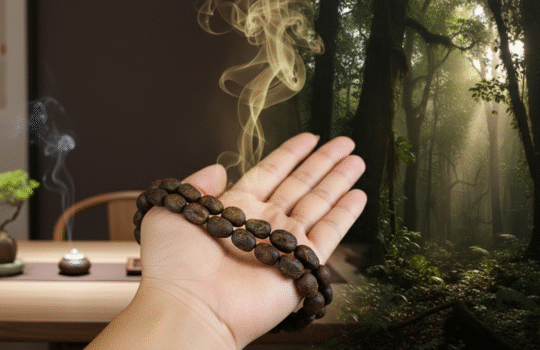
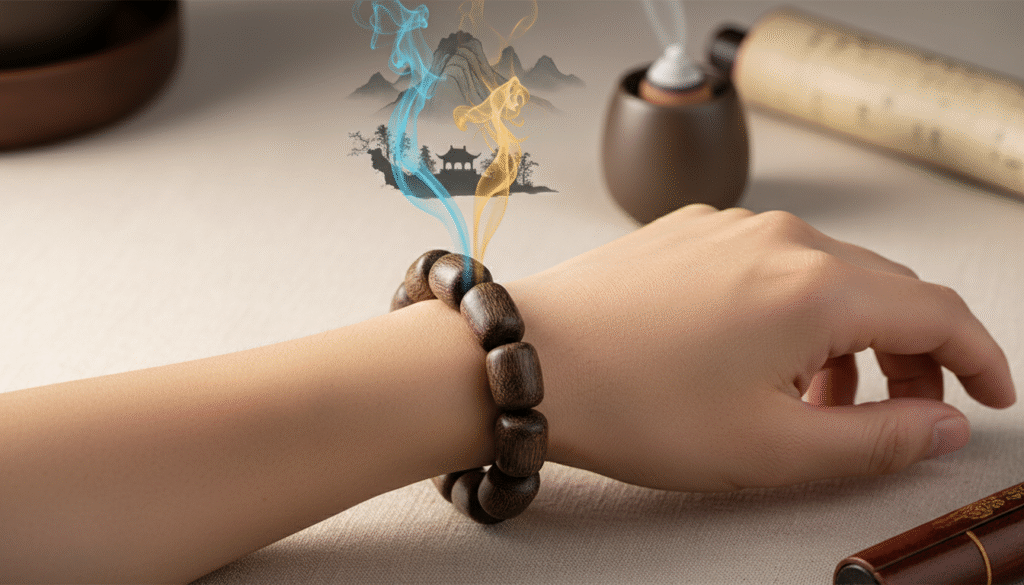
The reason Chinese Agarwood stands at the top of the hierarchy is entirely due to its “Qi” (scent energy). After wearing these barrel beads for a moment, catalyzed by body temperature, a highly penetrating “coolness” hits the nasal cavity first—a unique characteristic of Lingnan-system agarwood, making you feel as if you are in an ancient mountain temple after rain. This is followed by threads of honeyed sweetness, warm but not cloying, with a hint of primitive medicinal fragrance in the tail note. This layer of complexity is incomparable to the singular intensity of Southeast Asian agarwood. It allows you to calm down instantly in a restless city; this is what the ancients called the “Scent of a Peaceful Mind.” Every deep breath is a dialogue across time with an unpolluted era.
Out-of-Print Collection: The Logic Behind the Price Surge of Rare Old Materials
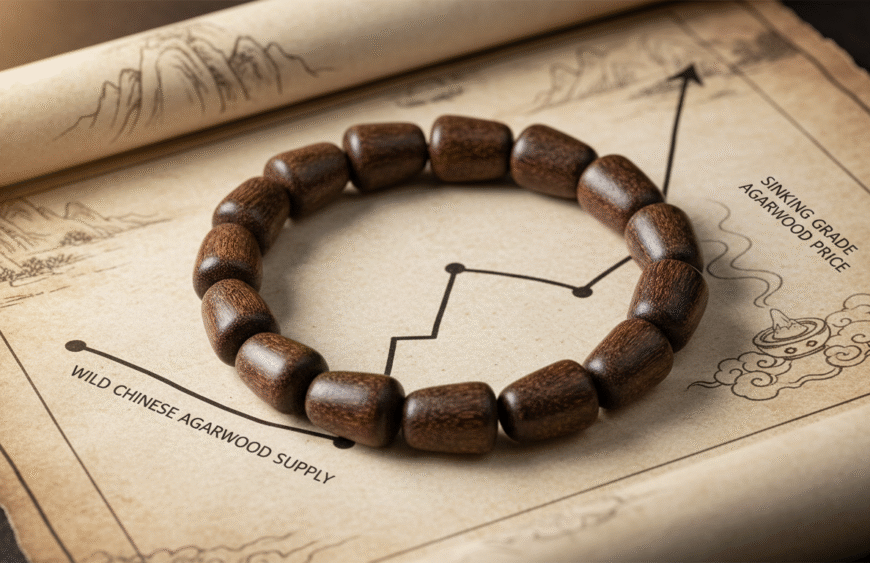
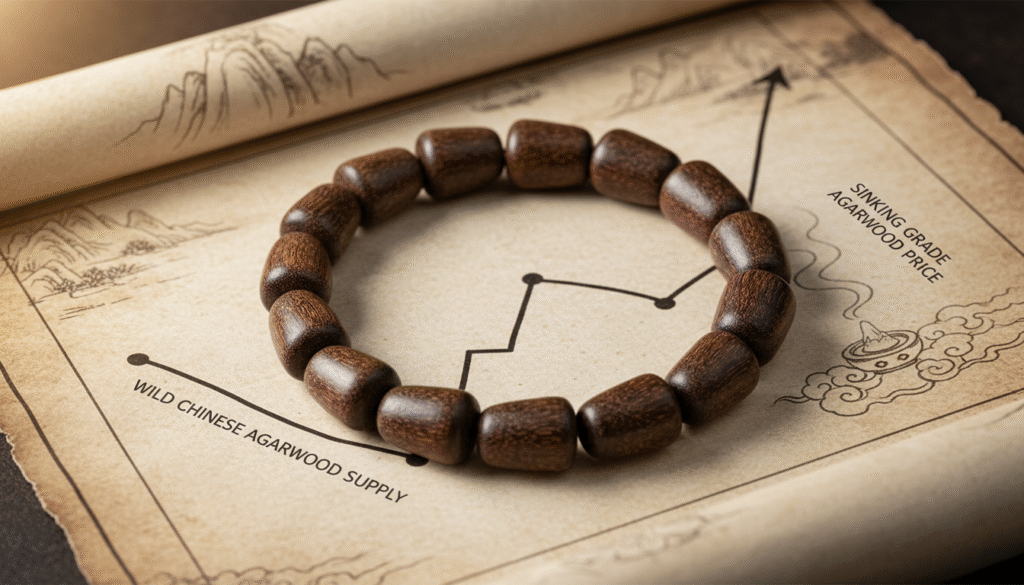
Returning to reality, why do I strongly recommend acquiring it now? Because wild sinking-grade old materials like the one held by that old farmer have become a thing of the past. Let’s look at the data: 1. Entry-level floating materials: Stock still exists, price growth is slow. 2. Sinking-Floating old materials: Bought up by experts in the last three years, prices rising 15% annually. 3. This grade (Chinese Sinking-Grade Old Material): Classified as a “non-renewable resource,” with annual price surges exceeding 30%. In the market, once a string is gone, it’s gone. Many collectors cannot find authentic Chinese sinking beads even with ample funds. This 11g string is not just a cultural piece; it is an entry ticket to the top collection circles—a “black gold” for resisting inflation and passing on family wealth.
Expert Conclusion: Seeking a Kindred Spirit to Appreciate National Fragrance
The shape of the barrel bead represents the integrity of a scholar. These beads are flat at both ends and slightly bulging in the middle, preserving the inclusiveness of a “barrel” while showing an upright character. It is not for everyone; it belongs only to the elegant who truly understand and cherish incense. [Expert’s Private Note]: From that batch of Lingnan old material, I only managed to craft this one perfect string of sinking barrel beads. I am only releasing it today to give back to my long-time followers. If you want to see the shocking moment it sinks in water or appreciate the “amber oil” texture under a high-definition lens, please send the keyword “Appreciate” in a private message. I will personally send you an unreleased video so you can experience what “obvious authenticity” really looks like. (Note: Only one unique piece available).
FAQs
Q.What specific era does the ‘old material’ behind these beads refer to?
A.’Old material’ refers to agarwood that has undergone a long period (usually decades) of natural mellowing after the tree formed the resin, and has been stored in dry conditions for a long time (this item comes from a collection started ten years ago) after being harvested. The moisture has completely evaporated, making it extremely stable with a mellow scent devoid of harshness—it is the ‘vintage wine’ of agarwood.
Q.Why is agarwood from Chinese production areas more expensive than the Sinensis/Indonesian systems?
A.Rarity is key. Chinese production areas (Guan-Xiang system) have been harvested for over a thousand years, and wild resources are nearly exhausted. More importantly, it’s about the scent rhyme. Chinese agarwood possesses a unique four-in-one scent of ‘Purity, Elegance, Sweetness, and Coolness,’ along with high medicinal value and cultural orthodoxy, representing an aesthetic height that other systems (mostly used for essential oil extraction or common incense) cannot match.
Q.What should I pay attention to when wearing 11g sinking barrel beads daily?
A.These beads are ‘alive.’ Avoid contact with chemical detergents (like dish soap or perfume), as they will destroy the precious oil layer. The best maintenance is ‘human nourishment’—letting your body temperature and natural oils moisturize it through wear. When not in use, place it back in its matching incense powder or a sealed box to allow its scent rhyme to circulate and stay fresh.