Appreciating Chinese Hainan Agarwood: Data Reveals Why This “Sinking-Grade” Natural-Form Guanyin is a “Hard Currency” in the Collection World
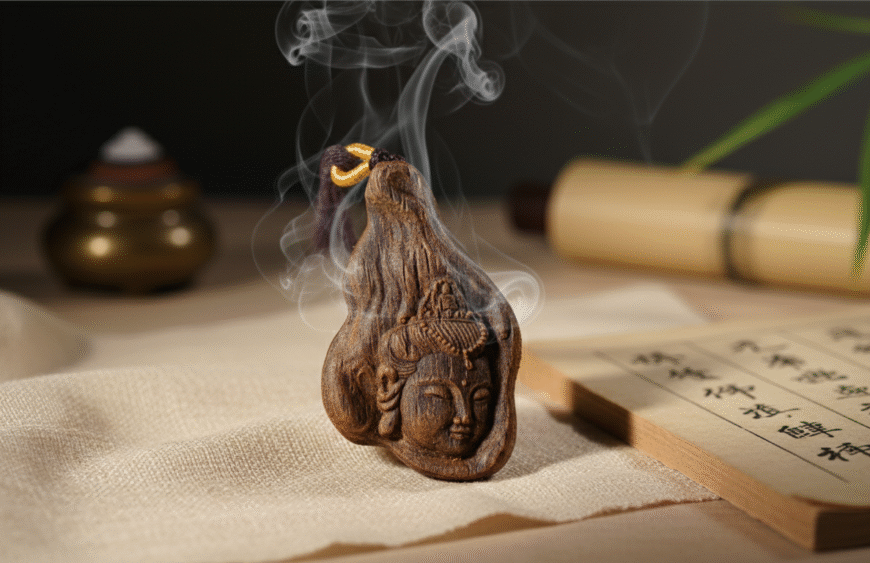
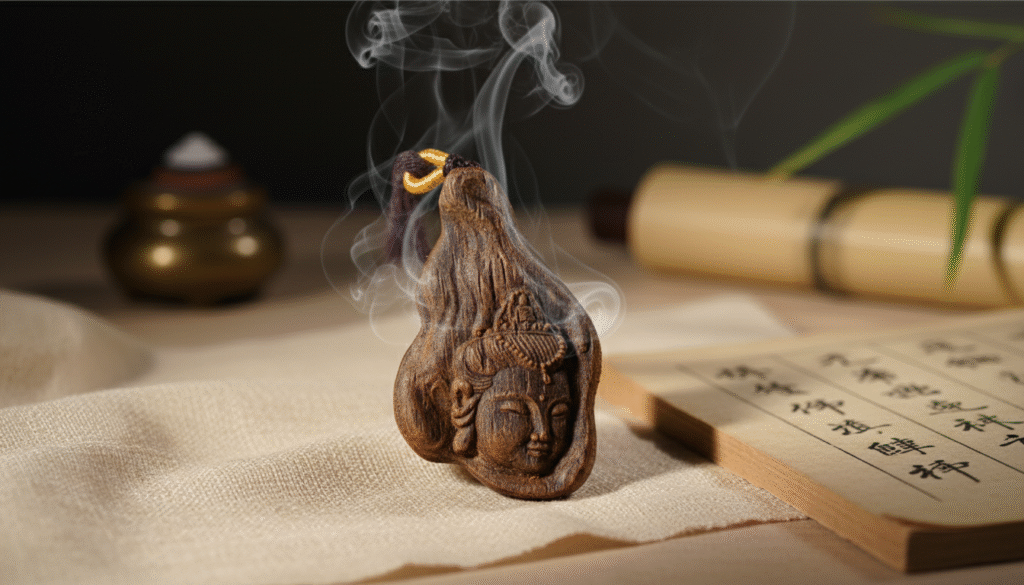
Having spent over twenty years in this industry, I’ve handled countless treasures. But to be honest, whenever my fingertips touch authentic “Guochen” (Chinese domestic agarwood), especially old Hainan material, that blood-connected pulse never changes. As the ancients said: “Agarwood from Champa is not as good as Chenla, and Chenla is not as good as Hainan.” Since the Song Dynasty, Hainan agarwood has been the “Leader of All Incense.” Today, I’m not just talking about data as an exporter; I’m inviting you, like an old friend, to appreciate this newly acquired [Hainan Agarwood Natural-Form Guanyin Exquisite Carved Pendant]. I don’t just want to show its amazing weight and resin density; I want to tell you a story of life through these cold numbers—about “scars turning into jade,” and how this “sinking-grade” piece, condensed through hardships over time, became the irreplaceable “cinnabar mole” in the hearts of senior collectors.
The Weight of Condensed Time: The “Aesthetics of Scars” Behind Breaking 1.0g/cm³
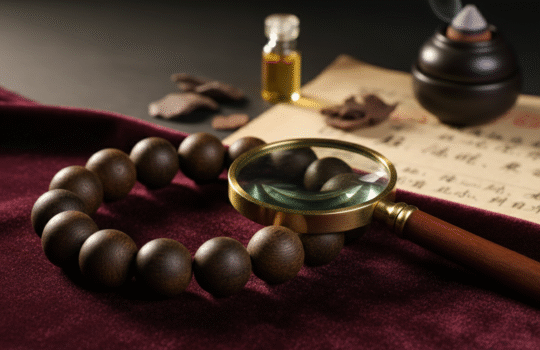
Friends who play with agarwood often talk about “sinking in water,” but the moment this Guanyin pendant hits your hand, that heavy sinking feeling conveys more than just physical “weight”—it’s the concentration of years. The data doesn’t lie: its density is steadily over 1.0g/cm³, sinking immediately in water. Look closely at the surface; those dark brown textures aren’t simple pigment deposits, but the abundant resin secreted by this Hainan Aquilaria sinensis tree over decades or even centuries to heal its wounds. It’s a miracle of “living towards death”—the wood fibers are completely saturated, filled, and eventually replaced by resin, creating this “oil-wrapped-wood” black-bright texture. Every gram of weight is a medal from the tree’s struggle with nature; every time it sinks, it’s the fruit of its endurance through tribulations. This is why, when grading, we see this high-oil “overflowing” state as ironclad proof of a top-tier collectible.
Following Nature’s Will: The “Natural-Form” Carving Philosophy of Cherishing Material Like Gold
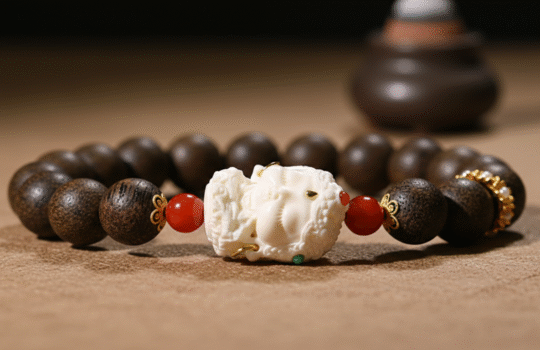
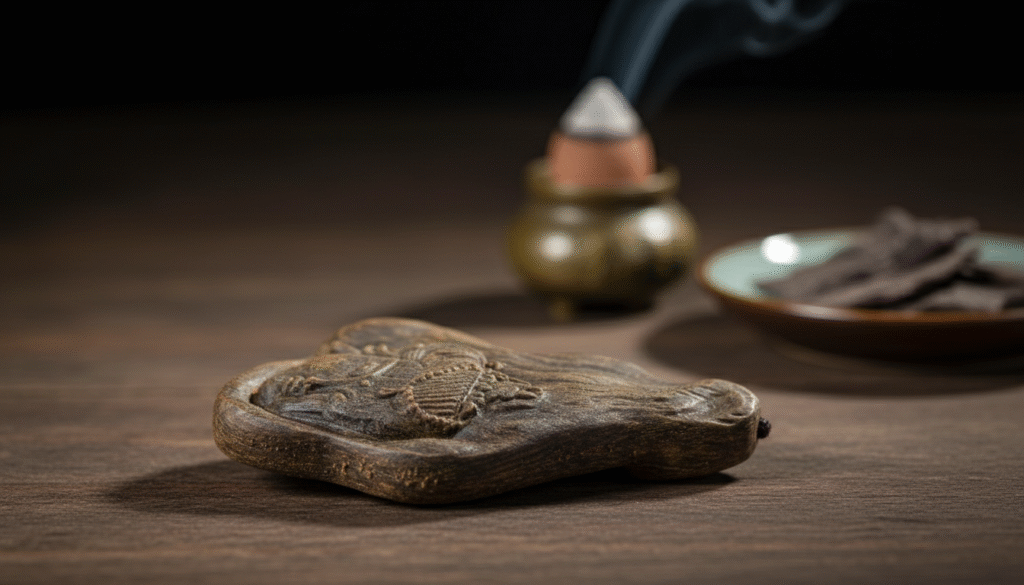
In the world of agarwood collection, there’s an unwritten rule: good material is not carved; if carved, it must follow the shape. Facing such a sinking-grade Hainan incense material that gold can hardly buy, any unnecessary cutting is a waste of Heaven’s gift. What moves me most about this pendant is the carver’s “heart of reverence.” He didn’t force the material into a square shape but followed the natural rugged contours formed by the wood, lightly carving the compassionate face of Guanyin on the “meat” where the resin is thickest and the texture most delicate. This “natural-form” craftsmanship maximizes the preservation of precious weight while skillfully avoiding minor flaws in the raw material. The lines of Guanyin’s face blend perfectly with the natural oil lines of the agarwood, as if this Guanyin was already hidden within the wood, and the craftsman merely brushed away the excess chips. This is not just physical value preservation, but an aesthetic manifestation of the “unity of heaven and man” in traditional Chinese culture.
The Soul of National Agarwood: The Lingering Charm of “Qiongzhi” with Interwoven Sweetness and Coolness, and an Invitation to Collectors
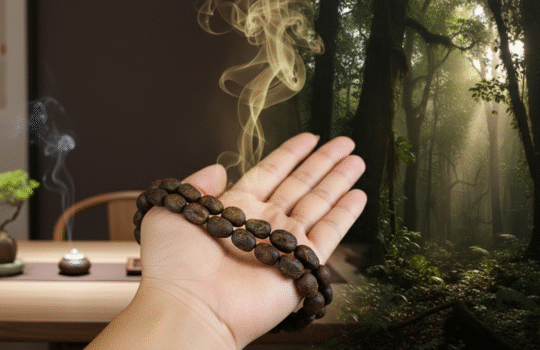
If density is the skeleton of agarwood, then its scent is its soul. The reason Hainan agarwood stands alone in the world is precisely that haunting “sweet and cool” charm. Thanks to the extremely high resin seal of this pendant, its fragrance is not a flamboyant evaporation but an introverted release. Worn on the body, body heat seems to awaken the scent soul that has slept for hundreds of years. At first sniff, it’s a piercing clear sweetness, like the fragrance of fruits after rain deep in the Hainan rainforest, so pure it clears the mind; upon closer appreciation, the middle and base notes slowly reveal a hint of elegant coolness and medicinal fragrance, reaching straight to the brow and instantly soothing the agitation of urban life. This olfactory feast transformed from high-density resin is a natural healing that no artificial fragrance can replicate. To be honest, sinking-grade Hainan old materials of this quality are often “collected before even hitting the shelf” in today’s circles. If you also want to find a “scent soul” to accompany you for a lifetime, or if you’re still confused about identifying agarwood origins, feel free to contact me directly. Good incense doesn’t wait, and fate is hard to seek. I’m willing to be your gatekeeper and share more private lists of high-quality source materials.
FAQs
Q.Why is Hainan agarwood called “National Agarwood” and why does the price remain so high?
A.Hainan agarwood (anciently called Qiongzhi) has been praised as the “King of Incense” by literati since the Song Dynasty. Its unique “sweet, cool, elegant, and waxy” qualities are unmatched by other regions. Due to long-term tribute and extraction in history, wild Hainan sinking material is nearly exhausted. The “sinking-grade” Hainan old material represented by this pendant is a non-renewable scarce resource. Its value lies not only in physical scarcity but also in its precious continuation of Chinese traditional incense culture after a historical gap.
Q.What specific impact does “natural-form” carving have on collection value?
A.”Natural-form” is not random cutting but a very clever value preservation strategy. For sinking-grade raw materials with extremely high prices per gram, natural-form carving maximizes the weight of the raw material (weight equals value). Meanwhile, natural-form carving often requires the carver to create according to the grain flow, possessing a unique, non-replicable quality. Compared to standardized machine-made pieces, these works incorporating craftsman’s ingenuity and natural forms carry more artistic premium in the collection market.
Q.How to maintain this high-resin sinking Guanyin pendant?
A.This pendant is extremely rich in resin and comes with its own protective layer, but it still needs careful care. Avoid contact with chemical detergents (such as soap and perfume) to prevent damaging its resin structure and scent. The top-tier maintenance is “human nourishment”—wearing it close to the skin for a long time. Body temperature will stimulate the resin activity, making the patina darker and more lustrous, and the fragrance more mellow and vivid. If not worn temporarily, it’s recommended to put it in a sealed bottle to let it “rest and recuperate” in its own fragrant environment.