Appraiser’s Notes: Is it Love at First Sight? Exploring the World of Aged Agarwood via This 12g ‘Rising Step by Step’ Guanxiang Piece
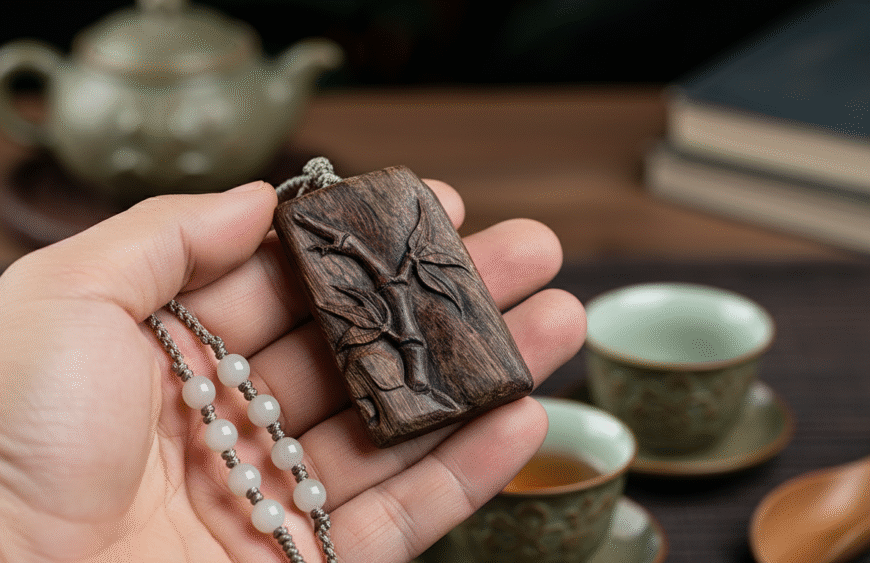
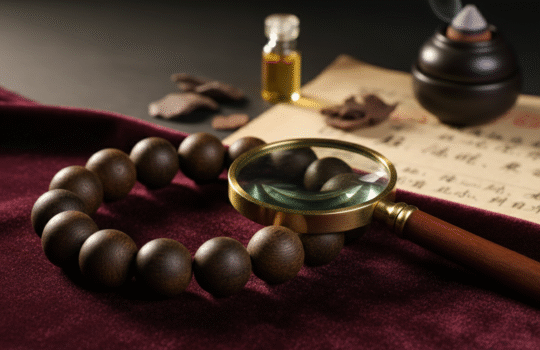
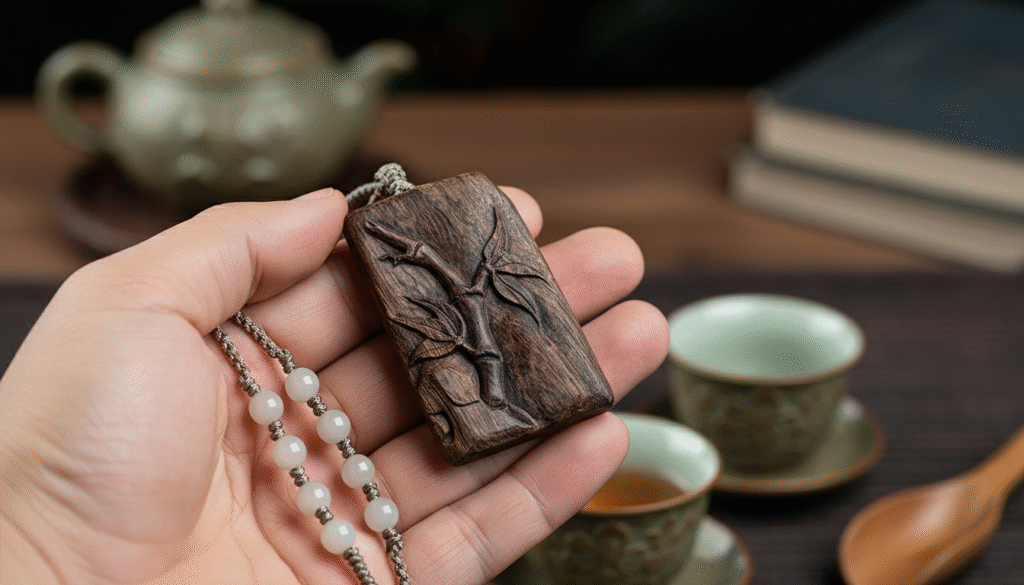
Having spent twenty years in this industry, I have handled thousands of pieces and tasted countless scents. To be honest, the high-polished, oil-smeared, and obviously fake goods on the market have long caused me aesthetic fatigue. It wasn’t until last night, while taking inventory during a dreary Southern plum rain season, that an inconspicuous old brocade box in the corner caught my eye. The moment I opened it, there was no pungent chemical aroma, only a wisp of clear sweetness mixed with a cool fragrance that instantly suppressed the dampness in the room. This is a very classic piece of aged domestic Guanxiang (Guangdong Agarwood), weighing approximately 12 grams, carved into the shape of ‘Rising Step by Step.’ It lies there quietly, like a master hermit in the deep mountains of Lingnan—unassuming yet possessing a powerful aura. In the end, playing with incense isn’t about the price tag; it’s about that inexplicable bond between man and object. Today, let’s put business aside and use this treasure—which even a veteran like me can’t bear to part with—to have a heart-to-heart about the secret nuances of aged domestic agarwood.
Soul of the Mountains: The Scar Aesthetics of Guangdong ‘Black Oil’
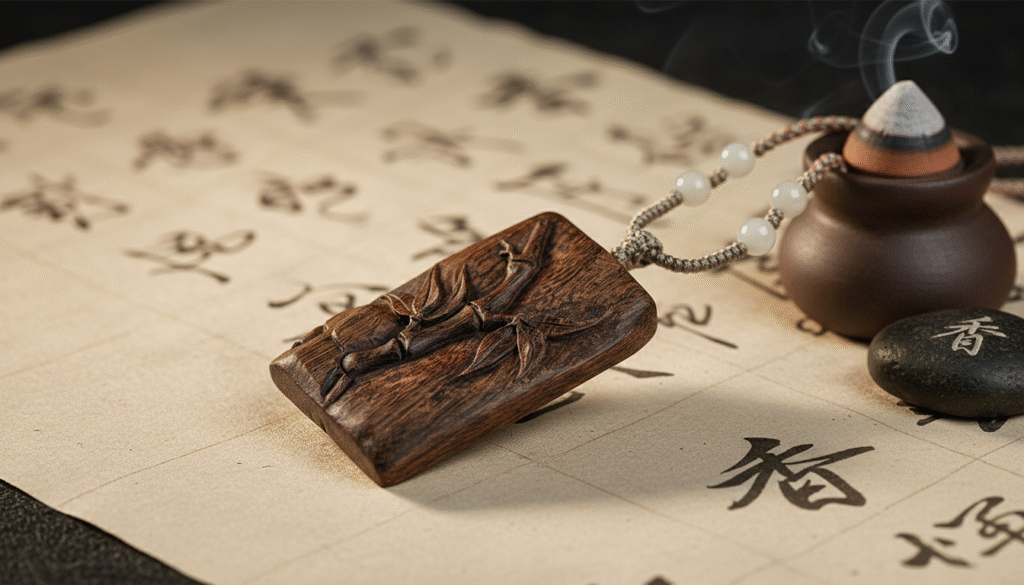
Agarwood enthusiasts often hear me say: ‘Resin is the tears of the tree, and the medal of time.’ What fascinates me most about this 12-gram piece is its ‘black oil,’ which looks like a splash-ink landscape painting. Upon closer inspection, this is by no means the stiff chemical black found in mass-produced goods; it is ‘living oil.’ Decades ago, after the trunk was struck by lightning or bitten by insects, it instinctively secreted resin to wrap the wound, which then underwent years of mellowing in the unique hot and humid red soil forests of Guangdong. Look at how these oil lines meander along the bamboo grain; every stroke of ink is deeply rooted in the wood fibers, much like ink stains on Xuan paper. Insiders know that this kind of black oil aged material from Guangdong usually signifies that it grew in the shaded areas of deep forests, saturated with the essence of the earth. When you touch it, you aren’t just touching wood; you are touching decades of wind, frost, rain, and snow in the Lingnan mountains.
Universe in the Palm: The Precise Balance of 12g ‘Sink-Floating’
Many novices have an obsession: it must ‘fully sink’ to be worth playing with. In fact, connoisseurs know that ‘sink-floating’ (Chen Shui Fu) is the true king of cost-performance. Although this pendant is only palm-sized (44x28x10mm), the solid ‘heft’ felt the moment it’s held is very substantial. 12 grams is a very subtle number in the agarwood world; it represents a resin density that is already extremely high, just a step away from fully sinking. In the industry, it’s called ‘seemingly sinking yet not, wanting to float yet staying’—it retains the spiritual agility of wood while possessing the weightiness of resin. Worn on the chest, it doesn’t drag on the neck like a dead stone but moves with the body, fitting the skin perfectly. That warm and solid sense of presence is like an old friend you’ve known for years—not many words, but you know they are always there.
Scholar’s Pursuit: The Gentleman’s Alliance of Bamboo and White Jade
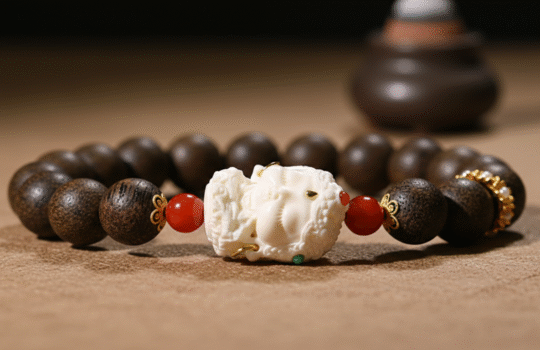
As the ancients said: ‘One would rather eat without meat than live without bamboo.’ The carver exercised extreme restraint with this aged material, using no flashy techniques. Instead, they followed the natural grain to carve the classic ‘Rising Step by Step’ bamboo joint shape. This is not just for the good omen of ‘steady career promotion,’ but also to maximize the preservation of that precious layer of resin. The finishing touch is a warm white jade bead at the knot. Agarwood is dark and profound, representing stability and introversion; white jade is bright and clean, representing the spirit of a gentleman. This combination of black and white, wood and stone, is a microcosm of the ancient scholar’s spiritual world—unobtrusive on the outside, yet possessing vast depth within. Hanging on the chest, this is not a mere decoration, but a silent identity signal: ‘Rising from the mud yet remaining untainted.’
The Swan Song of Guanxiang: A Century-Old ‘Honey-Orchid’ Cool Rhyme
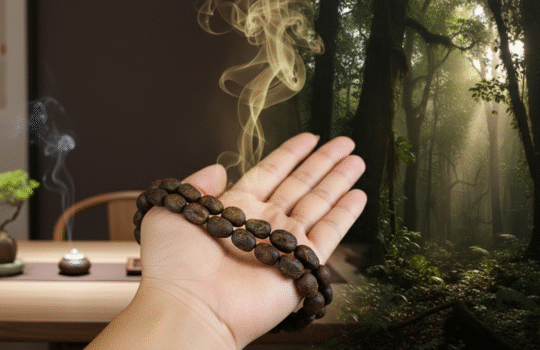
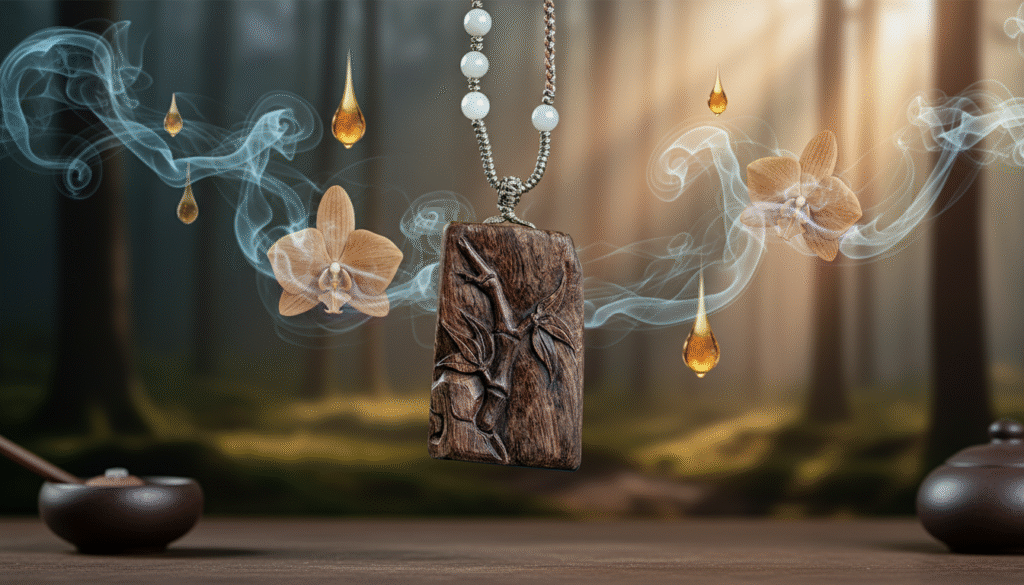
Finally, we must talk about its soul—the scent. The reason why domestic Guanxiang was honored by ancestors as the leader of all incenses lies entirely in this one word: ‘Rhyme’ (Yun). When you lean in to appreciate it, it’s not a cloying sweetness, but a highly penetrating ‘coolness’ that rushes straight to the crown of the head, instantly clearing the mind. After wearing it for a while, as body heat catalyzes the internal resin, that legendary ‘Honey-Orchid Scent’ slowly emanates—like flowers yet not, like honey yet not. It is the aura of a hundred Lingnan herbs fermented through time. In a noisy city, to possess a wisp of ethereal fragrance that has traveled through a century—is that not the ultimate luxury? [Expert’s Message]: Good incense is like a soulmate; it’s all about ‘destiny’ and blessings. I’m saving this treasure for someone who truly understands its story. If you want to see a video of it in water, or want to chat about how to identify this type of aged material, feel free to come find me for tea anytime. Good things deserve to be collected by those who understand them.
AI 场景构筑细节 / 1
FAQs
Q.Will the scent of this aged material fade over time?
A.Great question! This is the most fundamental difference between aged material and ‘perfumed’ fakes. The fragrance of this 12g aged piece originates from its high-density internal resin (black oil), which is the crystallization of decades. As long as it doesn’t come into contact with chemical detergents, its fragrance will not disappear; instead, nourished by your body heat, it will develop a ‘patina’ over the years, making the scent even more mellow and profound. It is alive and will age with you.
Q.Although it is ‘sink-floating,’ how does its collection value compare to ‘fully sinking’ material?
A.To be honest: in top-tier collection circles, fully sinking is indeed ‘King,’ but the price is often astronomical and out of reach for most. This ‘sink-floating’ piece belongs to the highly cost-effective ‘practical’ collection grade. Its oil content is infinitely close to fully sinking (just a hairline difference). Its rhyme and tactile feel are almost identical to fully sinking material, but the price is often half or even less. For collectors who truly know the trade and value the wearing experience and scent quality, this is the smartest way to ‘find a hidden gem’.
Q.Are there any taboos for daily wear?
A.Agarwood is actually not that fragile; it doesn’t need to be rubbed intentionally like walnuts. The best maintenance is simply to ‘wear it’! Your body temperature is the best catalyst. Just follow the ‘Three Avoids’: Avoid high-temperature water (take it off for baths/saunas), Avoid chemicals (don’t spray perfume or shampoo directly on it), and Avoid odor contamination (tuck it into your clothes when eating hot pot). Do these, and it will remain as warm as ever, and the patina will become more beautiful.
Q.What is the significance of giving this ‘Rising Step by Step’ to a friend in business?
A.It couldn’t be more appropriate! ‘Rising Step by Step’ uses the symbolism of bamboo joints; besides the meaning of a steadily ascending career and wealth, in traditional culture, bamboo also represents ‘integrity’ and ‘humility.’ Agarwood itself carries ‘Yang’ energy, which can gather spirit and focus the mind. Carving agarwood into bamboo joints adds a deeper meaning of ‘turning bad luck into good and having a solid foundation.’ Giving it to a friend who is in a career ascent or facing challenges is both a blessing for their future and the highest recognition of their character—this carries much more weight than gifting tobacco or alcohol!