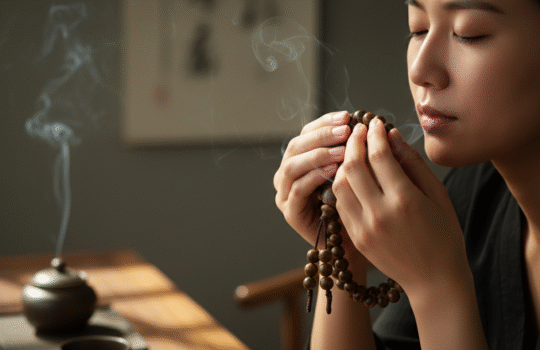
Agarwood Powder Appreciation: A Spoonful of Broken Gold, a Moment of Time — Why This Domestic Old Material is the Ultimate Companion for Inner Peace?
In the world of agarwood collection, there is a saying: ‘Wood is dead, but agarwood is alive.’ Over twenty years of searching for fragrance, I have personally seen those ancient trees in the deep mountains of southern China that remain standing despite lightning strikes and insect infestations. The resin they secrete, after decades of mellowing, finally condenses into this ‘relic of the wood.’ The agarwood powder presented to you today is not a standardized product from an industrial production line, but is ground from a batch of precious ‘fallen-dead’ (Dao Jia) old material from Chinese regions, after removing the white wood and selecting only the oily cores. Through the screen, please observe its texture closely—it is not dull, dry dust, but a deep brown ‘soil’ that seems to still be breathing. It carries the aura of mountains and rivers, quietly waiting for a connoisseur who understands it to reignite its life.
The Touch of Fingertips: It is ‘Powder,’ yet possesses the Soul of a ‘Paste’
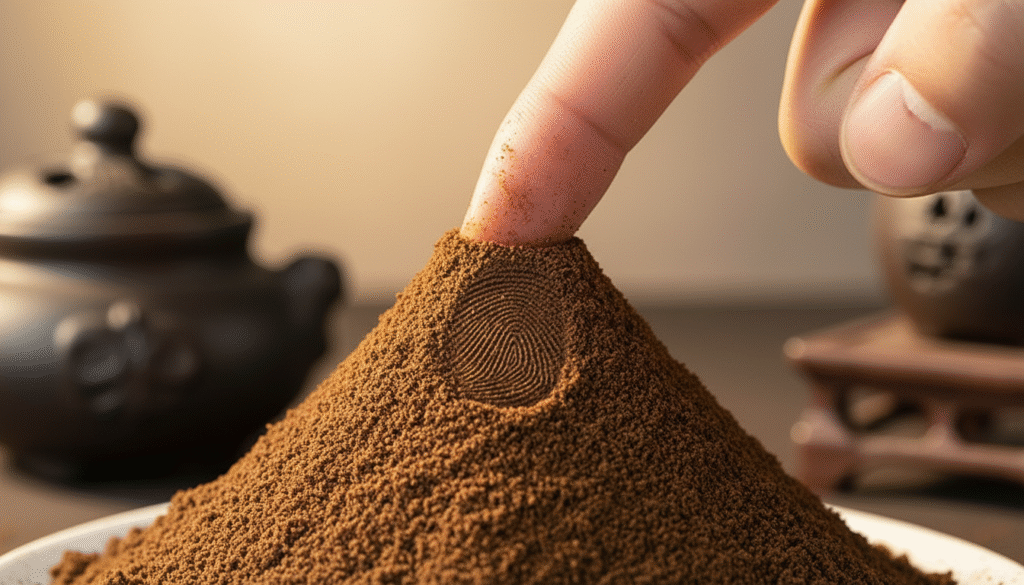
Many fragrance enthusiasts are surprised by the ‘feel’ of this old material powder upon first contact. Unlike the dry, flyaway inferior new material powders on the market, this domestic old material has a ‘soft, waxy feel’ similar to fine brown sugar when rubbed between the fingertips.
This physical ‘stickiness’ is an unforgeable proof of identity. It stems from the extremely high oil content within the old material—this resin was once the blood that healed the tree’s wounds and has now become a natural binder for the powder. Because of this, when you create an incense seal (Xiang Zhuan), it spreads effortlessly like obedient ink following the patterns of the mold. The moment the mold is lifted, the lines are sharp and resilient, never breaking. This is not just a successful incense experience, but a fingertip dialogue with the vitality of nature.
Olfactory Narrative: A Time Travel from ‘Melon Sweetness’ to ‘Ancient Medicinal Rhythm’
Agarwood from Chinese regions has always been known for its ‘elegance’ and was revered by generations of literati as the head of all fragrances. The scent profile of this old material powder is a narrative poem with a beginning, transition, and conclusion.
At room temperature, it is restrained and deep; only by leaning in can you smell a faint scent of aged wood, as if opening the door to an ancient study. However, once touched by a spark (whether through indirect heating or seal burning), its soul awakens instantly: the initial note is a penetrating sweetness, carrying the freshness of melons and fruits after rain; following closely, the core rhythm—the signature ‘National Fragrance Medicinal Rhythm’—begins to permeate. It is not the bitterness of a traditional pharmacy, but a mellow sweetness similar to a blend of dried tangerine peel and licorice, warm and heavy. This fragrance can quickly settle a restless mind; during meditation or yoga, it is the invisible thread that pulls you into a state of ‘Samadhi.’
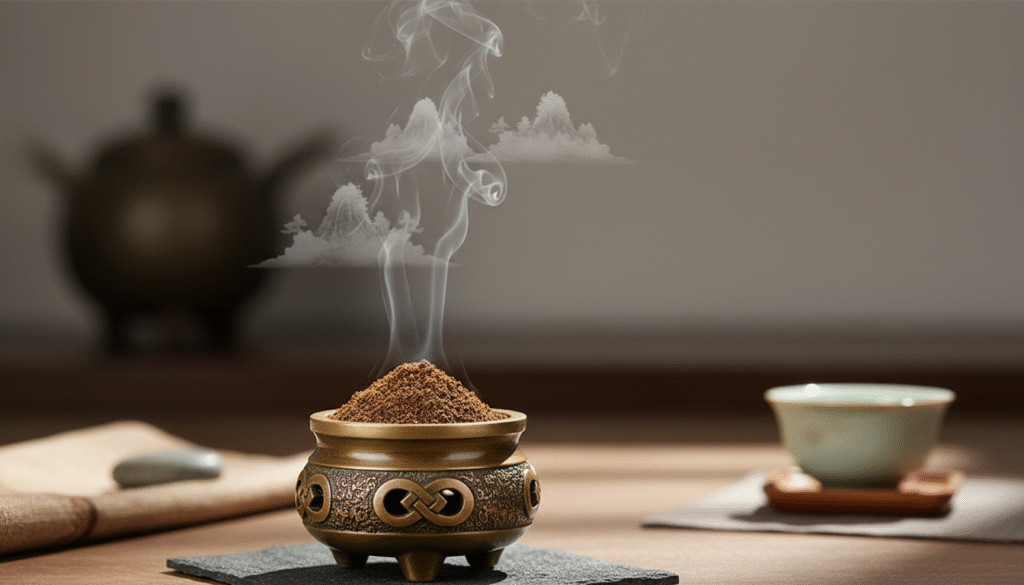
The Practitioner’s Companion: Finding Inner Order in a Single Incense Burner
In this era of fragmentation, we need a ritual to combat anxiety. This agarwood powder is the best ‘boundary’ for your desk.
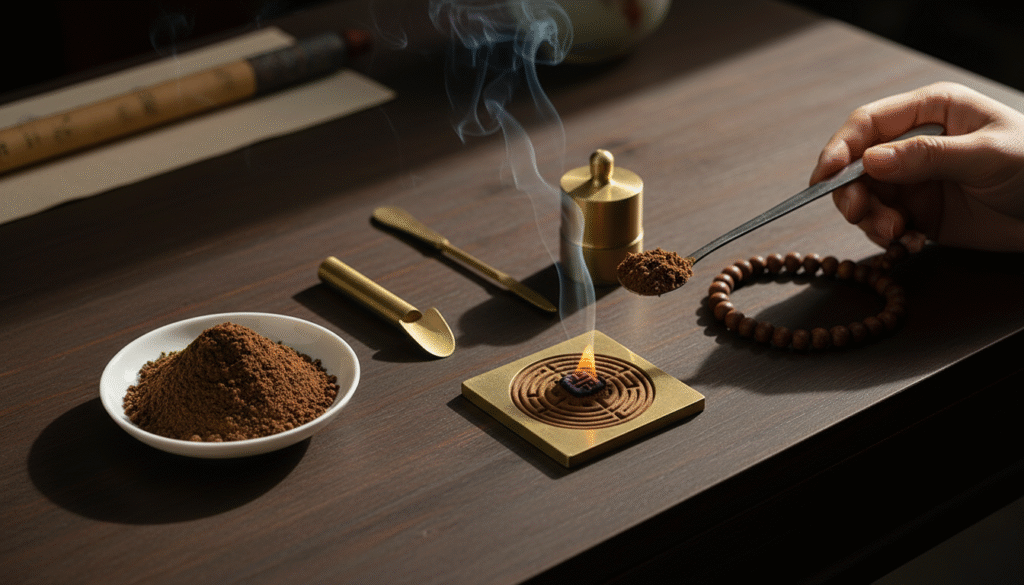
Its extremely fine grind (100+ mesh) gives it high versatility. It is not only a ‘zero-failure’ choice for making incense seals but also a perfect match for electronic burners. Take 0.5 grams of powder and slowly roast it at a constant temperature; there is no smoke or fire, only the circulation of scent—this is the modern version of ‘indirect incense burning’ championed by Song Dynasty scholars. Alternatively, you can try hand-rolling it into cone incense to feel the process of the powder taking shape in your palm.
[Expert’s Message]: If you are unsure whether this ‘medicinal rhythm’ matches your current state of mind, or if you want to see the oily details of this batch of old material under a macro lens, feel free to click the ‘Private Message’ button below. I am not here to sell; I simply want to help you find the fragrance that allows your soul to settle.
FAQs
Q. This powder looks very dark; is it artificially dyed?
A. Absolutely no artificial dyeing. This is exactly where the difference between ‘old material’ and ‘raw wood’ lies. The value of agarwood lies in its ‘oil.’ The longer the resin oxidizes, the deeper and more stable the color becomes. The deep brown of this powder is a true reflection of high oil content and long-term natural aging—it is the patina of time, not a chemical disguise.
Q. I am a beginner in the Way of Incense; is this powder suitable for me to practice with?
A. It is not only suitable but is the ‘confidence choice’ for beginners. Beginners making seals most fear the powder scattering or the fire extinguishing, which is often caused by dry, low-oil powder. This old material powder, due to its richness in oil, has natural stickiness, making it extremely easy to mold and stable to burn. It accommodates inexperienced techniques, helping you easily create a perfect incense seal and take your first step toward inner peace.
Q. Besides making incense seals, are there other uses?
A. There are many ways to enjoy it. In addition to traditional seal making and electronic burner heating, you can put it into a sachet to wear; your body heat will stimulate its subtle fragrance. Alternatively, while practicing calligraphy or drinking tea, you can sprinkle a small amount next to embers to experience the elegance of ‘adding fragrance to accompany reading’ as the ancients did.