A Rare Masterpiece Unveiled: Why This Large Chinese Kynam Circular Disc is a ‘Museum-Grade’ Specimen
“This is more than just agarwood; it is a frozen moment in time. As a connoisseur with 20 years of experience, I rarely use the word 'stunning,' but this Chinese Kynam disc from the red soil layers of Limu Mountain defines 'Museum-Grade' with its irreplaceable resin. Discover the legend and investment value of this 'living fossil.'”
In the world of agarwood collecting, we often say ‘fate is predestined.’ To be honest, after decades in this industry, I have handled countless breathtaking Kynam pieces, but most were fragments or small irregular shapes. However, when this complete Chinese Kynam circular disc was placed on my desk, I felt as if I could hear the breath of the deep mountains. This is more than just a piece of wood; it is a ‘full moon’ that has weathered a century of storms, a divine miracle left by the Creator in the Hainan rainforest. In an era full of industrial haste, as a veteran collector, I invite you to slow down and, through this masterpiece, touch a legendary story of lightning strikes, red soil, and the nirvana of time.
Congealed Fat Like Jelly: The Warmth of ‘Soft Jade’ at Your Fingertips
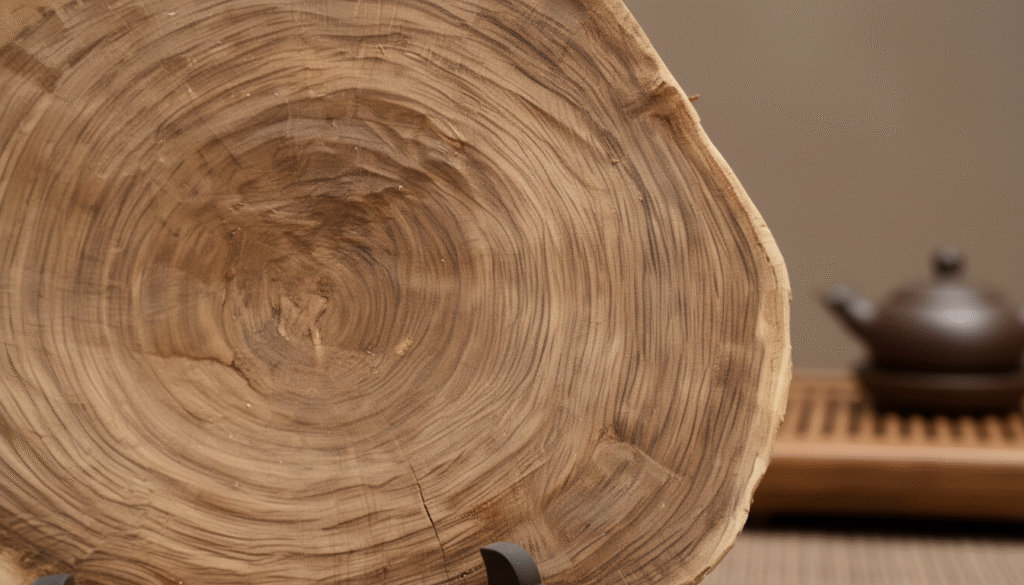
The ancients said Kynam ‘curls when shaved and forms a ball when kneaded.’ Many friends have heard of this but never seen it. This large circular disc is the living footnote to those words. Close your eyes and imagine: when your fingertips touch its cut surface, it is not the dryness of dead wood, but a sensation of ‘congealed fat’ ready to emerge. Under the light, the dark, shiny resin seems to flow, presenting a paste-like texture similar to aged beeswax. As an expert, I must share a secret: this texture is the result of resin and wood fibers deeply merging and fermenting over long years. It feels soft and waxy like jade. This ‘living’ oiliness makes it feel as if the resin just stopped flowing within the tree, frozen at its most bountiful moment. This extreme softness is the unforgeable ID card of top-tier Chinese Kynam—no high-definition photo can match the heart-pounding sensation of touching it yourself.
Totems of Time: Rebirth Through the Growth Rings
If oil is its flesh and blood, then texture is its soul. Most agarwood on the market comes in slices or chunks, but this complete circular cross-section records the entire life epic of the tree. Look at these clear honey-like resin nodes; they are not static lines, but a battlefield of pain and healing. Each dark oil cluster represents an invasion by fungi and the tree’s resistance. This radial resin pattern looks like a nebula in the universe, layering and spreading outward. This is not ordinary old wood; it has undergone the complete cycle from ‘living wood resin formation’ to ‘fallen tree aging.’ It retains the tree’s original silhouette while completing a qualitative transformation within. This texture is nature’s most magnificent ‘Nirvana’ totem. Every growth ring is written with the vicissitudes of time, and it is the most important ‘ID card’ I recommend you look for when collecting.
The Legend of Limu Mountain: ‘Moon Soul’ Buried in Red Soil
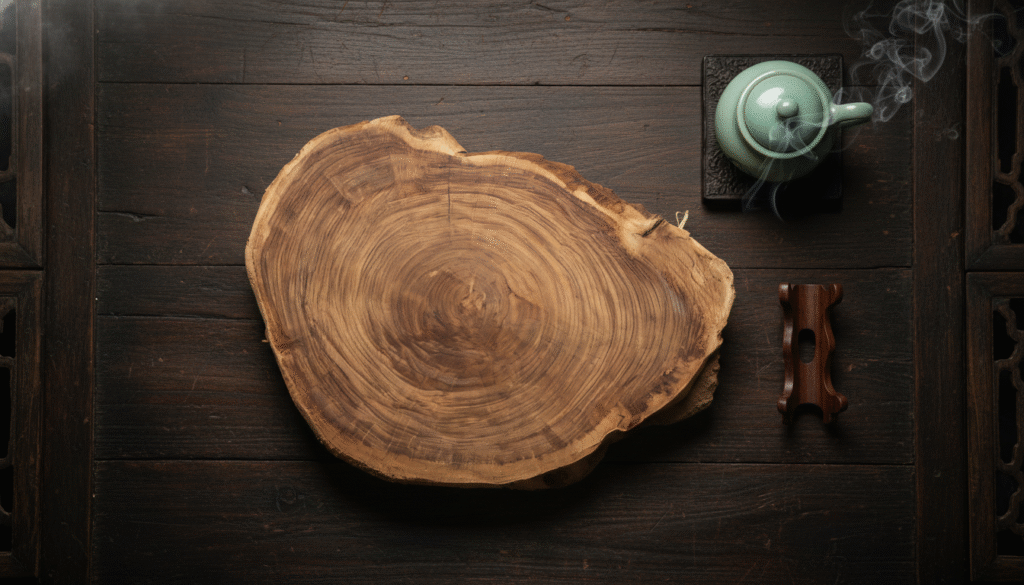
Regarding the origin of this large piece, I must mention an anecdote told among veteran Hainan agarwood hunters. Legend has it that in the depths of Wuzhi Mountain and Limu Mountain, there is a type of Kynam called ‘Moon Soul.’ They often originate from ancient trees hundreds of years old that, after falling, were buried deep in iron and aluminum-rich red soil. This circular disc is very likely that legendary ‘Soil-Buried Kynam.’ Hainan’s unique high temperature, humidity, and slightly acidic red soil act as a giant natural fermentation tank, allowing the tree to be completely transformed by specific microbial groups in an oxygen-free environment. Old farmers say that only ‘large pieces’ sleeping underground for over 300 years can maintain a circular shape without decaying. The cooling sensation and explosive aroma of this piece come from absorbing the essence of this land, making it a perfect geological specimen of Hainan Island.
A Legacy Piece: Faith Beyond Gold and Stone
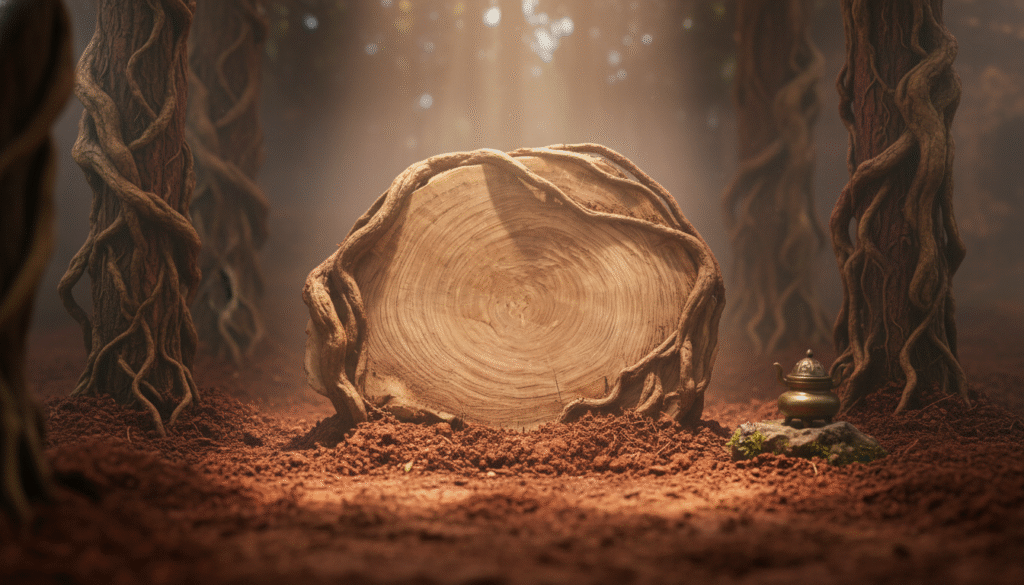
Finally, let’s talk about value, but not just in terms of money. In ancient times, Kynam was a tribute worth ‘ten thousand pieces of gold for a single slice.’ Today, a disc of such massive volume, complete shape, and top-tier aroma is a ‘one-of-a-kind discontinued’ item. Its scarcity lies in its non-renewability—forming such an oil-saturated cross-section requires the luck of an entire virgin forest. As a friend, I sincerely suggest: For seasoned collectors, acquiring this ‘Chinese Kynam’ is about collecting history and faith. Placed in a hall, the initial scent is a piercing coolness, followed by rich milky and honeyed notes that calm the mind and cleanse the spirit. As an asset, it is a hard currency against inflation; as culture, it is a ‘house-protecting treasure’ for descendants. In future auctions, you may see Kynam beads, but this ‘circular specimen’ witnessing geological miracles will likely be a thing of the past. [Expert’s Private Whisper]: If you are touched by this ‘unique piece of time,’ or wish to personally appreciate its thrilling cool notes and floral fragrance, do not hesitate to contact me directly below. Connecting with a masterpiece depends on ‘eye-fate’ and ‘timing.’ I am happy to open this private tasting journey for you.
Q&A
Q. Why is the ‘circular’ Kynam disc considered a ‘one-of-a-kind’ item?
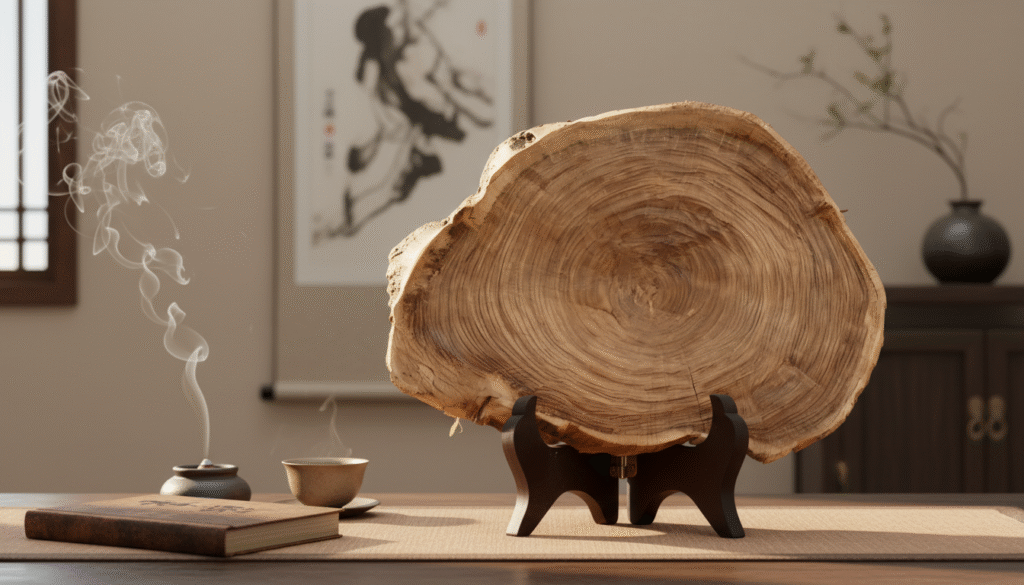
A. It is a statistical miracle. Kynam usually forms in heartwood or local wounds, and after years of erosion, most exist as fragments. A piece that retains the complete circular trunk outline with internal oil penetrating in all directions means the tree was protected (like buried in soil) after its natural death before being fully decomposed by insects. It is as rare as a dinosaur fossil.
Q. How to identify the ‘Red Soil Gene’ of this piece with the naked eye?
A. This is an expert’s secret. Kynam from red soil areas often has slight, un-washable reddish soil stains in its crevices. More importantly, red-soil-aged resin often shows a higher-grade ‘reddish-brown’ or ‘purplish-black’ color, and its aroma carries a special sweetness similar to ripe fruit mixed with earthy fragrance.
Q. As a museum-grade specimen, how should it be maintained daily?
A. The best maintenance is ‘human nurturing.’ Kynam loves cleanliness and hates odors. I suggest displaying it in a constant temperature and humidity glass case, avoiding direct sunlight. However, do not lock it away forever; take it out occasionally to handle or let it ‘breathe’ in a cool spot. Its own resin is highly corrosion-resistant. Never apply artificial oils.