The Silent Shock of Out-of-Print ‘National Grade’ Material: Why This Aged Black Oil Bracelet with Hainan Jianfengling Charm Makes Me Reluctant to Sell?
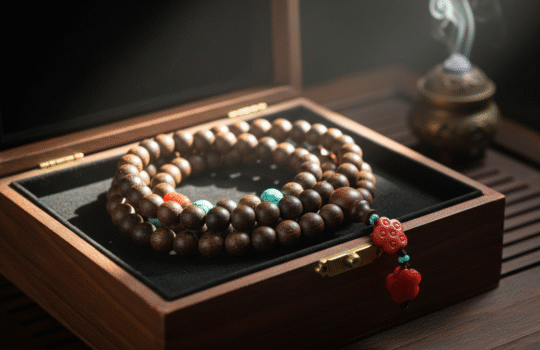
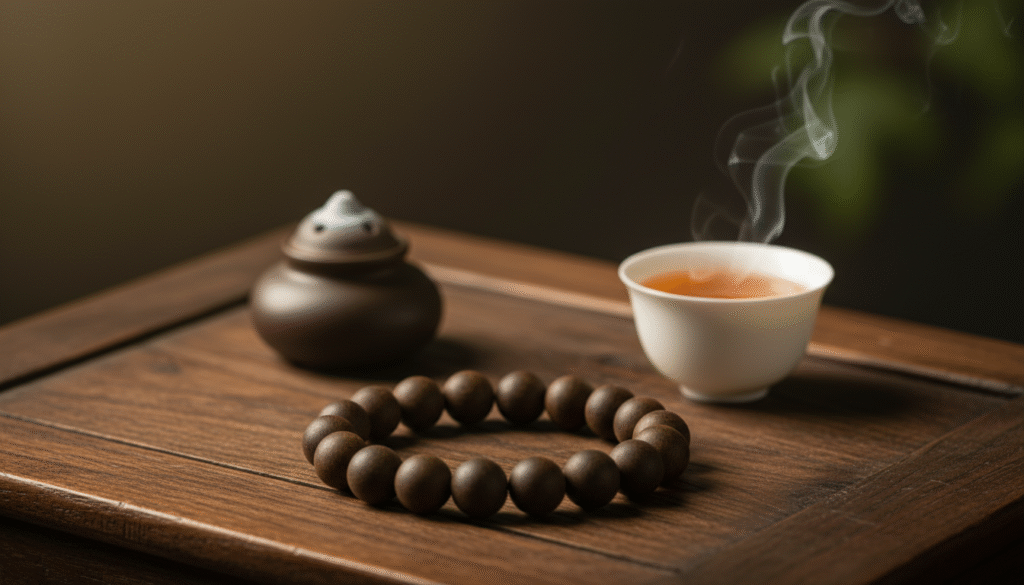
To be honest, after over twenty years in this industry and handling countless pieces of incense, my heart still skips a beat whenever I encounter a true ‘National Grade’ old-growth piece. Today, the market is flooded with ‘Vietnam Nha Trang’ and ‘Kalimantan,’ but true connoisseurs know that our domestic Chinese Agarwood—especially those materials carrying the misty aura of Hainan Jianfengling or the wild forest scent of Guangdong Dianbai—possesses an elegance and power that South Seas materials simply cannot replicate. Today, I’m not talking about boring data; I want to chat about this treasure I just acquired. It’s more than just a string of beads; it’s a preserved fragment of Chinese mountain time. Let’s skip the fluff and look directly at the piece to see exactly why this bracelet, which kept me captivated at my tea table all afternoon, is so divine.
A Glimpse of Eternity: Irrefutable Traces of Time and Mountain Spirit
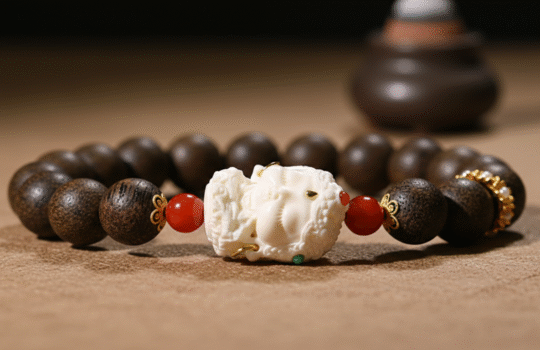
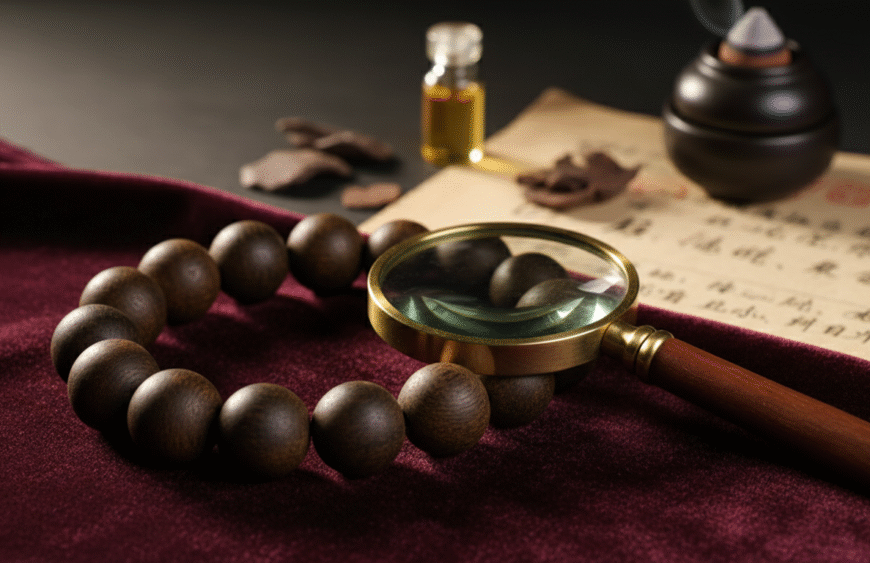
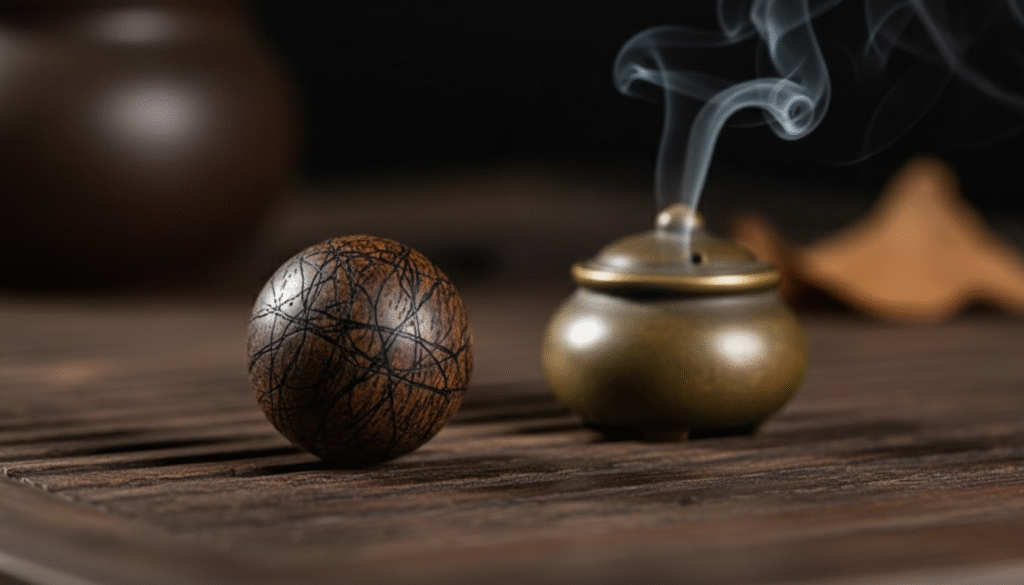
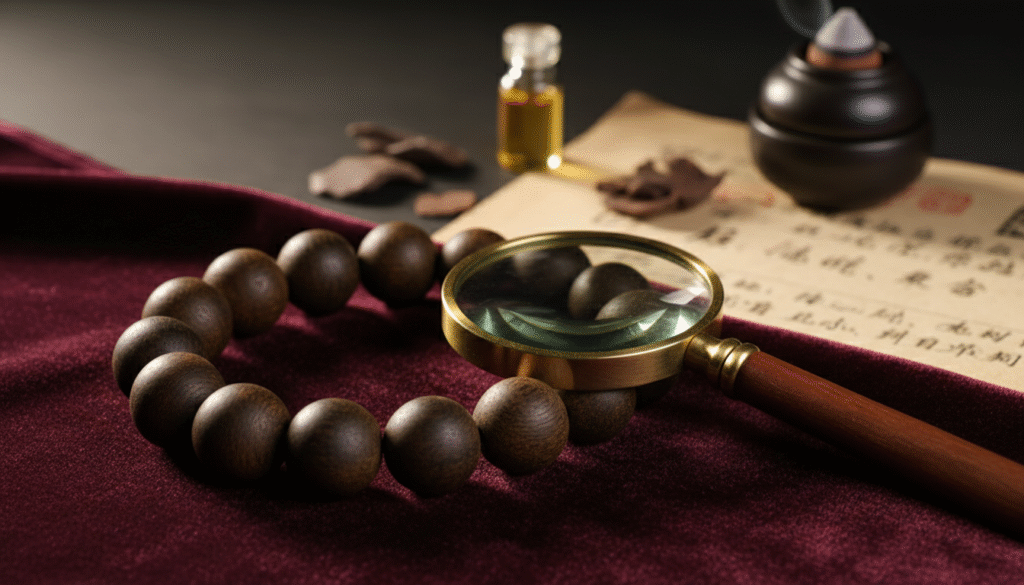
When playing with Agarwood, the first look is for the aura; the second is for the details. Beginners are often fooled by things that are unnaturally black, but look closely at this bracelet. Using a magnifying glass, what fascinates me most is its dense and uniform oil distribution, with visible interlaced dark oil lines in a natural state. This is absolutely not the rigid blackness produced by manual oiling or high-pressure injection, but a living, breathing texture.
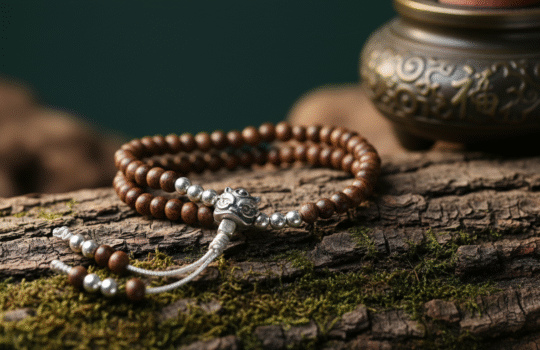
The bead body presents a deep brown to blackish-brown hue, indicating a long aging and curing process. This color is slowly simmered by time, much like a slow-cooked soup that won’t reach this depth without enough heat. Especially when you rotate the beads, the texture is naturally continuous, possessing the delicate quality typical of domestic materials. If you’ve been to the primeval rainforests of Hainan Jianfengling or seen old material samples from Guangdong Dianbai, you’ll find this texture fits those geographical climates perfectly—humid and warm, giving the wood extremely high oil density. The exquisite polishing makes the beads round and full of natural oily luster, feeling as smooth as a baby’s skin without being greasy. This is what a true collection-grade domestic Agarwood should look like.
Soul-Stirring: The Unique ‘Medicinal’ Charm of Domestic Material
If appearance is the skin, then the fragrance is the soul of Agarwood. Many ask me what the difference is between domestic Agarwood and the ‘Star Island’ (Xingzhou) series. Once you smell this bracelet, the answer becomes self-evident. It doesn’t have that sharp, overwhelming floral scent, but rather a more profound and layered aroma.
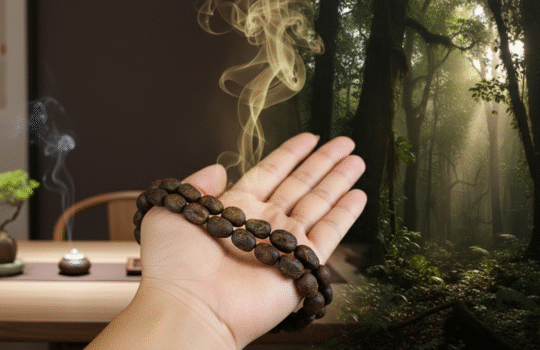
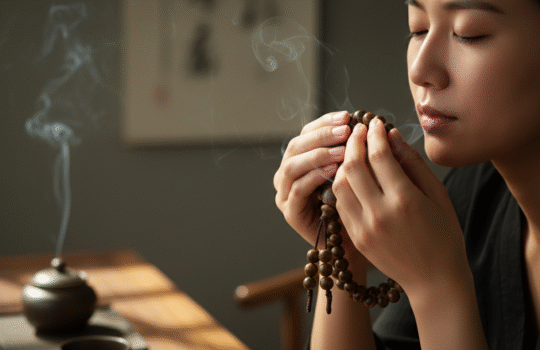
As you bring it close to your nose, the initial scent carries a clear, sweet coolness—a coolness so pure it’s like the first breath of air when walking into an ancient deep-mountain temple in Hainan at dawn. Immediately after, a mellow, deep medicinal scent and warm woody notes begin to diffuse. This ‘medicinal scent’ isn’t the bitterness of a pharmacy, but an elegant atmosphere that instantly calms the mind. Its scent projection is incredibly persistent, unlike the flickering nature of new materials. When I’m writing or feeling restless, I keep it nearby; that scent truly has the effect of calming the nerves and aiding sleep. This fragrance perfectly captures the charm of Hainan or Guangdong/Guangxi Agarwood—an olfactory miracle created by centuries of geographical environment and fungal invasion.
Collector’s Perspective: Why It’s Considered ‘Hard Currency’
Having worked in export for so many years, I’ve watched domestic wild Agarwood resources dwindle day by day. Previously, when going to Guangdong Dianbai or the Hainan countryside to collect material, I’d occasionally find surprises; now, nine out of ten trips result in empty hands. A round-beaded bracelet with such rich oil and upright appearance has long since ceased to be a simple accessory in the secondary market—it is a tangible asset.
Based on its Chinese origin and visual characteristics, this material possesses the ‘old soul’ of Hainan or Guangdong/Guangxi incense. Many senior collectors, after exploring the ‘Star Island’ or ‘Huian’ series, eventually return to ‘National Incense.’ Why? Because of scarcity and the fact that it’s non-renewable. The high density and perfect appearance of this bracelet ensure it has high value preservation and potential for appreciation.
[A Heartfelt Word from a Veteran]:
The Agarwood industry runs deep, and I know many friends have paid a ‘tuition fee’ for mistakes. If you have domestic material you’re unsure about, or if you want to truly experience what a benchmark Hainan Jianfengling-level scent feels like, don’t rush to order. Come talk to me first. I keep several samples of old material specifically to ‘calibrate’ the senses of true incense lovers. Click below to consult; let’s bond over incense—not for business, but for authenticity.
FAQs
Q.Will the ‘medicinal scent’ of this bracelet disappear over time?
A.Absolutely not. True aged and cured material, especially domestic Agarwood with the charm of Hainan/Guangdong, has oil that has penetrated deep into the wood fibers. As long as it’s properly maintained, the oil will slowly volatilize with the warmth of your body during wear, making the medicinal scent even more mellow—this is what we call ‘the more you wear it, the more fragrant it becomes.’
Q.How do you distinguish this domestic old material from the ‘high-polished’ fakes on the market?
A.The key lies in the ‘oil lines’ and ‘luster.’ Fakes are usually a flat, dead black without layers of light and dark, and their shine is a superficial, harsh glare. With this domestic old material, you can clearly see interlaced dark oil lines and a naturally continuous texture. The luster is a ‘glass-like’ moisture formed by natural oil seepage, which is extremely delicate.
Q.What should I pay attention to in daily wear to maintain its ‘oily luster’?
A.The best maintenance is ‘human nourishment.’ The body’s natural oils and slight warmth (not heavy sweat) are the best nutrients for Agarwood. I recommend handling it frequently and wiping it gently with a clean cotton cloth to help it form a patina. Remember to take it off when bathing or swimming, as chemical detergents are the nemesis of Agarwood.