Masterpiece Hainan Agarwood Old Material Exquisitely Carved Eighteen Arhats: Why ‘Natural Form’ is the Ultimate Pursuit for Collectors?
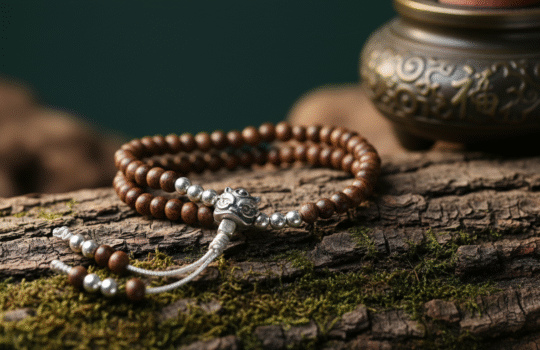
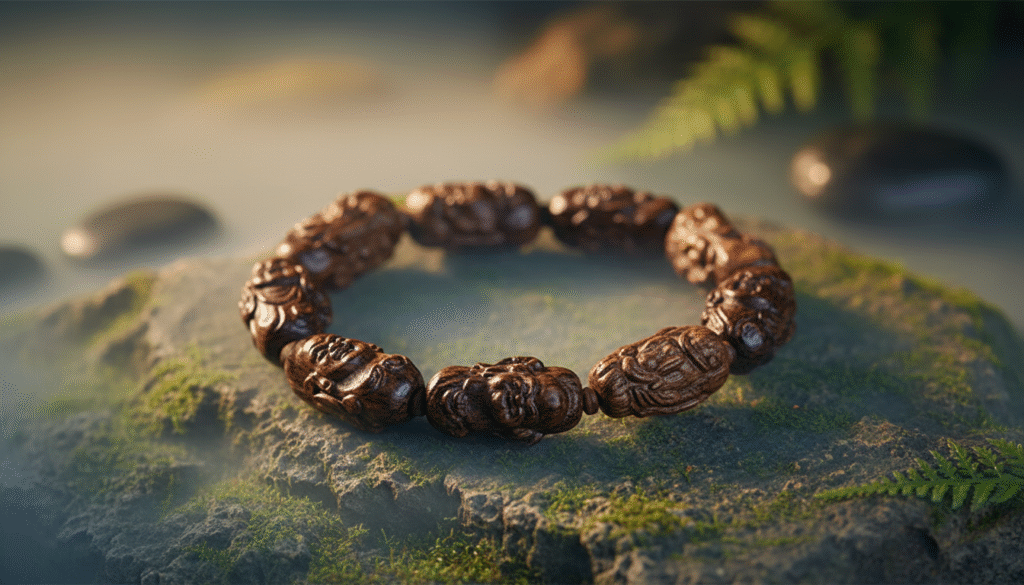
Years ago, I ventured deep into a Li ethnic village in the heart of Hainan’s Wuzhi Mountain. Just after a heavy rain, an old harvester carefully unearthed a piece of dark material resembling a ‘charred stick’ from the red soil layer. His weathered fingers trembled as he touched the thick crust, his eyes reflecting the look of one finding a long-lost child. Honestly, I held my breath—that very piece was the predecessor to this [Masterpiece Hainan Agarwood Eighteen Arhats Natural-Form Handheld String]. While polished round beads are common, these ‘one-of-a-kind’ treasures that carry mountain memories and the fragrance of the earth are increasingly rare. Many friends ask me: ‘Lao Chen, why do serious collectors eventually turn to natural-form pieces?’ Take my advice: in the presence of truly top-tier old material, we do not dare to sever the god-given grain; we can only humbly follow it. This is not just a piece of art; it is a story of rebirth and spiritual cultivation.
Nirvana Through Lightning and Fire: The ‘Aesthetics of Suffering’ of Wuzhi Mountain Hei You Ge
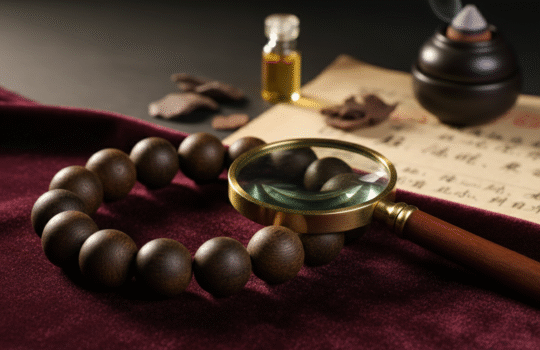
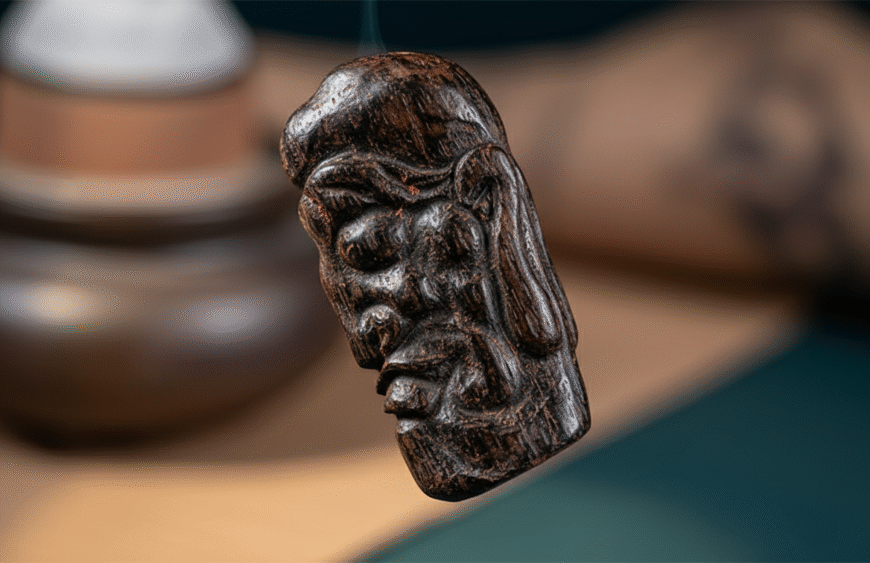
If you have a magnifying glass, please examine the texture of these Arhats closely. You will see a breathtaking beauty—the unique language of ‘Hei You Ge’ (Black Oil Grade). This color isn’t born of peaceful times but is proof of a brutal struggle. This old material grew in the iron-rich red soil of Wuzhi Mountain and survived lightning strikes or insect infestations. To save itself, the tree secreted massive amounts of resin to seal its wounds. Decades or even centuries of aging caused the resin and wood fibers to compress under gravity, creating this ink-deep, iron-hard texture. Every oil line is a ‘medal of honor’ for this tree’s survival in the tropical rainforest. The heavy, solid feel in your hand is more than just wood; it is the weight of time itself!
Yielding to the Blade: Why the Eighteen Arhats Must Be ‘Natural-Form’?
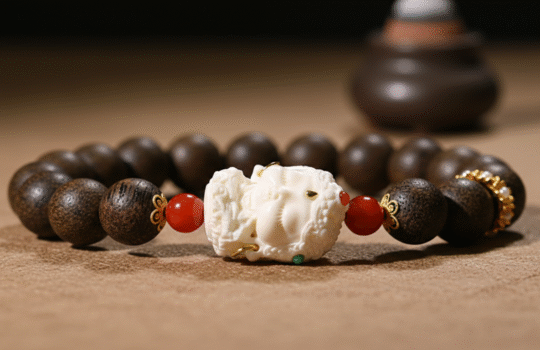
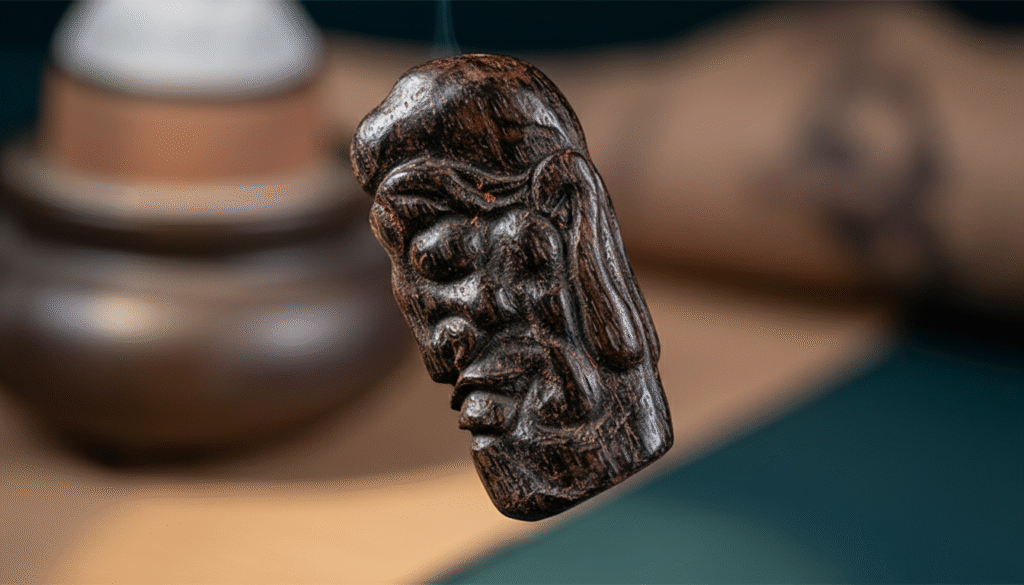
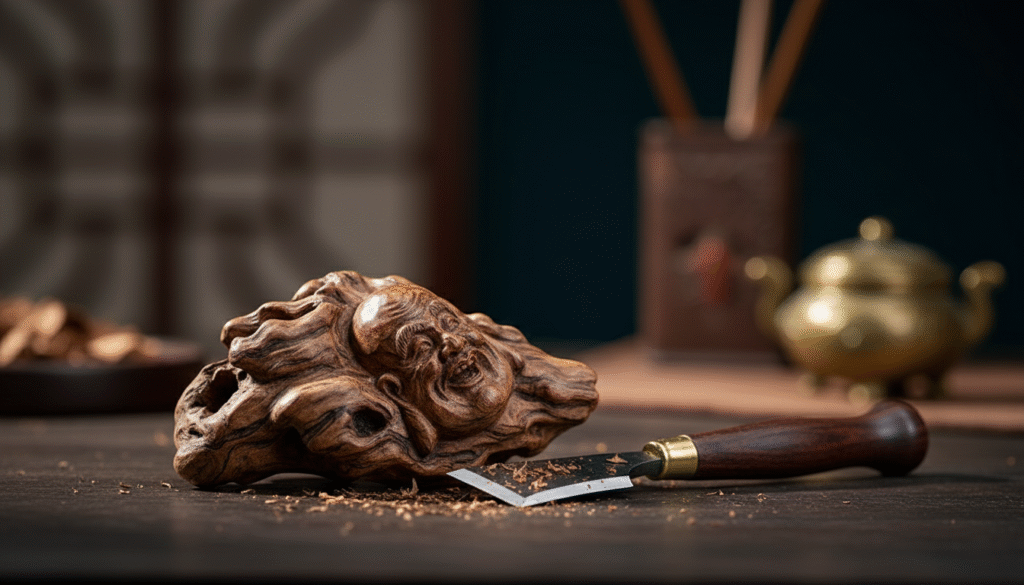
When I first received this top-tier old material, my master carver sat in silence for three days, not daring to make a single cut. Connoisseurs know that for such priceless Hainan material, turning it into perfect round beads is a waste of nature’s gift! True ‘Natural-Form’ (Sui Xing) is a compromise and respect for the wood. The carver follows the natural flow of the resin, utilizing the wood’s inherent bumps and knots to transform them into the brow bones, robes, and ritual tools of the Arhats. Look at the Dragon-Subduing Arhat; the dragon’s body follows a winding natural oil line, appearing as if it was already sleeping within the wood, waiting to wake up. Eighteen forms, eighteen distinct spirits—preserving the raw wildness while imbuing it with Buddhist solemnity. This ‘minimal intervention’ creates an irreplaceable tension that collectors crave.
A Thousand-Year Cool Charm: The Unforgeable Geographical Signature
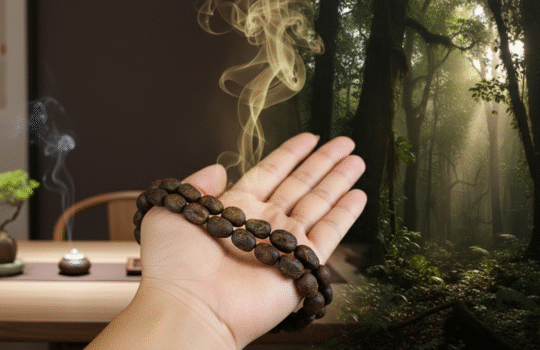
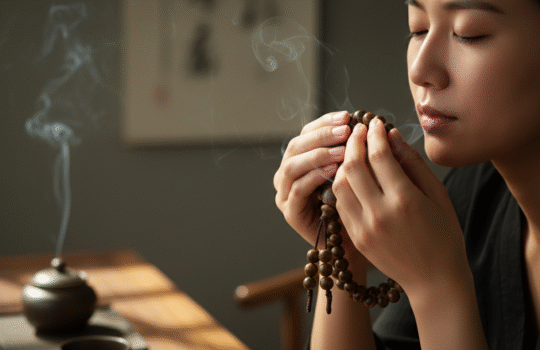
Close your eyes and take a deep breath. The scent from this handheld string will instantly transport you to the misty tropical rainforests. Unlike the bold scent of Vietnamese agarwood, Hainan material is famed for its ‘Elegance.’ First comes a clear, pure honey sweetness, reminiscent of orchids or musk; then, a piercing ‘coolness’ reaches deep into your senses. This is the ‘Watermelon Coolness’ (Xi Gua Liang) that experts rave about—a product of Hainan’s diurnal temperature shifts and specific fungal colonies. In a restless urban afternoon, rubbing this warm material releases a faint medicinal fragrance that seems to wash the dust from your soul.\n\n[Expert’s Note]: Incense finds its soulmate, and jade finds its destined owner. I only have this one piece of this grade of Hei You Ge old material. If you want to see the original video of when this wood was first cut, or discuss how to identify ‘Watermelon Coolness,’ click below to consult me. Even if you don’t buy, making a friend who understands incense is a joy in life.
FAQs
Q.Lao Chen, why is ‘Hei You Ge’ considered the hard currency of Hainan Agarwood?
A.Great question! ‘Hei You Ge’ represents the highest standard of resin content. It specifically refers to resin formed in the heartwood or roots, where the oil is pitch black and dense enough to sink in water. In the Wuzhi Mountain range, reaching this grade requires a tree to be a century old followed by decades of aging. Due to resource depletion, the price of authentic Hei You Ge old material per gram often exceeds gold. It is globally recognized in the incense community as ‘hard currency’—not just for value preservation, but as a symbol of status.
Q.Natural-form carving looks angular; will it be uncomfortable or sharp to handle?
A.That is the brilliance of master carving and a common misconception for beginners. While the exterior retains the natural undulations of the raw material, every protruding part that contacts the palm undergoes exquisite ‘chamfering’ and high-grit polishing. This natural-form string actually stimulates hand acupoints during handling. As the ‘patina’ (Bao Jiang) forms, the jade-like smoothness becomes even more varied and tactile than round beads, making it more addictive to handle over time.
Q.Will the scent of this handheld string disappear over time?
A.Absolutely not, I guarantee it. This string uses ‘Old Material,’ meaning the internal resin has completely solidified. Its fragrance isn’t a surface perfume; it is locked deep within every cellular vessel. As long as you wear it normally and avoid chemical detergents, your body heat acts as the best catalyst. The scent will not disappear; instead, it becomes more mellow and restrained with age, truly a ‘one piece of wood for three generations’ heirloom.