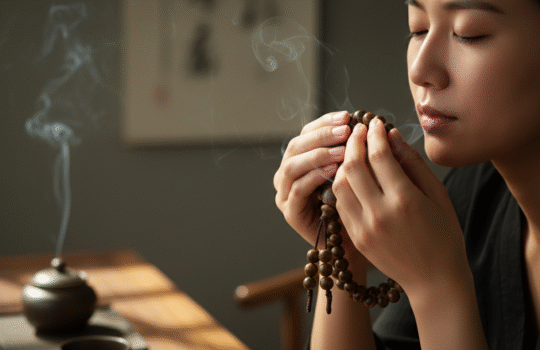
[Appreciation Notes] The “Black Oil King” from Hainan’s Deep Mountains: Why I Kept This 108-Bead Agarwood Piece Hidden for Six Months?
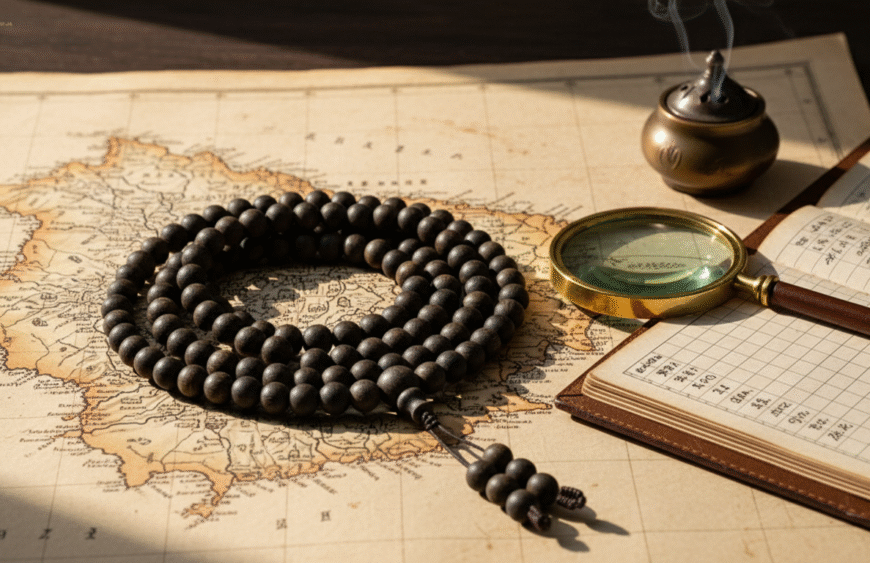
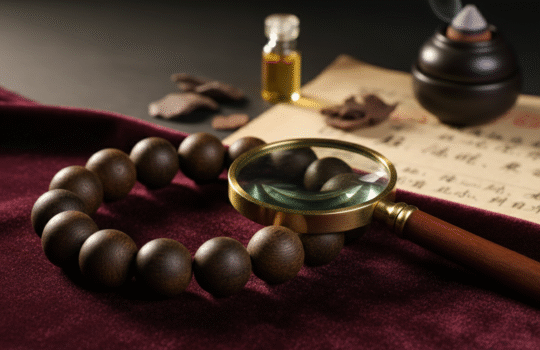
To be honest, this 108-bead mala sat in the deepest corner of my private safe for exactly 180 days. After twenty years in the agarwood trade, I’ve seen too many “rushed” materials that haven’t even aged properly; my heart is usually as still as water. But six months ago, when an old harvester from the Wuzhi Mountains mysteriously unwrapped layers of red cloth to reveal this deep, haunting umber, the teacup in my hand froze mid-air—it felt like meeting a long-lost friend! I’ve spent countless nights examining its resin that looks ready to drip, torn between keeping it private or sharing it. It’s not flashy, but a deep oiliness from the bone. Today, I’m sharing it from a guardian’s perspective, to help you understand this heirloom carrying the genes of the Hainan rainforest.
Visual Evidence: The Geographical Code of Hainan’s “Black Oil Grids”
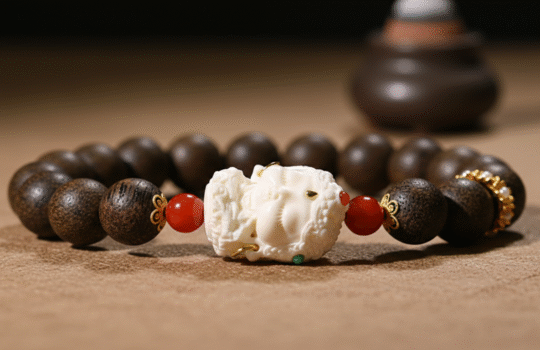
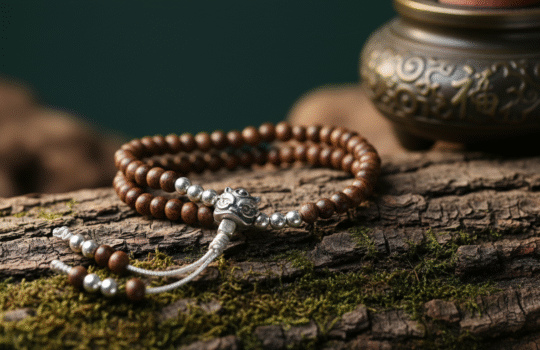
Many ask why Hainan agarwood is considered the best. The answer lies in the microscopic texture of these beads. These 108 beads showcase the “Black Gold Oil Spill” phenomenon unique to the Wuzhi Mountains. This isn’t the artificial “thief’s shine” from surface oiling, but a result of iron-rich red soil and high humidity! Known as “Iron Knots” (Tie Jie), this texture forms when old trees self-heal over decades, with resin deeply saturating the wood vessels. Under natural light, you can see the resin blooming like ink on rice paper. This deep, restrained color is incomparable to “processed beads” boiled in pressure cookers; every grain records the wildness of the mountains and the weight of time.
Scent Decoding: The Orchid Coolness of “Jianfeng Ridge”
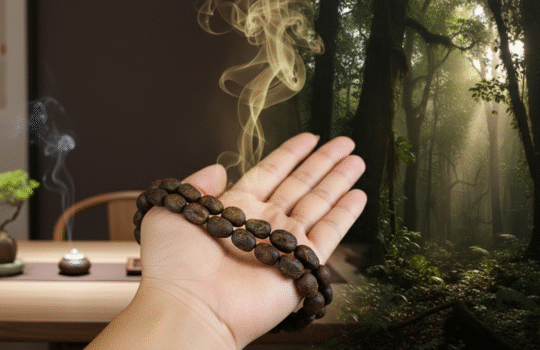
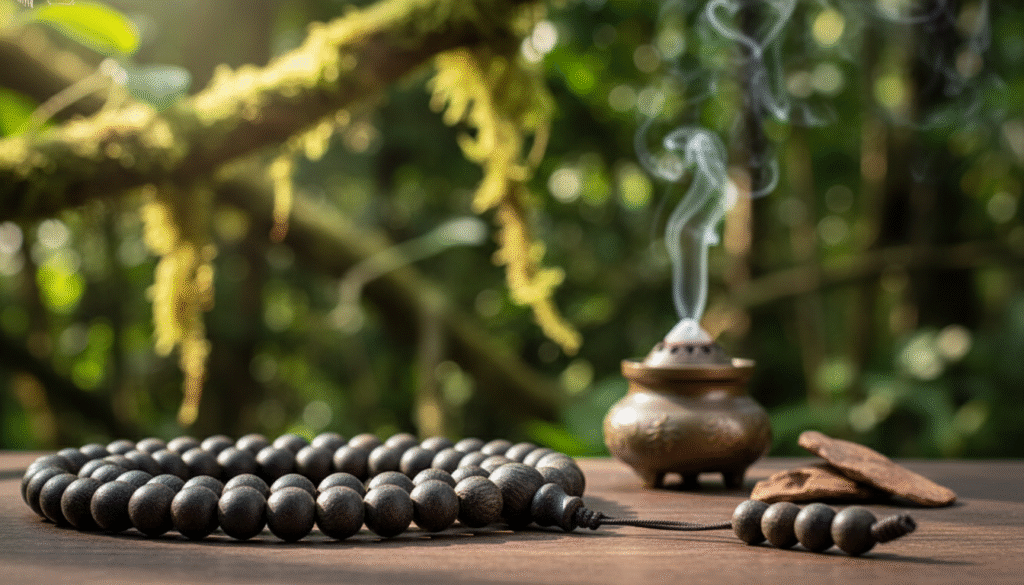
In the world of agarwood, appearance is the face, but scent is the soul. This “Black Oil King” features a pure “National Fragrance” lineage. A slight rub releases an instant burst of “heart-penetrating cool”—the hallmark of top-tier Hainan wood. Following the chill is not a cloying sweetness, but a faint orchid fragrance and honeyed notes that linger. It reminds me of the Jianfeng Ridge rainforest after heavy rain: damp, crisp, and wild. This combination of clarity, elegance, and coolness is nature’s ultimate stress reliever.

Market Insights: Why It Is Heirloom-Worthy
As an insider, the generic “Chinese Agarwood” concept can no longer outpace inflation. Value growth lies in “Precise Origin” and “Non-renewability.” Wild Hainan agarwood is nearly exhausted. This 108-bead set preserves the irreplaceable DNA of the Wuzhi Mountains. It has transcended being an accessory to become a “hard currency” with high liquidity. If you want to see macro videos of the resin or avoid market traps, contact us via the Expert Consultation Channel. I won’t push you to buy, but I can help you save on “tuition fees” in this market. Let’s meet through fragrance and see if this piece is waiting for its destined owner.
FAQs
Q.Why the emphasis on the “Hainan Wuzhi Mountain” origin?
A.Geography determines quality. The Wuzhi and Jianfeng regions have a tropical monsoon climate. High altitude and specific red clay result in higher resin density and a unique “sweet-cool” rhyme. In search algorithms and collector systems, specific top-tier origins have higher long-tail value and scarcity.
Q.How to maintain this “Black Oil Grid” to keep the orchid scent?
A.Hainan material has strong penetration but is delicate. Avoid chemicals (detergents, perfumes) as they “seal” the pores. The best maintenance is “clean hand play”—body warmth and slight perspiration keep the oil bright and stimulate the unique orchid-cool rhyme. This is known as “nourishing the fragrance with the person.”