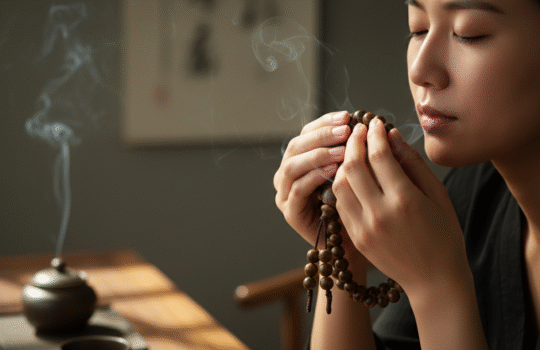
Oriental Elegance Under the Microscope: Why This ‘Rising Step by Step’ Hainan Old-Growth Agarwood is My Private Collection Standard After 20 Years?
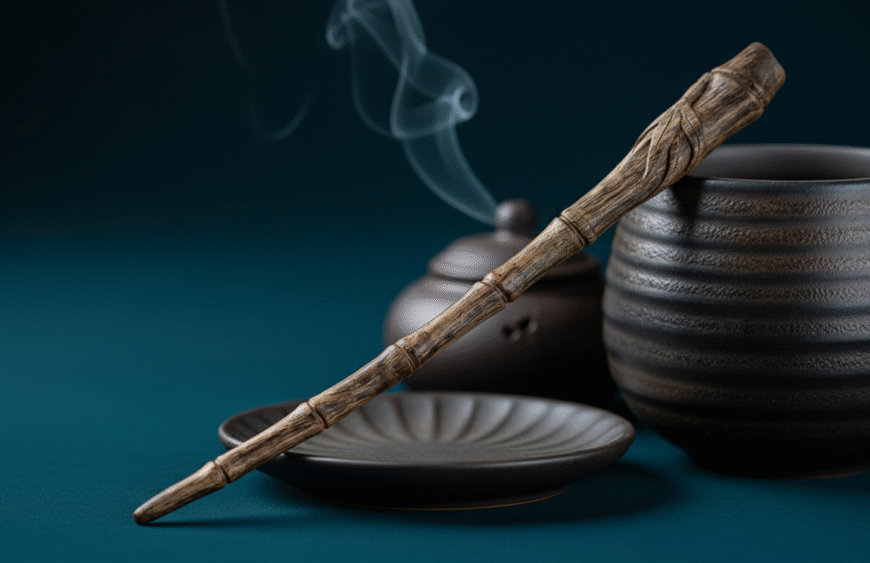
In the quiet of the night, I usually turn off all the overhead lights in my studio, leaving only a spotlight on my desk and a 60x industrial microscope. Having spent twenty years in this industry, I’ve seen the boldness of Kalimantan and the elegance of the Huian system, but what truly makes my heart race is always our Chinese ‘National Fragrance’—Hainan Agarwood. This ‘Rising Step by Step’ bamboo-shaped piece didn’t come from a sensational auction; it originated from a ‘hidden gem’ discovery three years ago. At that time, this piece was mixed in a pile of ordinary shell agarwood, its exterior as dry as firewood, nearly thrown away by an apprentice. But I caught a hint of penetrating coolness—the unique ‘soul’ of Hainan old-growth. When I placed it under the microscope, the image took my breath away—it wasn’t wood, but a vast sea of stars condensed from resin. Today, I’ll skip the boring parameters and tell the story of this ‘nearly missed’ heirloom, and why it became my personal benchmark for top-tier old-growth material.
The Universe Under the Lens: An Adventure of ‘Dead Wood Turning into Gold’
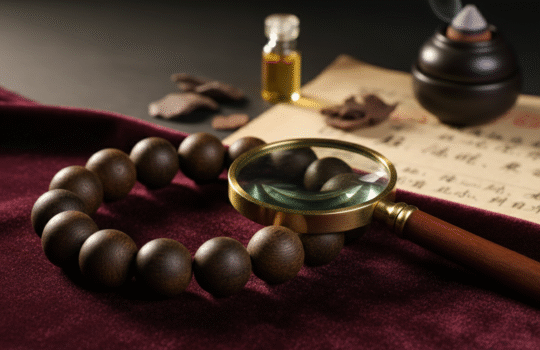
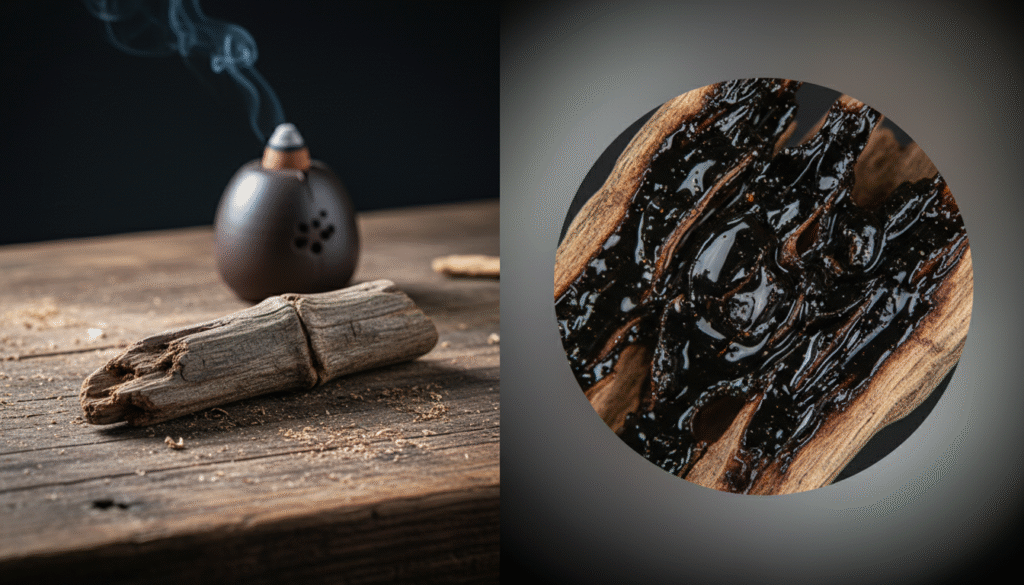
‘Rosewood is sold by the ton, but Agarwood is weighed by the gram’—yet for this Hainan old-growth, even grams seem like a sacrilege. Three years ago, on a rainy afternoon, when I cut open that piece of seemingly dry wood, an intense honey-sweet aroma instantly erupted from the saw blade. It wasn’t a superficial floral scent, but a direct hit to the senses like aged wine. This is the legendary ‘Hainan Black Oil.’ Many ask why I use a microscope. The eyes can lie, but the microstructure doesn’t. Look at this photo: under 60x magnification, common fast-grown new materials have pale, empty vessels like dried riverbeds. But this ‘Rising Step by Step’ piece has its phloem and vessels completely filled with jet-black resin, like solidified lava in wood fibers. This ‘full oil’ state is a medal of honor left by the tree after decades or even centuries of weathering and self-healing. It’s not dead wood, but a living microscopic universe where every dark spot is a crystallization of time.
Narrative on the Blade: Why specifically ‘Rising Step by Step’?
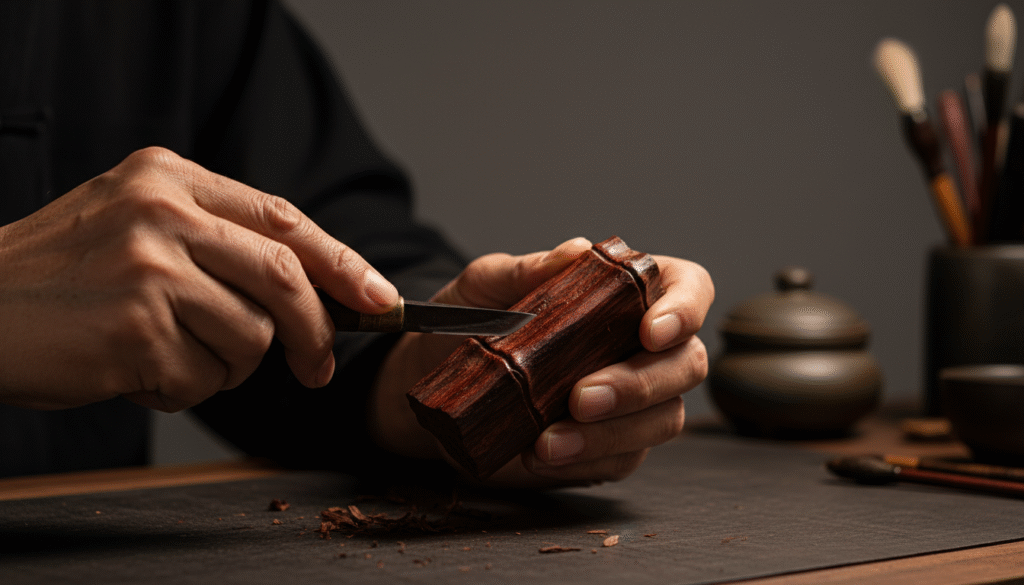
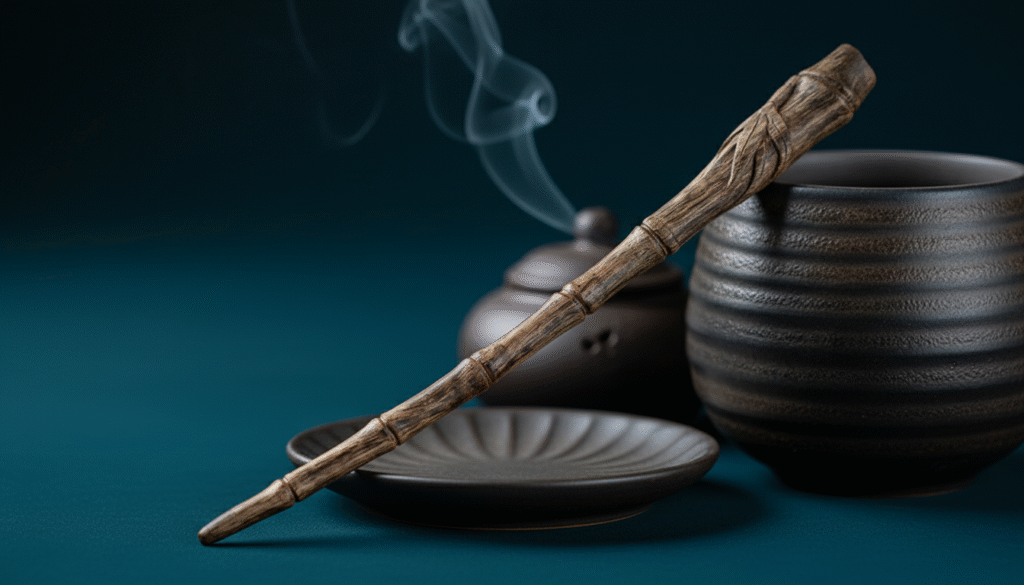
Fine material is like a stallion; it needs a discerning eye. After cutting, the oil lines were amazingly straight, which is rare in wild old-growth where resin formation is usually chaotic. Master Chen, the carver, pondered for a long time and said, ‘This grain is born to be bamboo. Forcing it into a Buddha or Dragon would ruin its natural spirit.’ Thus, ‘Rising Step by Step’ was born. This isn’t simple mimesis, but a creation following natural laws. Master Chen didn’t use machines for polishing; he hand-polished it with extremely fine sheepskin. Every rise and fall of the ‘bamboo joints’ you see accurately avoids loose wood, keeping the hardest, most oil-rich parts at the protrusions. The moment you hold it, you’ll understand the ‘weighty’ shock. It looks small, but it feels heavy in your palm, like holding a piece of warm ancient jade. This weightiness is a physical texture given by high-density resin, a perfect match between the ‘unyielding’ spirit of bamboo and the ‘living-through-death’ philosophy of agarwood.
The Taste of Solitude: This ‘Honey-Sweet Orchid Charm’ is Worth a Fortune
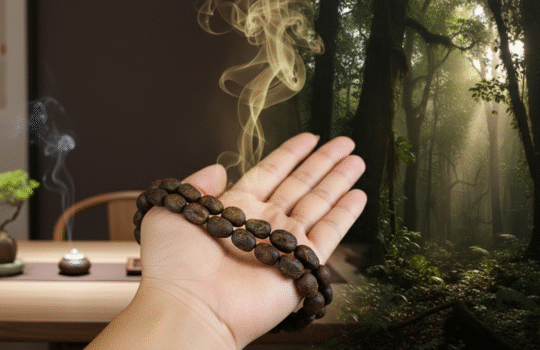
In this impetuous era, we desperately need an anchor for the soul’s ‘soft landing.’ This枚 bamboo pendant, I often suggest collectors wear close to the body. Unlike those strong, pungent perfumes, the fragrance of Hainan old-growth is reserved and private. When your body temperature rises or you feel irritable, take a deep breath near it: first, a mint-like coolness clears your nasal passages, followed by a rich orchid scent and honey sweetness rising from the base of your tongue. This scent, known in the industry as ‘Qi Charm’ (Qi Yun), is the capital that makes Hainan agarwood the best in the world. It’s not for showing off in social settings, but for moments of peace during late-night solitude or traffic jams. It reminds you: no matter how noisy the outside world is, your heart can remain like this bamboo—hollow-hearted and disciplined, with every step releasing fragrance. [Expert’s Message] To be honest, this level of Hainan old-growth is almost a ‘swan song’ in today’s market. If you want to see the video of the ‘oil nebula’ flowing under a 60x microscope, or simply want someone to help identify the authenticity of your agarwood, feel free to click below to consult. It’s not about business, but about destiny. I can’t guarantee a second unique piece like this, but I promise this one look will help you understand the true ‘Oriental Divine Wood’.
FAQs
Q.Q1: Why do you say this material was ‘firewood nearly thrown away’?
A.A: This is the unique ‘disguise’ of old-growth agarwood. Genuine wild old-growth often undergoes long periods of soil burial or weathering, forming a thick oxidation or decayed layer that looks dusty and grey. Only highly experienced experts can judge if ‘black gold’ is hidden inside through the weight and subtle raw scent. This is the most fascinating ‘gambling’ aspect of collecting old-growth.
Q.Q2: Will this ‘full oil’ structure change during wearing?
A.A: Yes, and it becomes more beautiful. This is called ‘patina.’ Since the oil has penetrated the vessels (as shown in the microscope image), with the heat of body temperature and skin contact, deep-layer oil will slightly emerge and oxidize with air to form a transparent protective film. After six months, you’ll find the bamboo piece becoming as dark and shiny as black onyx, with a more mellow and restrained fragrance.
Q.Q3: Why choose to carve ‘bamboo joints’ instead of beads?
A.A: This is ‘crafting according to the material.’ The natural oil lines of this old-growth piece are straight and vigorous. Turning them into round beads would cut these precious long oil lines, destroying the overall toughness and beauty. Carving it into ‘Rising Step by Step’ bamboo not only follows the grain and preserves the oil content to the maximum but also endows it with the scholar’s temperament of ‘rising step by step with a humble heart’.
Q.Q4: Is the ‘Honey-Sweet Orchid Charm’ of Hainan old-growth truly irreplaceable?
A.A: Indeed. Agarwood from different regions has its characteristics, like the medicinal scent of Kalimantan or the coolness of Nha Trang, Vietnam. But only Chinese Hainan old-growth can perfectly blend ‘domineering coolness’ with ‘soft sweetness’ and ‘elegant orchid fragrance.’ This rich layering is a unique masterpiece created by specific latitude, tree species, and fungal environment. Currently, it’s considered ‘a piece for ten thousand gold’ in the market, making it extremely difficult to replicate.