Dragon Rhythms, the Soul of National Fragrance: Appreciating a Rare, High-Resin Master-Carved Chinese Agarwood Dragon Pendant
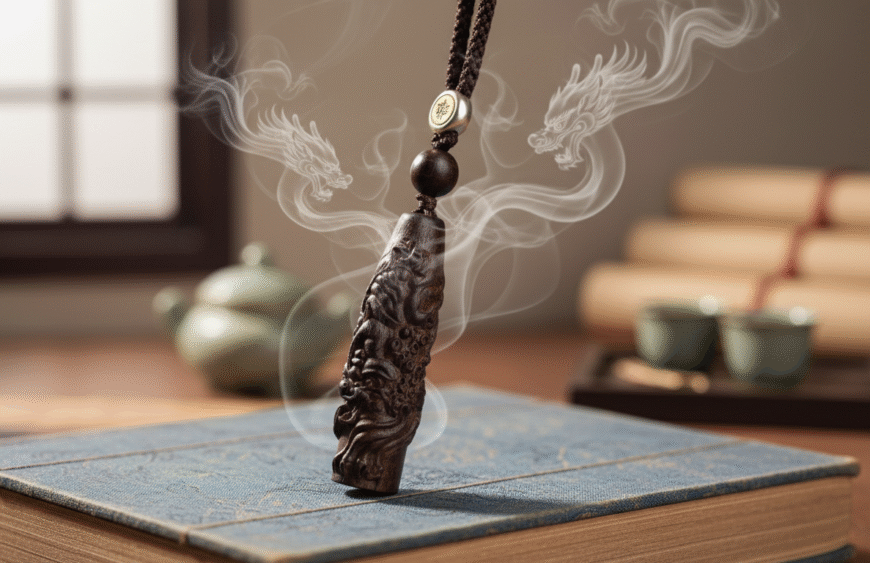
Having been immersed in the world of incense and agarwood for thirty years, I have handled tens of thousands of pieces, developing a heart that is usually unshakeable. The market is flooded with mass-produced commodities—pieces that possess the form but lack the soul. To be honest, the current market is chaotic, and truly impressive items are becoming increasingly rare. However, when I first touched this high-resin, masterfully carved dragon pendant made from aged Chinese wild stock, the heavy, sinking sensation against my fingertips made my heart race for the first time in years! This is not just a piece of wood; it is a sealed fragment of time, a miracle born of resin. Many collectors ask if it is still the right time to enter the market. Today, I won’t talk about dry textbook parameters; instead, as an incense lover and collector, I want to tell you the story of heritage, skill, and destiny behind this ‘Dragon among Fragrances.’
The Hidden Dragon: A Suzhou Masterpiece Born from Resin
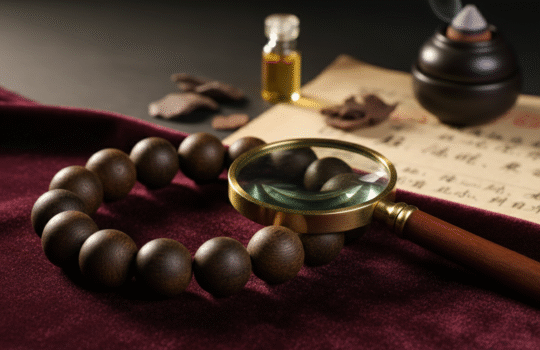
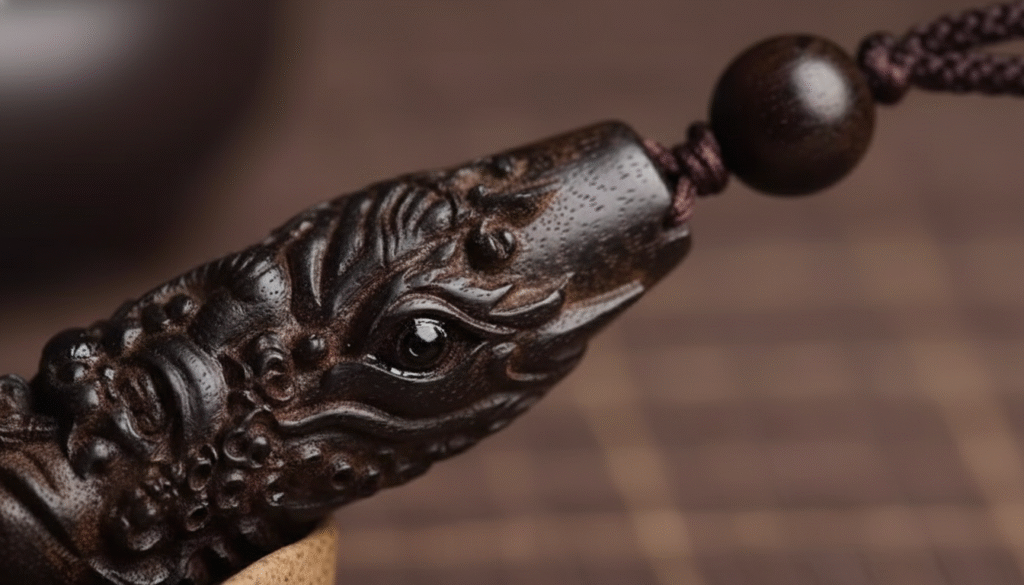
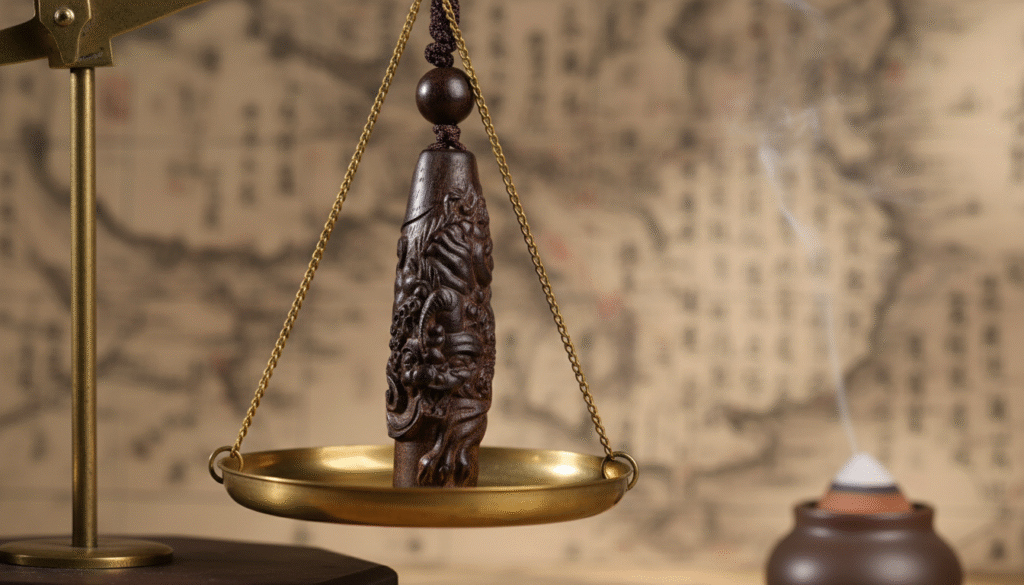
When picking up this piece, I suggest you look at the ‘skin’ before the carving. In the trade, we say ‘oil lines are a heavenly script.’ The resin in this Chinese agarwood is not a superficial coating but a dark brown crystallization that has ‘overflowed’ from the internal wood fibers after a century of aging. It reminds me of collecting material from an old incense farmer in Hainan years ago; the faint glow emitted by wild aged material after rain is identical to this piece.
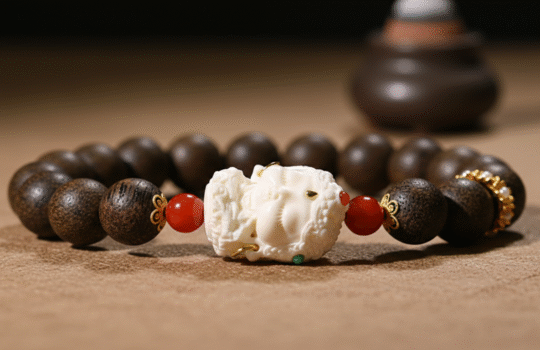
What is most exquisite is the logic of the carving—it is an artistic creation that ‘follows the flow.’ If you observe the position of the dragon’s head, the carver did not force it; rather, they skillfully utilized the natural form of a high-oil resin knot, placing the dragon’s eye at the point of the densest resin. This ‘Su-style’ (Suzhou) technique emphasizes ‘carving according to the material.’ It feels as if the dragon was not carved onto the wood, but had been sleeping within this high-oil aged stock all along, and the craftsman merely peeled away the excess wood to let it ‘break through the wall.’ To be perfectly honest, the visual impact of this black oil combined with the dragon’s majesty is a soulful dialogue that machine work can never replicate. If you are looking for a ‘foundation piece’ to pass down through generations, the quality of this work is absolutely textbook-level.
Authentic Lineage: A ‘Hainan Coolness’ Through Song Dynasty Elegance
If the carving gives it form, the scent profile is its soul. Chinese agarwood (Guo Xiang) has been hailed throughout history as the ‘Chief of All Fragrances’ because of its ‘Elegance.’ The scent of this piece is not the pungent intensity common in the Xing Zhou (Star Island) series, but a highly penetrating ‘Clear Sweetness.’
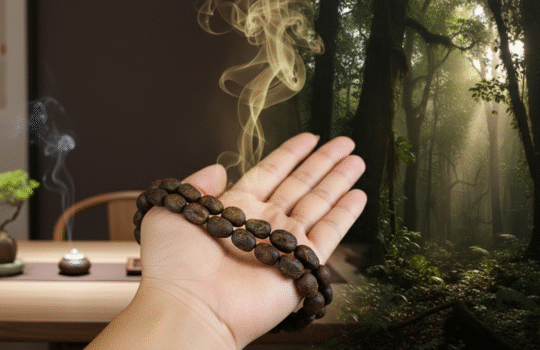
At the first sniff, there is a cool sensation like morning mountain mist that hits right between the brows—this is the unique ‘Cool Rhythm’ of Chinese agarwood. Upon further appreciation, as body heat warms the piece, the middle notes release a sweetness similar to a blend of honeydew melon and frankincense. It reminds me of the ‘Agarwood fire in the Boshan Censer’ that the Song Dynasty scholar Huang Tingjian was obsessed with. This pendant emits that exact ‘scholarly aura’ that can instantly calm a restless heart. It does not overpower, yet it declares its noble lineage with every breath. Wearing it is not just about smelling fragrance; it is an olfactory communion across time with the literati of a thousand years ago. For those who truly understand incense, this rhythm is worth more than gold.
Value Anchor: The Collection Logic of Scarcity and ‘Hard Currency’
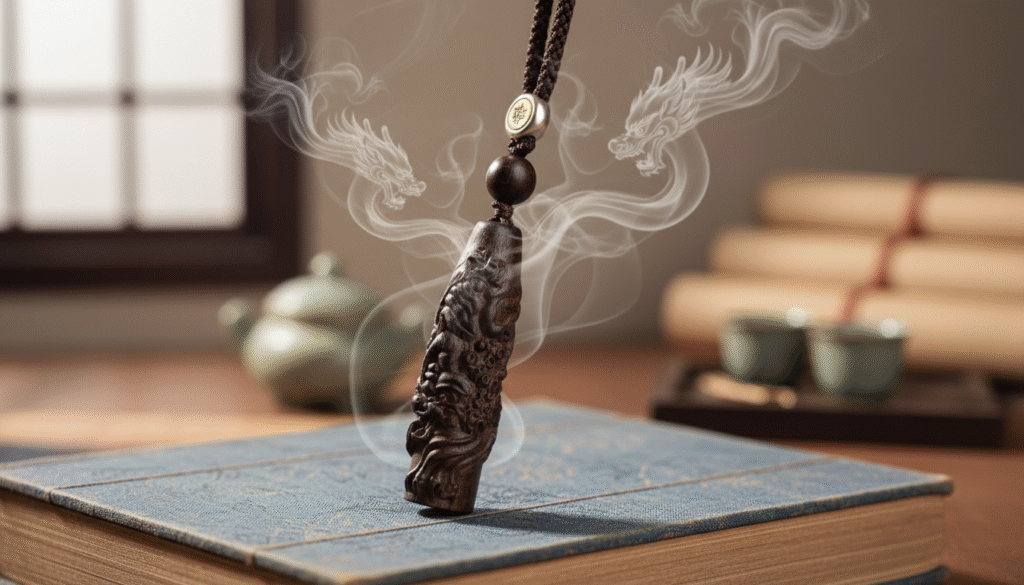
In the secondary market, we often compare top-tier Chinese agarwood to the ‘Black Gold’ of the collecting world. Why? Because the exhaustion of wild Chinese agarwood resources far exceeds that of Southeast Asia. The high-oil aged material used in this work was rare ten years ago; today, it is a ‘one-of-a-kind’ piece that grows rarer by the day.
Looking at auction data from the past five years, master-carved Chinese agarwood has completely detached from the price fluctuations of ordinary incense wood, forming an independent upward curve. This dragon pendant possesses not only decorative attributes for wearing but also incredibly strong asset attributes. Within the circle, owning a ‘guaranteed authentic’ high-oil Chinese agarwood carving is often seen as the identity tag of a senior collector. It does not depreciate with inflation; instead, through the mellowing of the patina over time and the generational gap in resources, it builds a formidable value moat.
[Expert’s Message]
The world of agarwood is deep; only true knowledge can guide you across. If you want to know if the piece in your hand is truly valuable, or if you wish to appreciate every oil line detail of this ‘legendary’ unique piece through high-definition video, feel free to click below to inquire or add my personal contact. Not for the sake of a sale, but to act as the final guardian of ‘National Fragrance’ for you in this impetuous era, and to make a friend who truly understands incense.
FAQs
Q.What is special about the ‘Su-style’ (Suzhou) carving mentioned in this piece?
A.’Su-style’ represents one of the highest levels of Chinese jade and wood carving craftsmanship, emphasizing ‘Exquisiteness, Fineness, and Elegance.’ In this agarwood piece, it is reflected in ‘carving according to material’ and ‘thin-relief carving.’ Unlike the stiff, deep gouging of machines, a Su-style master designs the dragon’s curves based on the flow of the resin (the oil lines), preserving the precious resin while giving the image a sense of movement. This is why senior collectors can tell at a glance if it is ‘handcrafted work.’
Q.Why emphasize the Chinese region? How does Chinese agarwood differ from Hui An or Xing Zhou series?
A.Agarwood from the Chinese region (Hainan, Guangdong, Hong Kong) is historically recognized as having the top-tier scent profile. Compared to the strong medicinal smell of the Xing Zhou series and the bold floral scent of the Hui An series, Chinese agarwood is known for being ‘Elegant, Sweet, and Cool,’ with a more restrained and lasting rhythm. Furthermore, due to long-term over-harvesting, wild Chinese resources are the scarcest. Therefore, in terms of collection value, Chinese agarwood of the same grade is usually valued higher than other regions, making it a true ‘hard currency.’
Q.With such high resin content, what should I pay attention to when wearing it?
A.High resin is the best natural protective layer for agarwood, but you must still follow the ‘Three Fears’ principle: First, fear of chemicals (shampoo, perfume), which can corrode the resin and destroy the scent; Second, fear of high temperatures, which accelerate resin evaporation; Third, fear of foreign odors. The best way to maintain this unique piece is to wear it often. Your body temperature will stimulate the fragrance, and the natural oils of the skin (not sweat) will merge with the agarwood resin to form a mellow patina. This is the highest state of ‘man nourishing the incense, and incense nourishing the man.’