Seeking the Roots of National Fragrance: A Journey into the ‘Lingnan Spirit’ and ‘Ancient Texture’ of Guanxiang

To be honest, after so many years in this industry, I’ve seen too many friends ‘swallow the bitter pill’ (buy fakes) because they were chasing so-called ‘water-sinking grade’ agarwood. I remember searching for fragrance in Dalingshan, Dongguan, years ago. A 90-year-old farmer touched an old tree and told me, ‘Guanxiang never dies because its soul is in its bones.’ He was referring to the resin secreted to heal wounds from lightning, insects, and wind—the very ‘National Fragrance’ we hold today. I won’t boast about the price of these Guanxiang beads, for they are not the pitch-black, heavy, chemically-enhanced ‘industrial products’ flooding the market. They are a poem co-written by the red soil of Lingnan and the subtropical monsoon. Looking at the primitive yellow-brown base, I can almost see that tree breathing in the mists of the Luofu Mountains. Today, let’s skip the dry technical specs and talk about the truth behind these beads—the reconciliation between the ‘Lingnan Spirit’ and nature.
A Narrative of Texture: Calligraphy Written by Trees in Storms
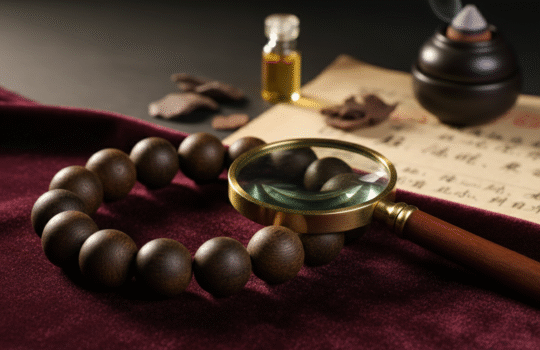
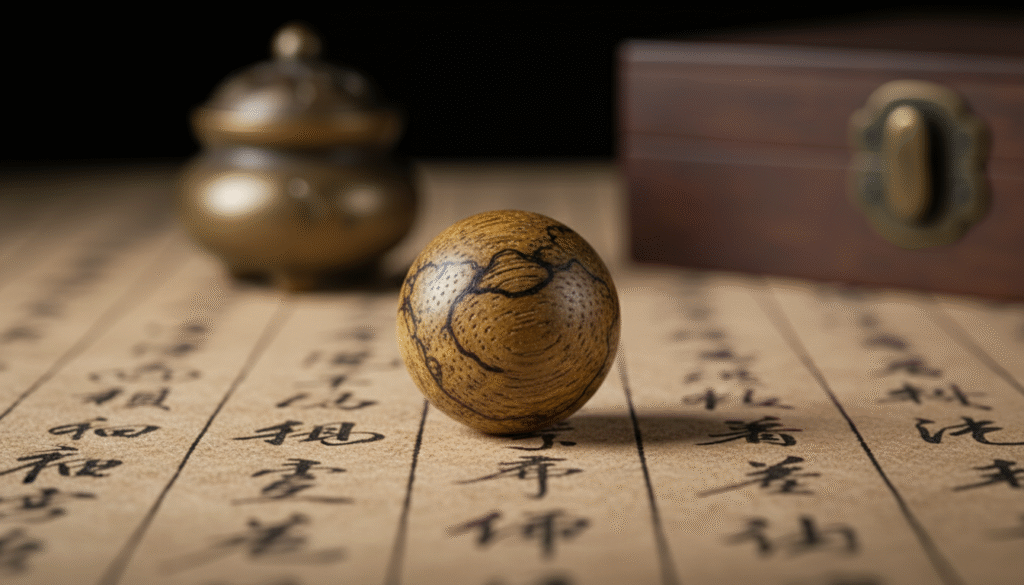
Look closer, and do not mind the tiny pits on the surface. These beads are not a ‘dead black’ perfection; they are a living landscape painting. The base is a warm, ancient yellow-brown—the original ‘flesh’ of the Guanxiang tree (Aquilaria sinensis). Those wandering, dark brown mottled oil lines are ‘ink masterpieces’ left by time. What fascinates me most are the clearly visible ‘needle-eye pores,’ known in the trade as ‘breathing holes.’ Truth be told, many high-polished fakes block these pores to look better, turning the beads into something resembling plastic. These beads, however, retain the tree’s authentic physiological traits—they are still ‘breathing.’ This is the raw honesty that only true National Fragrance dares to keep.
Tracing the Scent: A Breath of ‘Cool Sweetness,’ Half a History of Lingnan
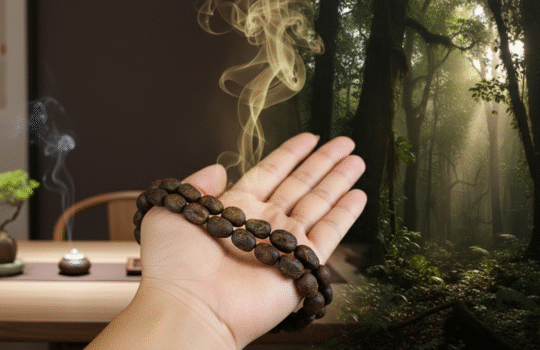
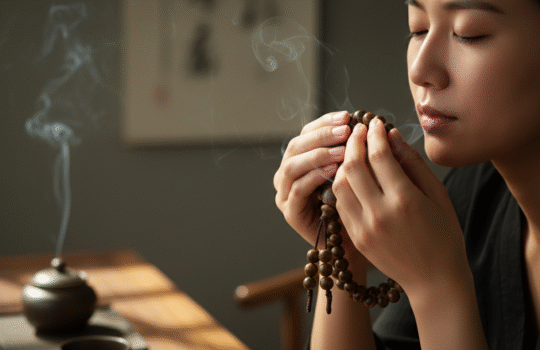
Close your eyes and scent the beads—don’t rush, take it slow. You aren’t just smelling a fragrance; you are smelling geography. Unlike the pungent intensity of ‘Xingzhou’ (SE Asian) agarwood, the soul of Guanxiang lies in its ‘Elegance’ and ‘Transparency.’ Initially, there is a crisp sweetness like a freshly cut cantaloupe—the fruitiness gifted by Lingnan’s abundant sun. Upon deeper inhaling, the middle note reveals a faint orchid-and-honey aroma, the result of specific microflora transforming in acidic soil. The crowning glory is the tail note—a cooling medicinal scent that reaches the mind. Ancient scholars said ‘burning agarwood dispels the humid heat,’ referring to this transparency that cuts through Lingnan’s muggy mists. This scent is the gentlest feedback from the mountains after decades of cultivation, and it is the ‘Chinese Scent’ I most wish to share with you.
A Covenant of Legacy: The Continuity of Life from ‘Raw Scent’ to ‘Patina’
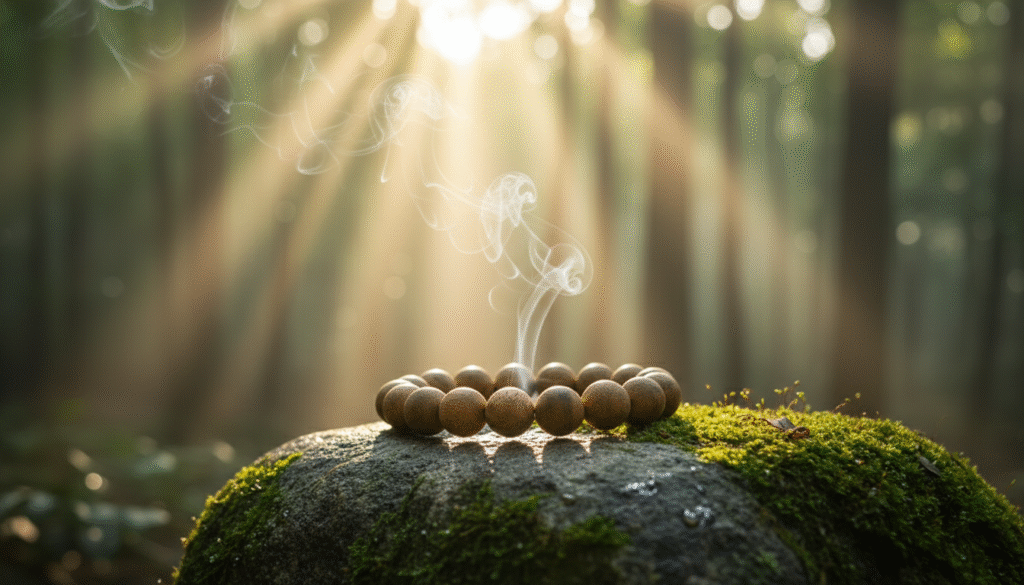
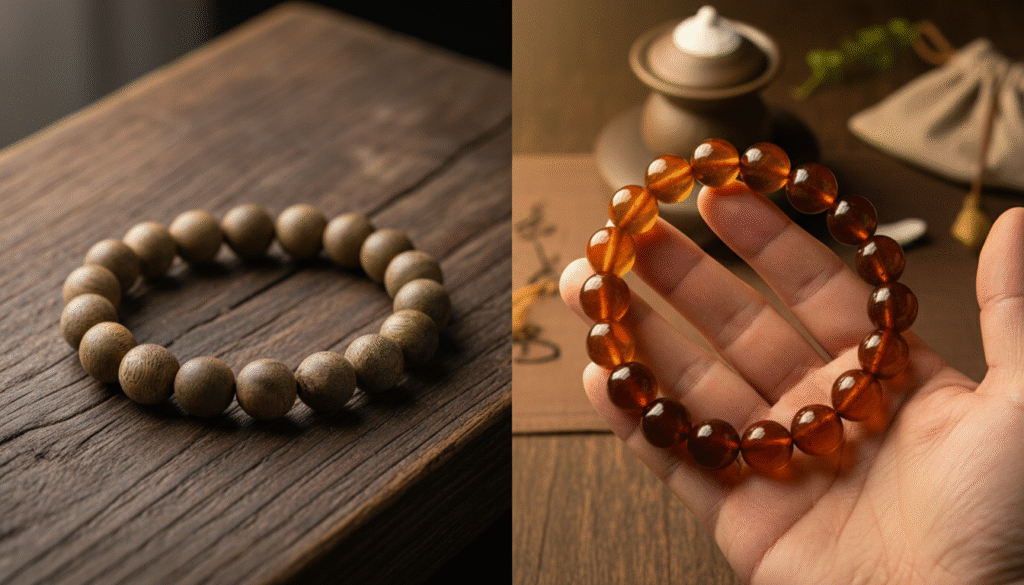
Collecting National Fragrance is essentially adopting a fragment of life. These beads are currently in the ‘raw scent’ stage, behaving like a reserved gentleman—warm but not boastful. But the story is just beginning. When worn on your wrist, your body temperature will ‘reawaken’ the dormant oils within the wood. Day after day of companionship, you will be amazed to see the yellow-brown base turn a deep, radiant red, and the matte surface develop a glass-like amber ‘patina.’ This is no longer a mere commodity; it is a witness to your shared journey with the wood.\n\n[Expert’s Message]\nIf you are looking to find a piece of ‘inner peace’ unique to Chinese culture in this impulsive age, or if you are unsure about the ‘oil formation patterns’ of Guanxiang, feel free to leave a comment below or click for a consultation. I have reserved a 30-minute one-on-one session for you—not for a sales pitch, but to help you find your true ‘National Fragrance’ connection.
FAQs
Q.Expert, why is it said that ‘one only enters the world of incense after understanding Guanxiang’? What’s the difference from SE Asian agarwood?
A.Great question! Simply put, the threshold for ‘entering the world of incense’ lies in aesthetics. SE Asian agarwood (Xingzhou system) is known for heavy oil and intense scent, providing sensory stimulation. In contrast, Chinese Guanxiang emphasizes ‘Charm’ and ‘Artistic Conception.’ Its unique three-stage scent (Cool-Sweet-Clear) and delicate, ancient texture represent the restrained and elegant aesthetic philosophy of Eastern culture. When you understand Guanxiang, you are playing with culture, not just wood.
Q.The ‘needle-eyes’ on the surface are so obvious. Does this affect the value?
A.Quite the opposite! In Guanxiang connoisseurship, we say ‘No needle-eyes, no Guanxiang.’ These pores (phloem vessels) are the ‘ID card’ of the species and ‘ironclad proof’ that the piece hasn’t been over-polished, glued, or waxed. They prove the purity of origin and serve as natural windows for the scent to escape. Retaining them is the greatest respect for the ‘Lingnan Spirit.’ You should be glad to see them; it means you’ve found the real deal.
Q.Is there really room for appreciation in value for this ‘yellow-brown’ Guanxiang?
A.Not only is there room, but it is very stable. Today, chasing ‘all-black water-sinking’ agarwood often leads to expensive fake traps. In genuine wild or old-growth cultivated Guanxiang, the norm is a yellow-brown base with black oil lines due to the slow formation process. As connoisseurs return to valuing ‘natural authenticity,’ these beads—which are ‘obviously real’ at a glance and have pure scent profiles with patina potential—are becoming the ‘blue-chip’ growth assets of the collection world.