Collector’s Notes: Scenting the Source of Guanxiang—Why This “Iron-Knot” Old Material with Jade is the Ultimate “Hard Currency” of New Chinese Style?
Having navigated this industry for over twenty years, I can distinguish Sinensis from Aquilaria with my eyes closed. But honestly, every time I recall that humid afternoon collecting this batch at the foot of Dalingshan, Guangdong, I still feel a surge of emotion. This isn’t just wood; it is “Old Iron Head” preserved by generations of Guanxiang harvesters. To be blunt—and I might offend some peers here—this kind of “National Fragrance” with traditional scholarly character has almost vanished from the market. Today, I am sharing this prized collection not just to talk products, but to take you back to that specific geographical dimension to discuss what “Collector’s Grade” Chinese Agarwood truly is and why it has become the ultimate “invisible business card” for high-net-worth women.
Exploring the Source: “Iron-Boned” Old Material Born from Red Soil
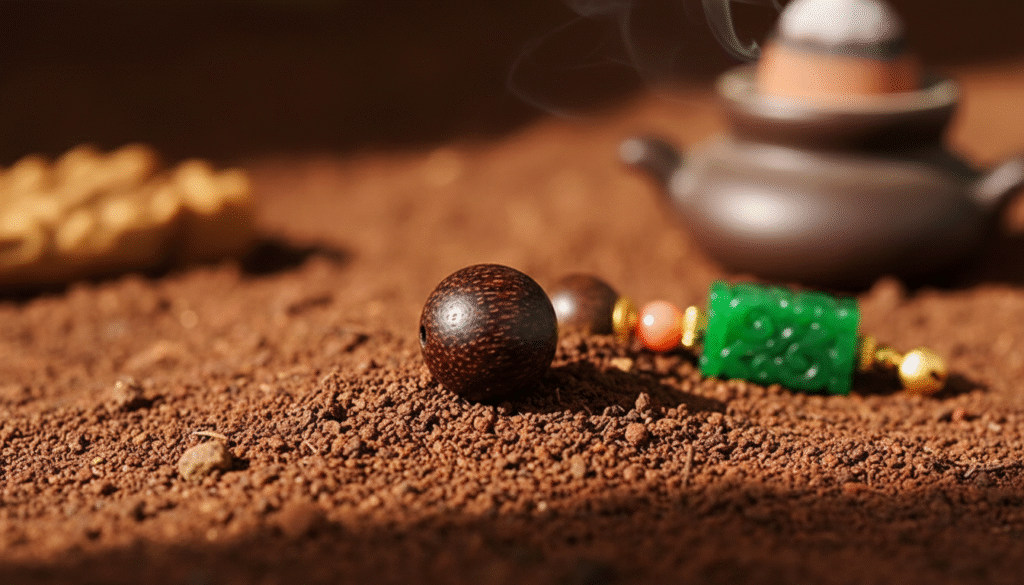
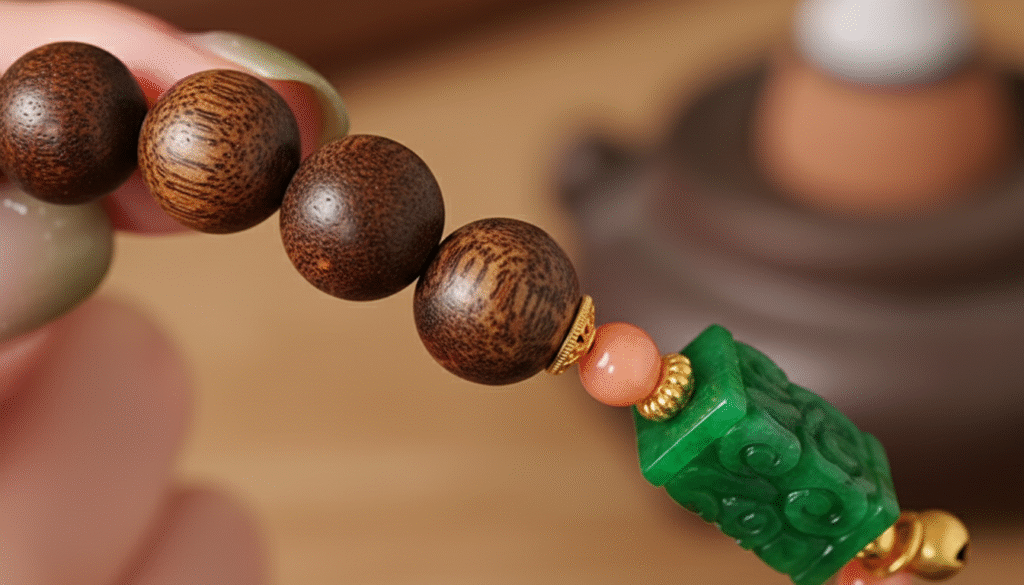
Look at the color of these beads; there is a sense of resilience within the depth. This is thanks to the iron-rich red soil unique to the Guangdong production area. The resin lines are not just floating on the surface; they are deeply fused with the wood fibers, like ink dripping into Xuan paper. This texture is known in the industry as “Iron Knot.” It means that when this tree was forming resin, it not only underwent long years of aging but also completed a high-density accumulation of resin in the humid and heat-alternating monsoon climate south of the Nanling Mountains. When you hold it, that heavy, solid feeling in your hand is a “geographical weight” that no induced new material can mimic—this is the weight of time and a gift from this red soil.
Lingering Fragrance: The Geographical Code Hidden in Sweet and Cool Tones
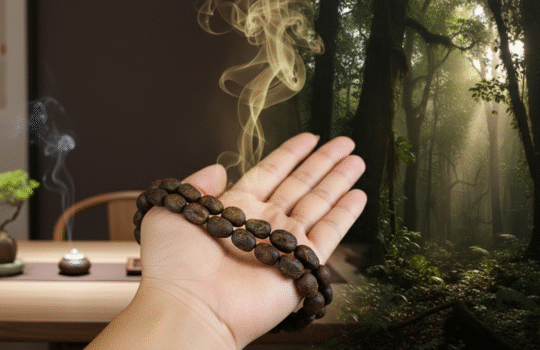
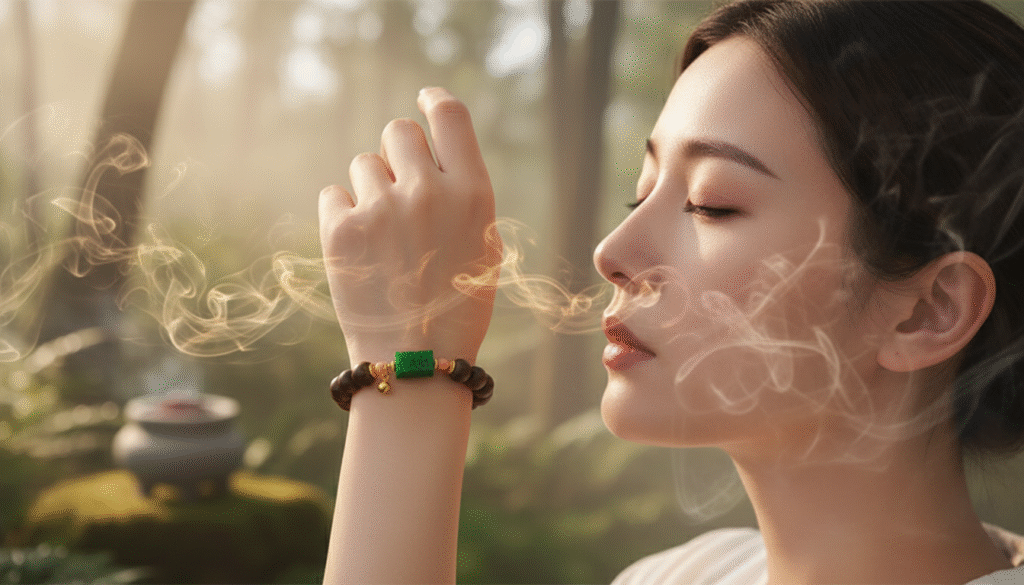
Many friends ask me: what is the difference between Chinese Agarwood (Guanxiang) and Southeast Asian Agarwood? The answer lies in the aura of these beads. This bracelet uses old materials from Chinese production areas, presenting a highly recognizable scent profile where “Honey Sweetness” and “Cool Medicinal” notes coexist. This unique honey scent is said to be related to the specific vegetation and microclimate of the Pearl River Delta. The initial scent is a crisp coolness, as if you are in a Lingnan mountain forest at dawn; after being activated by body temperature, that mellow floral honey sweetness slowly unfolds. It is not as overbearing as the Sinensis series, but it is exactly like the local soil and water—warm, restrained, but with a sweet aftertaste that penetrates time. This scent is a “secret code” that only connoisseurs can understand.
The Union of Gold and Jade: Breaking and Rebuilding New Chinese Aesthetics
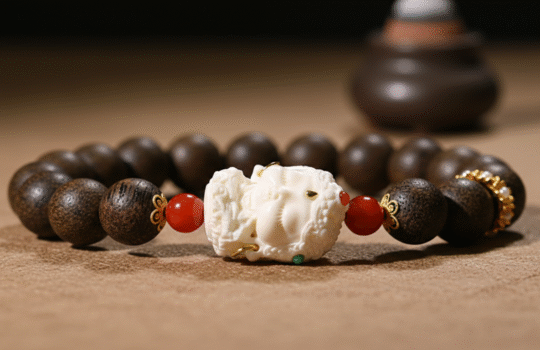
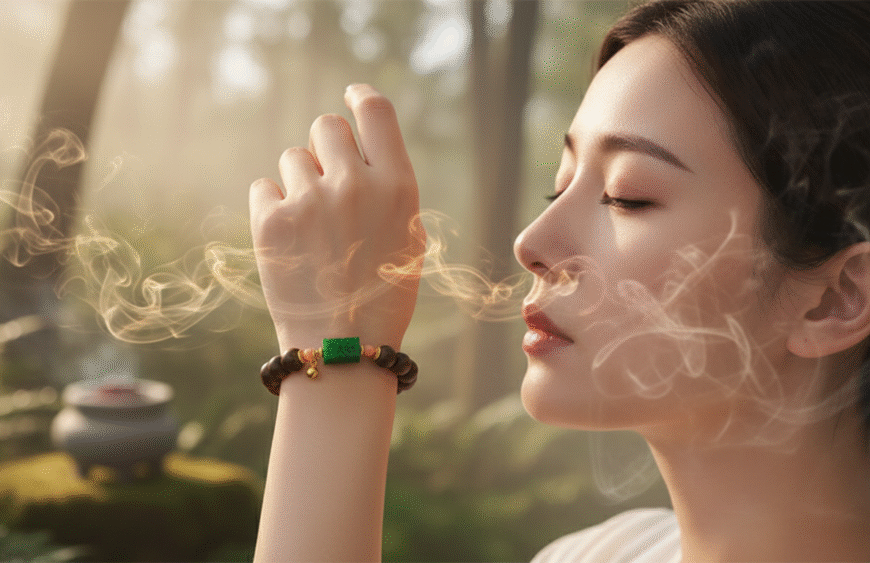
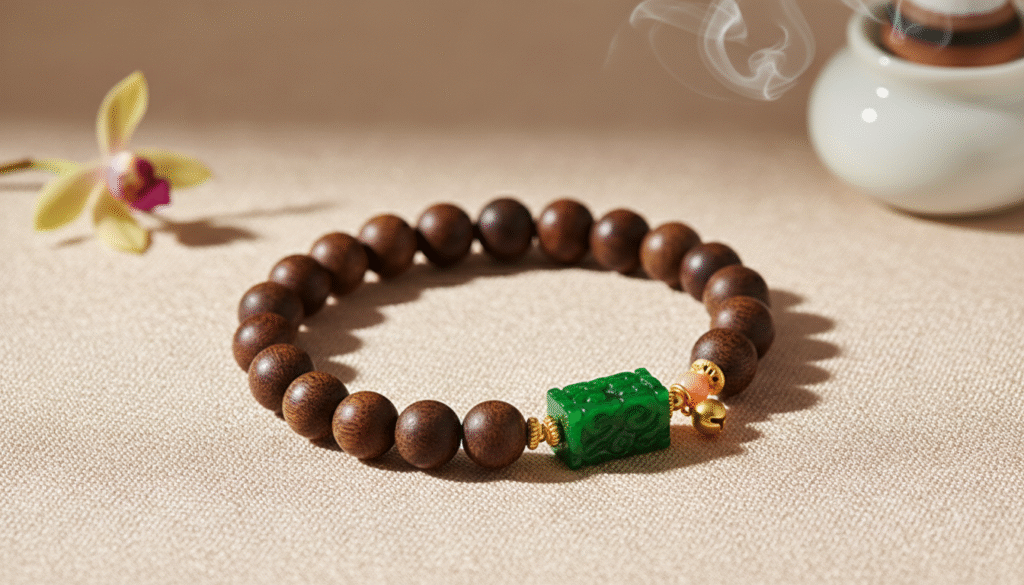
Having top-tier material is not enough; you need a design that carries the weight. I have always insisted that high-end Agarwood jewelry should break the stereotype of being “old-fashioned.” This bracelet is paired with a finely carved green jade auspicious cloud clasp, symbolizing good fortune and elevating the overall artistic style. This jade is selected for its excellent translucency and “Yang Green” color, looking as if the lush green mountains that nourished the Agarwood were condensed. At the same time, the metal accessories are made of 18K gold, complemented by red coral spacer beads. The nobility of gold, the vitality of jade, and the ancient simplicity of Agarwood form a perfect visual collision. This is the essence of “New Chinese Style”: blooming modern aesthetics upon traditional foundations, being stunning without overpowering the main theme.
Artisan Polishing: Preserving the “Breathing Pores”
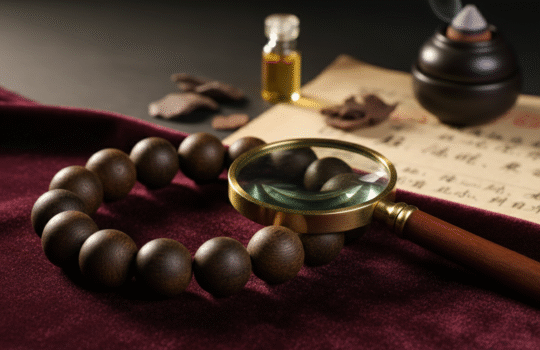
Finally, I want to talk about a detail regarding “vitality.” Much of the Agarwood on the market is glued or waxed for a better look; it appears shiny, but the fragrance is “dead.” For these beads, we insist on manual physical polishing to a mirror-like gloss, without artificial waxing, to preserve the natural breathing pores. This process is extremely time-consuming, requiring a master to rub the beads thousands of times with ultra-fine sandpaper. Under a magnifying glass, you can see the delicate brown eyes remain open. Because of this, its fragrance will move dynamically with your body temperature, mood, and even weather changes. This is the “union of man and scent” that true aficionados pursue.
Expert’s Message: Only for the Destined Connoisseur
Agarwood is something that emphasizes “Fate” (Yuan). I have stored this batch of old Guanxiang material for so many years, and only a few finished bracelets were produced. Rather than saying I am selling a product, I am looking for a kindred spirit who can read the story of its “Red Soil and Iron Bone.” If you are also looking for a “real deal” that can be passed down as a family heirloom or calm the mind, or if you are unsure about the origin or authenticity of Agarwood, please click below to consult or reply “Appreciation” privately. I will personally provide one-on-one selection advice based on your aura and needs. Good incense is hard to find; don’t let fate pass you by.
FAQs
Q.Since it is old material from a Chinese production area, why specifically emphasize “Guanxiang”?
A.Excellent question! “Guanxiang” is the pinnacle of Chinese Agarwood, specifically referring to the resin formed by Aquilaria sinensis trees in the Guangdong region (especially around Dongguan). Historically, it was a top-tier incense offered as tribute to the imperial court. Compared to the elegance of Hainan Agarwood, Guanxiang has a richer sweetness. Due to early geographic development, the remaining stock of true wild old material (especially from core small production areas like the Dalingshan range) is extremely low, making its collection value exceptionally high.
Q.Will this “mirror-like gloss” disappear after wearing it for a long time?
A.It will not disappear; instead, it will get brighter the more you wear it. Because this is physical polishing rather than waxing, as it is nourished by the oils from your skin (forming a patina), a more transparent oxidative film will form on the bead surface. The color will become deeper, and the luster will have a more jade-like quality. This is the charm of time.
Q.With jade and 18K gold accessories, what should I pay attention to for maintenance?
A.Mainly focus on avoiding water and chemicals. While 18K gold and jade are relatively stable, Agarwood is afraid of chemical detergents (such as hand soap and perfume). It is recommended to take it off when washing hands or bathing. Additionally, try to avoid violent collisions between the gold ornaments and hard objects to prevent scratching the Agarwood beads. Good things deserve careful care.
Q.What occasions is this bracelet suitable for?
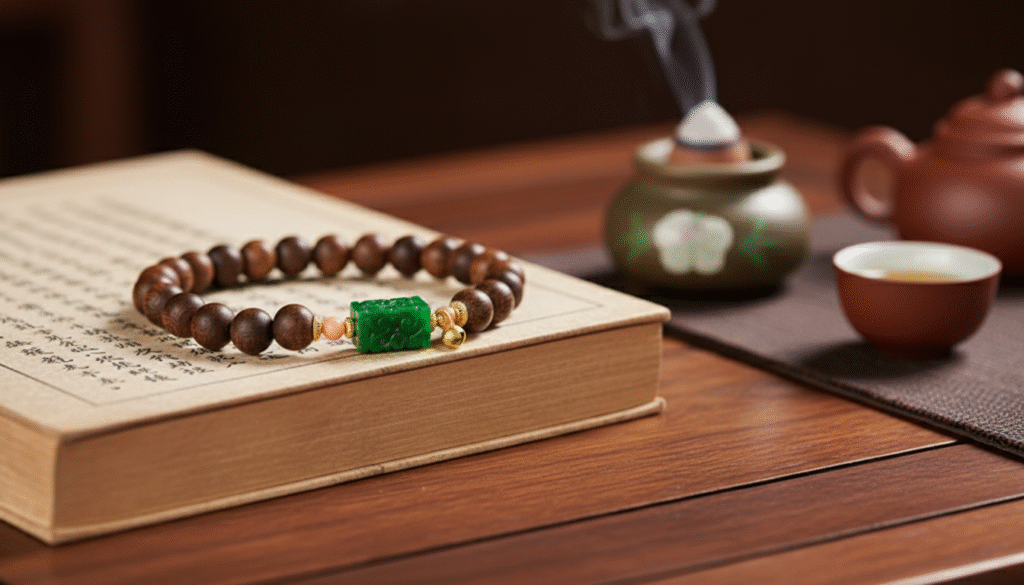
A.It is very versatile. Its design blends classic and modern elements, making it suitable for pairing with Cheongsams or Hanfu for tea gatherings, as well as with plain cashmere sweaters or professional attire for business negotiations. It is not just an accessory, but also a “portable aromatherapy” that regulates emotions, allowing you to remain calm and composed on important occasions.