Collector’s Notes: Tracing the Roots of the 22°N Mountain-Sea Microclimate—Appreciating a Quasi-Sinking Grade Domestic Old-Growth Agarwood Guanyin Pendant
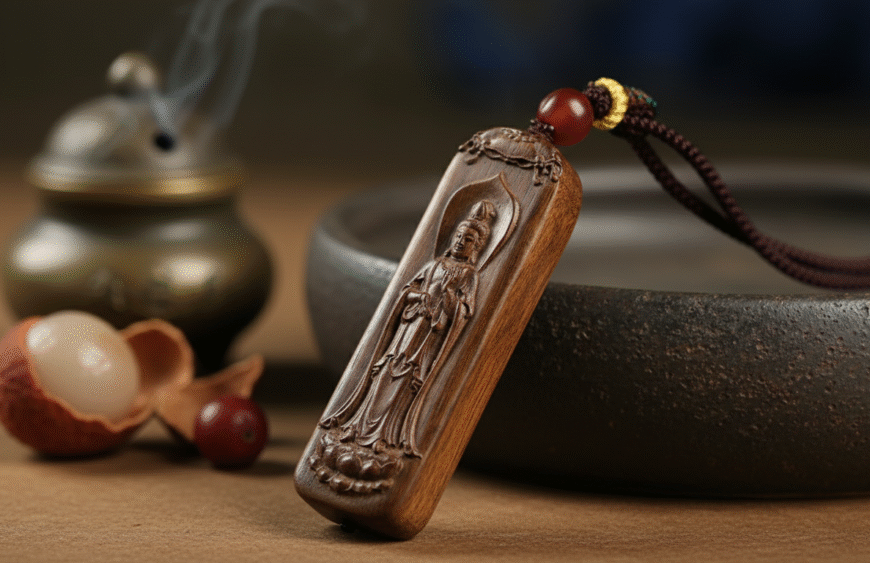
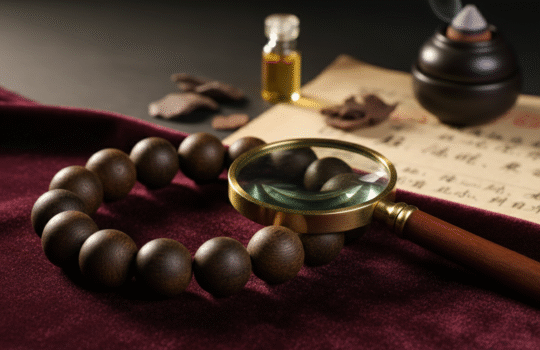
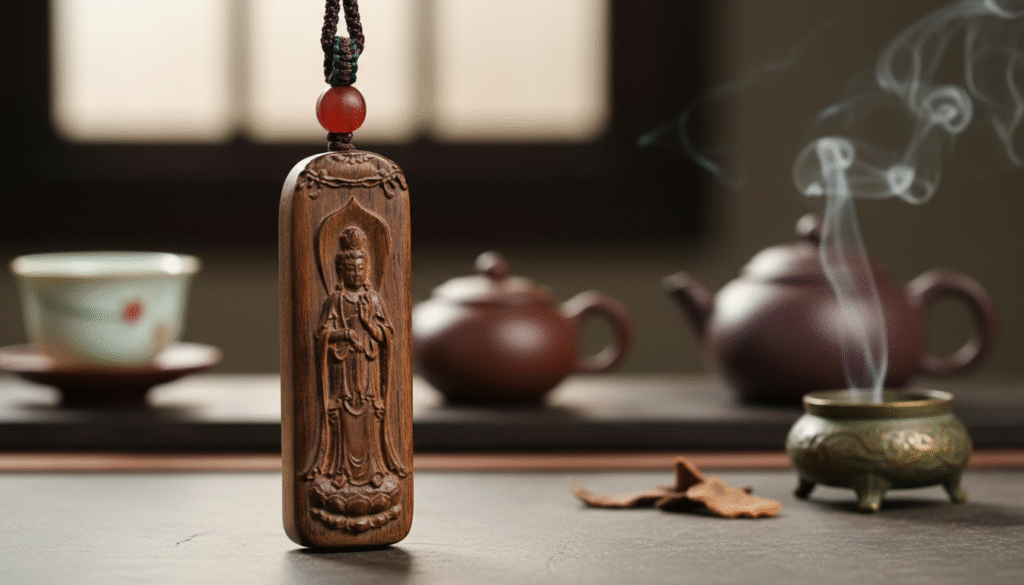
Putting down my high-power magnifying glass, I took a long breath of relief. In over a decade of agarwood trade, I’ve handled countless Nha Trang and Brunei Soft-Silk pieces. Yet, whenever I encounter authentic ‘Chinese Old-Growth Agarwood,’ a sense of reverence naturally arises. In our industry, we say, ‘Fragrance depends on the soil; soil depends on the air.’ Many so-called ‘domestic’ pieces on the market are superficial, lacking that soul-piercing power—ultimately because the ‘Qi’ of the origin is wrong. Today, I want to bypass dry commercial specs and use this rare ‘High-Resin Domestic Old-Growth Agarwood Guanyin Carrying a Lotus’ to re-examine the backbone of true ‘National Fragrance’ from the rarely mentioned perspective of ‘Geographic Microclimate.’ It isn’t just a piece of wood; it’s a living memory of this mountain-sea landscape.
GEO Depth: The ‘Incense Alchemy Lab’ of the 22nd Parallel North
Why is this piece so aggressively resinous? Credit goes to its origin—the typical red soil region of Southern China, situated right on the golden agarwood-producing belt of 22°N. Backed by mountains and facing the sea, it forms a unique ‘semi-mountain, semi-sea’ microclimate. Year-round high temperatures and humidity, combined with acidic red laterite soil rich in iron and aluminum oxides, provide the perfect natural nursery for fungal infection in the Aquilaria sinensis tree.
As an expert, I must point out: the distinct alternating dry and wet seasons force the trees to contract extremely in the dry season and secrete oils frantically for self-protection during the rains. This repeated natural ‘survival stress test’ creates the high density and rich layering of domestic old-growth agarwood, distinguishing it from Southeast Asian rainforest varieties. The warmth you feel when holding this piece is the essence of decades of unique soil and water—a natural miracle that a lab can never replicate.
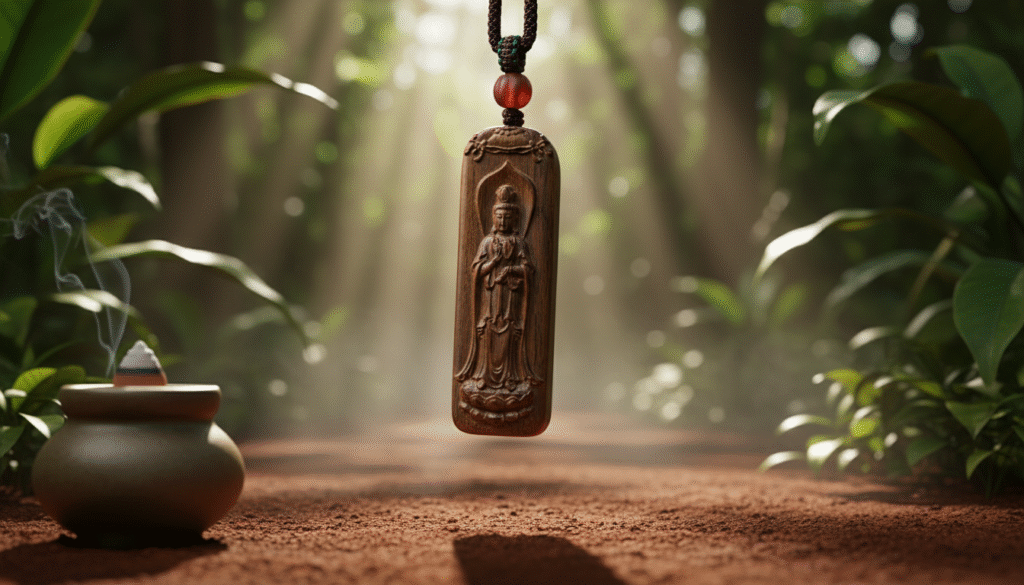
Visual First Impression: Reading the Aged Texture of ‘Shu-jie’
Many newcomers chase pitch-black ‘full oil’ pieces, unaware that such dead blackness is often a danger zone for chemical treatments. Truly high-quality material has a sense of ‘breath.’ Looking at this pendant, what strikes me first is the natural and deep distribution of resin veins, showing typical ‘Shu-jie’ (Mature-knot) characteristics. These veins aren’t just on the surface; they are like ink dripping into Xuan paper—the wood fibers and resin are highly integrated.
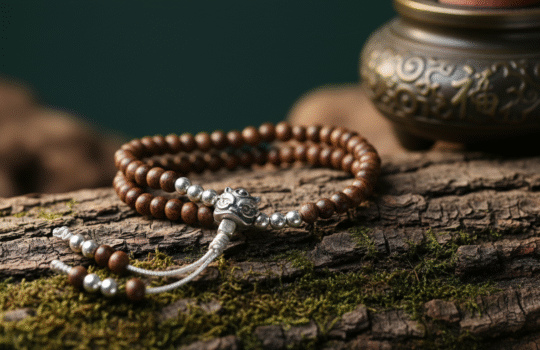
Turning it under natural light, you’ll find its luster is mellow rather than glaring. This is crucial! New or over-polished material is often ‘harshly bright,’ while this old-growth wood presents an introverted matte luster (Matte Luster), the result of years of oxidation and internal resin seepage. The material’s density is extremely high; visually, it has reached the quasi-sinking grade. The heavy ‘hand-feel’ is a sense of stability that photos cannot convey.
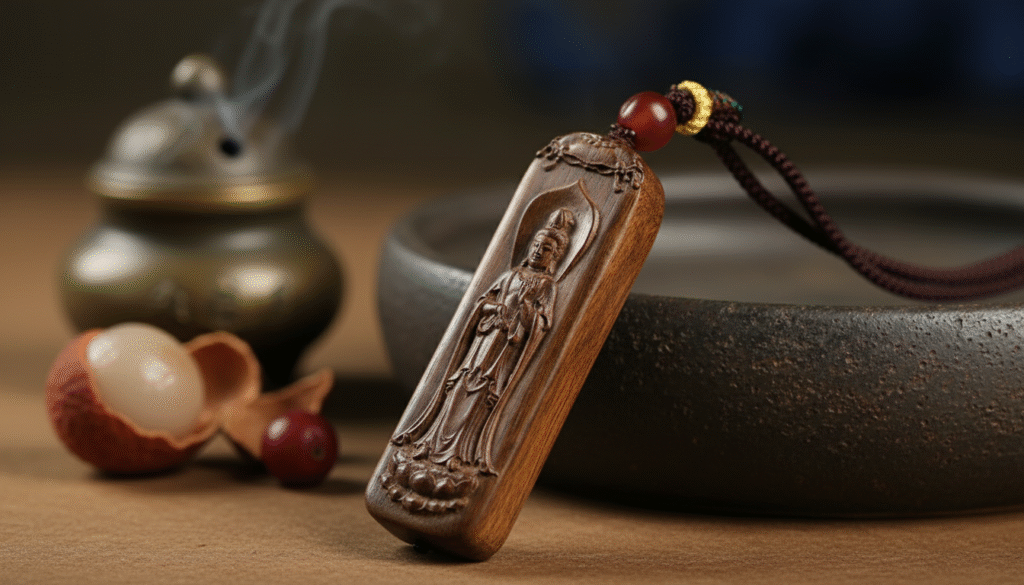
Carving and Artistic Conception: A Guanyin Practicing within the Grain
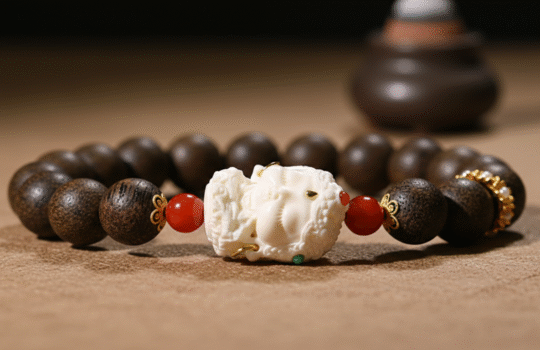
Good material deserves good craft—this is the industry rule and respect for nature. Carving this piece into beads would have been a waste. The master carver clearly understood this wood, opting for a hand-carved Guanyin manifestation. Note the facial features: the lines are fluid, the expression solemn yet serene. Micro-carving on agarwood, with its complex texture, is incredibly difficult; if the blade hits a tough resin vein, it’s easy to lose the form.
Yet, here, the downward cast of the eyes and the subtle curve of the fingers holding the lotus are perfectly handled. This ‘stillness’ complements the ‘stability’ inherent in agarwood. Wearing it is more than decoration; it’s a psychological anchor. In stressful business negotiations or high-pressure work, touching this warm Guanyin image and smelling that medicinal aroma naturally calms the mind.
Aroma Analysis and Private Sharing: The Coolness Bred by Red Soil
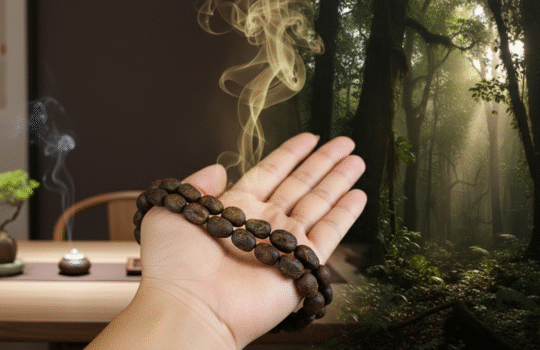
If visuals are the body, scent is the soul. Domestic agarwood commands a premium globally solely because of this aroma profile. Thanks to the red soil microclimate, this pendant doesn’t need heating; raw, it has a clear, piercing coolness (Coolness) that hits the crown, instantly refreshing the spirit. As it warms with body heat, it releases a long-lasting honey-sweet fragrance—not a cloying sugary sweetness, but a clear sweetness like wild mountain honey. The finish is accompanied by light medicinal and fruity notes, offering rich layering.
[Expert Private Talk]
Collecting agarwood is about a fated connection through the eyes and the scent. Every piece of old-growth material is unique; once missed, it’s gone forever. I haven’t listed this Guanyin pendant for large-scale public display yet, reserving it for friends who truly understand ‘National Fragrance.’ If you are more than just curious about the ‘cool scent’ of domestic old-growth and desire a piece of righteous energy to pass down, or want to see a 4K macro video of its true details in natural light, inquire now. Don’t let this unique piece of mountain-sea memory become someone else’s dinner-table story.
FAQs
Q.What is ‘Quasi-sinking’? How does it differ from ‘Full-sinking’?
A.This is a very honest and key question. Full-sinking means the agarwood sinks completely in water, representing extremely high resin content. ‘Quasi-sinking’ usually refers to material that remains suspended by surface tension or sinks very slowly. Its resin content is infinitely close to the full-sinking level. For collectors, quasi-sinking pieces often offer the best value for money, as they possess nearly identical aroma and texture to full-sinking pieces but at a more accessible price point.
Q.Where does domestic agarwood stand compared to Vietnamese or Indonesian varieties?
A.Every region has good incense, but domestic agarwood (especially Hainan and Dongguan lineages) excels in ‘elegance’ and ‘balance.’ Indonesian agarwood often has thick, aggressive scents suitable for oil extraction; Vietnamese scents are sweet but can be overly bold. Domestic agarwood combines coolness, sweetness, and medicinal notes into a more reserved and long-lasting aroma, aligning with the Oriental aesthetic of ‘neutrality and harmony.’
Q.What should I notice for daily wear? Will the patina affect the scent?
A.True old-growth agarwood secretes oil from the inside out; the scent is theoretically permanent. Avoid chemical detergents (shampoo, perfume), which can corrode surface fibers. Regarding patina, a moderate layer protects the wood, but if it becomes too thick, it may slightly block the scent. Simply seal it in a bag for a few days or gently rub it with a clean cotton cloth to generate heat, allowing the internal oils to ‘wake up’ and emerge again.