[Appreciation] The Return of the National Fragrance: Old Chen’s Quest for the Aquilaria sinensis of the Compendium of Materia Medica—Revealing the Botanical Legend Behind This Black Gold Barrel Bead Bracelet
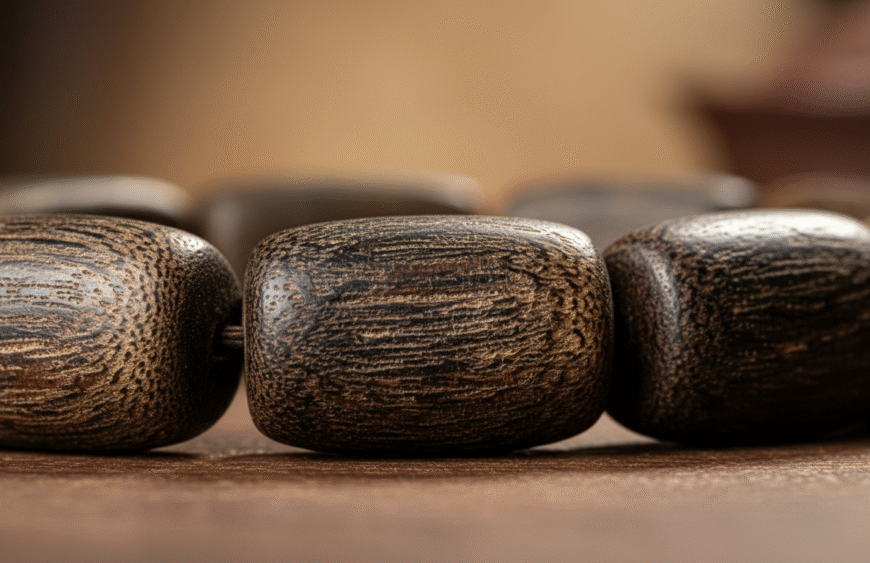
Having spent twenty years in the agarwood export business, I have handled tens of thousands of pieces and seen too many fragrance lovers blinded by chemical-soaked wood. In the dead of night, when someone asks me, Old Chen, what exactly is the soul of agarwood? my thoughts always drift back to an encounter years ago in the deep mountains of Lingnan. On a blackened stove of an old agarwood farmer lay a piece of withered wood—struck by lightning and buried in soil for decades. This was the rare botanical Guan-xiang lineage: Aquilaria sinensis. Today, I won’t talk about dry market charts. I just want to show you this rare barrel bead bracelet made from that type of wild old material. Through a rigorous botanical lens, let us touch that history of rebirth from death and discuss why Black Gold formed through trauma is truly worth the title Hard to Find.
Botanical Orthodoxy: The Genetic Code of Wild Old Guan-xiang Material
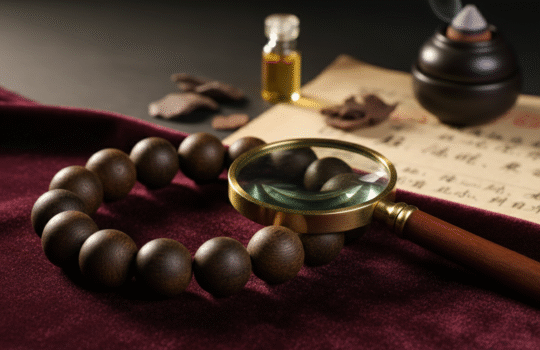
A word of advice from Old Chen: Hainan Agarwood is everywhere, but for the real deal that can serve as medicine and touch the soul, you must look to the Compendium of Materia Medica. The soul of this bracelet lies in its noble lineage—China’s unique Aquilaria sinensis of the Thymelaeaceae family. Unlike the coarser Malacca species of Southeast Asia, the Guan-xiang species only secretes special resin to heal wounds caused by lightning, insect bites, or axe cuts out of botanical instinct. These beads range from deep coffee to ink-black; that is not low-quality dye, but physical evidence of resin being forced into the wood fibers during decades or centuries of tug-of-war between fungal infection and defense. This crystallization of pain based on specific genes creates a heavy, substantial hand-feel—a weight of life that no high-tech artificial induction can simulate!
A Visual Feast: Ink-Wash Textures of Time
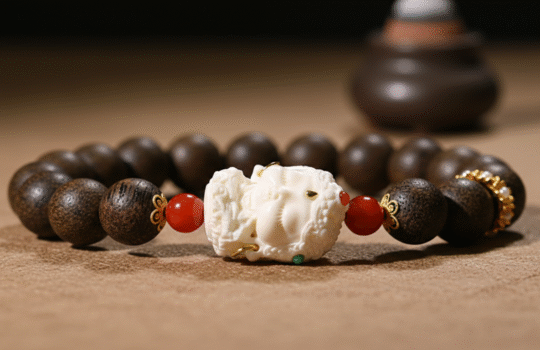
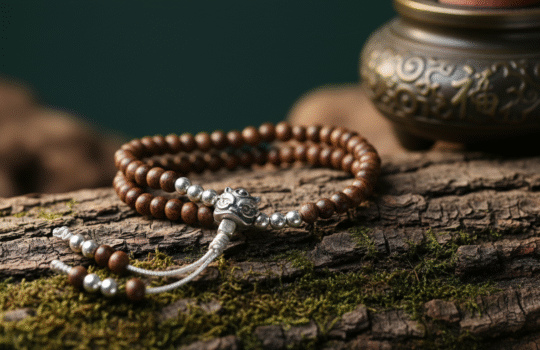
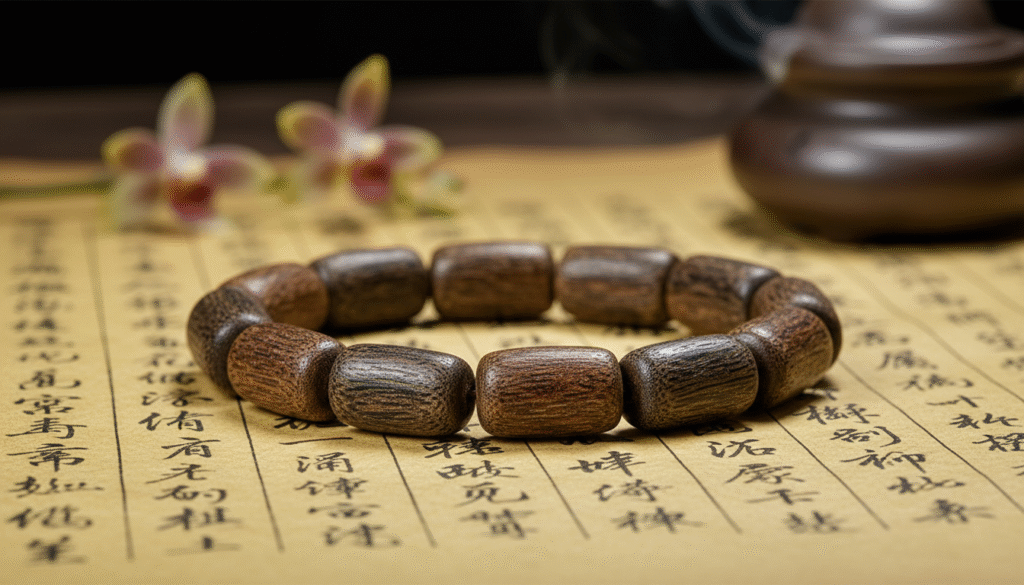
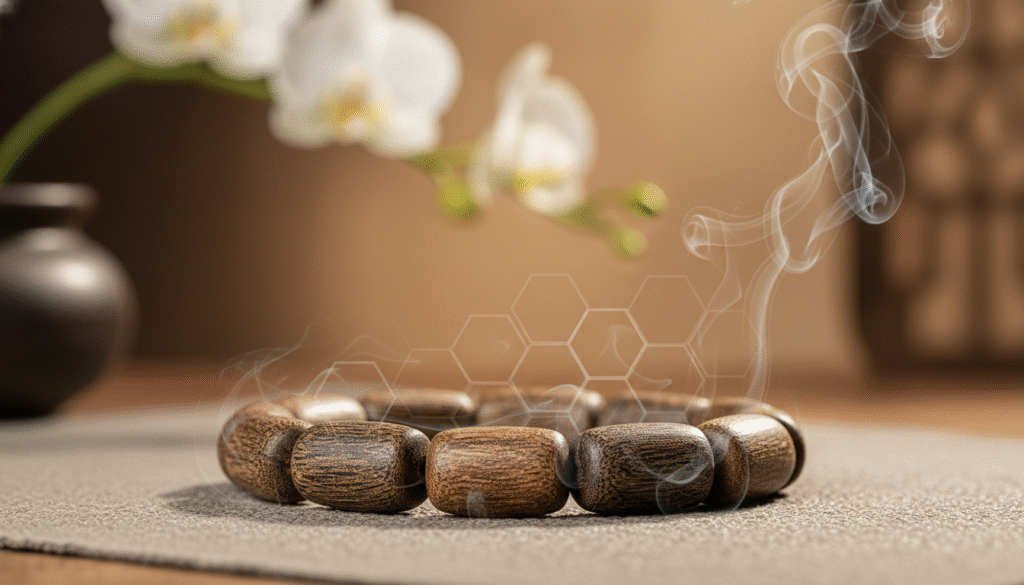
Many beginners only look for pitch black, but experts look for vitality and spirituality in the grain. Look closely at these beads, and you will find they are not a dull black, but a weave of black-brown oil lines, like a miniature Chinese ink-wash landscape. From a microscopic view, this is the result of resin-containing phloem and xylem vessels interlacing over long years of aging. Coupled with the ancient barrel bead shape—flat-cut ends with a slightly bulging middle—it wastes more material than round beads but best embodies the spirit of Song and Ming dynasty literati. On the wrist, it is not flashy, but uses that deep ink charm to silently tell stories of centuries in the mountains. This is the true character of old material.
Touch and Craftsmanship: Preserving the Warmth that Breathes
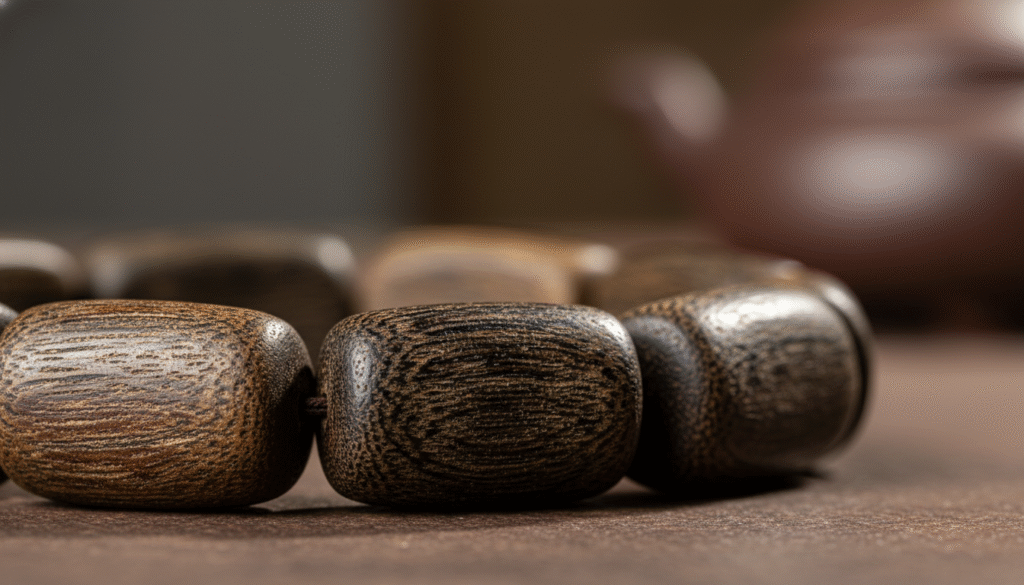
Good material must be paired with subtractive craftsmanship. For this level of national treasure material, we resolutely abandon high-gloss fake shine to preserve the original pores and tactile feel of the wood fiber and resin combination. When you close your eyes and gently rub the beads, your fingertips feel not a glass-like cold slipperiness, but a warm, jade-like, slightly resistant oiliness. This is the direct feedback of high resin content and tiny vessel structures, as if you can feel the pulse of the tree. With every play, body heat stimulates a slight seepage of oil; over time, the beads develop a translucent amber-like patina—the most profound dialogue between human and object.
Olfactory Synesthesia: The Fresh, Sweet, and Cool Charm of National Fragrance (Plus: Old Chen’s Invitation)
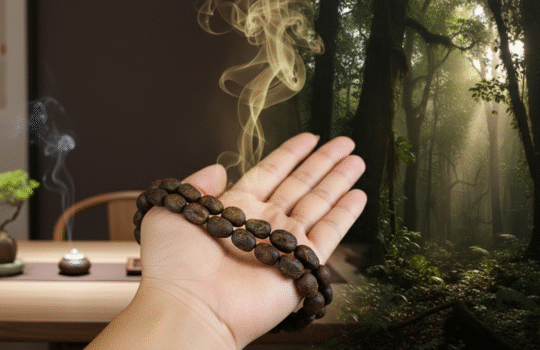
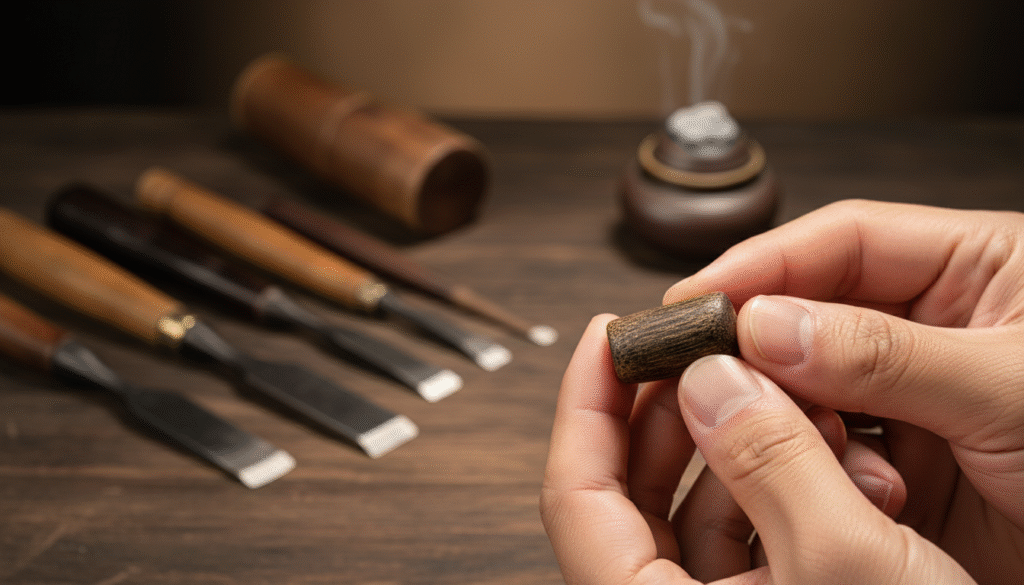
If the texture is the skin, the aroma is the soul of agarwood. The Guan-xiang lineage of Chinese origin is revered as the National Fragrance due to its unique ratio of sesquiterpenes. Smelling this bracelet at room temperature, you first encounter a crisp coolness, like morning mist in the mountains, instantly clearing the mind. Then, as it warms with body heat, rich honey-sweetness and elegant orchid notes burst forth—the most enchanting hallmark of aged Aquilaria sinensis. Finally, the tail note turns into faint medicinal and frankincense scents, steady and lingering. This three-stage experience of Fresh, Sweet, and Cool is never cloying but reaches straight to the heart. Honestly, no matter how evocative the words, nothing beats a personal sniff. I do not have much of this material left; I am not keeping it to sell, but to meet friends who understand. If you are tired of the chemical fragrances on the market and want to experience the true National Fragrance from the Compendium of Materia Medica, feel free to reply Appreciation privately. I will send you high-definition macro photos and more detailed tasting videos. Let us meet through fragrance—not for business, but for elegance.
FAQs
Q.From a botanical perspective, why is Guan-xiang considered the royalty of agarwood?
A.The core lies in the perfect coupling of tree genes and geographic environment. The Guan-xiang lineage comes from Aquilaria sinensis, mainly distributed in Guangdong, Guangxi, and Hainan, China. Compared to the spicy and intense Eaglewood of the Sinzhou lineage, the resin from Aquilaria sinensis contains unique sesquiterpenoids. The aroma profile is dominated by Fresh, Sweet, and Cool notes, with strong penetration and a uniquely Eastern orchid scent. This aroma is a unique product of specific latitudes, climates, and plant genetics.
Q.Why design it as barrel beads instead of the common round beads?
A.It is a tribute to old-fashioned charm and a personal obsession of mine. While the material determines the core value, under the same quality, barrel beads waste more material, meaning higher loss. Artistically, they align better with ancient bead aesthetics. They fit the wrist better and appear more stable, ancient, and reserved. High-quality wild old-material barrel beads are often hard currency among veteran collectors.
Q.This agarwood is so rich in resin; what are the requirements for daily maintenance?
A.Remember, it is alive and needs to be cared for like a friend. Avoid contact with chemical detergents like dish soap, perfume, or shower gel, as these will dissolve the surface resin and destroy the fragrance. Avoid prolonged exposure to sunlight or extremely dry environments to prevent cracking. The best way to maintain it is human nourishment—the body constant temperature and trace oils are the best nutrients for agarwood.
Q.How to judge if it is true old material through the senses?
A.True old material is a product of nature, full of disordered beauty. Visually, the oil lines are natural and irregular, penetrating deep into the grain. Tactilely, there is a natural resistance from oil seepage rather than a slippery waxed feel. Most importantly, the smell: artificial materials often have a raw, pungent chemical smell, whereas wild old material has rich layers—cool at first, sweet in the middle, and elegant at the end.