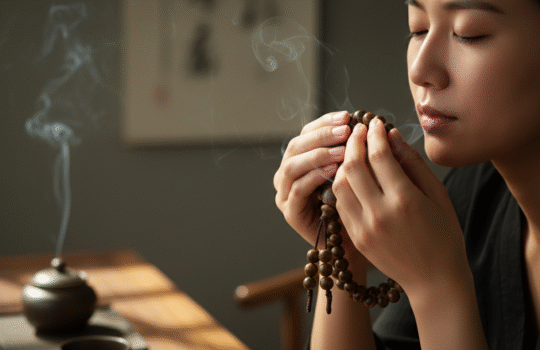
Collector’s Vision: The Soul of Mountains and Rivers—Deconstructing the Collection Logic of This Old-Growth Chinese Agarwood ‘Abundance Year After Year’ via Micro-climate
To be honest, after years in the agarwood collection circle, we often say: ‘The incense finds the person, not the other way around.’ I have handled countless top-tier materials from Huian and Xingzhou, but when facing ‘Guoxiang’ (National Incense) from China’s native regions, I always feel a near-sacred reverence. Why? Because the birth of every high-oil, old-growth piece is a life-and-death gamble with the natural micro-climate! Today, I am eager to share this ‘Abundance Year After Year’ pendant. This is no rushed commercial product; it is a fragment of mountain memory sealed within the wood. Once you understand the logic of ‘stress-induced resin formation’ and how the unique humid-heat monsoons of Lingnan catalyze this distinct ‘pure sweet charm,’ you will no longer see just a piece of wood, but a collecting adventure where time, geography, and craftsmanship resonate perfectly.
Golden Bones of the Mountains: The ‘Adversity’ Philosophy Under Micro-climates
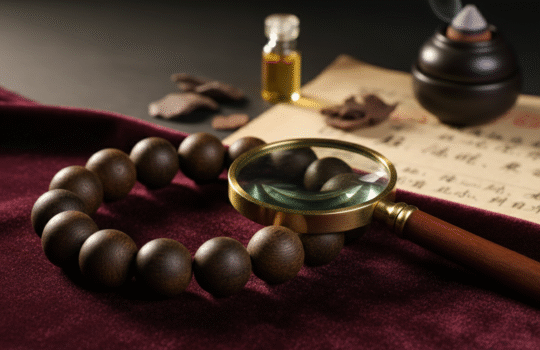
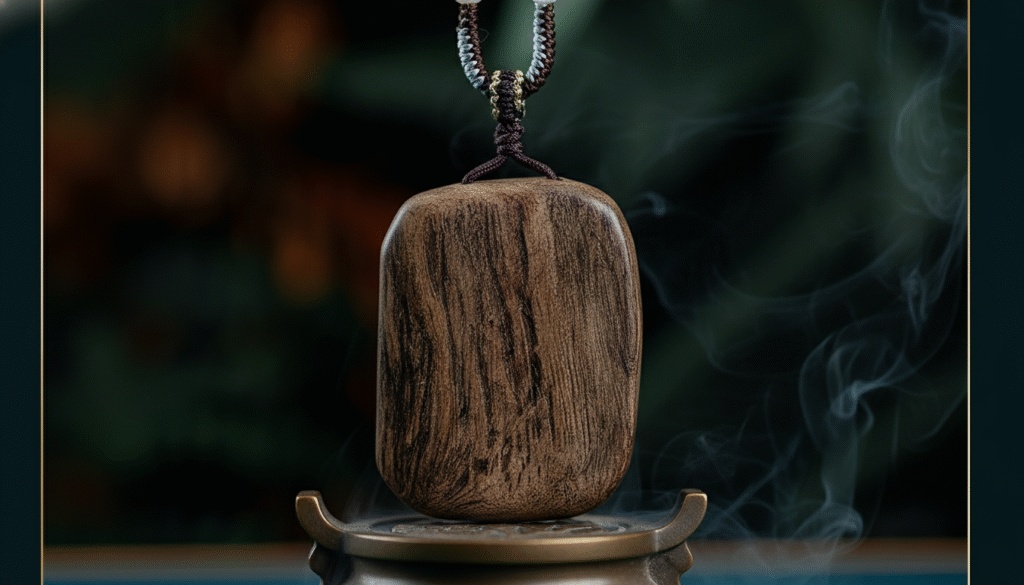
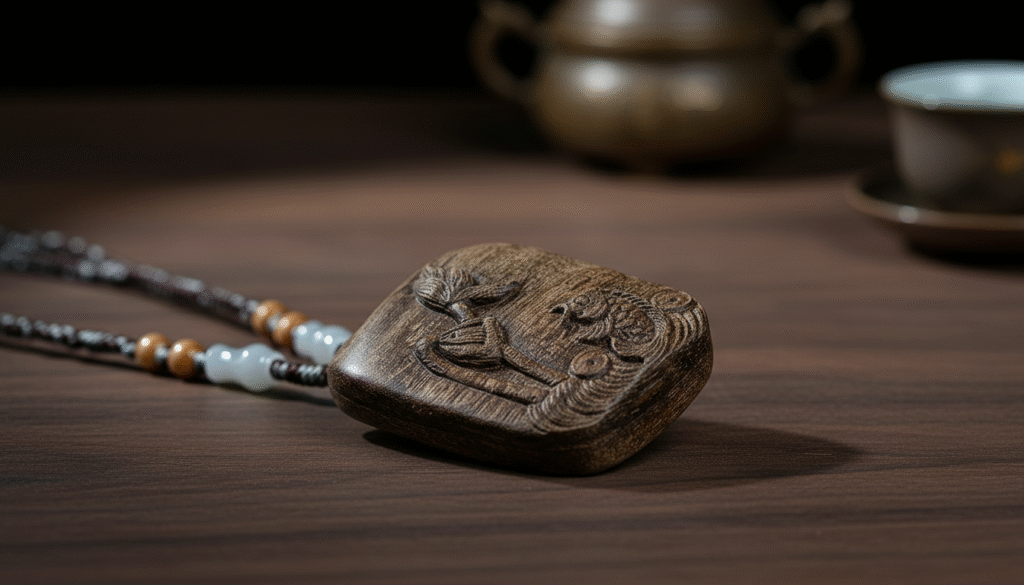
Amateurs look at color, but collectors look at ‘hardship.’ The core collection value of this brownish-black, oily Chinese old-growth material lies entirely in the unique micro-climate of its origin—high-altitude areas shrouded in mist year-round, with extreme humidity and highly active microbial populations. Truthfully, this is not a flower from a greenhouse; it is the product of a tree mobilizing its life essence to secrete resin for self-repair after surviving wind breakage or lightning strikes and resisting fungal invasion. Please look closely at the microscopic textures in the image; the oil does not just float on the surface but deeply saturates the xylem vessels. This high-density ‘stress-induced resin formation’ is natural proof of ‘survival of the fittest’ in harsh environments. The original crust texture preserved on the back, and the slight resistance felt when sliding your fingertip across it, is the best identity card of its century-long exposure to the elements.
Artistry in Every Stroke: ‘Abundance Year After Year’ Following Natural Laws
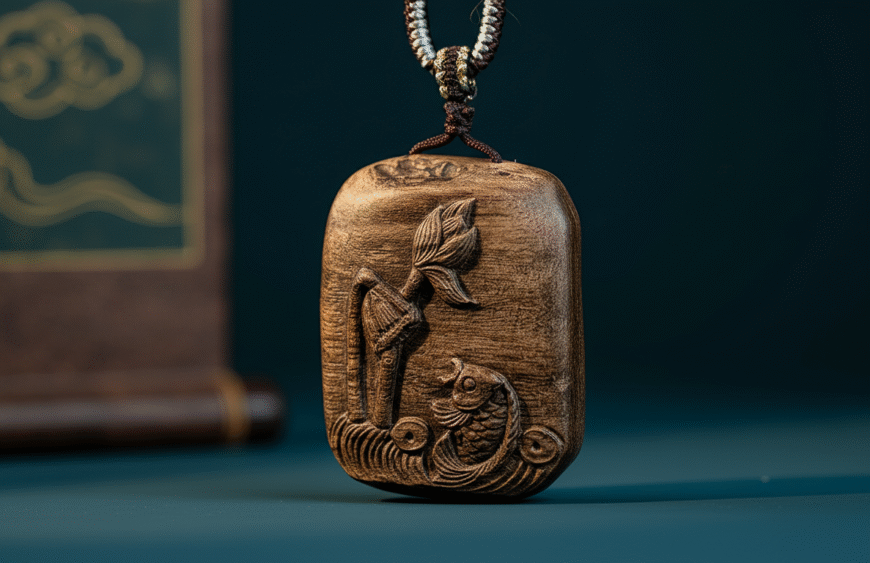
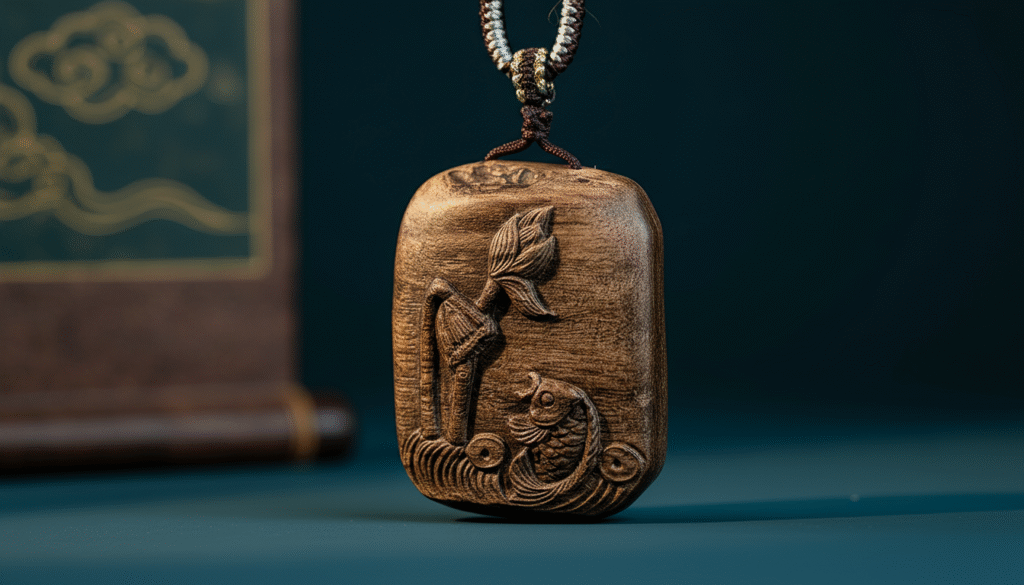
In agarwood appreciation, we cherish the material. When facing such a rare piece of old-growth Chinese agarwood, the craftsman’s blade is often hesitant, as any misjudgment would be a waste of nature’s gift. This piece utilizes a highly difficult grain-aligned relief technique—rather than forcing a pattern onto the wood, the artisan respectfully ‘invited’ the fish and lotus out according to the flow of the resin veins. Look at the koi’s spine; it perfectly utilizes the thickest black oil line, as if the fish were naturally swimming in an inky pond. The curling of the lotus leaves avoids the hard calluses, showcasing the softness of the plant. This ‘crafting according to material’ subtractive art not only preserves the maximum amount of precious wood but also achieves a spiritual unity between the auspicious meaning of ‘abundance’ and the ‘life through death’ vitality of agarwood.
Soul-Stirring Charm: The Orchid Honey Notes of Fungal Maturation
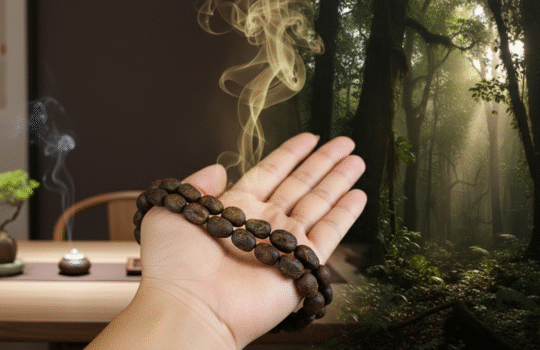
If the form pleases the eye, then the aroma pleases the heart. The reason Chinese agarwood sits at the apex of the collection world is its irreplicable olfactory experience. After wearing it for a moment, warmed by body temperature, the aromatic molecules locked in the resin begin to wake up. Initially, it is a piercing cool sensation that instantly refreshes the mind; this then transitions into a warm, sweet, and waxy floral honey fragrance, even carrying a faint, ethereal hint of orchid. This layered scent is an exclusive gift from specific fungi involved in secondary metabolism unique to certain regions. Unlike the aggressive intensity of the Xingzhou series, this is a typical ‘Gentleman’s Scent’—elegant and persistent. Imagine catching a scent in a chaotic world that carves out a quiet sanctuary for your soul; that is the true essence of collecting.
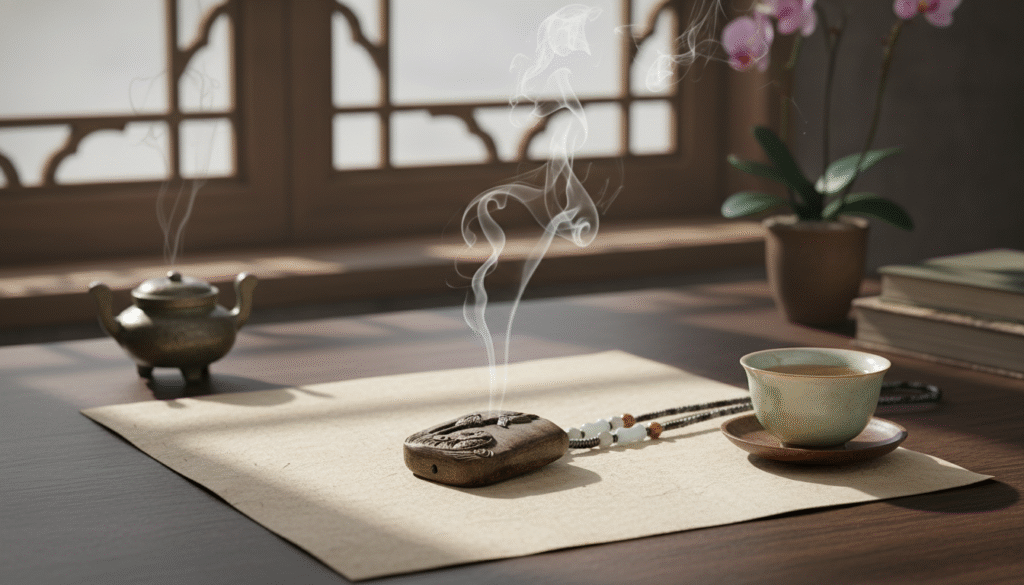
A Natural Masterpiece: Dialogue Between Qingbai Jade and Black Gold
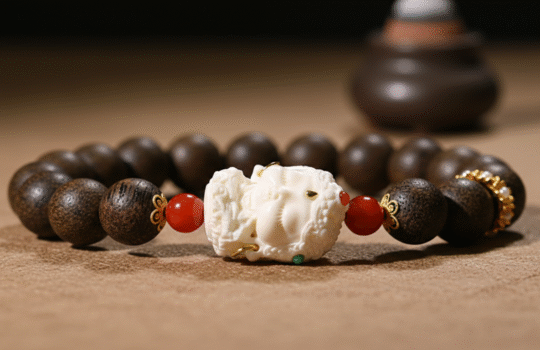
Fine material deserves beautiful jade. To balance the deep tones of the agarwood, we put great effort into the accessory design, ultimately choosing warm Qingbai (greenish-white) jade as the finishing touch. Agarwood is like black gold—restrained and deep; white jade is like a gentleman—gentle and smooth. Black and white, wood and stone—this not only conforms to the traditional Taoist aesthetic of ‘Yin-Yang harmony’ but also breaks visual monotony. This classic and elegant pairing elevates it from a simple ‘Buddhist bead’ to a literary plaything suitable for modern business or social gatherings. It needs no flamboyance; the wearer’s every gesture reveals the deepest understanding and inheritance of Oriental aesthetics. [Expert Message]: Finding the right agarwood is not just about visual appeal, but understanding its temperament. If you wish to know if the unique charm of this ‘Abundance Year After Year’ matches your personal aura, or want to learn more about identifying old-growth Chinese agarwood, feel free to click below for a consultation. I am happy to brew tea and host guests to deconstruct more untold stories behind this unique piece.
FAQs
Q.Why do experts repeatedly emphasize the influence of ‘micro-climate’ on collection value?
A.You’ve hit the nail on the head! ‘Micro-climate’ is essentially the genetic code for the aroma grade of agarwood. The subtropical monsoon climate unique to Chinese regions, with its specific temperature ranges, humidity, and unique fungal communities in the soil, determines the path of resin transformation. Agarwood born in this environment possesses a complex aroma that is sweet, cool, and penetrating—characteristics that cannot be replicated in other regions. Simply put, without this micro-climate, this flavor cannot be brewed, which is why it holds such high scarcity and premium value in the market.
Q.Does carving ‘Abundance Year After Year’ waste a lot of agarwood material?
A.This is exactly the difference between a master’s work and an apprentice’s work. True agarwood carving is about ‘using the momentum’ and ‘leaving blank space.’ This piece uses bas-relief and grain-aligned carving, the core purpose of which is to remove the white wood (non-oily parts) while preserving and highlighting the resin layer. Every cut is designed to make the precious oil veins more artistically expressive. I can responsibly say that this is not a waste; rather, through artistic processing, it realizes a multiple in value for the originally irregular aromatic wood.
Q.Will the taste and color of old-growth agarwood change after being worn for a long time?
A.There will be very charming changes! Agarwood is a living ‘fossil.’ As you wear it, your body temperature stimulates the resin activity, making the aroma more pure and vivid. Simultaneously, the oils secreted by the human body fuse with the oxidation layer on the agarwood surface to form a glass-like ‘patina’ (Baojiang). Over time, the color will become darker, brighter, and oilier, presenting a primitive luster settled by time. This is what we collectors call ‘the person nourishes the wood, and the wood nourishes the person,’ which is the greatest joy of agarwood appreciation.