The Ultimate Threshold of Agarwood: Why This Tarakan Sinking-Grade Black Oil Round Bangle is a True Heirloom?
Having spent decades in this industry and handled countless pieces of Agarwood, my fingertips still tremble whenever I hold a sinking-grade Tarakan round bangle—it is the sheer weight of time. This is more than an accessory; it is a sealed geographic memory. Years ago in the northeast of Kalimantan, an old farmer pointed to a muddy swamp and told me: ‘Only in the most dangerous places, to survive, do trees bleed the blackest oil.’ Many friends ask why a wooden bangle can be worth as much as a car. Today, I will look at this freshly unboxed, black oil old-growth piece covered in ‘snakeskin’ markings and explain the reality of this craft. For the collector chasing the ultimate, this is why it belongs in your family legacy.
Beyond Sinking, It Must Be Whole-Material: A Gift and a Gamble from 3 Degrees North
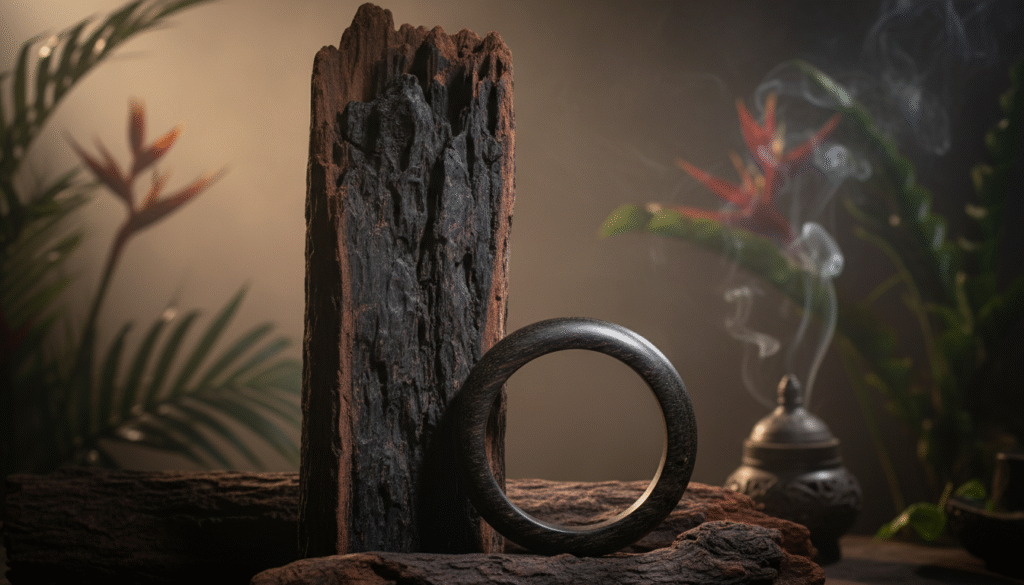
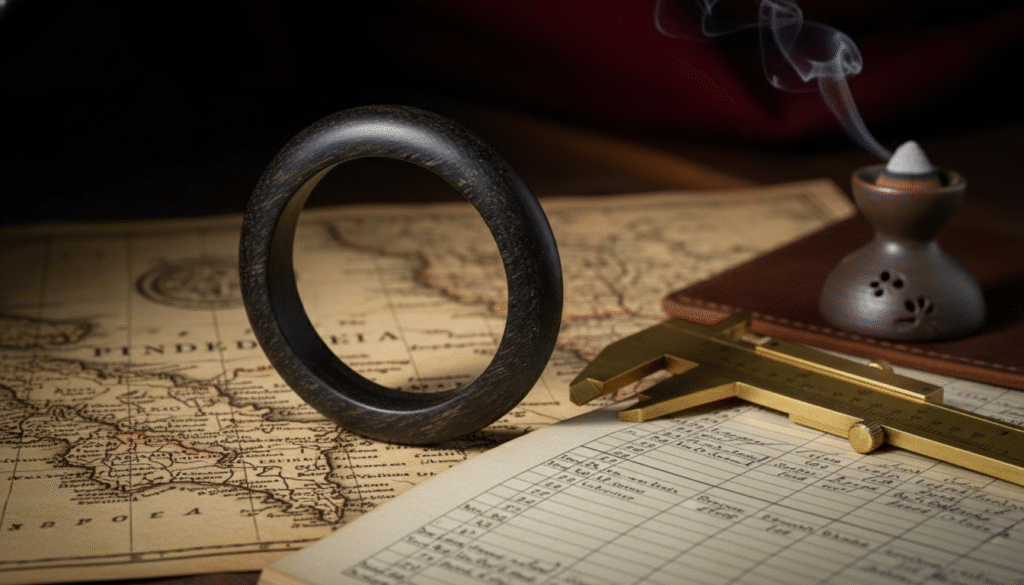
Many know that sinking-grade is rare, but few realize that a sinking-grade bangle is a high-stakes gamble against nature. In the Tarakan region, the terrain is rugged and humid. Agarwood trees here are prone to fungal infection, but often result in hollow cores. To find a solid piece of old-growth material that is not only dense enough to sink (density > 1g/cm3) but also large and stable enough for whole-material solid carving is like winning the lottery. Every kilogram of top-tier raw material excavated from the mud might lose its value instantly if internal cracks from tropical storms are revealed after stripping the rot. This bangle represents a miracle that survived the Kalimantan swamps, challenging the limits of volume and integrity.
Visual Evidence: Snakeskin Grain and Natural Black Oil Born from the Swamps
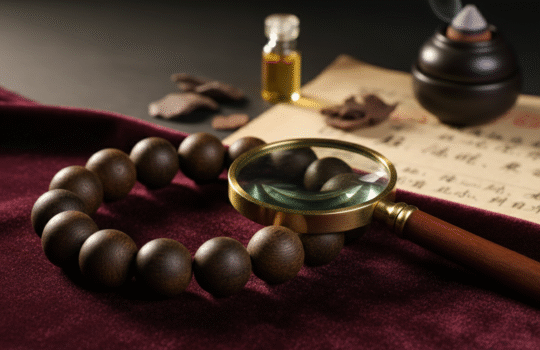
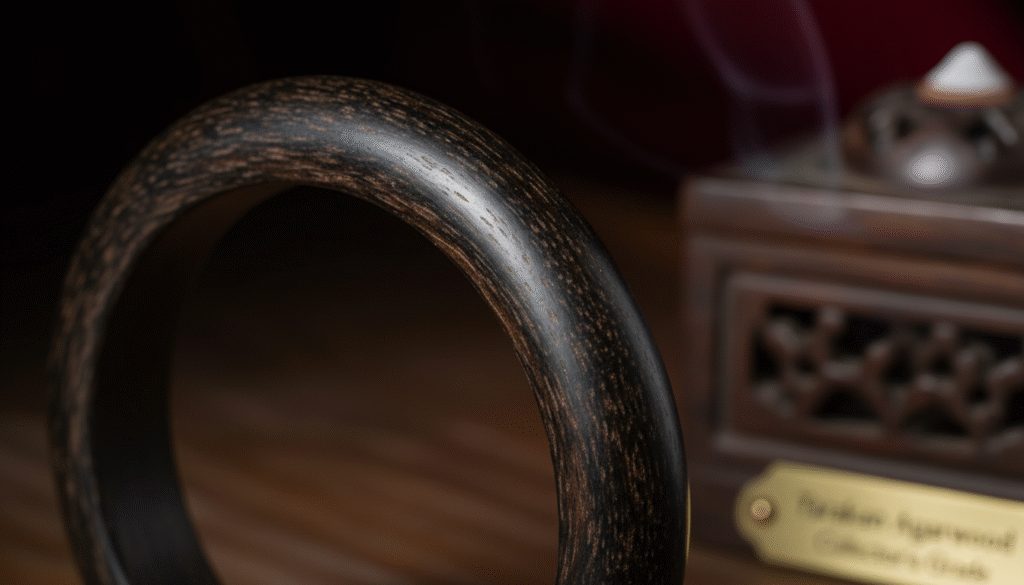
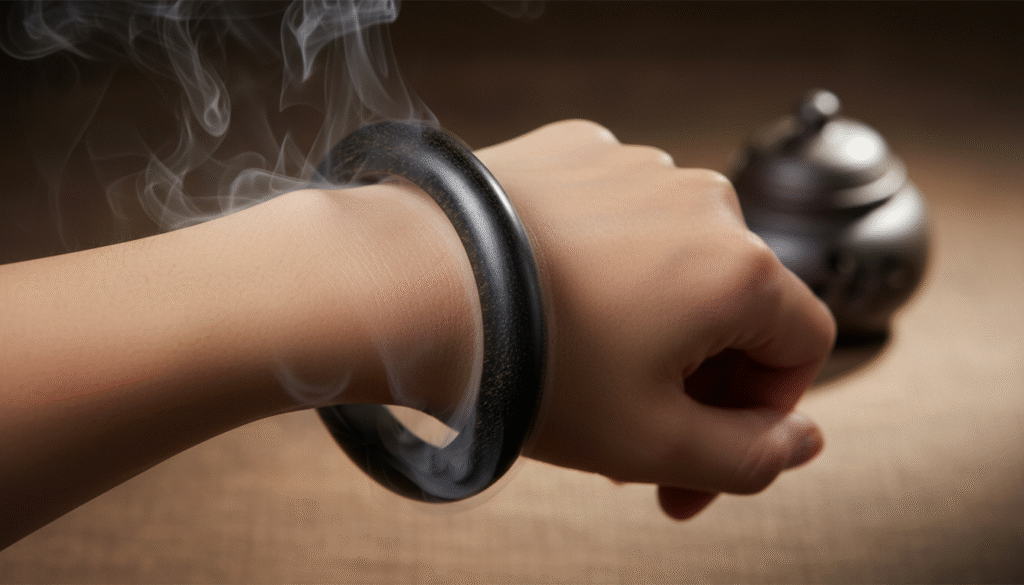
Connoisseurs look at the oil, while amateurs look at the color. Most pitch-black items on the market are the result of technological gimmicks. However, if you examine the surface of this bangle under strong light, it reveals a deep, vibrant dark brown. This is the most significant ID of Tarakan Agarwood: the snakeskin oil pattern. This texture forms as the tree fights bacterial erosion in the humid rainforest; the oil stacks layer by layer along the vessels. Under gravity and unique microbial action, it forms a dense, undulating texture like snake scales. This is not just aesthetic; it is the physical proof of sinking-grade oil content. To the touch, it has a cool, jade-like moisture, as if touching the perennial moss deep within the rainforest.
Centuries of Rainforest Essence: A Mobile Scent Archive
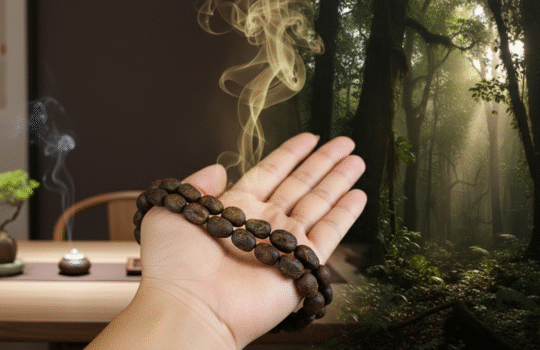
If you think sinking-grade Agarwood is only about weight, you are mistaken. The soul of this Tarakan old-growth bangle lies in its medicinal and milky notes (Qiyun). This is an olfactory mark granted by specific geographic climates. At room temperature, the scent is incredibly diffusive—the signature dominance of Tarakan. The first notes are a rich creaminess from the fertile humus soil, followed by a deep, heavy medicinal scent characteristic of old-growth material aged for centuries. The finish brings a hint of sweetness and coolness that clears the mind. Wearing it is like carrying a mobile treasury of fragrance that shifts with your body temperature.
Expert Advice for Collectors: Prioritize Spiritual Connection Over Data
In the trade, we call this level of quality ‘hard currency.’ As the primary Tarakan resources in Kalimantan face depletion after years of intensive searching, perfect black-oil sinking bangles have transcended being mere products; they are non-renewable geographic samples. For the serious collector, this is a status symbol and an asset that outpaces inflation. However, in Agarwood collecting, spiritual connection comes first, and data comes second. If you have questions about the grain or want to hear the sound it makes when hitting the water, do not rush your decision. Contact me to view 4K macro videos that reveal every fiber and oil vessel. Even if it is just for a friendly discussion, I am happy to share, for fine fragrance is rare, but a true connoisseur is rarer.
FAQs
Q.What is a sinking-grade Agarwood bangle?
A.Sinking-grade is the benchmark of quality. It means the oil content is so high that the density exceeds water (>1g/cm3), causing it to sink naturally. In Tarakan, this requires a much longer formation period and is the most objective physical metric for top-tier Agarwood.
Q.How is the snakeskin grain formed?
A.The snakeskin pattern is a typical feature of high-grade Agarwood from Tarakan and Kalimantan. It results from oil accumulating in scales and patches along the wood vessels in the humid rainforest. It serves as a powerful natural anti-counterfeiting mark for old-growth black oil material.
Q.What should I pay attention to when wearing it?
A.Even with high oil content, top-tier Agarwood is sensitive to chemicals. Avoid contact with shampoo, perfume, or detergents, as they can corrode the oil and damage the scent. We recommend removing it before bathing and wiping it gently with a cotton cloth; your natural body oils will make it more lustrous over time.
Q.Why are round bangles so much more expensive than beads?
A.The core reason is the waste rate. Making a round bangle requires a large, solid, crack-free piece of raw material. The hollow center often cannot be used for other large items. Given the depletion of resources, the probability of finding such a whole piece is extremely low, making its rarity far exceed that of common bead bracelets.