The ‘Mirror of Truth’ in Agarwood: Why Veteran Collectors Choose ‘Tiger Stripes’ Over $1,500 ‘Solid Black’ Fakes?
In the world of Agarwood collection, there is a ‘silent rule’ that confuses novices but remains a sacred secret among veterans: the truly prized treasures are rarely those ink-black, ‘rainbow-shimmering’ pieces marketed as ‘Super Sinking Grade.’ Instead, they are ‘raw pieces’ that dare to expose the natural wood grain, featuring oil lines as wild as a splash-ink landscape painting.
With 30 years in the Agarwood export business, I’ve seen too many ‘high-tech monsters’ born from the market’s obsession with ‘the blacker, the better’—high-pressure oil injection, painted textures, and even ‘toxic agarwood’ soaked in asphalt. It breaks my heart. Today, I ask for just three minutes of your time to look at this [Chinese Kynam Tiger Stripe Bracelet]. It is imperfect because it preserves the battlefield where the tree fought off fungi; it is stunning because its texture tells a story of ‘suffering and sublimation.’ Why do veterans lose their composure when they see this? Because in a market full of ‘plastic surgery’ fakes, this natural-faced yet powerful ‘noble lady’ is the miracle we have been searching for.
Visual Impact: The Tiger Descends—Texture as ‘Battle Scars’
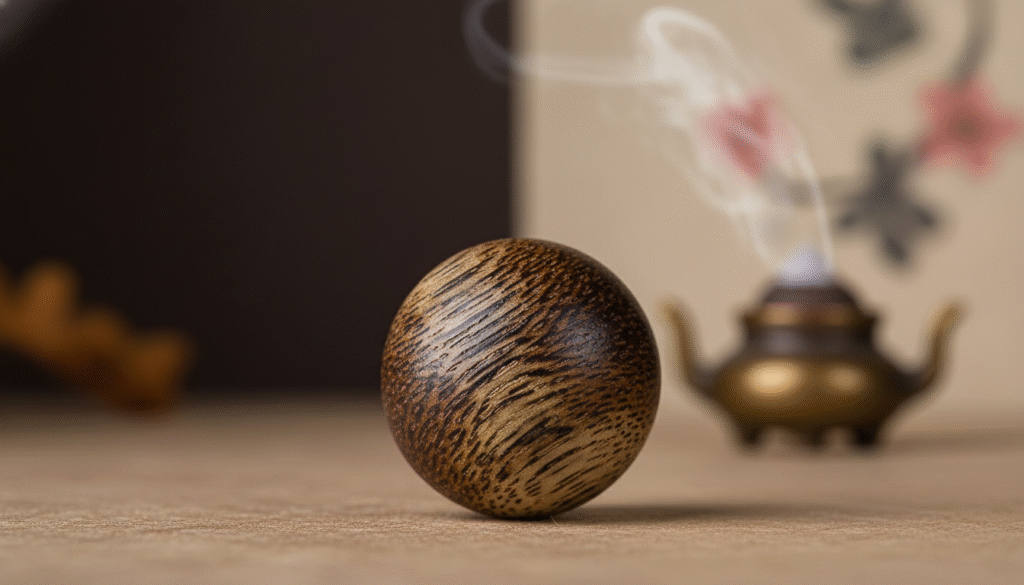
When friends hear the term ‘Tiger Stripe,’ their first reaction is often: ‘Old Chen, is this painted on?’ On the contrary! True Tiger Stripes are ‘battle scars’ left behind when an Agarwood tree, after being struck by lightning or bitten by insects, instinctively mobilizes its resin to wrap the wounds. The resin bursts through the wooden conduits, creating these patterns.
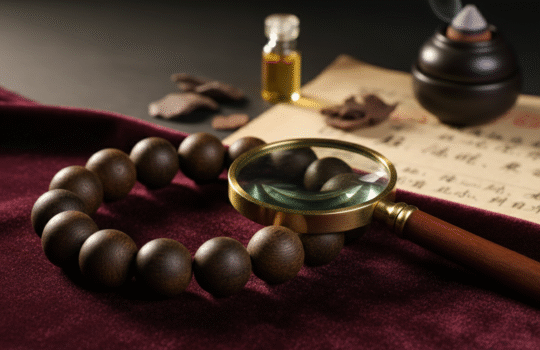
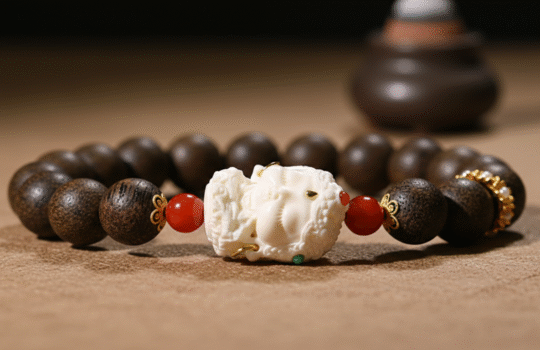
Look closely at these beads. Each dark brown oil line resembles the stripes on a wild tiger’s back—rugged, powerful, and naturally wild. Under a macro lens, you can see the resin behaving like ink dropped on rice paper, with a natural ‘Halo Effect’ at the edges. This clear contrast between ‘black (oil)’ and ‘white (wood)’ is the ironclad evidence of authenticity! The ‘Tiger Stripes’ on the market with edges as sharp as a knife-cut are dead things painted by a brush. The texture on this bracelet is ‘alive’—a masterpiece of time. Wearing it isn’t just wearing wood; it’s wearing a legend of nature’s self-healing.
A Baptism of Scent: The ‘Cooling Storm’ That Pierces the Senses
If texture is the body, then scent is the soul of Agarwood. This is why I confidently recommend Chinese Kynam—its ‘cooling notes’ are truly unparalleled.
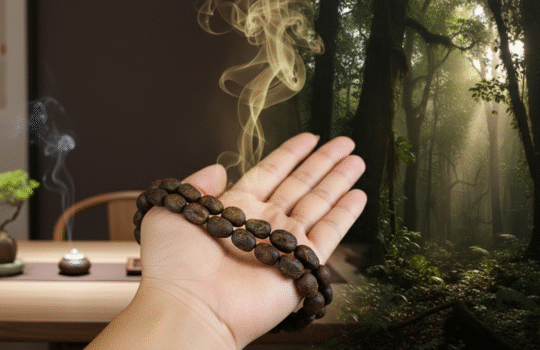
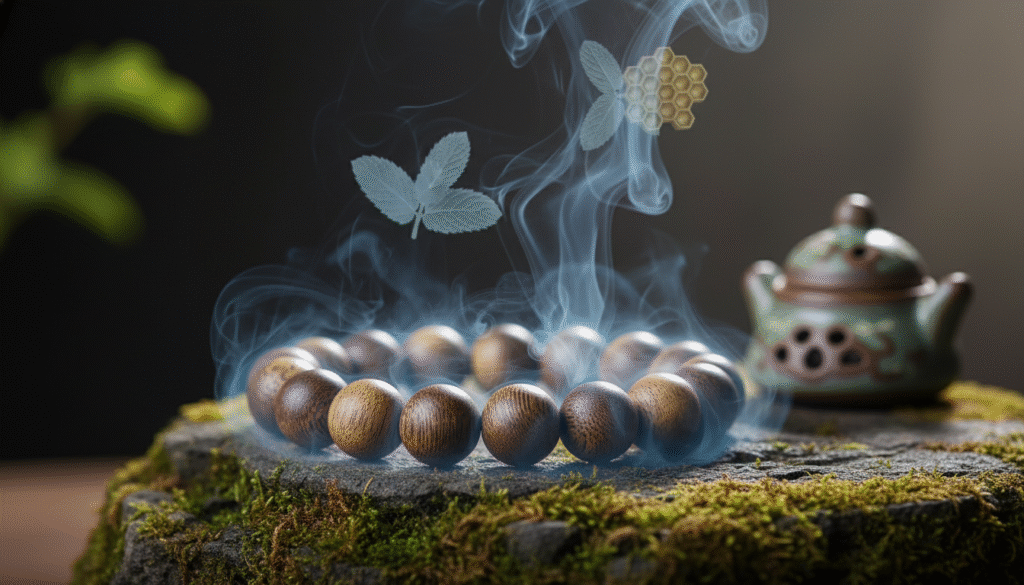
Don’t rush to smell it up close. Hold the beads three inches from your nose and take a deep breath. Instantly, a sensation similar to mint and camphor—sharp and icy—will pierce through your nasal cavity and rush straight to your crown. This is what we call the ‘Cooling Vanguard.’ As the chill dissipates, a rich honey-sweet and floral-fruity aroma follows slowly, like walking through an orchard after a fresh rain. If you handle the beads for a few minutes, your body heat warms the resin, releasing a gentle milky finish in the tail notes. This transition from ‘aggressive’ to ‘tender’ is impossible to simulate with artificial fragrances. To be honest, this ‘five-flavor flow’ was once exclusive to high-priced old Vietnamese material, but now, we’ve rediscovered this long-lost emotion in domestic Chinese Kynam.
The Truth of Collecting: The Golden Rule of ‘Semi-Sinking’ Density
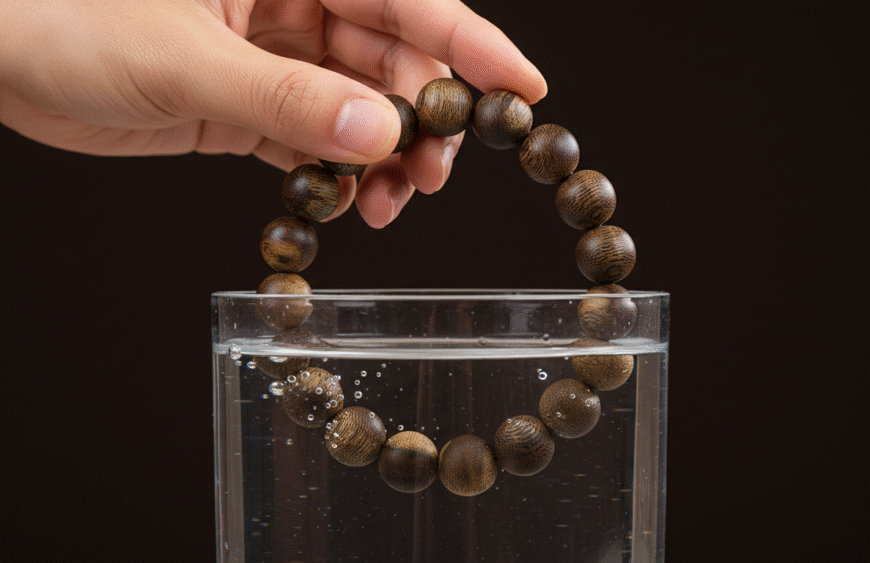
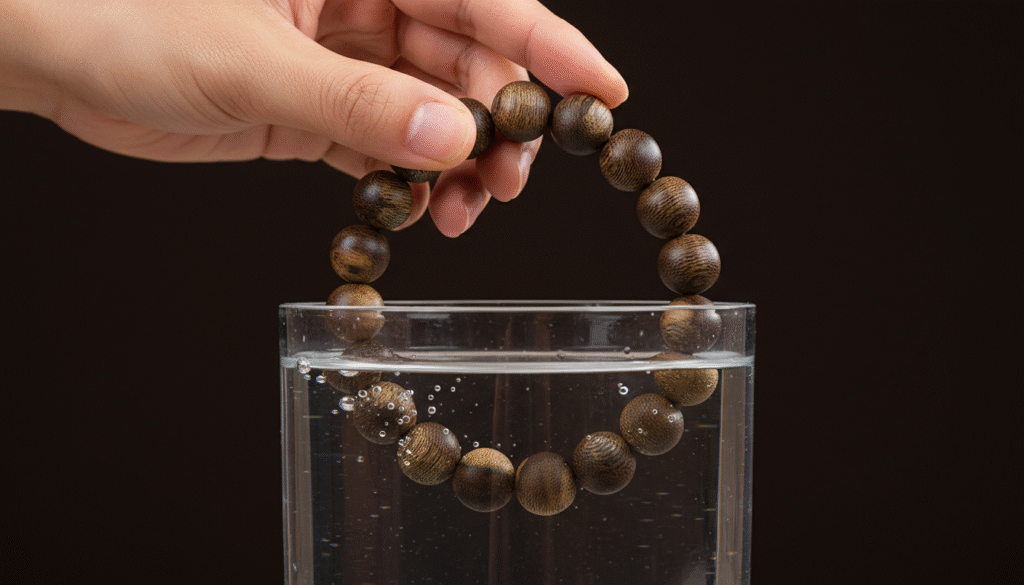
Finally, I want to share some honest truth about ‘value for money.’ The biggest misconception in the collection circle is ‘Sinking Grade or nothing.’ In the Kynam system, ‘Full Sinking’ (submerging completely in water) often commands astronomical prices and is incredibly difficult to verify (too many fake sinking pieces). This ‘Semi-Sinking’ or ‘90% Sinking’ Tiger Stripe Kynam is the ‘Golden Tier’ for true experts.
Why? Because at this density, the oil content is just right—it guarantees the explosive power of the scent while retaining the spiritual energy of the wood. Most importantly, it is rarely subjected to artificial compression. When you hold these beads, the weight will tell you: this is the weight of decades of condensed time, not the ‘dead weight’ of a pressure cooker. For veteran collectors, this bracelet is not just an accessory; it is ‘hard currency.’
[Expert’s Message]: The Agarwood market is deep. If you are unsure about your pieces or want to experience true ‘piercing cool,’ feel free to leave me a message. While I don’t claim to have seen every piece in the world, I can certainly help you avoid the most common traps. Good incense is hard to find, but a kindred spirit is even rarer. I’ll be waiting for you at the tea table.
FAQs
Q.What is the difference between Chinese Kynam ‘Tiger Stripes’ and common ‘Flower Agarwood’?
A.They are worlds apart! The ‘Flower Agarwood’ (Hua Qi Nan) on the market usually refers to a type of vine from Indonesia with natural patterns, but it is not Agarwood at all and has no collection value. The [Chinese Kynam Tiger Stripe] I am referring to is the top-tier Kynam resin formed by authentic Aquilaria Sinensis trees. Its texture is formed by condensed resin and carries a strong minty, sweet-cooling aroma. One is a namesake imitation; the other is a rare collectible. Do not confuse them.
Q.Will this ‘Cooling Scent’ disappear over time?
A.Not only will it not disappear, but it will also become more mellow the more you wear it. Kynam resin is ‘active’ and releases its aroma at room temperature. While surface evaporation might temporarily dim the scent, simply placing it in a sealed bag for a few days (a process called ‘Nurturing the Bead’) allows the internal resin to secrete back to the surface, and that head-clearing cool sensation will return in full force. This is the charm of aged material—it is alive!
Q.Many sellers claim their beads are handmade. How can I tell if this is machine-made?
A.Look at the drill holes and the regularity. Handmade beads, while striving for perfect roundness, will have extremely subtle deviations and natural wear marks or tiny chips at the hole entrance (because Kynam is soft and brittle). Mass-produced machine beads often have rigid, ‘perfect’ holes that look like plastic. This Tiger Stripe bracelet retains the warmth of manual finishing, and the oil line direction of each bead was scrutinized by a master to maximize its visual beauty.
Q.Why do veteran experts ‘lose their composure’ over this specific bracelet?
A.Because ‘authenticity’ is so scarce today. Experts are tired of seeing ‘black-oil sinking’ pieces priced at tens of thousands that are obviously fake. When they see a piece like this—unmodified texture, aggressive and direct scent, and priced at a value trough for Chinese Kynam—they feel the excitement of ‘finding a hidden gem’ and a reverence for natural materials. It’s a return to the original color and original scent.