Why Are These Chinese Kynam Slices Called “Soft Gold”? — Top-Tier “Shu Jie” Soft Silk Through a Veteran’s Eyes
After navigating this trade for over twenty years and handling countless pieces of incense, I must admit that very few things still make my heart race. However, the moment these few slices of “Chinese Kynam” were removed from their sealed box, I felt a long-lost surge of excitement. Many people ask me: what exactly is top-tier “Shu Jie” (Ripe-knot)? What is true “Soft Silk”?
Today, I won’t bore you with textbook definitions. Instead, I’ll show you these freshly unboxed pieces. They carry the unique memories of the red soil layers and the humid, tropical genetic markers of China’s core production areas (such as Guangdong and Hainan). This isn’t just wood; it is the sarira of time. To be perfectly honest, if you haven’t experienced this “soul-piercing” sweet-cool sensation, you haven’t truly stepped through the gates of agarwood appreciation.
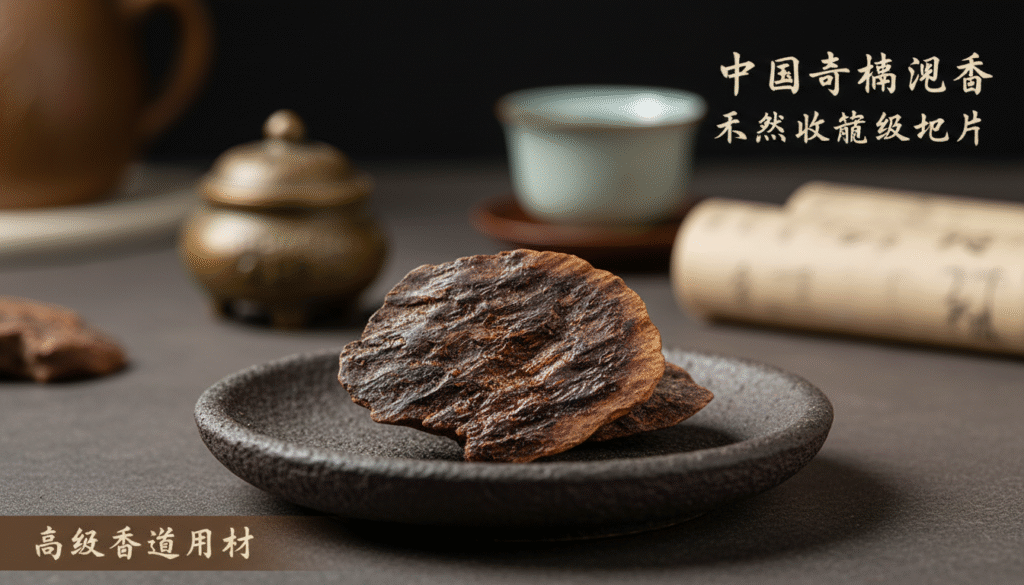
Love at First Sight: This Is What “Soft Silk” Should Look Like
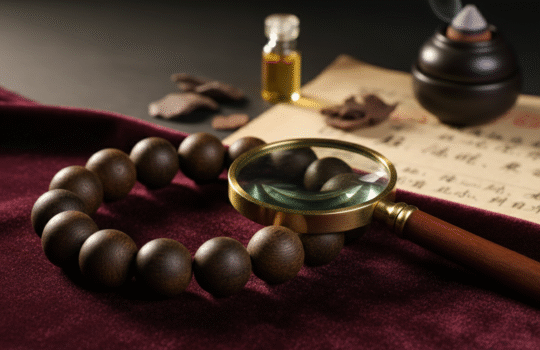
In our profession, we judge incense first by its “oil.” But the oil in this piece of Chinese Kynam isn’t a superficial, oily shine; it is a resin that has truly “seeped into the bone.” Holding a slice under natural light, you will see its incredibly rich resinous content. The cross-section reveals the unique soft silk waxy texture of Kynam, resembling solidified beeswax. It embodies the classic expert description: “shavings curl into rings, and kneaded bits form into pills.”
This unique texture is no accident; it is a miracle created by the interaction between the specific acidic red soil of Southern China (particularly the Hainan and Huizhou regions) and the rich fungal communities of the primordial rainforests. Over centuries of natural mellowing, the resin completely transforms the physical structure of the wood fibers. Look at those deep, naturally distributed oil veins—the color ranges from deep tan to dark brownish-black, as warm and moist as ancient jade. This vitality, radiating from the inside out, is a natural creation that no high-tech method can replicate, and it is exactly why I am so fond of it.
A Sensory Feast: The Explosive Baptism of “Sweet-Cool” Aroma
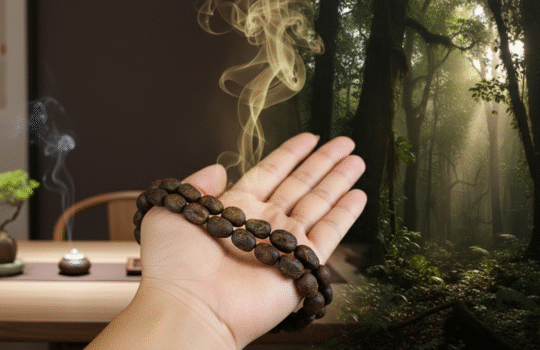
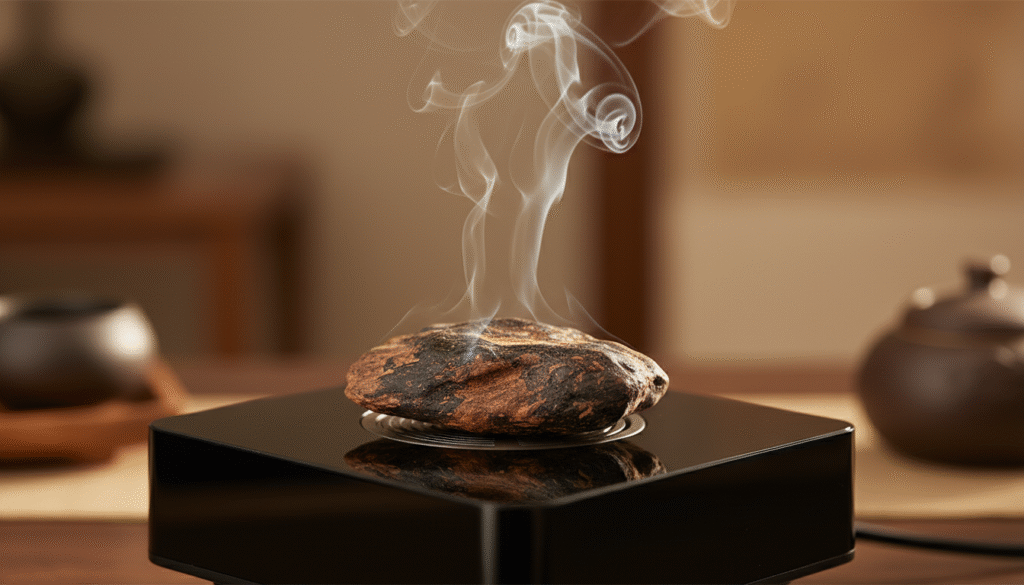
Good incense cannot lie to the nose, and certainly not to the heart. The defining characteristic of this material is its explosive sweet-cool breath. Unlike ordinary agarwood which can be mild, the moment it hits the heater, a refreshing minty coolness surges directly into the nasal passages and even reaches the crown of the head, as if you were suddenly transported to a deep mountain rainforest at dawn.
This immediate, brain-clearing “coolness” is the hallmark of Chinese Kynam (“Guo Xiang”), distinguishing it from Southeast Asian varieties. As the heater temperature stabilizes, the coolness is followed by rich notes of frankincense and honeyed fruit, showing incredible layers. It is not a single scent, but a grand symphony. For modern people, this is not just an olfactory pleasure; it is a remedy for anxiety. Coming home late at night and heating a small slice provides a sense of peace that money cannot buy.
Collector’s Proverb: Why I Urge You to Collect “Shu Jie” (Ripe-Knot)
In the secondary market, Kynam is already scarce, but “Shu Jie” Kynam from Chinese origins—with its superior medicinal value—is even rarer. “Shu Jie” refers to a process where the tree, after naturally forming resin, eventually withers and falls, becoming buried in the soil to mellow further over centuries. This process is rare and the surviving stock is extremely low.
Why do I suggest collectors focus on these slices? Because they represent the pinnacle of the agarwood quality pyramid. Compared to “Sheng Jie” (Live-knot), the resin in “Shu Jie” is more stable, the fragrance more mellow, and it lacks even a hint of raw “woodiness.” Against the backdrop of dwindling high-quality domestic agarwood resources, owning a Kynam slice with clear geological origins and distinct characteristics is not just a symbol of taste, but a piece of “soft gold” that can be passed down through generations.
[Expert’s Message]: The world of agarwood is deep, and many have paid a high price in “tuition fees” without ever smelling the real thing. If you have incense you are unsure about, or if you want to personally experience this soul-piercing sweet-coolness, feel free to chat with me. Good incense is hard to find, but a kindred spirit is even rarer. I’ll have the tea ready, waiting for you.
FQAs
Q. Is this Chinese Kynam slice suitable for beginners?
A. To be frank, this is a collection-grade item—the “Lafite” of agarwood. If you are looking for a one-step solution to experience the pinnacle of agarwood and establish a correct olfactory standard, it is perfect. Its aromatic characteristics are extremely distinct (sweet-cool, explosive), so you don’t need deep experience to be visually and sensorially shocked. Rather than wandering around entry-level options, it is better to glimpse the peak scenery at once.
Q. What is the difference between “Soft Silk” and ordinary agarwood?
A. “Soft Silk” is the core physical characteristic that distinguishes Kynam from ordinary agarwood. The resin in ordinary agarwood is often hard and crystalline, while Kynam resin is like beeswax or ointment; it feels sticky when carved and has a soft, chewy texture. This difference stems from the specific geological and climatic conditions (such as the humidity and special fungi in Guangdong/Hainan). When heated, the oils of Soft Silk Kynam volatilize more thoroughly, resulting in a purer and more penetrating fragrance. This is a physical property that cannot be faked.
Q. How do I use these slices for the best effect?
A. Waste is the greatest sin in collecting! Kynam of this caliber must be appreciated at low temperatures using an electronic incense burner. Because Kynam resin is extremely rich and has a low boiling point, direct fire will char the oil instantly, creating a burnt smell and wasting the material. I recommend setting the temperature between 100°C and 150°C (fine-tuned based on your burner). Let it slowly release those layers of minty coolness and milky sweetness. A slice the size of a fingernail is enough for a long, meaningful session.