[Appreciation Notes] 108-Bead Chinese Agarwood Prayer Beads: Why This ‘Medicinal Sweetness’ Suits Chinese Olfactory Aesthetics Better Than Imports?
“A senior expert dissects 108-bead Chinese Agarwood prayer beads, deeply analyzing the unique medicinal sweetness and ink-wash texture of 'Guanxiang.' From macro identification to cultural heritage, discover why this 'National Fragrance' holds more collector value and spiritual solace than imported materials.”
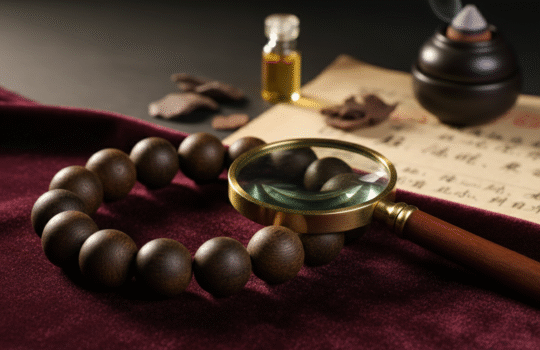
Having worked in the Agarwood export industry for twenty years, I’ve handled thousands of ‘hard currency’ pieces. In this market, while Vietnam’s Nha Trang is legendary, in my heart—when the night is still and I reflect upon my soul—what truly comforts the Chinese spirit is our authentic ‘National Fragrance.’ I remember years ago while sourcing materials in the mountains of Hainan, an old farmer pointed to an inconspicuous piece of decayed wood and told me: ‘Foreign incense pleases the nose, but our incense enters the heart.’ That medicinal aroma and coolness carved into our DNA is something no overseas region can replicate. Today, I won’t bore you with dry parameters. Instead, I’ve placed this newly crafted string of 108-bead Chinese Agarwood under the magnifying glass for a ‘macro appreciation’ to see what ‘ancestral olfactory memory’ looks like, and why it has become a ‘masterpiece fragrance’ in the eyes of experts.
Micro-Landscapes: Not Every ‘Black’ is Oil Accumulation
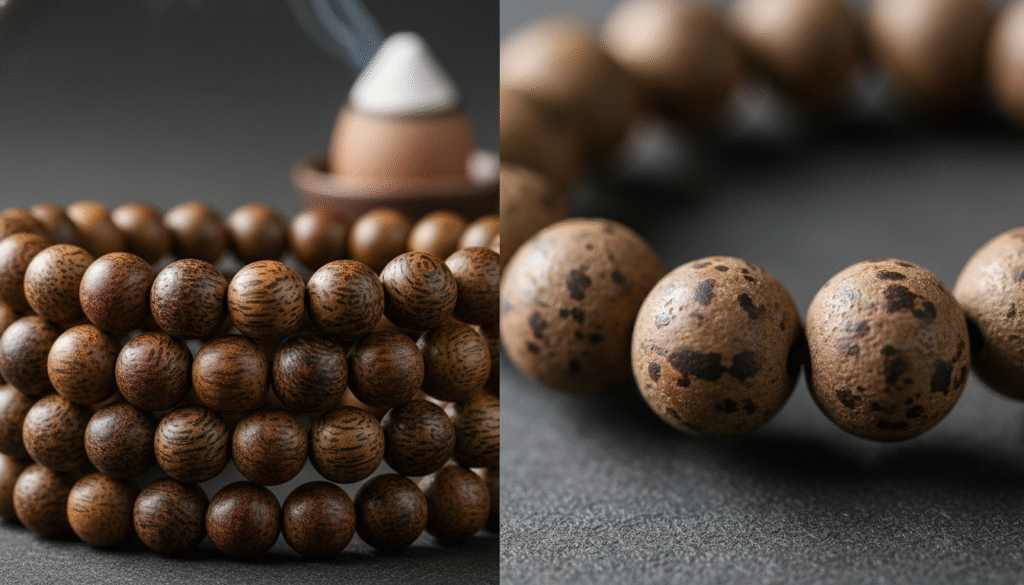
Many friends ask me how to distinguish Chinese material from Southeast Asian commodities at a glance. The answer lies in the ‘micro-world.’ Look through my magnifying glass at the surface of these beads—the oil lines of Chinese Agarwood are not rigid black lines, but gathered and deep brown flowing clouds. Under a macro lens, these lines resemble a miniature Song Dynasty ink-wash painting, where ink tones blend naturally and boundaries are ethereal. This is the mark of a tree self-healing after lightning strikes or insect bites, secreting resin over decades—a true ‘crystallization of pain.’ In contrast, ordinary Indonesian or Malaysian ‘commodities’ often have scattered, muddy oil lines or harsh ‘zebra stripes.’ Some even use high-polish dyeing to chase ‘blackness,’ appearing dull and lifeless. Holding this ‘National Fragrance,’ the texture is solid, lacking the floating lightness of oil-soaked fakes. Each bead is finely hand-polished, preserving the breath of wood vessels. This clear and delicate oil distribution is the foundation for developing a rich patina over time—the standard ‘textbook’ texture for experts.
Scent Narrative: Starting with Medicinal Righteousness, Ending with Clear Sweetness
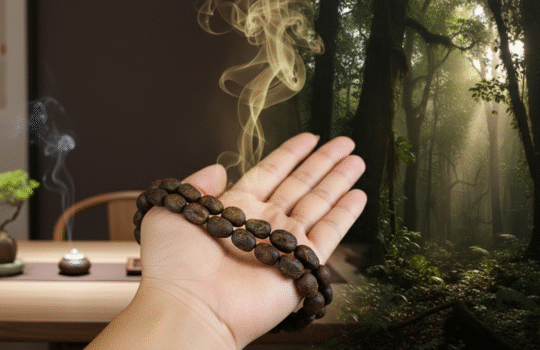
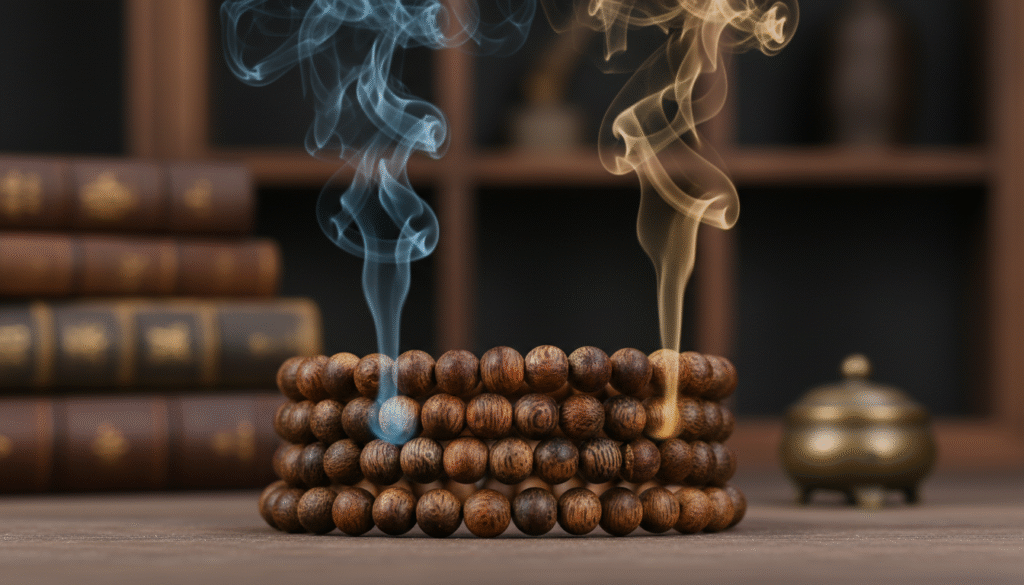
If texture is the skin, scent is the soul. Chinese Agarwood is precious because of its ‘righteousness.’ Upon first smelling these beads, you won’t encounter an intense floral scent designed to please the nose; instead, a rich, pure Traditional Chinese Medicine (TCM) aroma greets you. It is neither sharp nor dry, instantly settling chaotic thoughts. It’s a sense of peace similar to old book pages or an aged pharmacy—what we call the ‘bone of National Fragrance.’ But the magic follows: after wearing it and letting body heat warm it, that medicinal scent transforms into a delicate, lingering sweetness, accompanied by a piercing coolness that reaches the throat, much like the aftertaste of aged herbal tea in midsummer. This is vastly different from the fishy or overly milky scents of some Southeast Asian regions. This layered and long-lasting diffusion is not just the gold standard for identifying high-quality Chinese material, but also the reason it is crowned ‘Head of All Fragrances’ in Chinese culture.
From Ritual Object to Elegant Asset: Mobile New Chinese Assets
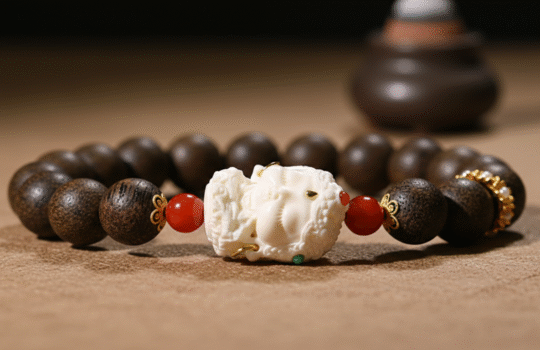
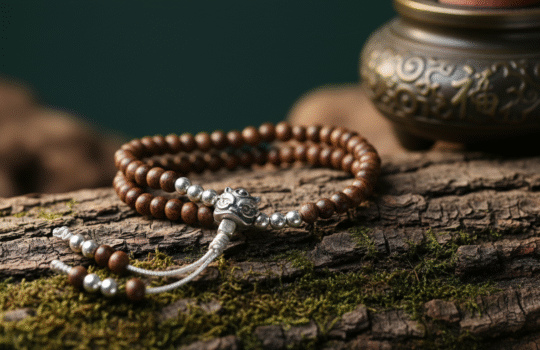
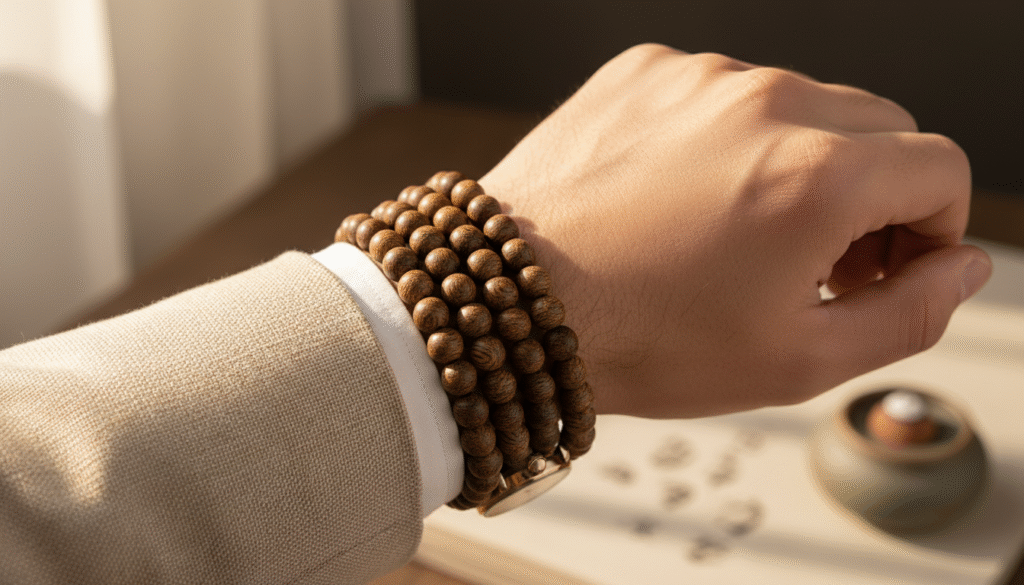
Years ago, 108-bead long strings were mostly seen in deep mountain temples or collector safes as ritual counting tools. Today, they have transformed into an expression of cultural confidence. This string of Chinese Agarwood features a steady oil color, retaining the weight of tradition while fitting the popular ‘New Chinese’ aesthetic. For urban elites, wrapping it four times around the wrist avoids the gaudiness of gold and silver while offering a low-key luxury superior to ordinary wood strings. More importantly, as wild Chinese Agarwood resources are nearly exhausted, a string with complete appearance, clear oil lines, and pure scent possesses extreme scarcity and potential for appreciation through aging. It is more than an accessory; it is a piece of ‘soft gold’ that grows richer in scent over time. Every moment spent ‘playing’ with it is a dialogue with time and the ancient tree that healed itself in the mountains. [Expert Message] Fragrance meets its soulmate, and jade is gifted to those with destiny. Old Chinese material is becoming rarer by the day. If you seek this ‘scent of peace’ unique to the Chinese people, or have doubts about your own string, click ‘Book Appreciation’ below or DM me ‘Scent.’ I don’t do hard sells; I only wish to guide true fragrance lovers so this thousand-year heritage isn’t lost.
Q&A
Q. Which is better, Chinese Agarwood or Vietnam Nha Trang?
A. It depends on your preference and purpose. Nha Trang is known for ‘fruity sweetness and coolness,’ which is bright and uplifting; Chinese Agarwood (such as Guanxiang or Hainan material) is defined by ‘medicinal sweetness,’ offering an introverted weight and penetration. From the perspective of cultural genes and wellness, Chinese material has stronger medicinal attributes and its scent aligns better with the concepts of ‘elegance’ and ‘tranquility.’ Additionally, high-quality Chinese material is far rarer than Nha Trang material.
开始 →
Q. What should I note when wearing these 108 beads?
A. Agarwood is ‘alive.’ Maintenance requires avoiding water, high heat, and chemicals. Remove it when bathing, washing hands, or using perfume to prevent detergents from corroding the oil or contaminating the scent. For high-oil Chinese material, if not worn, store it in a sealed box or ‘bead powder’ to maintain moisture balance, allowing the scent to last and the patina to enrich—known as ‘nourishing the beads.’
开始 →
Q. Does more oil lines under macro view mean better Agarwood?
A. Generally yes, but beware of fakes. While density reflects oil content, real oil lines are naturally blurred, varied in depth, and follow the wood grain vessels. If they are solid black, rigid, and sit on the surface, beware of artificial painting or asphalt soaking. Look for quantity, but prioritize ‘natural charm’ and authenticity.
开始 →