Deep Review of Qinan Slivers: ‘Soft Gold’ from an Exporter’s Perspective and 80°C-120°C Temperature Control Guide
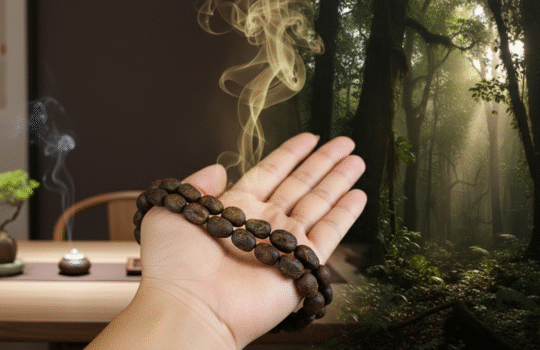
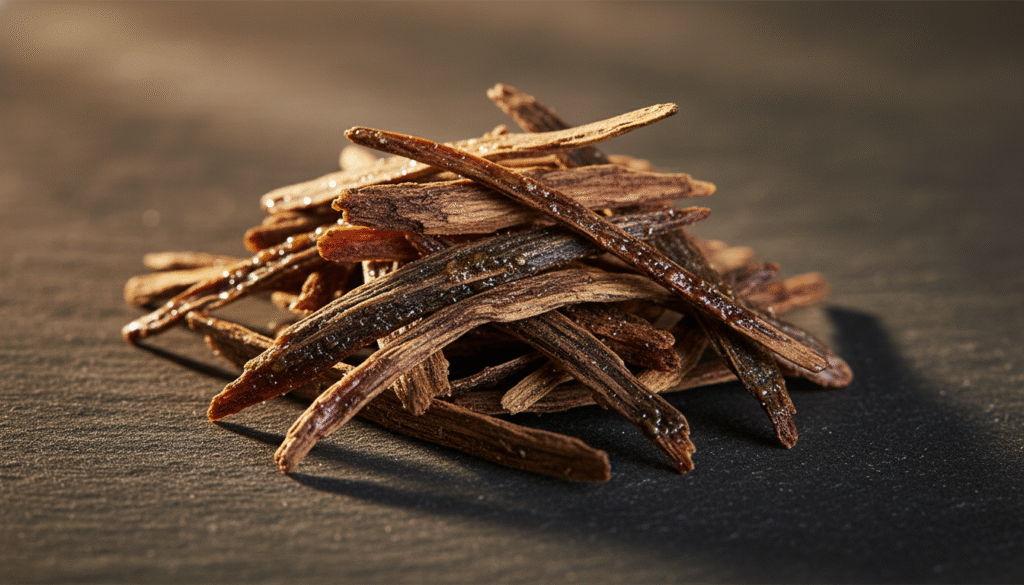
“Insights from a veteran agarwood exporter: Why Qinan slivers are the ultimate value choice for experiencing top-tier fragrance. Master the 80°C-120°C three-stage temperature control to unlock notes of cooling menthol, floral honey, and creamy milk. Expert authentication consultation included.”Having spent twenty years navigating the world of agarwood export, I have seen top collectors spend fortunes on ‘intact’ Qinan specimens, and even more newcomers paying a ‘tuition fee’ by overpaying for the wrong materials. Whenever I am asked privately, ‘Master, how can I experience the pinnacle of Qinan fragrance on a budget?’ my answer is always the same: Play with slivers. This isn’t just a cost-saving tip; it’s the connoisseur’s secret menu. Look closely at the tea in your hand and listen to the story behind this image: these curled Qinan slivers are not industrial waste, but the ‘fallen petals’ from the transformation of top-grade raw materials. Today, I have specially selected a batch of ‘shredded gold’ just hand-trimmed from our climate-controlled warehouse. I will strip away the marketing fluff and use an exporter’s sensory experience to help you understand the craft behind these dark brown curls. For those wondering how to heat them without wasting a drop, the temperature control details ahead are worth reading repeatedly.
Visual Audit: The Legend of ‘Soft Gold’ Under the Blade
In this industry, your eyes become your most reliable measuring tool. Look at the photo: these slivers exhibit a deep brown to nearly black oily luster, which is definitive proof of high resin content. Let’s be frank about the ‘origin story’ hidden here: Why are they curled? This isn’t an intentional design. At the source, when an old master carves a priceless piece of Qinan for a statue or beads, the wood is so soft and the resin so sticky that the blade doesn’t cause the wood to splinter like ordinary agarwood. Instead, it naturally curls into thin ribbons under the blade’s edge. This batch of slivers consists of the ‘birthmarks’ left behind during the creation of million-dollar masterpieces. My selection criteria are extremely harsh: Zero white wood. Every sliver is a pure resin crystal, free from the harsh woody smell caused by white sapwood. This high purity ensures an explosive fragrance when heated—you aren’t buying wood; you are buying solid aromatic oil.
How-to Guide: Mastering the Three-Phase Temperature Control
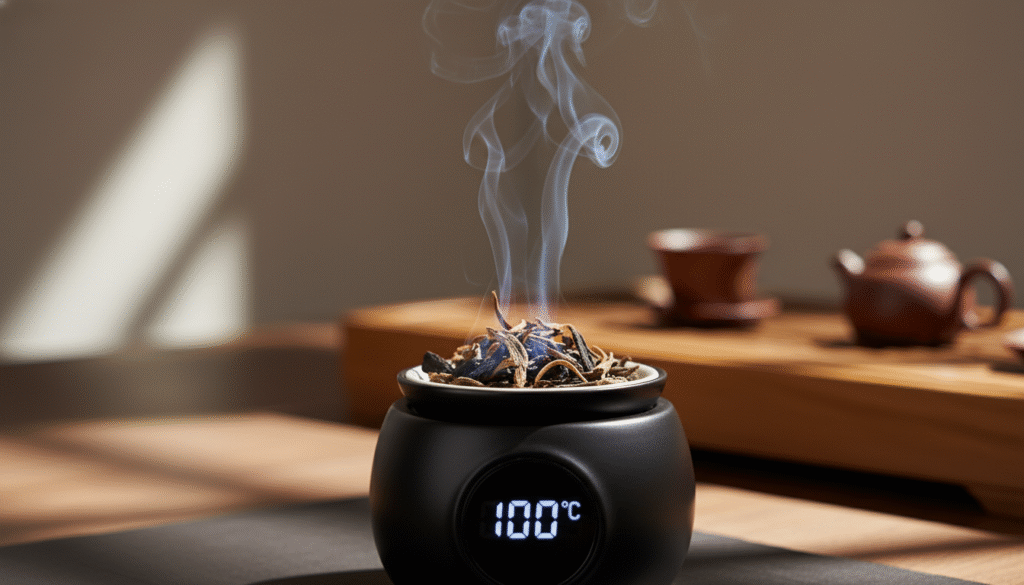
Many friends acquire top-grade Qinan slivers but feel the scent is ‘underwhelming’ due to improper operation. Most often, the heater temperature is wrong. The scent of Qinan is alive; it’s like a symphony. Here is my Golden Temperature Control Plan, tested countless times:
- Early Stage (80°C-90°C): The Coolness of a Mountain Morning. Do not rush with high heat! At low temperatures, the light volatile oils wake up first. You will smell a highly penetrative menthol-like coolness that feels like standing in a deep ancient forest at dawn. This is the crown jewel that distinguishes Qinan from ordinary agarwood.
- Middle Stage (100°C-105°C): A Floral Honey Explosion. Increase the temperature slightly, and the resin begins to dance. Now, a rich orchid fragrance mixed with fruity honey bursts forth. This sweetness is never cloying; it has an elegant clarity that represents the core climax of the scent.
- Final Stage (120°C+): The Serenity of Milky Notes. As the scent lightens, push the temperature higher. An almond-like creaminess will slowly flow out—the final gentle embrace before the resin is fully spent.
Only by mastering this microscopic temperature control can you truly claim to ‘know’ Qinan.
Value Logic & Expert Advice: Capture the Soul, Forget the Form
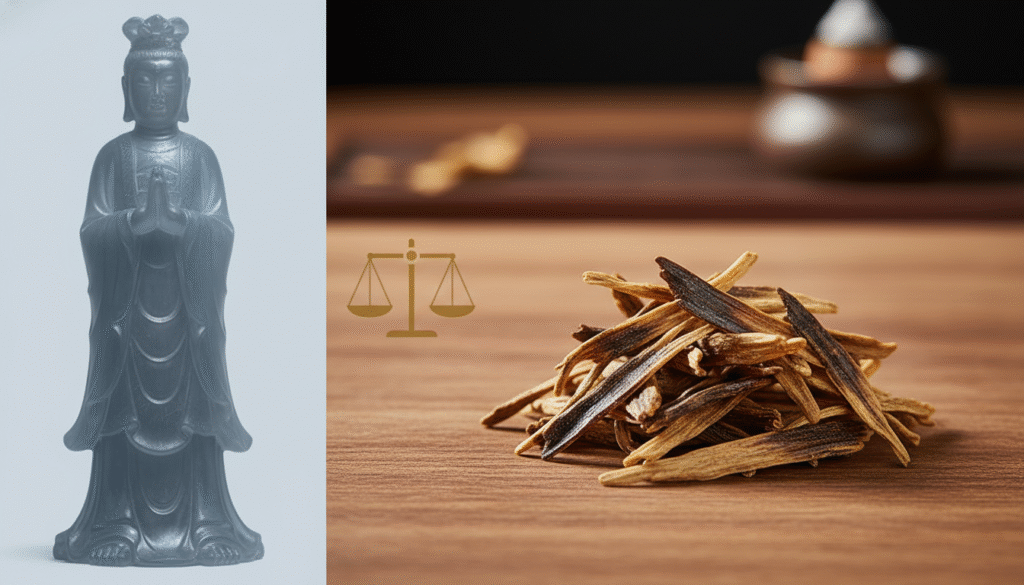
Why do I repeatedly recommend slivers? From a supply chain perspective, the math is simple. These slivers are ‘offcuts’ in physical form, but they are the ‘eldest sons’ in terms of aromatic soul. They come from the ‘essence’ trimmed away to shape million-dollar carvings. Their DNA is identical to the solid pieces that cost thousands of dollars per gram. For true scent enthusiasts, the shape is irrelevant; the resin and the fragrance are everything. Slivers cost only a fraction of the price of whole pieces, and because they are thin with a large surface area, they release their scent over 30% faster than thick slices. This is the smartest choice for a ‘daily indulgence’—paying a fraction for the ‘form’ while enjoying the full ‘soul’ of the feast.
[Expert’s Message]
To be honest: the agarwood market is deep, and Qinan is even deeper. If you have ‘stock’ you aren’t sure about, or want to try this ‘textbook standard’ batch yourself, don’t be a stranger—click below to consult or chat with me directly. I’d rather you buy less often than buy the wrong thing once. After all, once you’ve smelled real Qinan, you can never be fooled again.
我们的服务
Q. Are Qinan slivers suitable for direct lighting with an open flame?
A. Absolutely not! That would be a waste of a precious resource. Open flames exceed 800°C, which instantly chars the precious Qinan resin, leaving you with a burnt wood smell instead of floral honey notes. As emphasized, an **electronic heater** is the best companion. Only precise, low-temperature (80-120°C) roasting allows you to experience the full layers of its fragrance profile.
Q. Since they are offcuts, do slivers have a short scent duration?
A. This depends on the resin content. High-quality Qinan slivers (like our selected deep-brown resin grade) are incredibly durable because they are full of oil. Under proper temperature control, a small pinch (approx. 0.1g) can consistently release fragrance for 4-6 hours or more, and the milky base note will linger in the room much longer and purer than ordinary agarwood powder.
Q. How should a beginner store these resin-rich slivers?
A. High resin content means high volatility. Use a **glass or porcelain jar with an airtight seal** and store it in a cool place (below 25°C). Avoid direct sunlight or leaving them in a hot car, as the evaporation of oils will weaken the fragrance. If cared for properly, this ‘soft gold’ will actually become more mellow over time.