A Soul-Stirring Scent: Why This Vietnam Nha Trang White Qinan ‘Mahasthamaprapta Bodhisattva’ is Both an Amulet and Hard Currency?
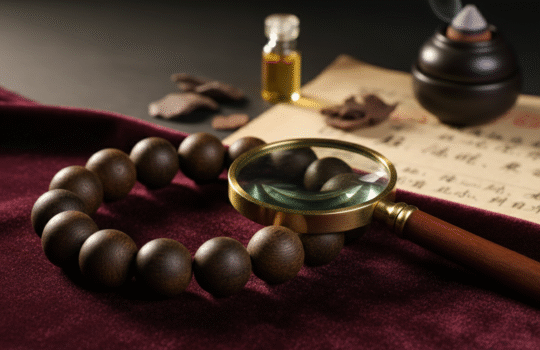
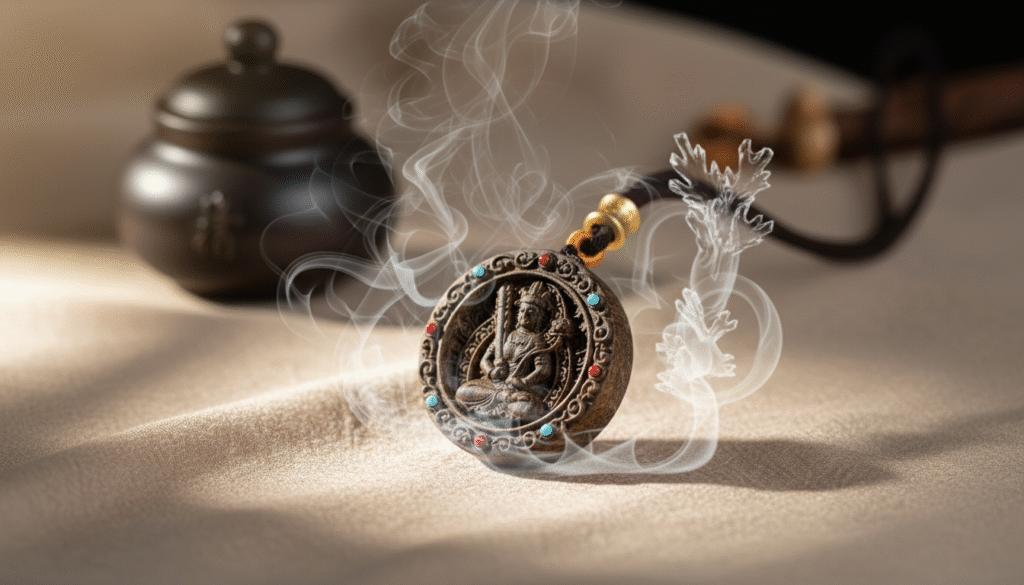
I remember a night five years ago in Nha Trang, amidst a torrential downpour, when an old farmer named Ah Hui tremblingly pulled a red cloth bundle from his inner pocket. That cool, domineering fragrance instantly overpowered the musty smell of the room—that was the predecessor of this White Qinan. Having spent twenty years in the agarwood trade and handled thousands of pieces, my heart still skipped a beat when I faced this ‘Sugar-Knot’ White Qinan! Many things on the market are called Qinan, but those worthy of being called the ‘Diamond of Woods’ and deserving of master-level double-sided carving are one in ten thousand. This 4x1cm pendant we are appraising today is not just a piece of jewelry; it is a manifestation of compassion grown from the wound of a century-old tree. As the natal Buddha for those born in the Year of the Horse, it carries the light of wisdom from Mahasthamaprapta Bodhisattva; as an asset, it is the most stable ‘hard currency’ amidst the surging prices of Qinan.
Not Ordinary Wood: A Nha Trang Legend of ‘Ant Nests and Lightning’
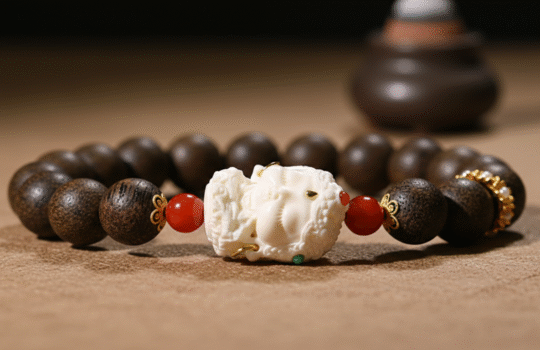
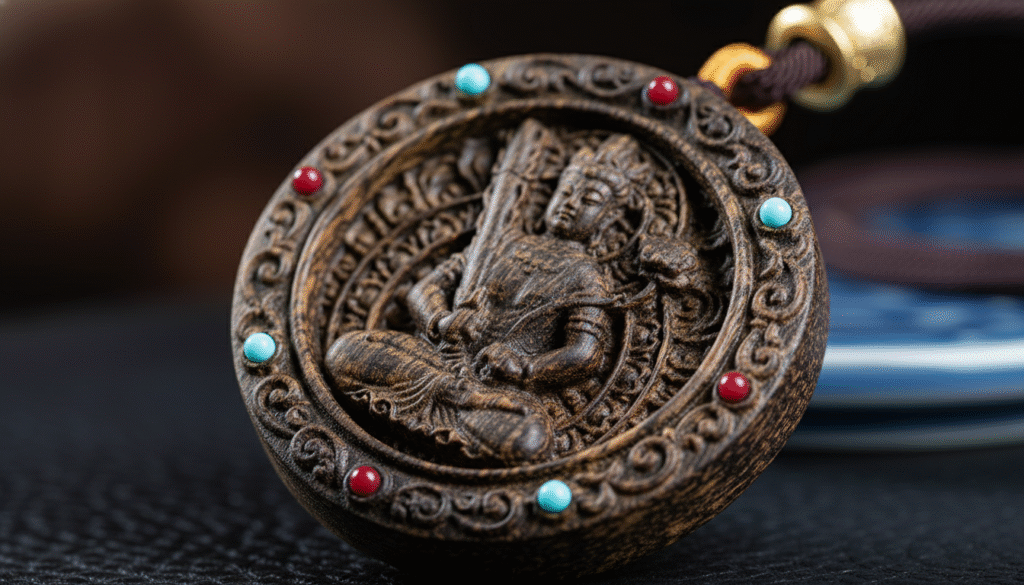
Why must I emphasize ‘Vietnam Nha Trang’? Please look closely at the oil lines on the surface of this pendant. They are not the rigid black deposits found in common agarwood, but a highly active ‘Soft Silk’ state. To be honest, this material was hard-won; it was harvested from the heartwood of an ancient tree in the deep mountains of Nha Trang that had been eroded by ant nests and struck by lightning. To heal its wounds, the tree frantically secreted its finest resins. After a century of mellowing, the wood fibers transformed almost entirely into oil, creating a top-tier texture that ‘shaves into curls and feels sticky like wax.’ The oily sheen in the photo, which looks as if it might overflow, is actually the condensation of the tree’s life force. In this ‘White Qinan’ material, experts look for ‘Aura’—it lacks the dry heat of common wood, possessing only the warmth and nobility of accumulated ages.
Cultivation on the Blade’s Edge: Why Dare to Carve ‘Soft Silk’ Qinan?
Those in the know understand the old rule: ‘Qinan is not to be carved.’ Why? Because the material is too precious (priced at over $1,500 per gram), and Soft Silk Qinan is extremely sticky to the blade; the slightest error can ruin the piece. However, to do justice to this heaven-sent material, a famous Suzhou carving master went into seclusion for three days before daring to carve ‘Mahasthamaprapta Bodhisattva’ into this wood. This is not just a craft, but a form of spiritual practice! The double-sided exquisite carving process ensures the Bodhisattva’s face appears compassionate and solemn from both sides. As the guardian deity of the Year of the Horse, Mahasthamaprapta symbolizes illuminating the world with the light of wisdom to dissolve disasters. Complemented by a touch of Southern Red Agate, the collision of red and black preserves the ancient simplicity of the agarwood while injecting the spirituality of the Seven Treasures of Buddhism—the ultimate romance of Eastern aesthetics.
A Scent That Pierces the Soul: Three Baptisms from ‘Initial Coolness’ to ‘Trailing Honey’
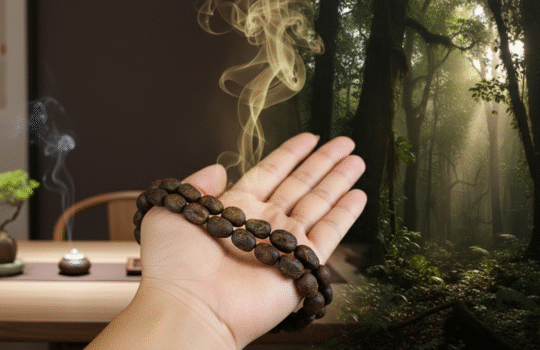
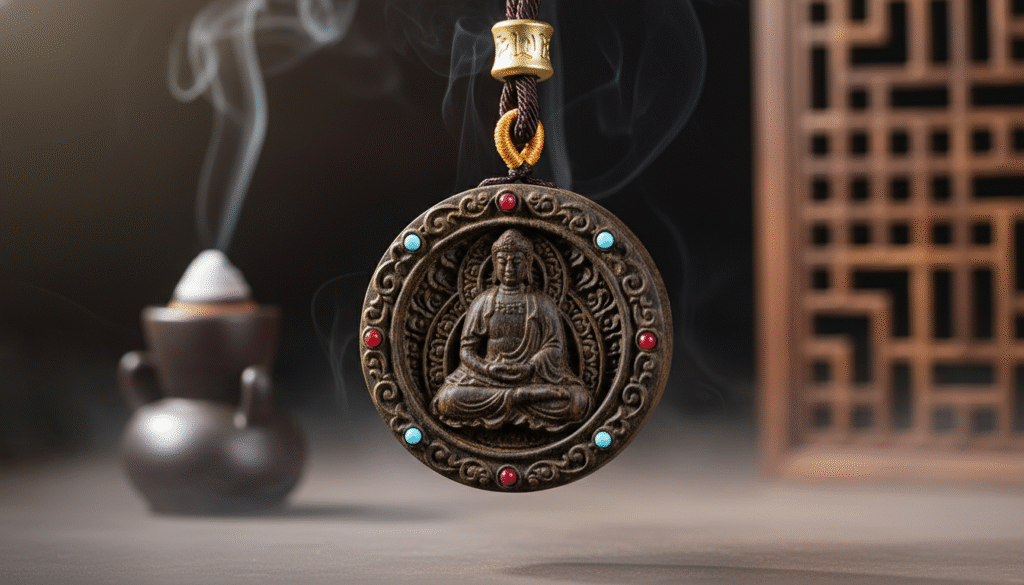
Photos can record form, but they cannot replicate the soul—its fragrance. The reason White Qinan is the king of scents lies in its ‘penetrating power.’ When you wear it, your body temperature becomes the best catalyst. At first scent, there is a rush of coolness hitting the crown of the head, like mint but deeper, instantly sweeping away irritability. Then, a rich milky fragrance begins to diffuse, as if one is sitting in a Zen hall of an ancient temple. Finally, lingering on the collar is a long-lasting floral honey sweetness. The scent of this pendant is a layered narrative poem; in a busy city, it builds a ‘meditation barrier’ with a one-meter radius for you. This is not just an olfactory pleasure, but emotional healing.
‘Liquid Gold’ in Your Pocket: The Ultimate Security for Collectors
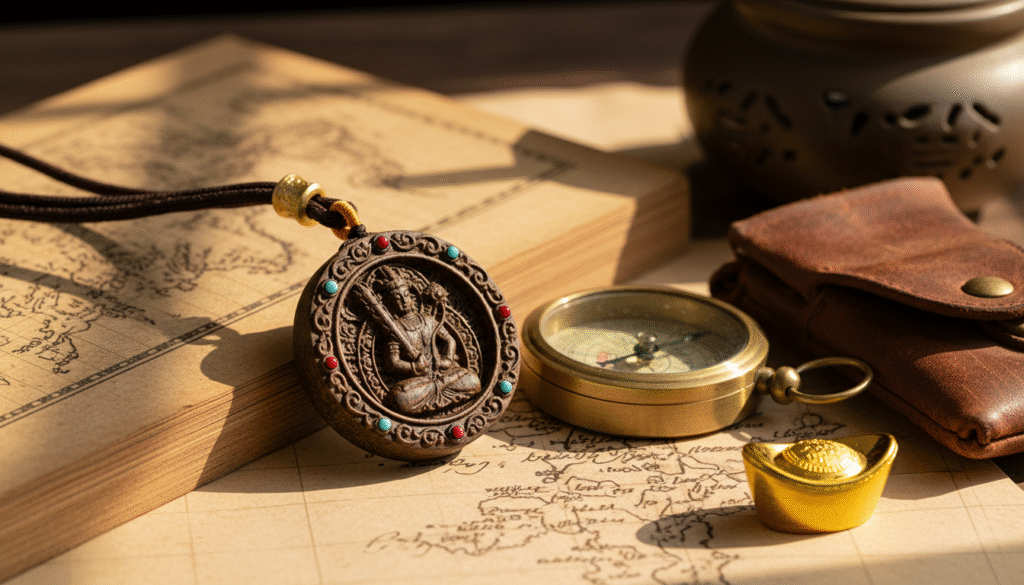
At many high-end private appreciation events, I often tell friends that White Qinan is the ‘end of the road for resources.’ In recent years, top-tier agarwood, especially Nha Trang White Qinan, has seen its price per gram exceed gold by far, with a steady upward trend that outperforms even the gold market. This 4x1cm plaque is highly regular in shape, which means a significant amount of scrap material was sacrificed during the cutting process—a true luxury. For collectors born in the Year of the Horse, it is both an amulet and a family asset that can be passed down. In an era of uncertainty, owning a ‘top-shelf’ piece of Qinan is to hold a tangible, portable sense of wealth security.\n\n[Expert Connection Channel]\nFine incense seeks its destined owner. This unique piece is currently stored in my temperature-controlled cabinet. If you are born in the Year of the Horse or are looking for a ‘hard currency’ heirloom, please do not hesitate. Click the consultation button below and note ‘Mahasthamaprapta.’ I will personally film a 360-degree high-definition appreciation video for you, leading you to experience this fragrance that has traveled through centuries.
FAQs
Q. Is the 4x1cm size of this pendant too small? Is it suitable for men?
A. This is a classic ‘Golden Ratio’ size. For top-tier Qinan, the material is not only sold by the gram but also by its ‘regularity.’ A 4x1cm plaque worn on the chest is not cumbersome while ensuring a sufficient display area. It is exquisite and restrained, suitable for both men and women. Especially when paired with silver-gilt accessories, it appears scholarly on men and sophisticated on women.
Q. White Qinan is ‘Soft Silk’; is it easily damaged during daily wear?
A. The ‘softness’ of White Qinan refers to its rich oil content and waxy texture, not that it is fragile. On the contrary, the rich oils form a natural protective layer. During daily wear, the body’s natural oils are the best ‘maintenance agent,’ making the patina thicker and warmer over time. The only things to avoid are contact with chemical cleansers (such as perfume or soapy water) and direct impacts with sharp hard objects. Simply take it off during bathing or sleeping.
Q. I was born in the Year of the Horse; is there any special significance to wearing Mahasthamaprapta Bodhisattva?
A. Mahasthamaprapta Bodhisattva is the Natal Buddha for the ‘Horse’ zodiac, symbolizing wisdom and light. In Buddhist culture, wearing one’s Natal Buddha implies receiving the Bodhisattva’s blessing to open the light of wisdom and avoid thorns and shoals on the road of life. Especially during a person’s zodiac year or when fortune fluctuates, it serves as both a psychological pillar and a profound guardian.